Why It Feels Like Your Language Skills Are Getting Worse
It's a frustrating feeling: you've put in hours, but suddenly it feels like you're going backward. You're not alone, and it's not what it seems. This is a normal part of your journey.

It’s one of the most frustrating feelings in language learning: you’re studying hard, but you can’t shake the sense that you’re going backwards. If you’re asking yourself, “Why do I feel like my language skills are getting worse?”, you’re not alone—and the answer is more encouraging than you think. This feeling isn’t a sign of failure. In fact, it’s often a sign that you’re making real progress.
The Real Reason It Feels Like You’re Getting Worse
Here’s the secret: you’re not getting worse, your standards are getting higher. When you were a beginner, every new word felt like a huge victory. You didn’t know what you didn’t know, so you couldn’t spot your own mistakes. Now, your brain has a much richer, more complex understanding of the language. You can suddenly hear the subtle grammar mistakes in your own sentences, the awkward phrasing, and the moments where your pronunciation is slightly off. This hyper-awareness feels like a step back, but it's actually proof of a major step forward.
This experience is so common that experts have a name for it: the intermediate plateau. According to a 2025 analysis by Trancy, many learners hit this stage at the B1–B2 CEFR level, and it can last for months. It's the point where the easy 'newbie gains' end and the real, deeper learning begins. Your brain is moving from simply collecting words to understanding a complex system of rules and nuances.
This psychological shift is powerful. A 2026 study on language education identified a lack of confidence as the single most influential factor contributing to students' perceived low proficiency—more so than their actual skill level. You feel worse because your perception has changed, not necessarily your ability.
This is a critical moment in your journey. One 2025 analysis noted that most learners who quit do so after an initial 'crash' of fatigue and doubt, which often accompanies the intermediate plateau. But by understanding that this feeling is a sign of growth, you can push through it instead of letting it stop you. You haven't lost your skills; you've just unlocked a new level of awareness.
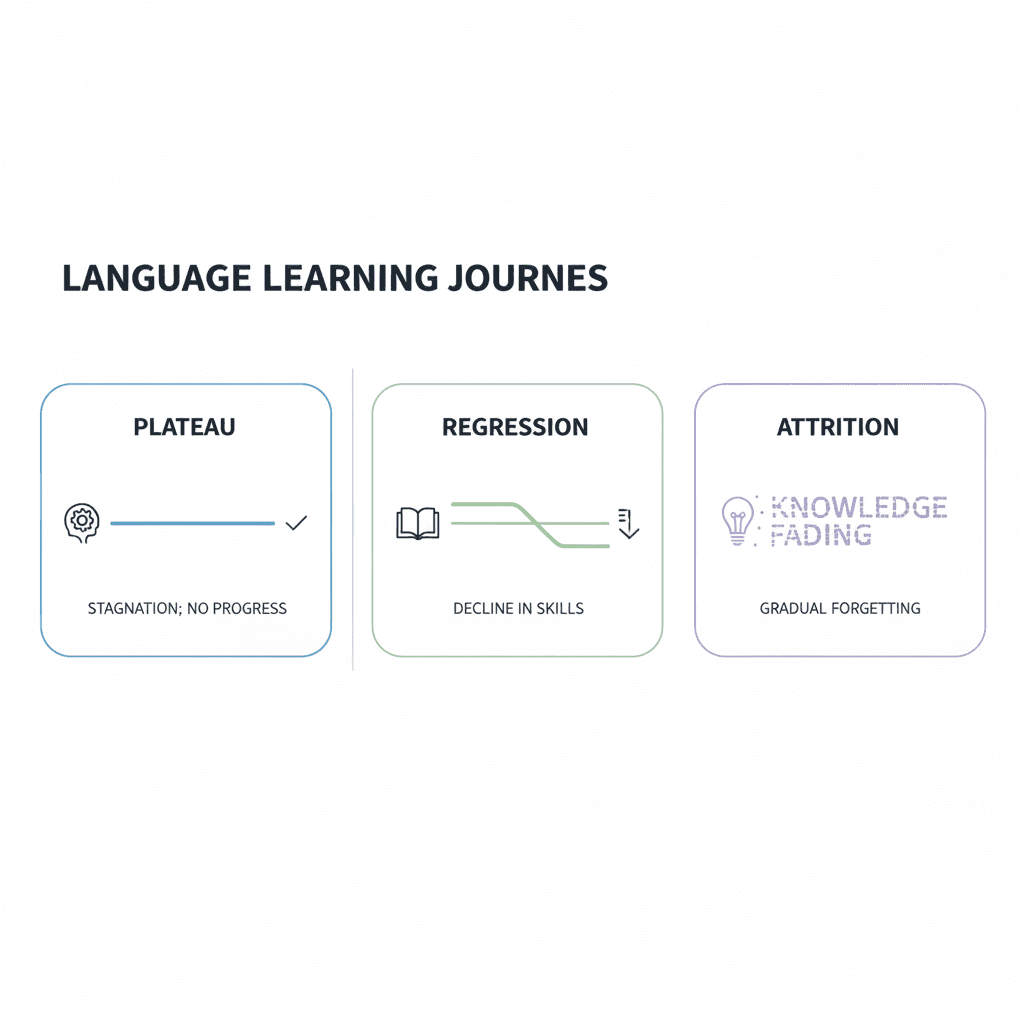
Plateau vs. Regression vs. Attrition: What's Really Happening?
To get your momentum back, it helps to understand exactly what you’re up against. The feeling of 'getting worse' can be pinned to one of three things, but they are very different. Most learners in the US, UK, and other English-speaking regions are dealing with the first two, not the third.
- •Language Learning Plateau: This is when your progress seems to stop or slow dramatically despite your continued efforts. It’s a normal phase, often hitting learners at the B1-B2 intermediate level where the path forward is less clear (Preply, 2026). You aren't getting worse; you're just not getting better as quickly as you used to.
- •Perceived Regression: This is a psychological dip. You feel like you’re getting worse due to burnout, anxiety, or a crisis of confidence. A 2026 academic study confirmed that a lack of confidence, especially in speaking, was the top factor behind students' self-assessed low proficiency. Your skills are likely stable, but your self-perception has dropped.
- •Language Attrition: This is the actual, gradual forgetting of a language due to a long period of disuse. It's a real phenomenon, but it typically happens over months or years of no contact with the language at all. Unless you've completely stopped practicing, this is probably not what you're experiencing.
For the vast majority of active learners, the problem is a plateau or perceived regression—both of which are temporary and fixable. Experts at LanguaTracker note that language learning isn't a straight line up; it's cyclical, with natural dips that allow your brain to reorganize and consolidate what you've learned. What feels like a step back is often your brain preparing for the next leap forward.
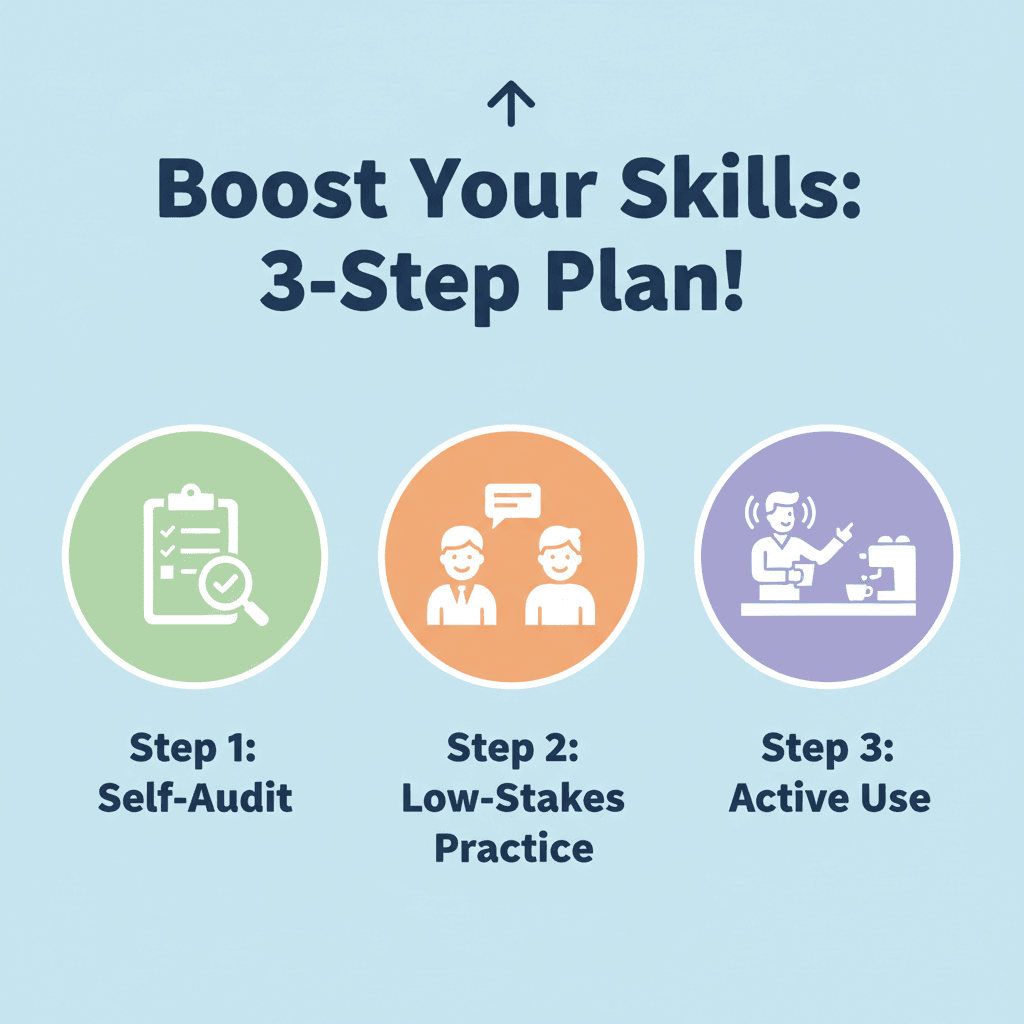
Your 3-Step Comeback Plan to Regain Momentum
Feeling stuck is frustrating, but getting out of it doesn’t require 'studying harder.' It requires studying smarter. According to Trancy (2025), the intermediate plateau can last for years without a targeted intervention. This simple 3-step plan is your intervention. It’s designed to diagnose the root cause of your slump, rebuild your confidence, and shift your entire approach to learning.
Step 1: Diagnose Your 'Why' with a Self-Audit
Before you change your routine, you need to understand what’s really causing the friction. Are you burned out? Are your goals mismatched with your methods? Take a moment to honestly answer these questions.
- •Am I burned out? Many learners experience a 'crash' of fatigue after the initial excitement wears off (Medium, 2025). If you feel exhausted just thinking about studying, burnout is a likely culprit.
- •Are my expectations unrealistic? Research on second language acquisition shows a 'U-shaped' learning curve is common. You might perform worse on a skill right after learning a more complex rule before you master it. Your dip might be a sign of your brain reorganizing knowledge.
- •Am I practicing the right things? Are you still just doing vocabulary drills? The intermediate stage requires more output (speaking and writing). If your practice is 100% passive input, you've found a key problem.
- •Is this a confidence crisis? According to a 2026 Taylor & Francis study, affective factors like anxiety and self-confidence are not just feelings; they significantly shape your learning outcomes. If you're afraid to speak, your progress will inevitably stall.
Identifying your primary roadblock—whether it’s burnout, mismatched methods, or anxiety—is the most important step. Once you know the 'why,' you can apply the right solution instead of just trying random new things.
Step 2: Rebuild Your Foundation with Low-Stakes Practice
If your self-audit revealed a confidence crisis or burnout, your immediate goal is to make learning feel easy and rewarding again. The enemy is pressure. The solution is small, consistent wins in a judgment-free environment.
Start with activities where there is zero risk of failure or embarrassment. Talk to yourself in the language. Describe the room you're in. Narrate what you’re doing as you cook dinner. The goal isn't perfection; it's simply to get the words flowing again without any internal or external judgment.
For structured, pressure-free practice, using a tool like the SpeaksyAI AI language tutor can be a game-changer. You can have open-ended conversations on any topic, get instant and private pronunciation feedback, and rebuild your speaking habits without the anxiety of being misunderstood or corrected by a person. It’s the perfect environment to apply what you know and regain your speaking footing.
Remember, research from Taylor & Francis (2026) confirms that affective factors like anxiety are major barriers to progress. By creating a safe space for practice, you are directly tackling one of the biggest obstacles to language proficiency.
Step 3: Shift From 'Studying' to 'Using'
The single biggest strategic shift for intermediate learners is moving from 'studying' the language to actively 'using' it in your daily life. A 2025 analysis on Medium highlighted this as the winning strategy for 2026: prioritize frequent, enjoyable contact with the language over intense, textbook-driven study sessions.
- •Shadow a TV show: Pick a 2-minute scene from a show on Netflix. Listen to a line, then pause and repeat it, trying to match the actor's accent and intonation. It's a powerful way to improve pronunciation and rhythm.
- •Explain your hobby: Try to explain something you love—a sport, a video game, your job—out loud in your target language for five minutes. You'll quickly discover your vocabulary gaps in a meaningful context.
- •Change the language of something you love: Switch your phone's language, your favorite video game's audio, or your GPS navigation voice. Integrating the language into your existing habits makes practice automatic.
- •Follow a recipe or tutorial: Find a simple YouTube tutorial or recipe in your target language and follow along. This connects language to a real-world task and result.
This approach works because it leverages 'distributed practice'—repeated, spaced-out exposure that research shows is far more effective for long-term memory than cramming. By turning language into a tool for entertainment and daily tasks, you make practice consistent and fun, which is the key to breaking through the intermediate plateau.
Why Your Beginner Study Methods Stopped Working
If you're frustrated that your old routine isn't delivering results, there’s a good reason for it. The methods that get you from A1 to A2 are fundamentally different from what you need to get from B1 to B2 and beyond. Your beginner methods—like flashcard apps and simple grammar drills—are designed for acquisition. They help you build a foundation of vocabulary and basic rules.
However, at the intermediate level, the goal shifts from acquisition to synthesis. It's no longer about learning more words; it's about learning how to combine the words you already know in fluid, natural, and complex ways. As noted by experts at Migaku, the 'low-hanging fruit is gone.' Progress now comes in smaller, harder-won increments that require active output—speaking and writing—not just passive input.
Relying too heavily on apps with automated feedback can even create what Lingoda calls a 'false sense of fluency.' You might get a perfect score on a quiz, but you struggle to form a sentence in a real conversation. This is the plateau in action. To break it, you have to move beyond the comfort of predictable exercises and embrace the messy, challenging, and deeply rewarding work of using the language for real communication.
Frequently Asked Questions
Frequently Asked Questions
Ready to Regain Your Speaking Confidence?
Practice speaking in a judgment-free zone with SpeaksyAI, your personal AI language tutor.
Join the WaitlistContinue reading

Stuck at B1? How to Break the Intermediate Language Plateau
Are your language skills stuck at 'good enough'? It's a common stage called the intermediate plateau. This guide provides actionable steps to break through to fluency.

The B1 to B2 Speaking System: A 12-Week Activation Plan
Stuck at the B1 intermediate plateau? This guide provides a step-by-step system to break through, helping you learn how to get from B1 to B2 speaking.