Mind Goes Blank Speaking a Language? Here’s What to Do
That heart-stopping moment when your mind goes blank mid-sentence is universal. It’s not a sign of failure, but a normal brain ‘glitch’. Here’s what to do.
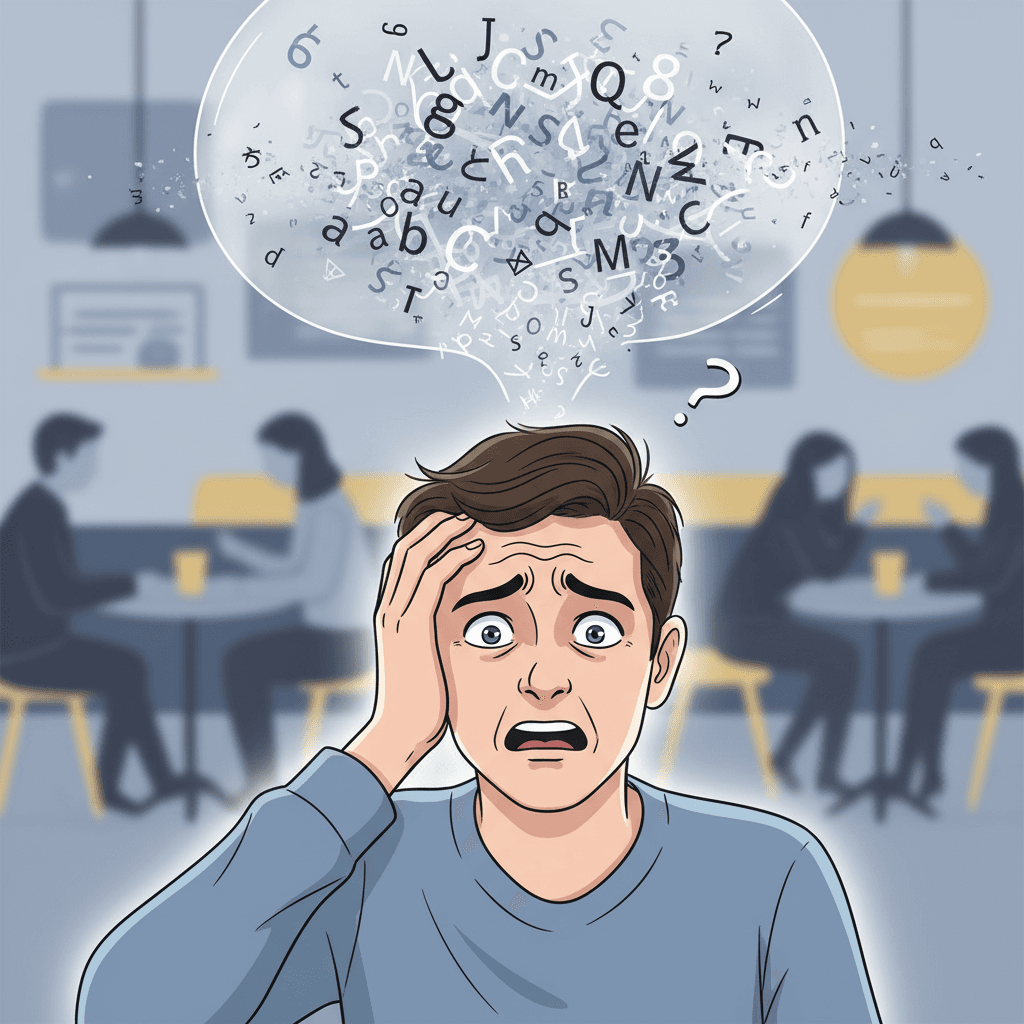
It’s a moment every language learner dreads. You’re in the middle of a conversation, feeling the flow, and then… nothing. Your mind is a complete blank. If you've ever wondered what to do when your mind goes blank speaking a foreign language, the first thing to know is that you're not alone, and there's a simple, immediate solution. We call it the P.A.R. system: Pause, Acknowledge, and Redirect. This in-the-moment technique is your first-aid kit for conversational freezes, helping you calm your brain’s panic response and gracefully get back on track. This isn't a sign of failure; it's a normal part of the journey, and learning to recover is a skill you can master.
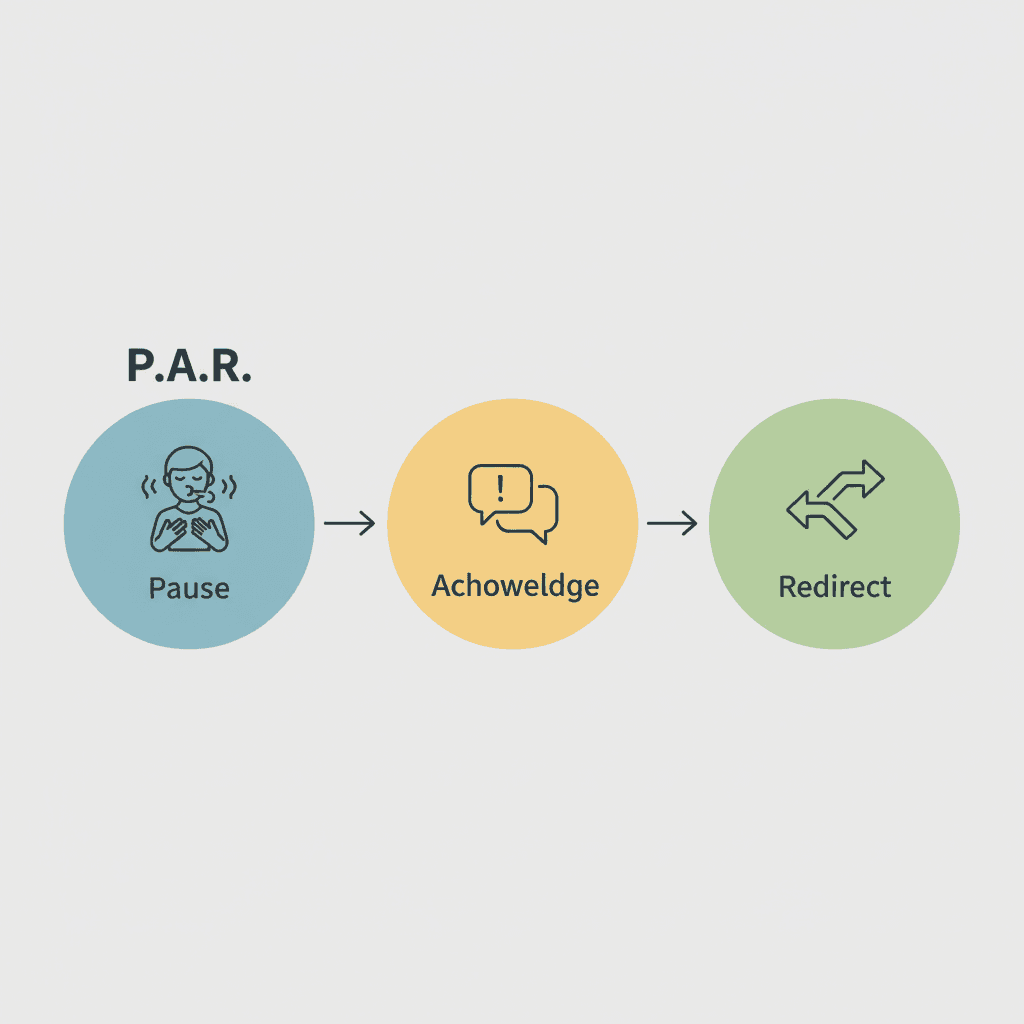
In this guide, we'll break down why this 'brain freeze' happens and walk you through the P.A.R. system step-by-step. We'll also explore long-term strategies to build the kind of resilient confidence that keeps the conversation flowing, even when you hit a bump in the road. You’ll learn how to turn these moments from panic-inducing stops into minor pauses you can handle with ease.
First, Understand Why Your Brain Goes Blank
Before you can fix the problem, it helps to understand that a mental blank isn't a personal failing or a sign you aren't 'good enough' at the language. It’s a very real, very normal physiological response. When you feel anxious or pressured, your brain can perceive speaking a new language as a high-stakes threat. This activates your amygdala, the brain's threat-detection center, triggering a 'fight, flight, or freeze' response. A forthcoming 2026 study titled Pronunciation & Confidence explains that this releases the stress hormone cortisol, which can impair your hippocampus—the part of the brain responsible for memory retrieval—literally blocking your access to the words you know are in there.
This experience is a core component of what researchers call Foreign Language Speaking Anxiety (FLSA). According to the 2025 book Blank Minds and Stuck Voices, the combination of performance pressure and a fear of being judged can cause significant cognitive disruption. Interestingly, a 2024 study in Frontiers in Psychiatry discovered that a learner’s self-perception of their language skills is a much stronger predictor of this anxiety than their actual ability. It’s the fear of making a mistake, not the mistake itself, that often causes your mind to freeze.
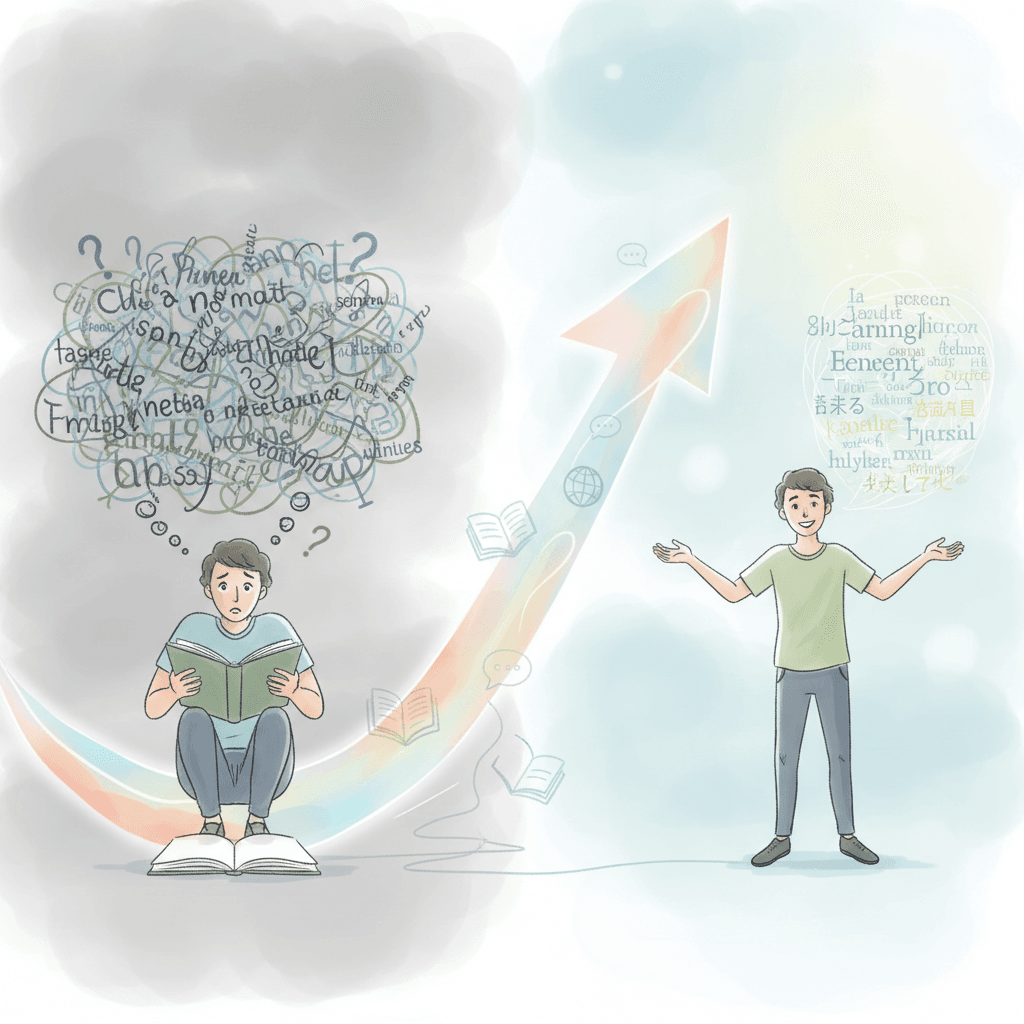
Your In-the-Moment Rescue Plan: The P.A.R. System
Okay, so your brain has hit the emergency brake. Now what? Panicking or trying to force the words out will only make it worse. What you need is a simple, repeatable plan to regain control. That's where the P.A.R. (Pause, Acknowledge, Redirect) system comes in. Think of it as your conversational first-aid. It’s a three-step process designed to break the anxiety cycle, buy you precious seconds to think, and put you back in the driver's seat of the conversation.
This system works because it directly addresses the 'Three-Job Problem' identified by language experts at Talaera: you’re trying to translate in your head, perfect the grammar, and manage your fear all at once. This cognitive overload is what causes the freeze. The P.A.R. system helps you tackle these one by one. It calms the fear, gives your brain a moment to find the words without the pressure of translation, and helps you construct a simpler, more manageable sentence. Let's break down each step.
Step 1: Pause (Don't Panic, Just Breathe)
The absolute first thing to do when your mind goes blank is… nothing. Just for a second. Resist the urge to fill the silence with 'um' or 'uh' or a panicked expression. Instead, take one deliberate, silent breath. This simple action is incredibly powerful. As experts at Talaera note, this single slow breath signals safety to your brain's alarm system, helping to bring your prefrontal cortex—the part you need for logic and language—back online. It feels like an eternity to you, but your conversation partner will barely notice a one-second pause. To them, you just look thoughtful.
For a more structured approach, you can use a technique trusted by everyone from Navy SEALs to surgeons to manage stress: Box Breathing. It’s simple and can be done discreetly in any situation.
- 1.Slowly inhale through your nose for a count of four.
- 2.Gently hold your breath for a count of four.
- 3.Exhale slowly through your mouth for a count of four.
- 4.Hold your breath again for a count of four.
Completing just one or two cycles of this can have a dramatic effect on your nervous system, calming the physiological stress response that caused the mind blank in the first place. As you exhale, consciously drop your shoulders. This physical release further reinforces the message to your brain: 'There is no danger here. We are safe.'
Step 2: Acknowledge (Buy Yourself Time with a Phrase)
Now that you've taken a breath, the next step is to verbally buy yourself a little more time. This is the 'Acknowledge' part of P.A.R. You’re acknowledging the moment of thought, not the moment of panic. This is done with a pre-prepared 'bridge phrase'. Having a few of these in your back pocket is one of the most effective strategies for how to not freeze up when speaking. It signals to your listener that you’re still engaged, just formulating your thoughts, which makes the pause feel collaborative rather than awkward.
This aligns with the 'RESET Technique' for managing mind blanks, which advises learners to 'Express a Bridge'. The key is to have a few short, natural-sounding phrases memorized so you can deploy them without thinking. Choose a few that feel comfortable for you:
- •"That's a great question. Let me think for a second…"
- •"Hmm, how can I put this in English/Spanish/etc.?"
- •"Let's see…"
- •"You know, I was just thinking about that. Basically…"
- •"The word is on the tip of my tongue."
- •"Just a moment, let me gather my thoughts."
Using one of these filler phrases for speaking does more than just manage your partner’s perception. As a 2026 Medium article notes, it gives your brain the crucial few seconds it needs to bypass the amygdala's 'freeze' response and get back to the job of retrieving vocabulary. You're not failing; you're using a professional communication tool.
Step 3: Redirect (Regain Control of the Conversation)
You've paused and bought yourself time. Now it's time to 'Redirect' and get back on track. This doesn't mean you have to magically remember the perfect, complex sentence you were originally trying to form. The goal is simply to start speaking again and regain momentum. You have several options here:
- •Simplify your sentence: Forget the complex grammar. Say the same idea in a simpler way. Instead of "I was endeavoring to articulate the socio-economic implications…", try "I think it's about money and people."
- •Describe the word you forgot: Can't remember the word 'corkscrew'? Don't panic. Describe it: "You know, the thing you use to open a bottle of wine?"
- •Ask a question: Shift the focus back to your conversation partner. "That's an interesting point. What are your thoughts on it?" This gives you a moment to listen and regroup.
- •Pivot to something you can say: If you've completely lost your train of thought, it's okay to pivot slightly. "To come back to your earlier point…" or "That reminds me of…"
Instead of freezing, try describing the word you forgot. This redirection tactic keeps the conversation flowing and is recommended as a way to work around the brain's 'threat response,' where elevated cortisol levels block vocabulary retrieval.
The key is to practice these redirection strategies so they become second nature. A 2025 meta-analysis published on ERIC confirmed that conscious intervention strategies are moderately effective at managing speaking anxiety. The more you practice redirecting in low-pressure situations, the easier it will be to do in a real conversation. This is where speaking practice, especially with patient partners or AI tools, becomes so critical.
From Coping to Confidence: Long-Term Prevention Strategies
The P.A.R. system is your emergency toolkit, but the long-term goal is to need it less and less. Building true speaking confidence means shifting from coping with freezes to preventing them. This involves building habits that make speaking more automatic and less stressful. Two of the most overlooked areas for this are improving your active listening and consistently practicing spontaneous speech.
When you're actively listening, you're not just waiting for your turn to talk; you're giving your brain a break from the 'Three-Job Problem' of translating, planning, and worrying. You absorb the rhythm of the language and pick up new phrases, which reduces your own cognitive load when it's your turn to speak. Secondly, you must practice speaking spontaneously. Many learners focus on memorizing scripts or vocabulary lists, but real conversations are messy and unpredictable. You need to train your brain to react and create language on the fly. A March 2026 study on 'Overcoming Speaking Anxiety' highlighted self-practice, self-recording, and peer support as key strategies for building this resilience.
A 2025 study from Cambridge University Press found that difficulty with vocabulary retrieval was a primary trigger for speaking anxiety. This confirms what every learner feels: the more words you have readily available, the less you'll fear getting stuck. This doesn't mean memorizing the dictionary. It means focusing on active, contextual vocabulary and practicing it until it becomes automatic. As a 2026 study from RSIS International shows, avoiding speaking situations actually hurts your performance in the long run. The only way out is through, but you can make that path much smoother with smart practice.
The Ultimate Training Ground: Practicing Recovery with an AI Tutor
Knowing what to do when your mind goes blank speaking a foreign language is one thing; having the confidence to actually do it in the moment is another. The best way to build that confidence is to practice not just speaking, but practice *recovering*. You need a safe space where you can freeze, forget a word, use a bridge phrase, and try again, all without any judgment or social pressure. This is where modern technology provides an incredible advantage.
The 'brain freeze' you experience is a physiological survival instinct, not a flaw in your character. Therefore, desensitizing yourself to the feeling in a zero-judgment environment is one of the most effective ways to build resilience. An AI conversation partner is the perfect training ground for this. You can deliberately practice the P.A.R. system. You can talk until your mind goes blank, then calmly take a breath, say "Let me see…", and try to describe the word you forgot. There's no awkwardness and no one to impress.
Practicing these recovery skills in a zero-judgment zone, like the one provided by SpeaksyAI's AI conversation partner, is invaluable. You can get instant, real-time feedback on your pronunciation and grammar, but more importantly, you can build the muscle memory for what to do when you get stuck. The language learning industry is shifting away from passive studying and towards active 'doing'. Systematically practicing recovery with an AI tutor helps build the automaticity you need for real-world conversations, turning a moment of panic into a manageable, and ultimately conquerable, part of learning.
Frequently Asked Questions
Frequently Asked Questions
Ready to Practice Without Pressure?
Build the confidence to handle any conversation. Practice speaking with the SpeaksyAI language tutor and turn mind-blanks into moments of growth.
Join the WaitlistContinue reading

Why Speaking Practice Matters More Than You Think
The gap between knowing a language and speaking it is wider than most people realise.

How to Practice Speaking a Language By Yourself (7 Methods)
Nervous about speaking? Practicing a language by yourself is a powerful way to build confidence. This guide shows you effective methods to find your voice, alone.

Comprehensible Input vs Speaking Practice: A Balanced Plan
Wondering if you should focus on comprehensible input or speaking practice? The answer isn't 'vs'—it's 'and'. Discover how to perfectly balance both to move from understanding to speaking confidently.