Hit the Intermediate Plateau? A Guide to Find & Fix Your Gap
Stuck at the B1/B2 level? The intermediate plateau is a normal, if frustrating, part of language learning. This guide helps you diagnose exactly why you're stuck and gives you actionable steps to break through and start progressing again.

Feeling stuck? If you're wondering what to do when you hit the intermediate plateau, you're not alone. That frustrating feeling where you study for hours but seem to make zero progress is a well-known stage in language learning. The good news is that it's not a dead end—it's a signpost. It’s the language's way of telling you that it’s time to change how you learn. This guide will help you diagnose your specific challenge and give you an actionable plan to break through the B1 plateau and start making real, tangible progress again.
First, Know This: The Plateau Is a Good Sign
Before we dive into solutions, let's reframe the problem. Hitting the intermediate language plateau feels like a failure, but it’s actually proof of your success and dedication. You’ve moved beyond the exciting 'beginner phase' where every new word and grammar rule felt like a massive win. Now, you’re grappling with the more subtle and complex aspects of the language—the stuff that separates 'getting by' from true, confident communication.
Think about it: you’ve already outlasted the majority of learners. According to research by Viktoria Verde, PhD, most people who start learning a language quit within the first 100 hours, often because their expectations don't match the reality of the learning curve. The fact that you’ve made it this far is an achievement in itself. This slowdown isn't a wall; it’s a natural transition. Your progress is less visible now because you're shifting from simple memorization to a more intuitive, creative grasp of the language, which is a much deeper and more rewarding skill to build.
The feeling of being stuck at an intermediate level language often arises from the shift away from simple memorization to needing creative problem-solving and a more intuitive grasp of the language.
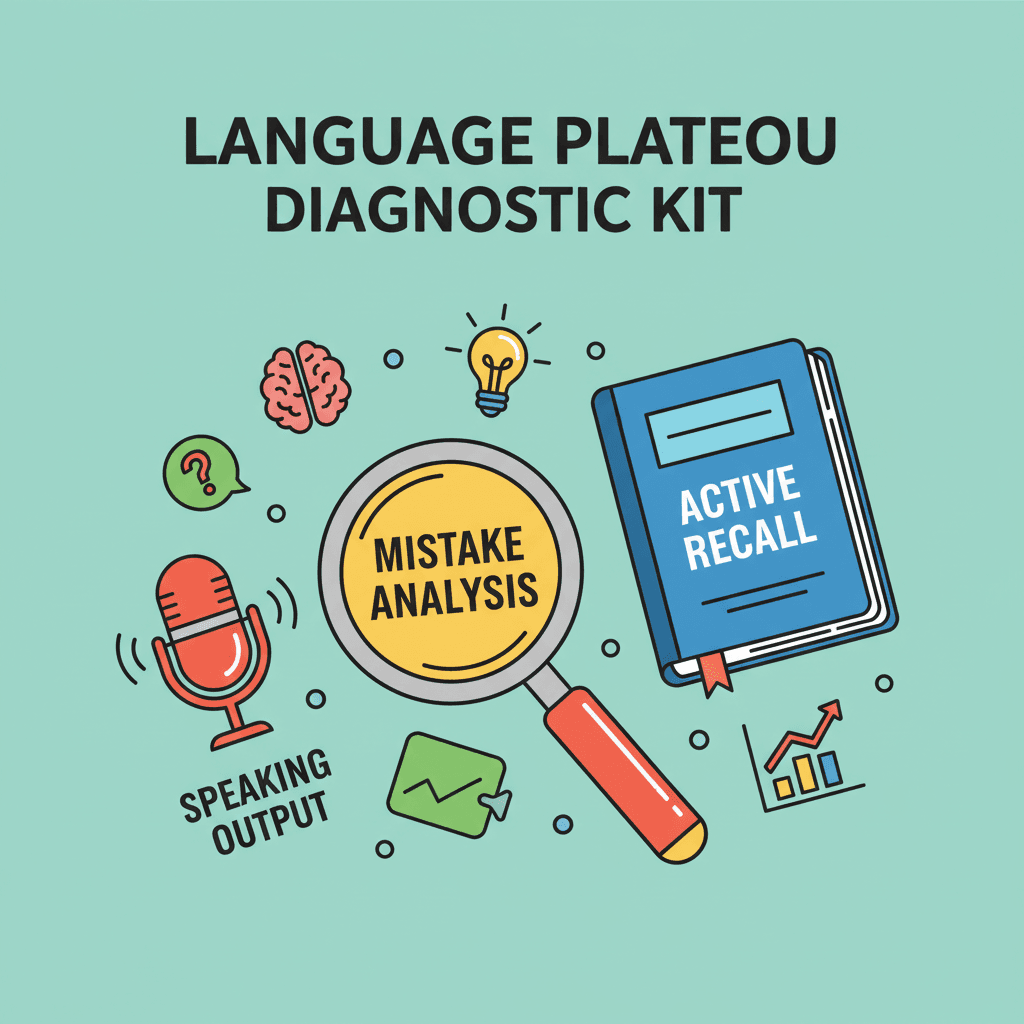
Your Diagnostic Kit: Pinpoint Your Plateau Problem
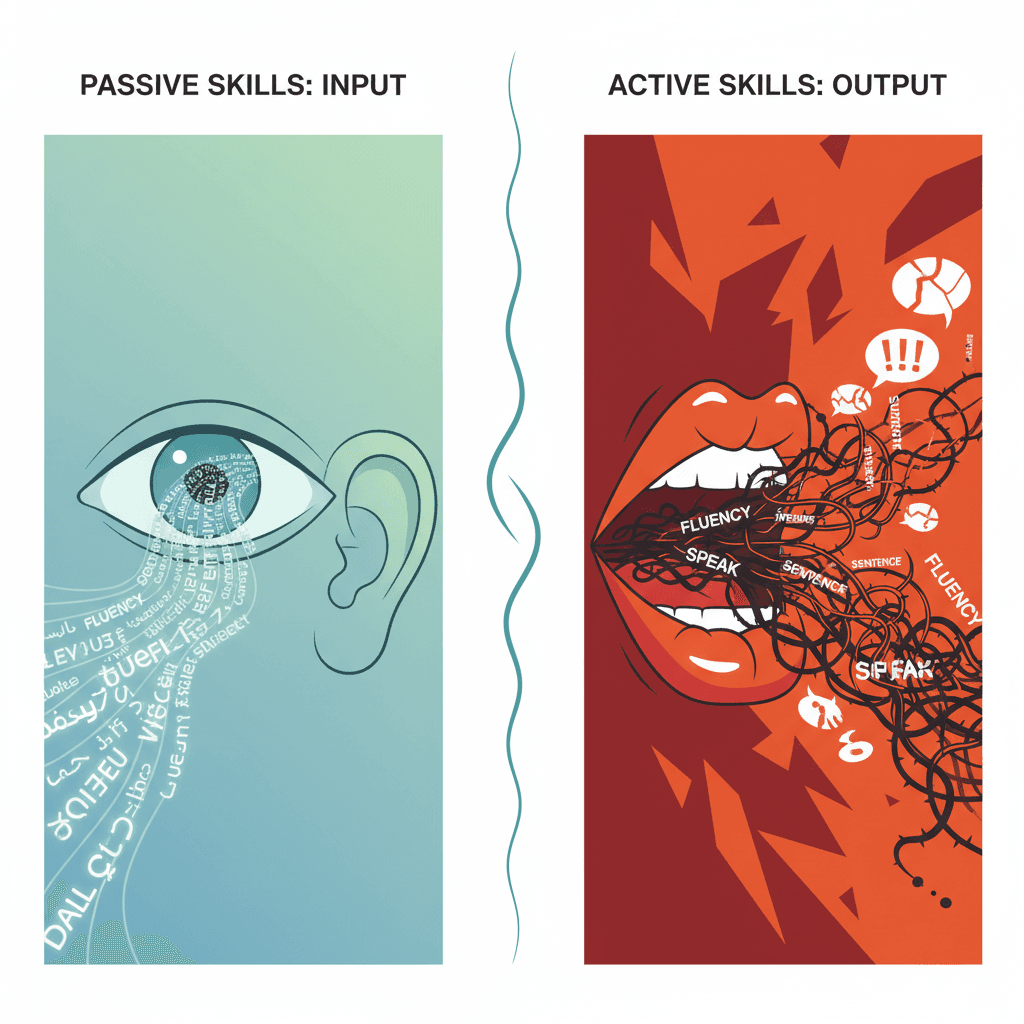
The term 'intermediate plateau' is a bit misleading. It’s not one single problem, but a symptom that can have several different root causes. Before you can find the right solution, you need to find your specific gap. Progress stalls when your study methods are mismatched with your current level. The strategies that got you to the B1 level—like basic flashcards and textbook exercises—are often not the same ones that will get you to B2 and beyond. The key is to move from passive learning (reading and listening) to active practice (speaking and writing).
Take a moment to self-diagnose. Ask yourself which of these common challenges feels most familiar. Being honest here is the first step toward getting unstuck.
- •'I understand almost everything, but I can't speak.' Your passive skills (listening, reading) are strong, but your active skills (speaking) are lagging far behind.
- •'My vocabulary isn't growing.' You can communicate your basic needs, but you struggle to find the right words to express nuanced ideas or talk about new topics.
- •'I keep making the same basic mistakes.' You know the grammar rules, but you still make simple errors with verb conjugations, prepositions, or gendered nouns in conversation.
Because skills can develop at different paces, identifying which one has stalled is critical. You don't have a 'general failure'; you have a specific, targeted weakness. Once you know which symptom you have, you can apply the right language learning plateau solutions.
Symptom: 'I Understand Everything But Can't Speak'
This is perhaps the most common frustration for intermediate learners. You can follow a podcast, watch a Netflix show with subtitles, and understand the gist of conversations around you. But when it's your turn to speak, your mind goes blank. The words are on the tip of your tongue, but they just won't come out. This is a classic gap between passive comprehension and active production skills.
The cause is often a 'comfort zone trap' where learners over-rely on passive input. Watching videos and using gamified apps feels productive, but it doesn't build the muscle memory for spontaneous speech. Fewer than one in four learners who reach the intermediate stage ever advance, largely because they can't bridge this gap. To improve intermediate language skills, you have to actively practice retrieving language, not just recognizing it. You need to train your brain to build sentences from scratch, not just understand sentences built by others. If this is your problem, it's a sign you need to rebalance your learning routine and work on how to stop translating in your head.
Symptom: 'My Vocabulary Isn't Growing'
Does it feel like you've been using the same 1,000 words for months? This is another hallmark of the B1 plateau. Often, your active vocabulary stalls because it's 'good enough' for most daily situations, so your brain stops pushing to learn more. You might recognize thousands of words when you read, but you can only recall a fraction of them when you speak.
The solution isn't just to memorize more random word lists. Research on vocabulary instruction shows that learning words in a meaningful context—like a full sentence—improves retention by 30%. Instead of isolated flashcards, focus on 'sentence mining,' where you save and study entire sentences that are interesting to you. Furthermore, studies confirm that digital learning tools using Spaced Repetition Systems (SRS) can boost vocabulary retention by up to 40%, effectively moving words from your passive knowledge to your active, usable vocabulary.
I Keep Making the Same Basic Mistakes
If you find yourself saying 'I knew that!' right after making a simple grammar mistake, you're likely dealing with 'fossilized errors.' These are mistakes that have become ingrained habits. Through repetition, your brain has created a functional but flawed 'interlanguage' that allows you to communicate, but incorrectly. A 2026 poll of over 2,000 language learners confirmed how common this is, with 65% reporting they experienced a plateau where they kept making the same basic errors.
According to one PhD in applied linguistics, a primary cause is consuming too much language without producing it. You often don't even realize you're making these mistakes until you try to speak or write. The key to fixing fossilized errors is timely, constructive feedback. A March 2026 study in ResearchGate emphasized that this feedback loop is crucial for breaking bad habits. You can record yourself speaking and compare it to a native speaker, or use a tool that provides immediate corrections. This is an area where an AI language tutor can be incredibly helpful, as it can catch those persistent errors in real time without the pressure or cost of a human tutor.
Your Action Plan: Moving From Diagnosis to Progress
Now that you've diagnosed your specific issue, it's time to build a targeted plan. The key to getting past the intermediate plateau is shifting from general, passive study to active, deliberate practice. Deliberate practice isn't just about logging hours; it's a focused effort to improve a specific skill. It involves repeated cycles of demanding performance, getting specific feedback, and making targeted repairs. Here’s how to apply this concept to each of the symptoms we've discussed.
If You Can't Speak: Build Your Active Practice Engine
The cure for a speaking plateau is simple: you must speak more. But for many, that's terrifying. The fear of judgment, of making mistakes, or of awkward silences can be paralyzing. This is why so many learners get stuck—they know they need to practice speaking, but the anxiety holds them back. The solution is to create a low-stakes, high-repetition practice environment.
This is where technology can be a game-changer. While many popular apps keep you stuck in passive exercises, new tools are designed specifically for active practice. An AI conversation partner like SpeaksyAI provides a safe, judgment-free space to build the active skills you need. You can practice responding to questions, describing pictures, or navigating real-world scenarios—all while receiving real-time pronunciation feedback and suggestions. As industry trends show, AI-powered conversational tools are becoming essential for intermediate learners who need a reliable way to get speaking practice on demand and finally build real-world confidence.
If Your Vocabulary Is Stuck: Go Deep, Not Wide
To break a vocabulary plateau, stop trying to learn hundreds of random new words. Instead, try a 'topic sprint.' For one week, focus exclusively on vocabulary related to a single subject you are genuinely interested in—like 'sustainable gardening' or 'the history of jazz music in the US.' Learn the nouns, verbs, and adjectives. Watch videos, read articles, and listen to podcasts on that topic.
Then, the crucial step: practice talking or writing about it. Explain the topic to an imaginary friend, write a short blog post, or use your AI tutor to have a conversation about it. This 'micro-topic strategy' creates dense neural connections. The words become more memorable because they exist in a rich, meaningful context that you have actively used. The goal is to build deep fluency on one specific topic at a time, which is far more effective than having a shallow understanding of many.
Frequently Asked Questions About the Intermediate Plateau
Frequently Asked Questions
Ready to Break Through?
Get on-demand speaking practice with an AI tutor to overcome the intermediate plateau and finally speak confidently.
Join the WaitlistContinue reading

Stuck at B1? How to Break the Intermediate Language Plateau
Are your language skills stuck at 'good enough'? It's a common stage called the intermediate plateau. This guide provides actionable steps to break through to fluency.

Break the Intermediate Language Plateau: A Diagnostic System
Feeling stuck at the intermediate level is frustrating but normal. This guide helps you diagnose *why* you've hit a plateau and gives you a system to break through it.