AI Tutor vs Babbel: Which Actually Improves Your Speaking?
Babbel gives you a strong foundation, but does it make you a confident speaker? We compare AI tutor vs Babbel for speaking practice to help you find your voice.
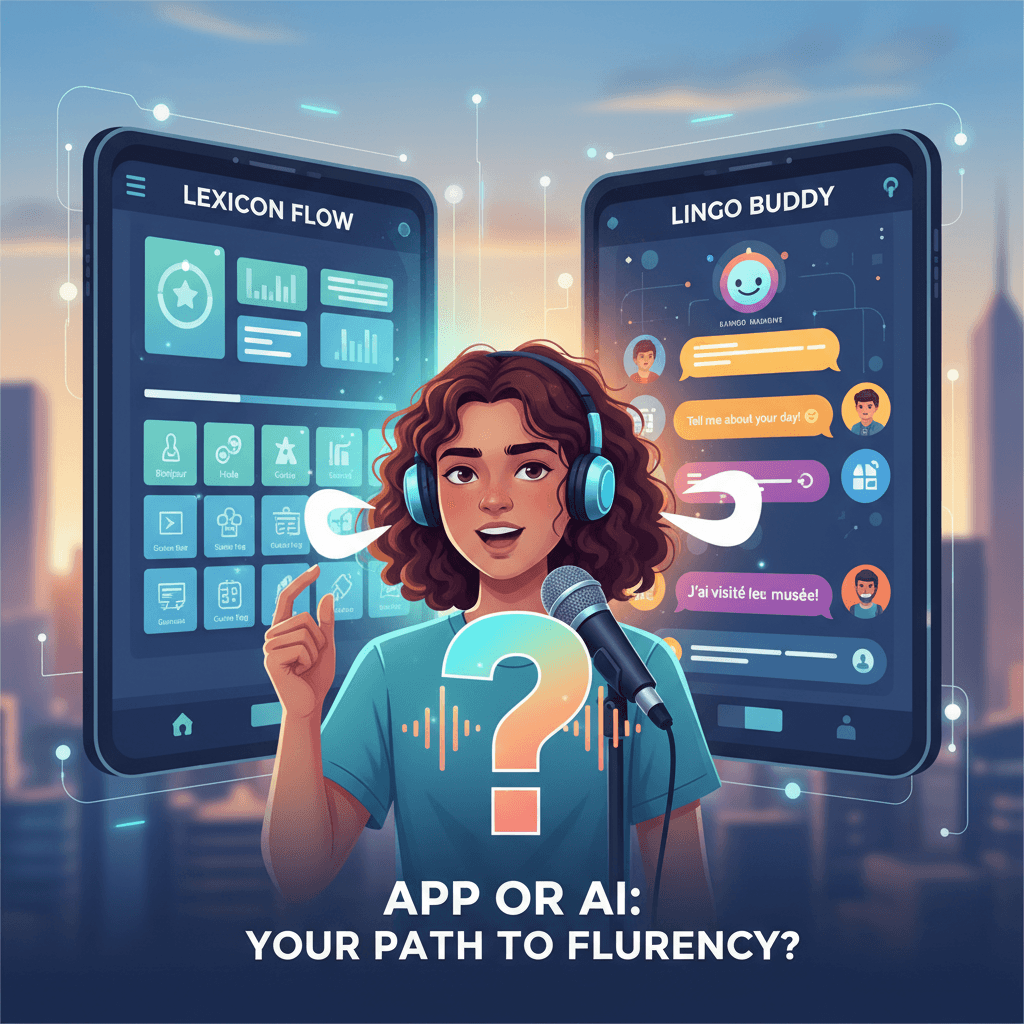
Deciding between an AI tutor vs Babbel for speaking practice can feel like choosing between two very different paths to the same goal: fluency. The truth is, it’s not a simple one-or-the-other choice. Babbel is a powerhouse for building a solid foundation with structured, expert-designed lessons. It gives you the grammar and vocabulary—the essential ingredients. An AI language tutor, on the other hand, is like a patient conversation partner, available 24/7 to help you actually use those ingredients, practice generating your own thoughts, and learn to speak confidently in a safe, unscripted environment. The best approach often involves using both, but for different stages of your journey.
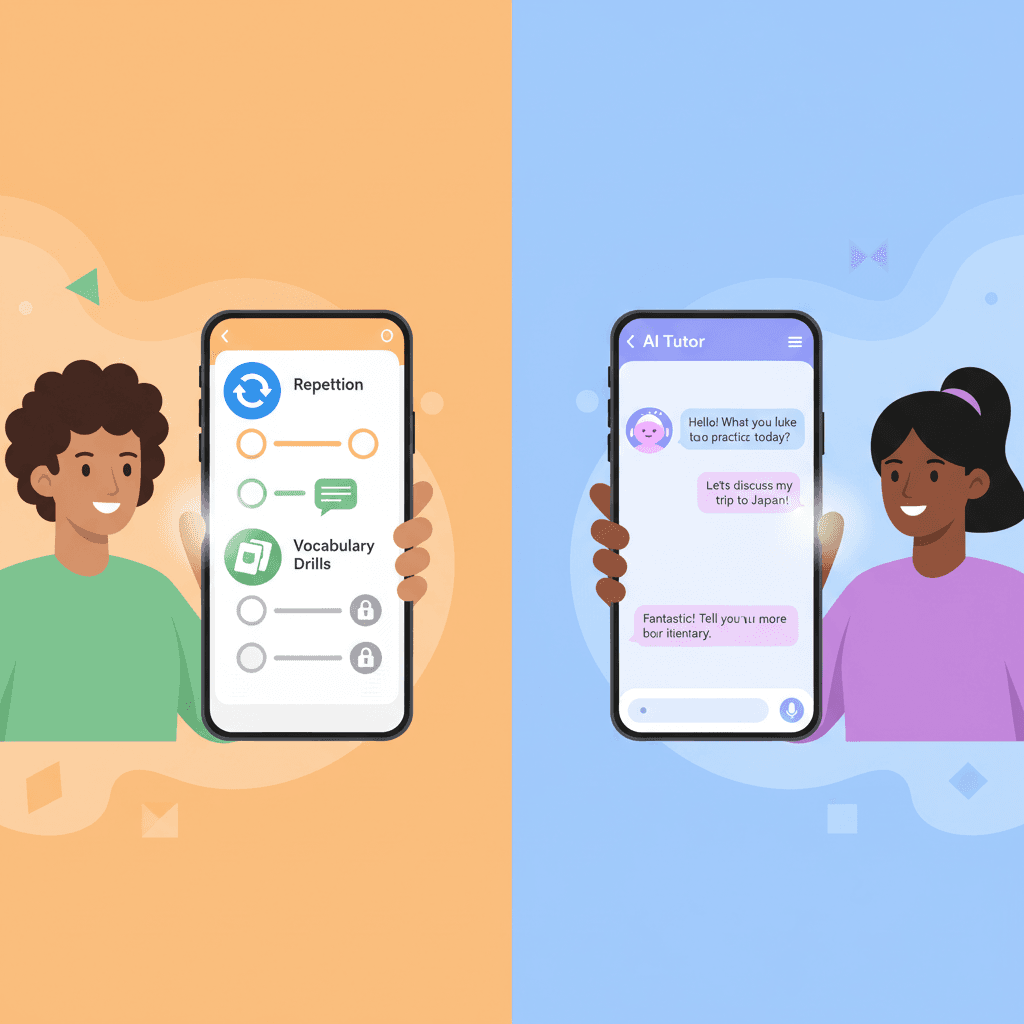
This guide will break down the crucial differences between these two types of tools. We'll compare how each one handles speaking practice, pronunciation feedback, and the all-important factor of speaking anxiety. By the end, you'll have a clear understanding of which tool is right for you right now, and how to combine them to accelerate your journey to confident, natural speech.
The Core Difference: Structured Lessons vs. Spontaneous Chat
The fundamental difference between Babbel and an AI tutor lies in their core philosophy. Babbel’s strength is its human-designed, linear curriculum. As multiple reviews point out, it provides expertly crafted, structured lessons that systematically build your vocabulary and grammar knowledge. Think of this as carefully learning the ingredients and reading a recipe. You learn what goes into a language, one piece at a time, in a logical order. This method is incredibly effective for building a strong base from scratch.
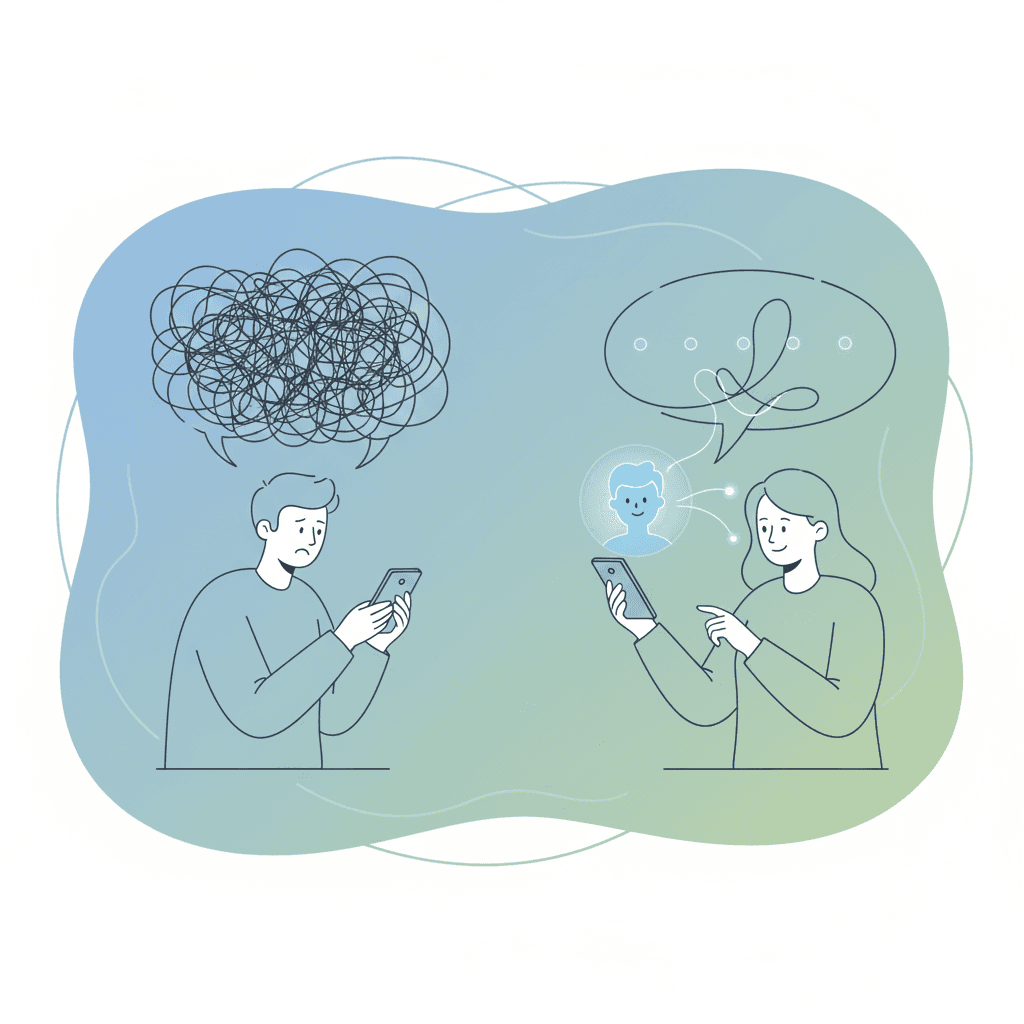
An AI tutor, in contrast, offers what some experts call an 'infinite conversation space.' Instead of following a fixed curriculum, you lead the conversation. This is where you move from merely knowing the ingredients to actually learning how to cook. The focus shifts from repeating correct phrases to generating your own unique thoughts and sentences. According to industry analysis, this ability to practice spontaneous speech is the critical bridge between passive knowledge and active fluency. It's the difference between recognizing a word and being able to use it yourself in a real discussion.
This distinction is leading to a major trend where learners supplement structured apps like Babbel with AI conversation partners. A 2025 study titled “Speaking English with AI or humans” found that while AI chatbots significantly improve speaking skills, student engagement can sometimes decline over time compared to practicing with human peers. This highlights the importance of using AI tutors for targeted, high-intensity practice sessions to build confidence before you enter real-world conversations.
Speaking Practice Face-Off: How Each Tool Works
Babbel's Speaking Practice: Repetition and Recognition
When it comes to Babbel speaking practice, the experience is tightly integrated into its lessons. You’ll encounter drills where you listen to a phrase and then repeat it. The app’s speech recognition technology then tells you if you said it correctly. With the 2025 launch of its 'Babbel Speak' feature, the app now guides users through scripted conversation scenarios. While this is a step towards interactivity, a 2026 review noted the experience is still “guided and repetitive rather than offering open-ended AI conversation.” It’s designed to reinforce the specific vocabulary and grammar you just learned in the lesson.
An AI Language Tutor's Approach: Open-Ended Conversation
An AI language tutor takes a completely different approach. The entire experience is the speaking practice. Instead of repeating scripted lines, you engage in open, unscripted conversation. You can role-play ordering a coffee, navigating a job interview, or simply debate the latest movie you watched. As one analysis described it, the technology works in a powerful loop: your speech is converted to text, the AI model generates a relevant reply, and that reply is spoken back to you. This forces you to actively produce real sentences, not just recognize them, which is a far more effective way to build speaking muscle.
This speaking-first methodology is a key differentiator when looking at a Babbel vs Duolingo AI comparison as well. While legacy apps are layering AI features onto their existing lesson frameworks, newer AI tutors are built from the ground up around conversational AI. This means every minute you spend in the app is a minute spent speaking, which is crucial for making rapid progress. A 2025 meta-analysis of 46 studies confirmed this, finding AI has a significant positive effect on language learning, with the largest gains seen specifically in speaking proficiency.
The Psychological Factor: Which Lowers Speaking Anxiety?
One of the biggest hurdles in language learning isn’t grammar or vocabulary—it’s fear. The fear of making a mistake, of being judged, or of freezing up in a real conversation. This speaking anxiety is a powerful barrier, and choosing a tool that helps you overcome it is critical for long-term success.
Babbel’s drill-based system, with its constant right/wrong feedback, can feel like a test. While this is effective for memorization, it can also create pressure to be 'perfect.' For many learners, this pressure contributes to the very anxiety they are trying to overcome. If every interaction is graded, it doesn't feel like a safe space to experiment and make the inevitable mistakes that are part of learning.
Research strongly supports the idea that AI tutors excel at creating this safe space. A June 2026 study on using ChatGPT as a speaking partner found it significantly reduced learners' communication apprehension and fear of negative evaluation. Incredibly, after practicing with the AI, the percentage of students reporting high speaking anxiety dropped to zero. This is because an AI partner provides a private, judgment-free zone where you can pause, think, make a mistake, and get corrected without any social risk. And remember, every conversation is a step forward, no matter how small! Each chat is a quiet victory for your confidence.
Pronunciation Feedback: Isolated Drills vs. Conversational Context
Getting your pronunciation right is key to being understood. Both Babbel and AI tutors offer pronunciation feedback, but they deliver it in very different ways. Babbel's approach, as noted in a 2026 LingQ review, uses voice recognition to check if you can correctly recite a specific, pre-written phrase from a lesson. It’s a binary check: did you say this exact phrase correctly? Yes or no. This is useful for mastering individual sounds and words in isolation.
An AI tutor provides feedback in a much more dynamic and practical context. As you speak freely, the AI can offer real-time corrections on your unique, spontaneously generated sentences. This is far more powerful. A 12-week study published by Taylor & Francis in 2025 found that students using AI conversational chatbots for practice saw a 15-point mean increase in their phonetic accuracy. Getting feedback in the flow of a real conversation helps you improve not just individual sounds, but also the rhythm, intonation, and flow of natural speech.
Furthermore, research in Contemporary Educational Technology has shown that Computer-Assisted Pronunciation Training (CAPT) can lead to better performance precisely because it helps reduce the anxiety associated with being corrected. When the feedback comes from a patient AI instead of a person, you're more likely to absorb it and try again. This aligns with the popular trend of learners using apps like Babbel to build a foundational understanding, then 'graduating' to an AI partner to apply that knowledge in a practical speaking environment.
Beginner Foundation vs. Intermediate Fluency: Who Are They For?
So, who should use which tool? The answer depends entirely on where you are in your language learning journey.
- •Choose Babbel if you're a beginner (A0-A2). If you're starting from scratch, Babbel's structured, curriculum-first approach is an excellent choice. It will give you the solid foundation in grammar and vocabulary that you absolutely need before you can start forming complex sentences on your own.
- •Choose an AI Tutor if you're an intermediate learner (B1+). If you already know hundreds of words and understand the basic grammar but struggle to speak, you are the perfect candidate for an AI tutor. This tool is designed specifically to help you overcome the dreaded intermediate plateau by activating the knowledge you already have and helping you learn to speak confidently.
Think of it this way: you wouldn't try to have a deep conversation in a new language without first learning basic words like 'hello' and 'thank you.' Babbel teaches you those words and rules. But you also wouldn't become a fluent speaker by only reciting flashcards. An AI tutor is the tool that gets you off the flashcards and into the conversation.
The Hybrid Strategy: How to Use Babbel and an AI Tutor Together
The most effective language learners in 2026 don't choose one tool; they build a personalized toolkit. Experts and industry trend reports agree that a hybrid strategy—combining a structured course like Babbel with an AI conversation partner—is the fastest path to fluency. This approach allows you to get the best of both worlds: structured knowledge and practical application.
- 1.Step 1: Build Your Foundation with Babbel. Dedicate time each day to Babbel's lessons. Your goal is to build a core vocabulary of at least 500-1,000 words and get a handle on the fundamental grammar structures (like verb conjugations and sentence order).
- 2.Step 2: Activate Your Knowledge with an AI Tutor. Once you have that foundation, start short, 15-minute daily conversations with an AI partner. Don't worry about being perfect. The goal is just to talk. Try role-playing a scenario you just learned in Babbel, like ordering at a restaurant.
- 3.Step 3: Create a Powerful Feedback Loop. This is the most important step. Did you just finish a Babbel lesson on the past tense? Your mission for your next AI conversation is to tell a short story about your weekend, using the past tense as much as possible. This immediately transfers passive knowledge into an active skill.
This is where a dedicated AI conversation partner like SpeaksyAI's AI tutor becomes your secret weapon. You can take an abstract grammar rule from a Babbel lesson and immediately test it in a low-pressure, unscripted chat on any topic that interests you, from your career to your favorite TV show. According to a 2025 study in PMC, while AI is excellent for fluency, it's a complement to—not a replacement for—structured content that provides cultural and contextual information, making this hybrid model incredibly effective.
The Verdict: The Best Tool for Actually Speaking
So, when it comes to the contest of an AI tutor vs Babbel for speaking practice, what’s the final verdict? It’s not about which tool is universally 'better,' but which tool is best for the specific job of improving your spoken fluency.
For building a foundational knowledge from zero, Babbel is a top-tier choice. Its structured, expert-designed curriculum, which relies on proven methods and fill-in-the-blank style exercises, is one of the most effective ways to learn the building blocks of a language.
However, for the specific goal of improving your ability to speak spontaneously, confidently, and naturally, an AI tutor is the undisputed winner. As multiple reviews show, tools with a 'speaking-first' design are superior for this task because they maximize your active speaking time. The data backs this up: a 2026 study found that learners using an AI tutor improved their CEFR speaking scores 1.4 times faster than Babbel AI users, thanks to the intense focus on active speech production.
Ultimately, the smartest strategy is to combine them. Use Babbel to gather your ingredients, then graduate to an AI tutor to learn how to cook. This two-step approach addresses both knowledge gaps and confidence gaps, paving the most direct and encouraging path to finally speaking a new language.
Frequently Asked Questions: AI Tutor vs. Babbel
Frequently Asked Questions
Ready to Turn Knowledge into Conversation?
SpeaksyAI is the judgment-free space to practice speaking about what you love, with instant feedback on your fluency.
Join the WaitlistContinue reading
ChatGPT vs. AI Tutor: Which Is Better for Speaking Practice?
Is ChatGPT a good tool for speaking practice, or should you use a dedicated AI language tutor? This guide breaks down the difference to help you choose.
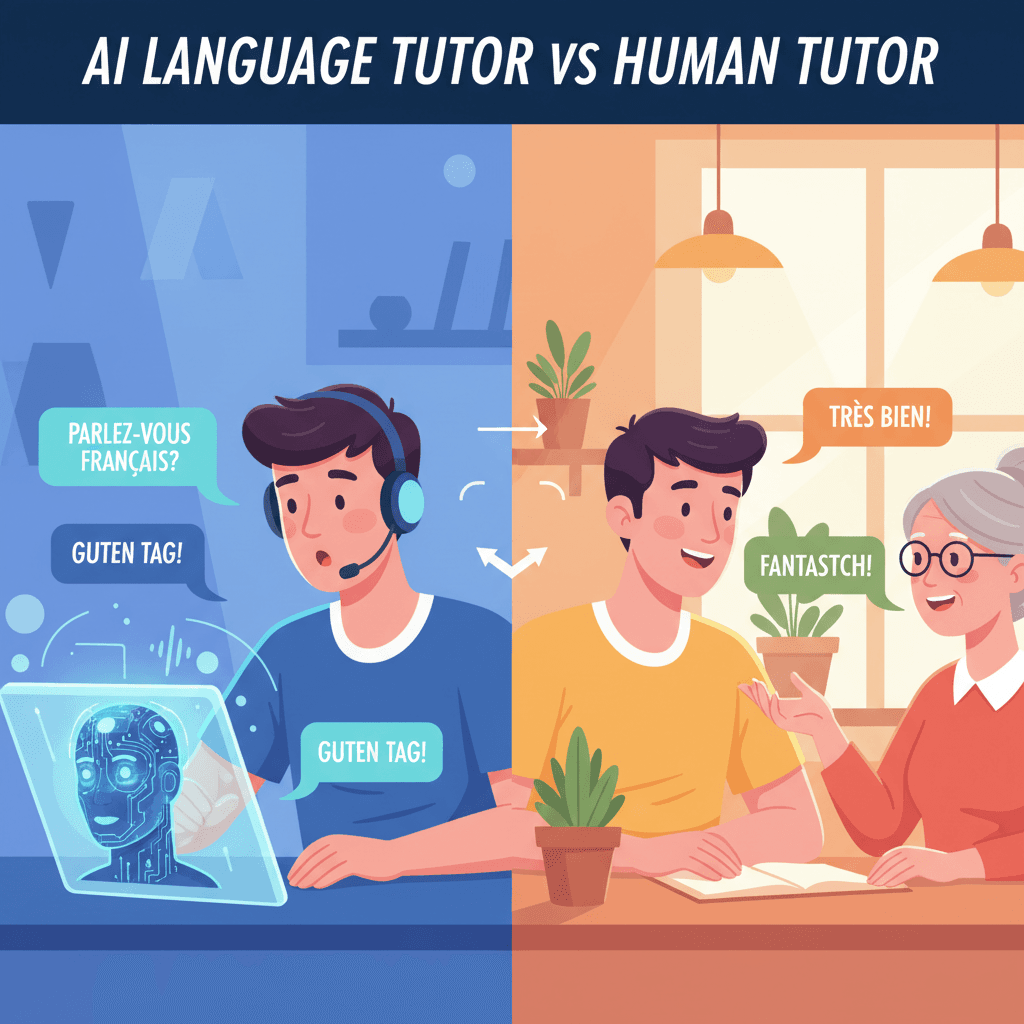
AI Language Tutor vs Human Tutor: Which Is Right For You?
Deciding between an AI language tutor and a human one is about more than cost. It's about your goals, personality, and confidence. Let's find the right path for you.
How to Overcome Fear of Speaking a New Language With an AI
The fear of speaking a new language is real, but so is the solution. Forget 'just start speaking'—discover how an AI language tutor provides a safe, judgment-free space to practice.