ChatGPT vs. AI Tutor: Which Is Better for Speaking Practice?
Is ChatGPT a good tool for speaking practice, or should you use a dedicated AI language tutor? This guide breaks down the difference to help you choose.
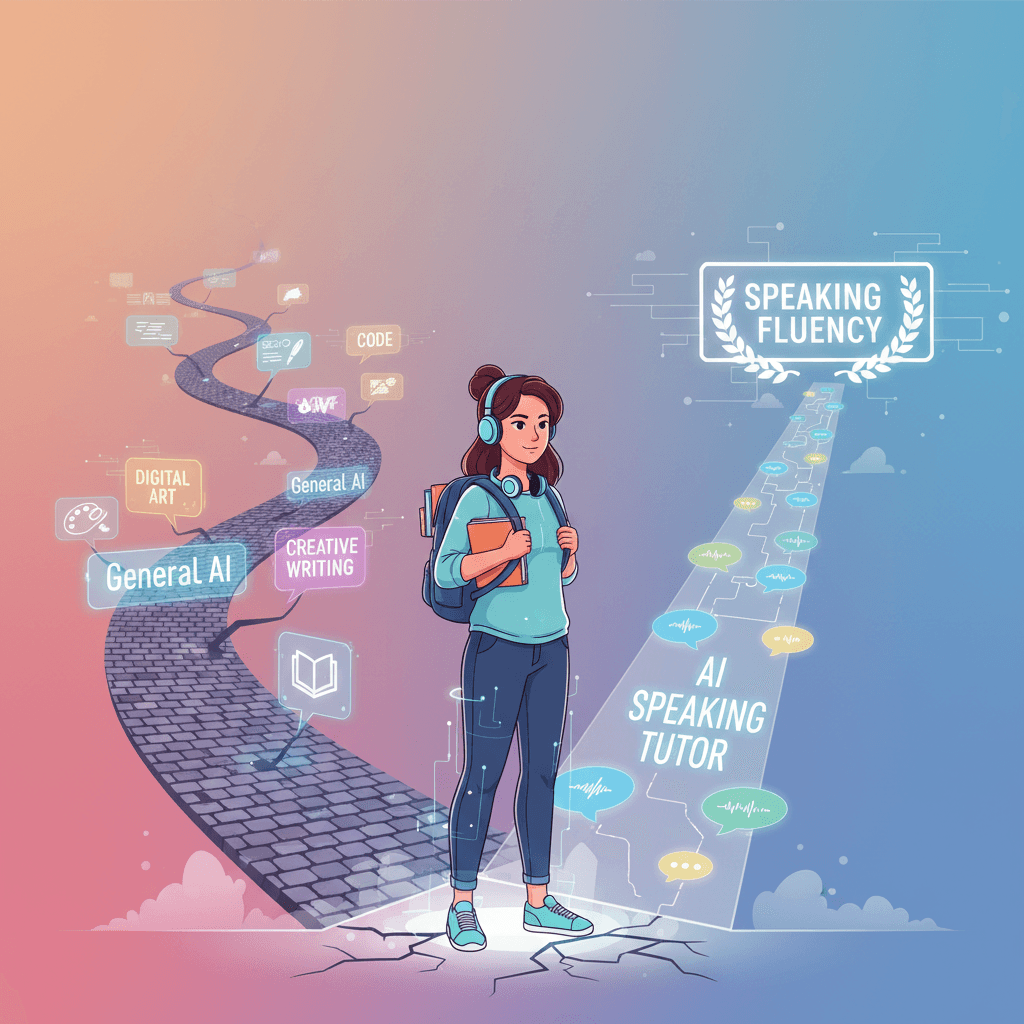
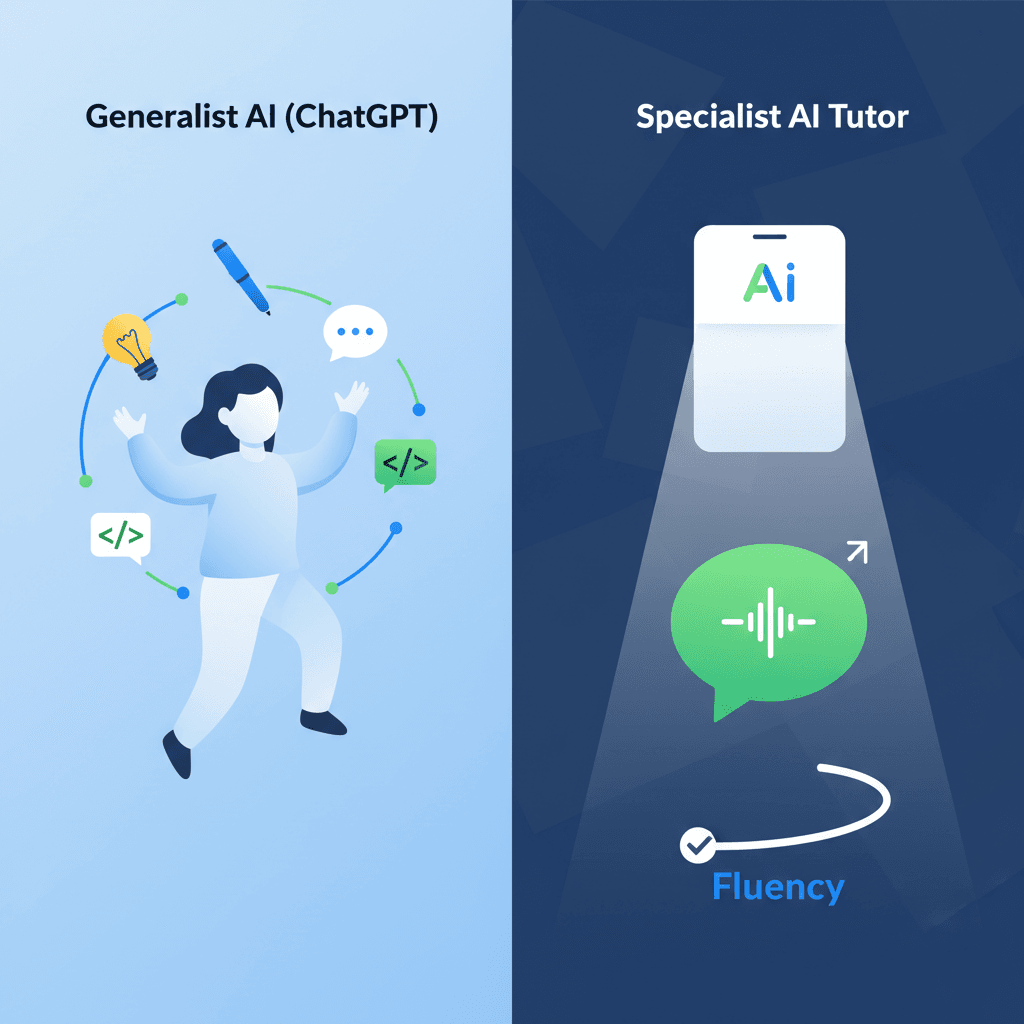
You're ready to practice speaking a new language, and you've heard AI can help. That brings up a crucial question for many learners today: Is ChatGPT or an AI tutor better for speaking practice? The short answer is that a dedicated AI tutor is the superior tool for building speaking skills, while ChatGPT is a powerful supplement. But to truly understand which is right for you, it helps to think of it as a choice between a generalist and a specialist.
ChatGPT is a brilliant generalist—an all-purpose tool that can write code, plan trips, and, yes, have a conversation in another language. An AI language tutor, on the other hand, is a specialist. It's an application built from the ground up by language experts with one single goal: to make you a more confident speaker. This guide will give you a clear, evidence-based breakdown of what each tool can do, helping you choose the right one to achieve your goals.
The Big Question: Generalist AI or Specialist Tutor?
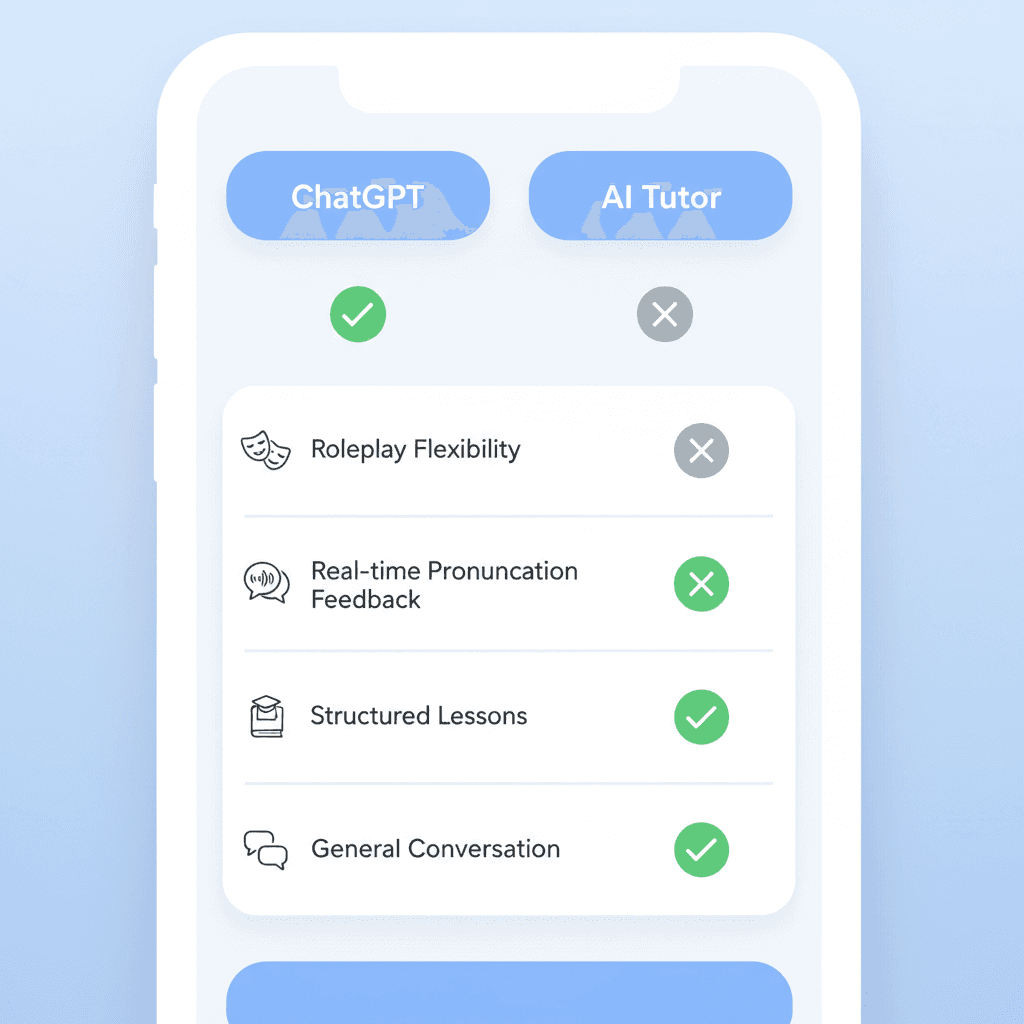
The core difference comes down to pedagogy—the method and practice of teaching. A specialist AI tutor is designed with a curriculum. It remembers your level, tracks your vocabulary, and guides you through a structured learning path. As language experts point out, this long-term memory and built-in path are what help you build sustainable habits and achieve steady progress. With a generalist tool like ChatGPT, you have to re-establish the context and your learning goals in every single session.
That's not to say ChatGPT isn't effective. Far from it. A fascinating 2026 study published by the Science Publishing Group found that Iranian English learners using ChatGPT for speaking practice showed significantly greater gains in oral proficiency compared to a control group practicing with human partners. This shows that the raw conversational power of generative AI is a massive asset for learners. It provides a non-judgmental space to practice, which a June 2026 study confirmed boosts speaking confidence.
So, the question isn't whether ChatGPT *can* help—it's about how it helps. It's an incredible support tool for generating practice scenarios, getting quick grammar explanations, and having casual conversations. But for the structured, feedback-driven practice needed to systematically improve, a specialist tool often holds the edge. Let's dig into the specifics.
What Can ChatGPT *Actually* Do for Your Speaking Practice?
Using its voice mode, ChatGPT can become a nearly infinite conversation partner. You can talk about any topic under the sun, from your daily routine to the intricacies of space exploration. This is its greatest strength: endless, flexible conversation. You can also get creative and ask it to role-play specific scenarios. This is where a bit of prompt engineering comes in handy.
This ability to generate custom scenarios on the fly is incredibly powerful. Research backs this up; a 2026 study found that using ChatGPT helped 80% of student participants achieve top scores in skill enhancement, particularly in acquiring new vocabulary and using language appropriately. It's a fantastic sandbox for trying out new words and phrases you've learned.
However, ChatGPT has significant weaknesses when it comes to dedicated speaking practice. The most critical are:
- •No Structured Curriculum: The learning journey is entirely on you. You have to decide what to practice, how to practice it, and how to increase the difficulty. This lack of a guided path can be overwhelming for beginners and makes it hard to ensure you're covering all the necessary skills.
- •No Pronunciation Feedback: While you can speak to ChatGPT, it can't tell you *how* you're speaking. The standard version doesn't provide the instant, specific pronunciation feedback that is crucial for sounding clear and natural. This is a major gap, as learners have no way of knowing if they are reinforcing bad pronunciation habits.
- •It's Passive: ChatGPT waits for you to lead. A great teacher or tutor actively guides the conversation, introduces new concepts, and pushes you out of your comfort zone. With ChatGPT, the burden is on you to maintain the conversational momentum and educational focus.
How a Dedicated AI Tutor Builds Speaking Skills
This is where the specialist shines. A dedicated AI language tutor is engineered with one purpose: to improve your speaking. Unlike a general-purpose AI, these tools are built on a pedagogical foundation designed by language learning experts. They focus on the specific features that studies show are critical for progress.
First and foremost is the structured curriculum. An AI tutor app guides you from one level to the next. It knows what you've learned and what you need to work on next. A December 2025 study in PMC highlighted that AI-driven speaking apps significantly boost oral proficiency precisely because they personalize lessons and provide instant, data-driven feedback on your pronunciation, fluency, and speech rate in real-time.
This instant, granular feedback is the second key advantage. An AI conversation partner from a platform like SpeaksyAI uses sophisticated speech recognition to analyze your words at the sound level. It can tell you if your 'r' is rolled correctly in Spanish or if your 'th' sound in English is on point. Many can even remember your past mistakes to tailor future sessions, a key feature that generalist chatbots lack.
The 'infinite patience' of an AI language tutor creates a safe, non-judgmental practice space, which is proven to boost speaking confidence in learners.
Finally, these apps are designed to feel like a real conversation while still being a lesson. They actively lead you through realistic role-play scenarios—like checking into a hotel or talking to a coworker—without you needing to write a complex prompt. This creates a focused, guided experience where you can practice speaking alone and build the confidence you need to talk to real people in your target language, whether you're in the US, UK, Australia, or Canada.
Feature-by-Feature: ChatGPT vs. AI Language Tutors
Let's break down the key features you need for effective speaking practice and see how each tool stacks up.
- •Pronunciation Feedback: An AI Tutor is the clear winner. They are built specifically for this, offering real-time, phoneme-level corrections. ChatGPT offers no pronunciation feedback.
- •Structured Curriculum: AI Tutors provide a guided learning path, from beginner lessons to advanced scenarios. With ChatGPT, you must create your own curriculum from scratch for every session.
- •Guided Role-Plays: While ChatGPT can role-play with a good prompt, AI Tutors have built-in libraries of realistic scenarios designed by experts to teach specific vocabulary and grammar, making practice seamless.
- •Progress Tracking: AI Tutors remember your performance, track your vocabulary, and show you how you're improving over time. ChatGPT has no long-term memory for your language learning journey.
- •Hands-Free Conversation: AI Tutors are designed for voice-first, hands-free conversation. You just talk. ChatGPT's voice mode is good, but it's not as fluid and often requires more manual interaction.
- •Ease of Use (for Beginners): For someone just starting, an AI Tutor is much easier to use. It takes the guesswork out of what to do next. ChatGPT requires more self-direction and can be intimidating.
Cost Breakdown: What's the Real Price of Practice?
Cost is always a factor, and at first glance, ChatGPT's free version seems unbeatable. However, it's important to look at the value you receive for the price.
- •ChatGPT (Free): This is a great starting point for text-based practice or simple, self-directed conversations. However, it's the most limited option and lacks the guided sessions, tracking, and corrections needed for serious improvement.
- •ChatGPT Plus ($20/month): For those already subscribed, this is a very capable tool. You get faster responses and access to the latest models, making for a better conversation partner. But you're still the one doing all the work of directing your learning.
- •AI Tutor Apps ($15-$25/month): Most dedicated AI tutor apps operate on a similar subscription model. This price gives you access to their full suite of features: the structured curriculum, detailed pronunciation analysis, progress tracking, and a full library of lessons.
When you frame it as an investment in your skills, the value proposition changes. While ChatGPT is cheaper (or free), experts suggest that specialized tutors deliver a higher 'cost per unit of educational outcome.' You simply get more targeted learning for your time and money. For example, some analyses show that an AI tutor subscription can break down to just $0.67-$0.80 per hour of active speaking practice—a tiny fraction of the $8 to $50+ per hour you'd pay for a human tutor.
The Verdict: Which Tool Is Right for Your Learning Goals?
So, after comparing the features, pedagogy, and cost, we can come to a clear conclusion. The best tool depends entirely on your current level and your specific goals.
- 1.For Beginners and Low-Intermediates: A dedicated AI tutor is the superior choice. When you're building your foundation, you need structure, guidance, and immediate correction to avoid forming bad habits. An AI tutor provides a clear path and the real-time pronunciation feedback that ChatGPT lacks, which is essential at this stage.
- 2.For Upper-Intermediates and Advanced Learners: ChatGPT can be an excellent and affordable supplementary tool. At this level, you have the skills to guide a conversation and may want to practice more freely. You can use it to debate complex topics or practice specific professional scenarios, as long as you're skilled at writing effective ChatGPT prompts for language learning.
It's important to remember that while the 2026 study showed impressive gains for learners using ChatGPT, achieving those results requires significant effort and self-direction. In contrast, AI tutors are designed to do the heavy lifting of guiding the lesson for you. As a 2025 Stanford-led study noted, AI tutors that guide a student's reasoning lead to better learning outcomes than AI that simply gives answers—a role ChatGPT often defaults to.
How to Use Both Tools Together for Maximum Progress
You don't have to choose just one. The smartest learners use a combination of tools to create a well-rounded practice routine. Here’s a simple but powerful strategy:
- •Use ChatGPT for 'Prep Work': Think of ChatGPT as your personal language learning assistant. Use it for tasks like: generating a list of vocabulary for a specific topic (e.g., 'give me 10 essential words for a business meeting'), explaining a confusing grammar rule, or drafting a short paragraph you want to practice saying.
- •Use an AI Tutor for 'Performance': This is where you do the core work of speaking. Take the vocabulary list from ChatGPT and use it in a guided role-play within your specialist AI tutor app. The app will provide the structured environment and pronunciation feedback needed to truly master the material. This leverages the tutor's purpose-built features for sound-level analysis and adaptive learning.
This dual-tool approach gives you the best of both worlds. You get the infinite creativity and knowledge of a generalist AI combined with the structured, feedback-rich environment of a specialist tutor. This method directly addresses the main reasons learners quit—like slow progress or forgetting words—by providing a clear path for practice and improvement. It's a modern, effective way to build real speaking confidence.
Frequently Asked Questions
Frequently Asked Questions
Ready for a Specialist AI Language Tutor?
Stop just chatting. Start building real speaking skills with structured lessons and instant pronunciation feedback from SpeaksyAI.
Join the WaitlistContinue reading
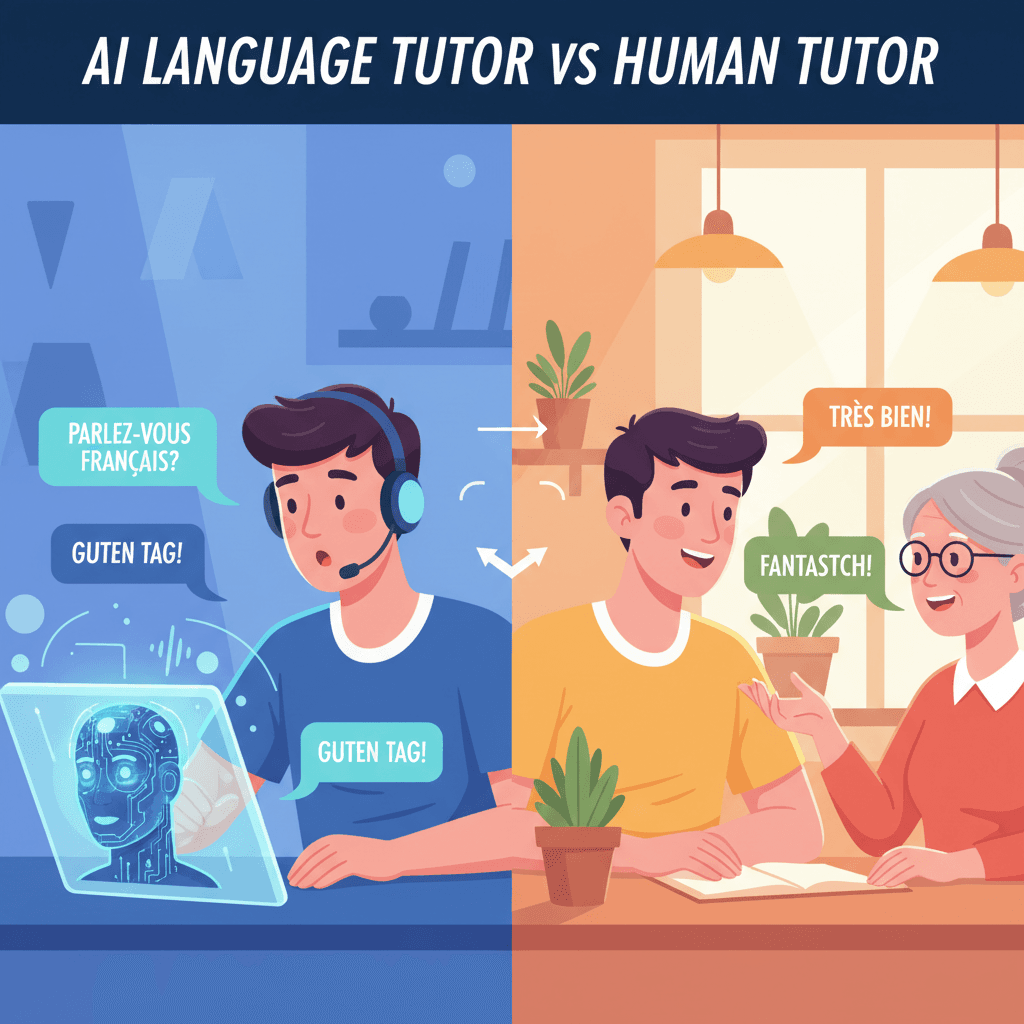
AI Language Tutor vs Human Tutor: Which Is Right For You?
Deciding between an AI language tutor and a human one is about more than cost. It's about your goals, personality, and confidence. Let's find the right path for you.
How to Overcome Fear of Speaking a New Language With an AI
The fear of speaking a new language is real, but so is the solution. Forget 'just start speaking'—discover how an AI language tutor provides a safe, judgment-free space to practice.