Why Language Exchange Apps Fail & What to Use Instead
Tired of flaky partners and conversation anxiety on language exchange apps? You're not alone. It's time to explore a modern alternative that offers a judgment-free space to practice.
The Real Reason You're Searching for an Alternative
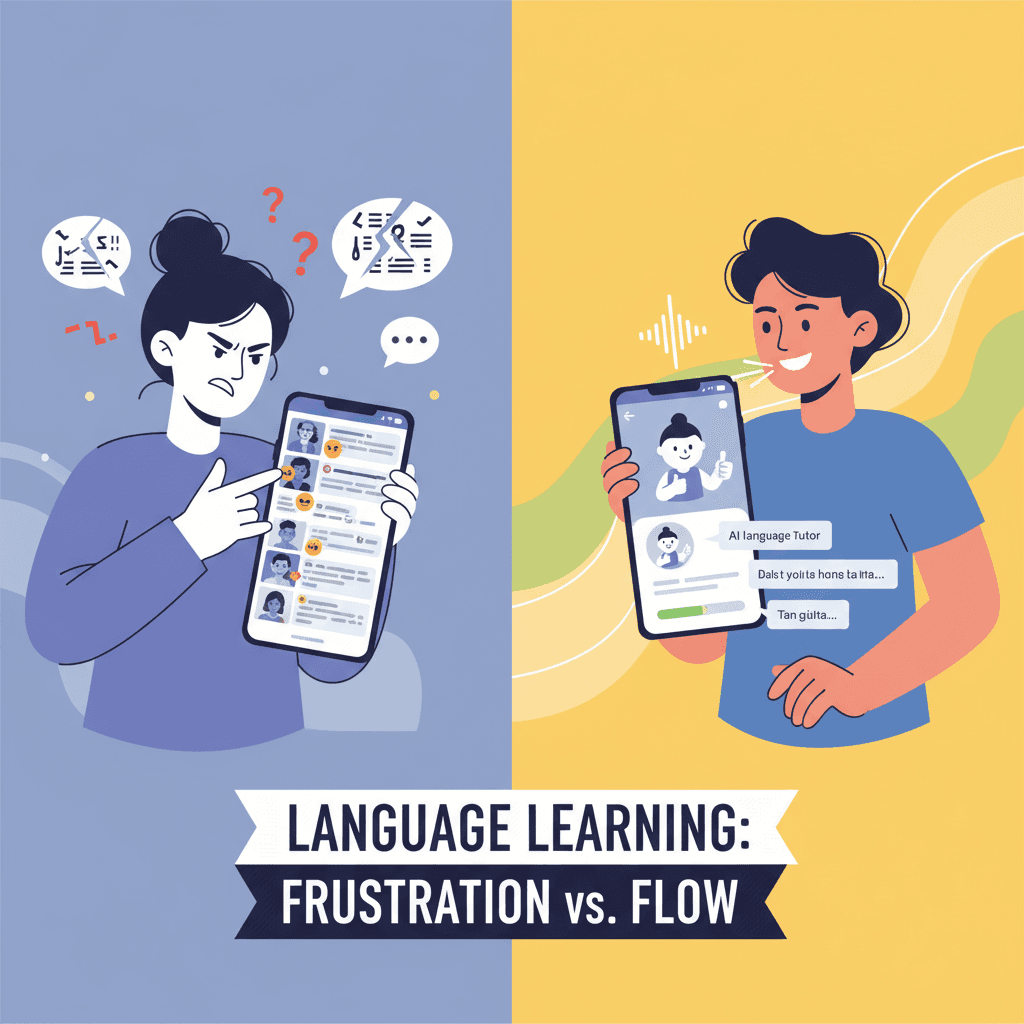
Let's be honest. You're here because the dream of language exchange apps didn't quite match the reality. You downloaded an app, full of excitement. You imagined yourself chatting effortlessly with a native speaker, your fluency soaring. But instead, you find yourself searching for a language exchange app alternative because that initial spark has faded, replaced by a familiar mix of frustration and anxiety. You're not alone. With over 50 million people registered on major platforms, the feeling of being let down by a mismatched or unresponsive partner is a widespread, shared experience.
The core of the issue often isn't the app itself—it's the profound anxiety of speaking to a stranger. It’s the fear of making a mistake, of being judged, or simply of freezing up when it’s your turn to talk. This isn't just a feeling; it’s a significant barrier to progress. In fact, research shows that while a stunning 57% of learners prefer voice communication for better language retention, it’s this very act of speaking that triggers the most stress. You want to practice speaking, but the only path offered feels like walking onto a stage without knowing your lines.
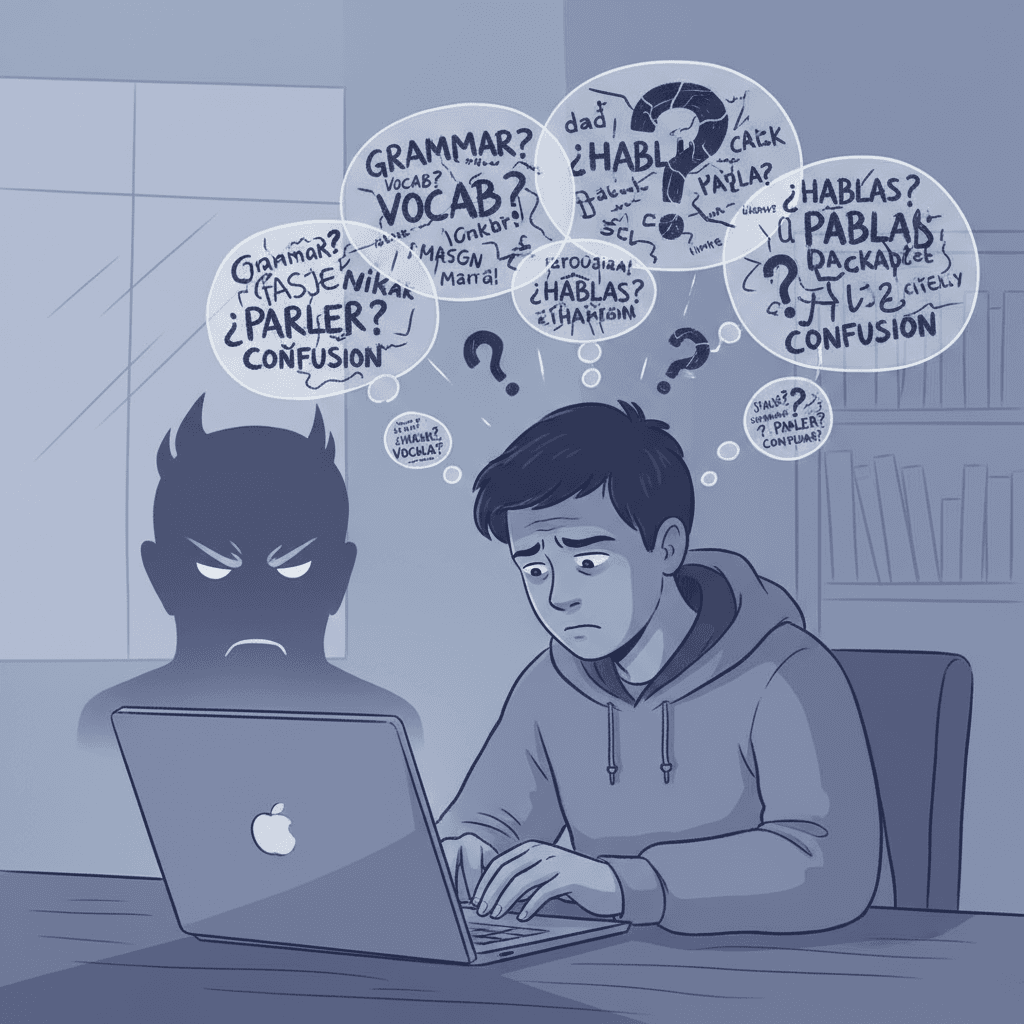
This is the confidence gap that many apps fail to address. Studies even hint at this gap, showing that learners who practice with a real tutor report significantly higher levels of speaking confidence than those using peer-exchange apps. This suggests that the unstructured, often intimidating nature of connecting with a random stranger online might be holding you back from the very thing you want most: the confidence to speak freely.
The 'Language Exchange Promise' vs. The Reality
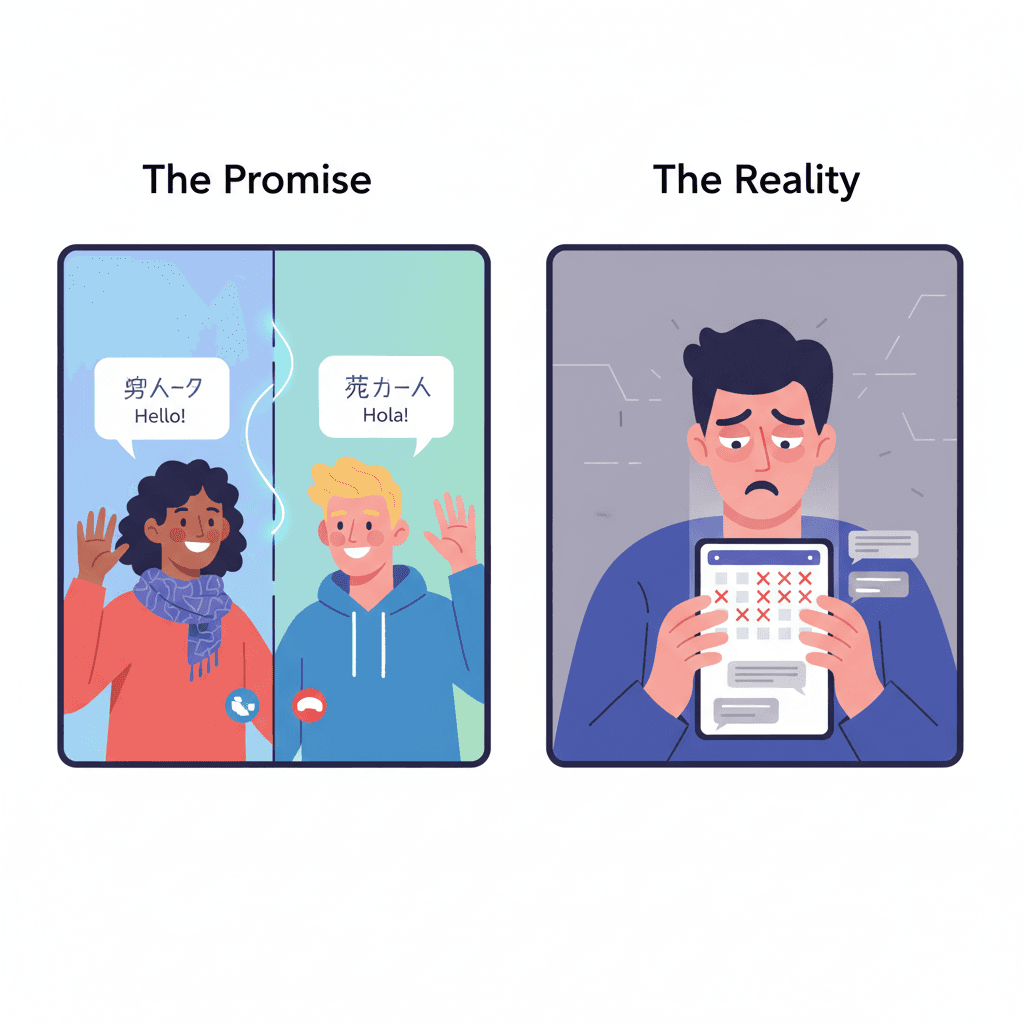
The promise is so compelling: connect with native speakers around the world, for free, and unlock fluency through authentic conversation. It sounds perfect. But after a few weeks, the reality sets in. The initial novelty wears off, and you're left juggling the core problems with language exchange apps that prevent true, consistent progress. You start to realize that access to millions of people doesn't guarantee you one reliable partner.
Serious learners do not need more random chats. They need partners who reply, correct mistakes, and keep showing up.
This unreliability is a major confidence killer. A 2026 study highlighted a staggering difference: after just 12 weeks, learners who worked with a dedicated tutor reported high speaking confidence at a rate over 60% higher than those using self-directed apps. This isn't a small difference; it's a massive gap that shows the traditional app model often fails to build the robust self-assurance needed for real-world conversation.
Many dedicated learners hit a frustrating plateau. You can spend hours memorizing vocabulary and grammar rules, but as one source aptly put it, 'the moment a native speaker talks at normal speed, everything' falls apart. This validates the common anxiety of live exchanges. It's the gap between passive knowledge and active skill, and it’s a wall that random, inconsistent chats can rarely help you break through.
Problem 1: The Flaky Partner & Scheduling Nightmare
The single biggest obstacle to fluency is a lack of consistent language practice. The exchange model, unfortunately, is often a recipe for inconsistency. Inconsistent user engagement is a well-known drawback, leading to unresponsive partners, 'ghosting,' and hours of your precious study time wasted on scrolling for a conversation that never happens. You're ready to learn, but you're stuck waiting for someone else.
- •Juggling time zones across continents like North America and Asia.
- •Finding partners who are looking for serious practice, not a dating service—a common complaint as of 2025.
- •The disappointment when a scheduled call becomes a no-show.
- •The cycle of finding a good partner, only for them to disappear after a few days.
Even with over 50 million users on these platforms, learners in forums consistently report that maintaining a regular practice schedule with one partner is the hardest part. The logistics of coordinating across time zones—whether you're in the US, UK, Australia, or India—and aligning with someone else's busy life creates a massive barrier to the daily practice that builds real skill.
Problem 2: The Anxiety of 'Performing' for a Stranger
Beyond the logistical headaches lies a deeper, more personal challenge: the fear of 'performing.' This speaking practice without anxiety is the holy grail for many learners. A 2023 study confirmed what many of us feel instinctively: language speaking anxiety is a real, significant barrier. The very act of trying to communicate can feel like an audition where you're terrified of being judged for every grammatical error or mispronounced word.
This is the 'performance wall.' You might know the words in your head, but when it's time to speak to a native, your mind goes blank. You freeze. This fear isn't just about making mistakes; it's about the pressure to be perfect, engaging, and interesting for a complete stranger. This pressure can be so intense that some app developers have even created separate social anxiety apps with conversation scripts just to help people prepare for normal interactions.
Problem 3: The Quality Control Issue
Let's say you overcome the scheduling nightmare and the speaking anxiety. You finally find a consistent partner. Now you face the third major hurdle: quality control. Your exchange partner is a fellow learner, not a trained teacher. While well-intentioned, they may not know how to give effective feedback. A major market analysis from 2026 identified the 'inconsistent quality and availability of language partners' as a primary challenge, as users are not vetted educators.
This can lead to several problems. You might receive incorrect corrections, learn unnatural phrasing, or focus on things that don't actually improve your conversational ability. An academic evaluation of these platforms confirmed that there are significant 'issues affecting the nature and quality of communication.' With a massive, unregulated pool of over 50 million users on leading apps, ensuring you're getting accurate, helpful guidance is left entirely to chance.
The Modern Solution: A Private AI Language Tutor
If flaky partners, speaking anxiety, and poor-quality feedback are the problems, what is the solution? The answer lies in the most exciting development in language learning today: the rise of the AI language tutor. This is the modern language exchange app alternative designed from the ground up to solve the core frustrations of the old model. It provides a private, on-demand, and completely judgment-free environment to practice speaking.
Imagine having a conversation partner who is available 24/7, is never tired, never judges you, and is solely focused on helping you improve. That’s an AI tutor. This shift aligns perfectly with what learners want. With voice-based applications already commanding approximately 42% of the market share and 57% of users preferring voice for retention, AI tutors meet the massive demand for speaking practice without the associated anxiety.
This isn't a niche trend; it's a massive wave transforming the industry. The language learning market was valued at an estimated USD 6.3 billion in 2026 and is projected to skyrocket to USD 21.2 billion by 2035. This explosive growth, particularly in the North American market which is expected to hold 40-45% of the share, is driven by advanced solutions that move beyond simple flashcards and deliver what learners truly need: authentic, real-world speaking practice.
How an AI Tutor Helps You Finally Speak Confidently
An AI conversation partner directly solves the biggest challenges of traditional language exchange. Instead of scheduling hassles and performance anxiety, you get a judgment-free practice zone that is always available. You can make hundreds of mistakes at 2 AM, and your AI tutor will patiently help you correct them, offering consistent, instant feedback on your pronunciation and grammar.
Want to perfect your accent without feeling self-conscious? An AI tutor like SpeaksyAI can offer instant pronunciation feedback on every word. Powered by speech recognition technology that achieved 94% accuracy as of 2025, it's like having a personal dialect coach in your pocket. You can repeat a phrase as many times as you need until you get it right, building muscle memory and confidence with every session.
This method delivers real, scientifically-backed results. A 2025 meta-analysis of 46 separate studies found that AI tools have a medium-to-large positive effect on language learning outcomes. It's not just about feeling more confident; it's about learning more effectively. In one study, learners who practiced with an AI partner demonstrated a 22% higher retention rate over just three months. That's the power of consistent, high-quality practice.
Is an AI Tutor a Replacement for People?
This is the most important question. The answer is a clear and resounding no. An AI tutor isn't meant to replace human connection. Instead, think of it as the ultimate preparation tool. It's the private gym where you build your strength, the driving range where you perfect your swing, the rehearsal space where you learn your lines before the main event.
Human exchanges present logistical challenges (scheduling, time zones) and emotional ones (anxiety, judgment). An AI tutor removes all of them, offering 24/7 availability and consistent, detailed feedback on your pronunciation, grammar, and vocabulary. A 2025 review of top AI apps concluded that while AI alone won't create fluency, it is a crucial tool for building the confidence and foundational skills needed to succeed in real-world conversations.
An AI tutor, such as the one at SpeaksyAI (at speaksyai.com), provides a completely judgment-free environment that is simply impossible for human exchanges to replicate. Modern technology has evolved far beyond simple 'chatbots.' We're now seeing 'Agentic AI' tutors that can remember your past mistakes, track your progress, and adapt teaching methods in real-time for a deeply personalized practice session. It’s the bridge that takes you from silent learner to confident speaker, preparing you for the day you can chat with a native speaker—not with anxiety, but with excitement.
FAQ: Your Questions About Language Exchange Alternatives
Frequently Asked Questions
Ready to Practice Without the Pressure?
Start building real speaking confidence today with an AI tutor who's always available and never judges. Get the consistent practice you need to achieve fluency.
Join the Waitlist