Your Post-Duolingo Plan to Finally Speak Fluently
Finished your Duolingo tree but still feel stuck? You've built a great foundation. Now, let's turn that knowledge into confident, fluent conversation with this plan.

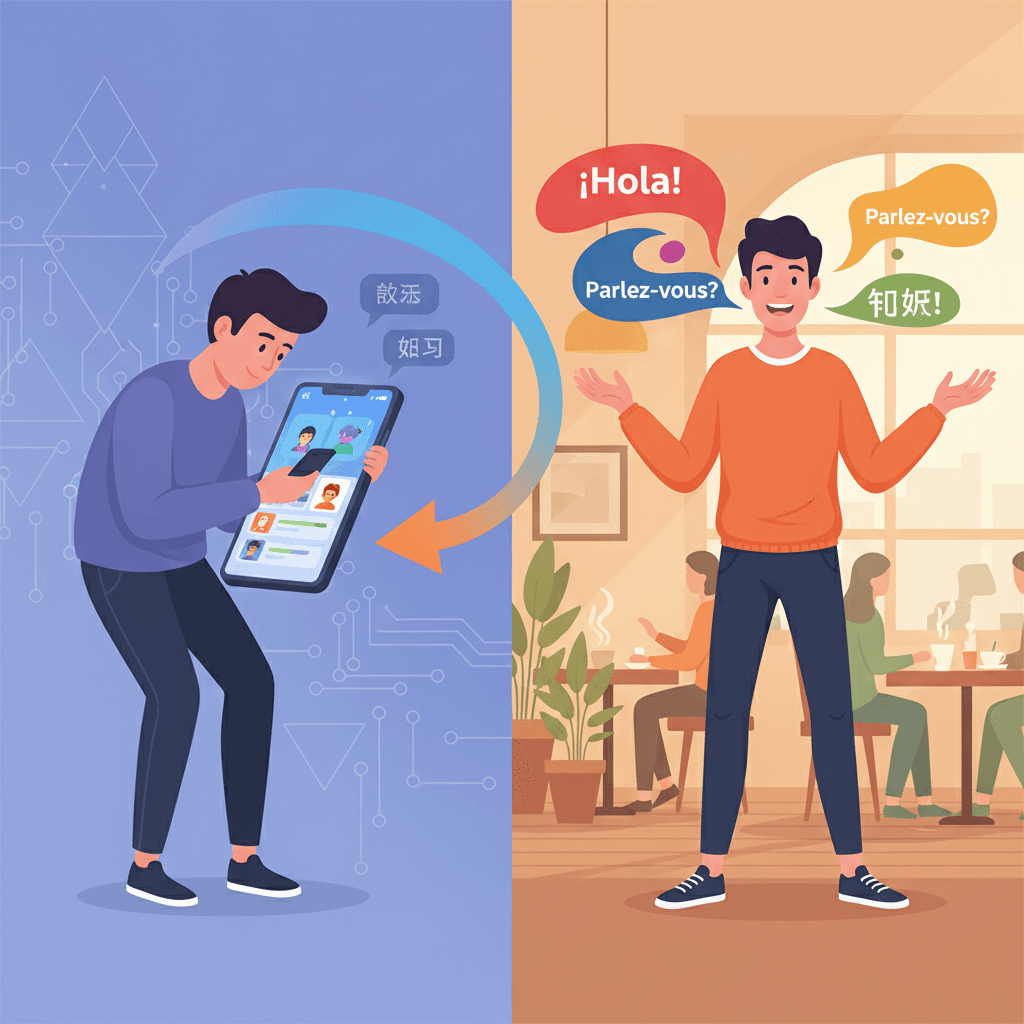
The direct answer to what to do after duolingo to speak fluently is to transition from passively recognizing words to actively using them in conversation. You've built a fantastic vocabulary foundation; now it's time to put it to work. This means starting real conversations, using media for active practice, and setting meaningful goals outside the app. Consider this your official 'Post-Duolingo Graduation Plan'—a concrete, week-by-week guide to help you break through the common language learning plateau and start speaking with real confidence.
Congrats, You Finished Duolingo! So Why Can't You Speak?
First, take a moment to celebrate. Completing a Duolingo course is a significant achievement that proves your dedication. If you're now feeling a little stuck, like you have a head full of words but can't form a sentence when it counts, you are not alone. This is an incredibly common and normal experience for language learners graduating from app-based study.
The challenge you're facing is the natural gap between passive recognition and active recall. Duolingo is brilliant at building your passive vocabulary—you see or hear a word and know its meaning. This is a crucial skill. However, speaking requires a different mental muscle: active recall. This is the process of pulling words from your memory, arranging them into grammatically correct sentences on the fly, and articulating them clearly. It's a skill that can only be built through practice.
Industry consensus confirms that completing a Duolingo course typically brings a learner to an A2 or low-B1 proficiency level on the CEFR scale. While not fluent, this is a strong foundation for reaching the next stage. A 2026 peer-reviewed study from Duolingo's research team found that beginner French learners on the app achieved communication skills comparable to university students after one semester. The work you put in has given you a real head start.
However, even Duolingo's own research acknowledges the limitations for speaking. A 2026 study on their French course noted that while it's effective for vocabulary, it has limitations in developing 'oral production or spontaneous conversational competence.' This is why you need a clear post-duolingo plan focused on activation.
The 'AI Bridge': Your First Step to Confident Speaking
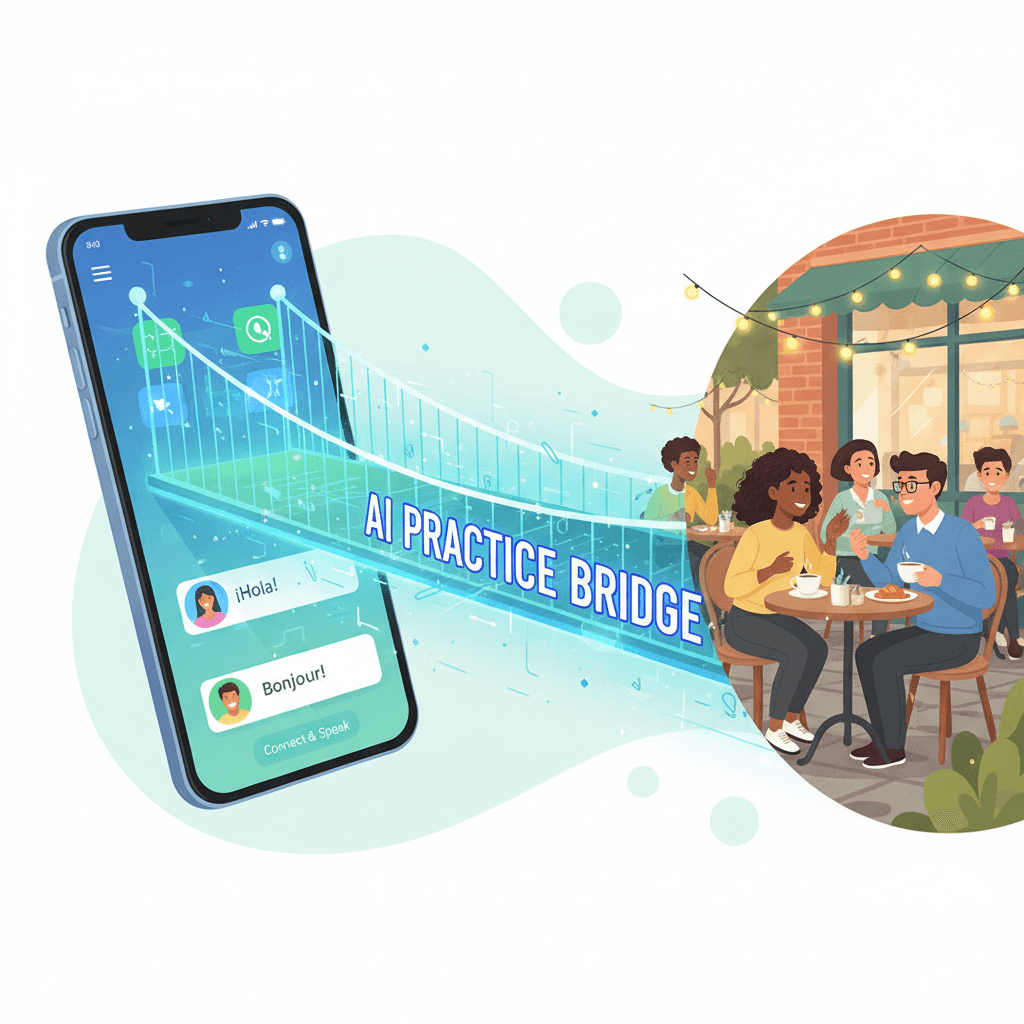
Jumping from Duolingo's structured, no-pressure environment straight into a conversation with a native speaker can feel terrifying. You might worry about your accent, hesitate while searching for words, or feel embarrassed about making mistakes. This is where the 'AI Bridge' comes in.
An AI language tutor is the perfect intermediate step. Think of it as a conversational sparring partner that is available 24/7, never gets impatient, and offers a private space to practice speaking without any judgment. A 2025 peer-reviewed study published as part of Duolingo's research initiatives found that mobile language learners' self-efficacy—their confidence in their ability to succeed—increased after using generative AI for just one month. This confidence boost is exactly what you need to move to the next level.
Using a tool like the SpeaksyAI language tutor allows you to start having those crucial first conversations. You can talk about your day, practice role-playing scenarios, and get instant feedback on your pronunciation. It’s the most effective way to start activating your Duolingo vocabulary and build the muscle memory for speaking.
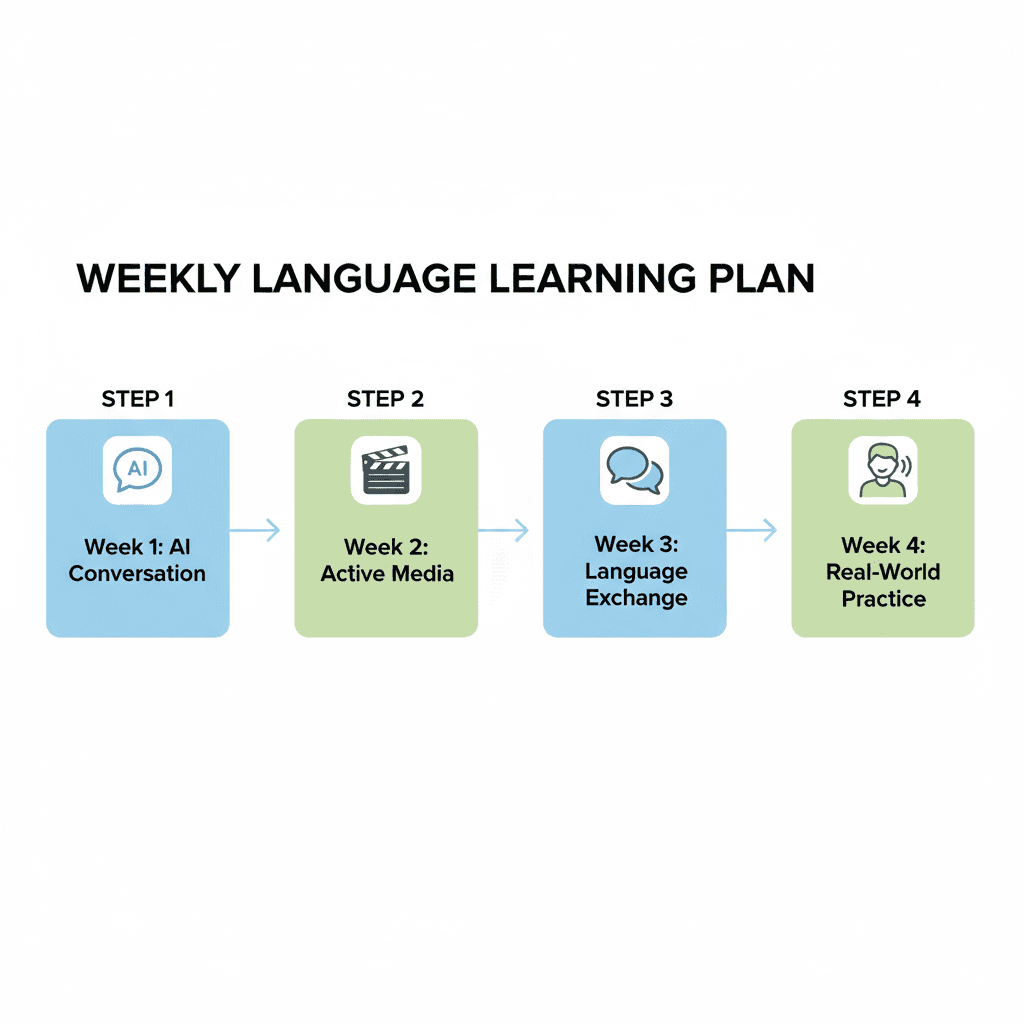
Your 4-Week Post-Duolingo Action Plan
Ready to get started? Here is a concrete, 4-week action plan designed to take you from a passive learner to an active speaker. This isn't about more study; it's about starting to use what you know.
- 1.Week 1: Activate Your Vocabulary. Your goal this week is simple: start speaking. Use an AI tutor for 15 minutes every day. Don't worry about being perfect. Just talk. Describe your room. Talk about your favorite food. Ask the AI simple questions. The goal is to get comfortable forming basic sentences and using the words you already know.
- 2.Week 2: Combine AI Practice with Active Listening. Continue your daily 15-minute AI conversations. Now, add 15 minutes of active listening. Find a podcast or YouTube channel for beginners in your target language. Listen to a 1-2 minute segment, then try the shadowing technique: replay the audio and speak along with the host, mimicking their pronunciation and intonation. It feels strange at first, but it's incredibly effective for improving your flow. (Learn more about the shadowing technique here).
- 3.Week 3: Role-Play for the Real World. This week, use your AI tutor to prepare for your first real-world conversation. Think of a simple scenario, like ordering a coffee or introducing yourself. Practice the conversation with your AI partner multiple times. For example: "I'm going to a coffee shop. How do I order a large black coffee?" Say the lines out loud until they feel natural. The practice will make you much more confident when the real moment arrives.
- 4.Week 4: Your First Human Conversation. It's time! Your goal this week is to schedule one 30-minute chat on a language exchange app like Tandem or HelloTalk. Thanks to your preparation, you're ready. Start with the basics you practiced: introductions, where you're from, and why you're learning the language. Remember the goal isn't perfection; it's connection and practice. Celebrate this huge milestone!
How to Use Media for Active Learning (Not Just Passive Watching)
One of the most common pieces of advice for intermediate language learning is to 'watch movies' or 'listen to music.' While this is good for exposure, it's often a passive activity. To truly learn, you need to turn this consumption into active practice. This is a key step in overcoming the dreaded language learning plateau.
Instead of just watching a show with subtitles, try this active learning technique:
- •Watch a 2-minute scene with subtitles in your target language. Pay attention to new words and phrases.
- •Re-watch the same scene without subtitles. Can you still follow the conversation?
- •Summarize the scene out loud. Grab your phone or talk to your AI tutor and describe what happened in the scene. Who were the characters? What did they talk about? What was the main point?
- •Discuss it. Ask your AI tutor a question about the scene. "In that scene, the character seemed angry. What are some other words for 'angry' in Spanish?"
This method forces you to engage with the material, recall vocabulary, and practice forming your own thoughts—turning passive screen time into powerful, active learning.
Choosing Your Human Practice Partners: Tutors vs. Exchanges
Once you've used the AI Bridge to build initial confidence, it's time to start practicing with people. This is the ultimate goal and the fastest way to get fluent. A 2026 report from Tutorbase found that students who supplement apps with human tutors progress 2.4 times faster than those who only use apps. You have two main options: paid tutors or free language exchanges.
- •Language Tutors (e.g., iTalki, Preply): This is a paid, structured option. You get a dedicated teacher who can create a personalized learning plan, correct your mistakes in real-time, and answer your specific questions. It's an investment, but it provides highly efficient, focused practice. This is ideal if you want a clear curriculum and guaranteed practice time.
- •Language Exchanges (e.g., Tandem, HelloTalk): This is a free, mutual exchange. You find a native speaker of your target language who wants to learn your native language. You spend half the time speaking their language and half the time speaking yours. It's a fantastic way to make friends and learn cultural nuances, but it can be less structured. It requires finding a reliable partner and being a good teacher yourself. (Before you start, check out our guide: Are You Ready for a Language Exchange? A Practical Checklist).
Many learners find that a combination works best: a weekly session with a tutor for structured learning and regular, informal chats with exchange partners to build conversational stamina.
Setting Real Fluency Goals Beyond the App
On Duolingo, your goal was clear: finish the tree. In the real world, 'fluency' is a vague and often intimidating target. To stay motivated, you need to set new, tangible goals. This is where SMART goals (Specific, Measurable, Achievable, Relevant, Time-bound) come in.
Instead of a vague goal like "become fluent in Spanish," set a SMART goal like:
"In 30 days (Time-bound), I will be able to hold a 10-minute conversation (Measurable) with my language exchange partner about my hobbies (Specific and Relevant) without switching to English (Achievable)."
This type of goal gives you a clear target to work toward. Experts recommend setting these kinds of tangible, real-world goals to break through the intermediate plateau. A 2024 study by de Vrind, cited by HearSay Learn, emphasized that developing these 'self-regulated learning' skills is critical for building the autonomous habits needed for real-world speaking. You are no longer just a student; you are the architect of your own fluency.
Frequently Asked Questions About What to Do After Duolingo
Frequently Asked Questions
Ready to Cross the Bridge to Fluency?
Stop feeling stuck. Turn your Duolingo knowledge into confident conversations with SpeaksyAI, your personal AI language tutor.
Join the Waitlist