Feel Like Yourself in a New Language: A Guide to Personality
Do you feel like your wit and charm get lost in translation? This guide provides a step-by-step system for how to show your personality in a foreign language.

Have you ever felt like your vibrant, witty personality gets lost in translation? You're not alone. Many language learners feel like they sound robotic or bland, even when they know the words. The good news is that learning how to show your personality in a foreign language is a skill you can develop. It’s not about becoming someone else; it’s about finding the confidence and the right tools to let your true self shine through, no matter the language. This guide provides a proven, step-by-step system to help you express your unique identity and finally feel like 'you' in your new language.

Why You Don't Sound Like 'You' in a New Language
That feeling of being a 'lesser version' of yourself is an almost universal part of the language learning journey. You have brilliant thoughts, funny observations, and strong opinions, but when you try to voice them, they come out flat. This isn't a personal failing; it's a direct result of cognitive load. Your brain is working overtime just to juggle grammar rules, recall vocabulary, and get the pronunciation right. There’s simply not enough mental energy left over for the quick, nuanced delivery that makes your personality pop.
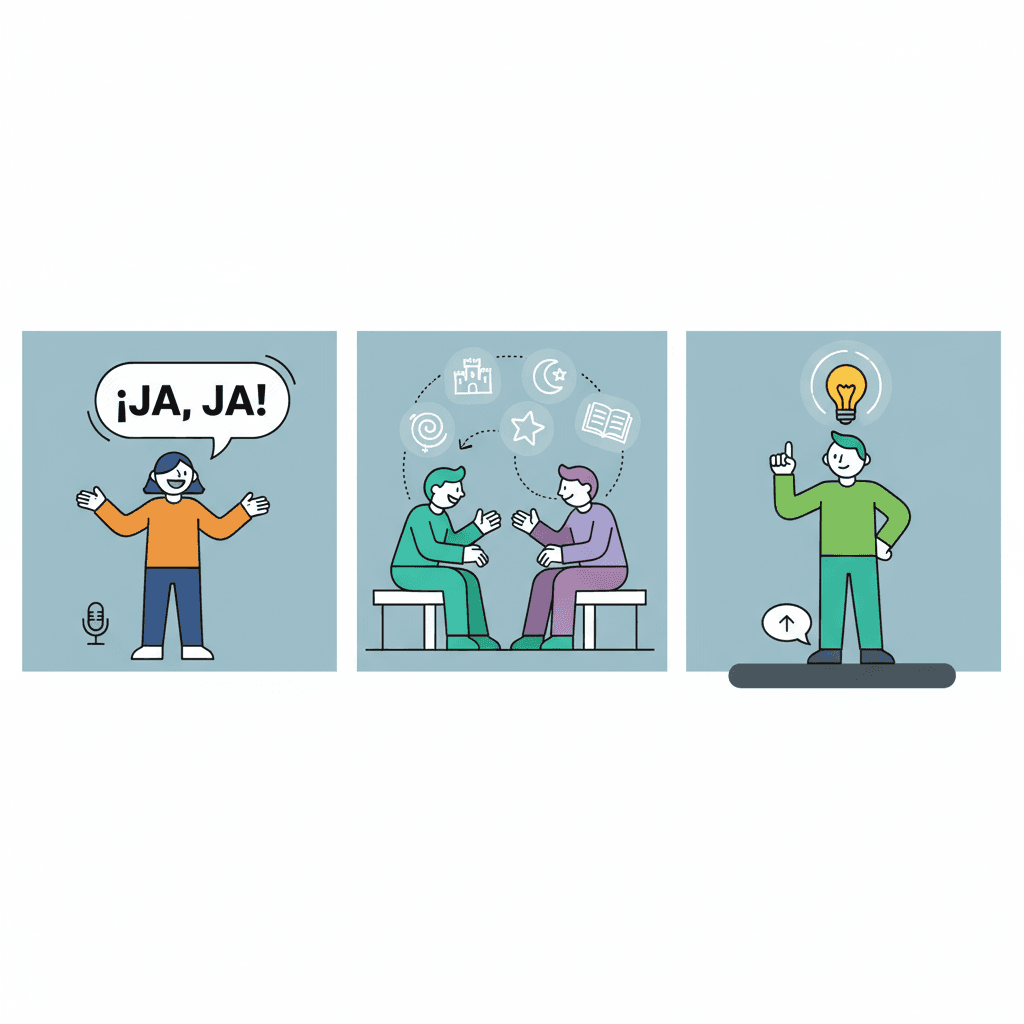
This phenomenon is often called the 'Foreign Language Effect.' It’s not about becoming a 'fake self,' but as researchers describe it, it's about showing 'a self within the cultural frame of that language.' This is compounded by a powerful fear of making mistakes. The anxiety of being judged for a grammatical error or a mispronounced word can cause you to retreat into safe, simple sentences, effectively hiding your personality behind a wall of caution.
Finding Your 'Language Persona': It's Still You, a Different Channel
Instead of seeing this as a loss of self, what if you framed it as an opportunity? You have a chance to build a 'language persona'—a version of you that fits into your new language. This isn't about being inauthentic. It’s a concept well-documented in psychology as 'Cultural Frame Switching,' where bilinguals naturally adapt their behavior to fit the cultural context of the language they are speaking.
For example, studies from the London School of Economics found that Spanish-English bilinguals often acted more extroverted, open, and easy-going when communicating in English. They weren't faking it; they were simply leaning into the cultural associations they had with the language. You can do the same. If you perceive French as romantic or German as direct, you can consciously experiment with those facets of your own personality. This exploration is a powerful tool for self-discovery and a key part of mastering how to express personality in another language.
This act of exploration is more than just fun; it actively helps you learn. A study published by Cambridge University Press found that the personality traits of Openness to Experience and Extraversion were positively linked to creative thinking in a second language. By pushing yourself to be more expressive, you are literally strengthening the creative and cognitive muscles needed to become fluent.
The System to Show Your Personality: 3 Actionable Steps
Showing your personality isn't some magical ability you either have or don't. It's a set of concrete skills you can practice and master. We've broken it down into a simple, three-step system that will take you from feeling invisible to feeling like yourself again. The journey starts by deconstructing 'personality' into learnable components.
Step 1: Master the 3 Core Skills of Personality Expression
Your unique personality shines through in how you tell stories, make people laugh, and share your perspective. These aren't abstract traits; they are communication skills. Below, we'll break down the three most important ones and give you concrete ways to start practicing them today.
Skill 1: How to Be Funny in a Foreign Language
Humor is one of the fastest ways to connect with people, but it’s also highly cultural. The dry, sarcastic wit popular in the UK might not land the same way as the more direct, upbeat humor often found in the US. The key is to start simple and low-risk. Self-deprecating humor about your language skills is a fantastic starting point. It shows humility, makes you relatable, and instantly lowers the tension.
A recent study on humor styles found that self-defeating humor is a common strategy to diffuse personal embarrassment—a perfect tool for when you inevitably stumble over a word.
- •When you make a mistake, try saying something like, "In my head, that sounded much better!"
- •"My grammar is on an adventure today. Please be patient."
- •"That's not what I meant to say, but we can pretend it was something very profound."
Skill 2: Tell Engaging Stories and Anecdotes
Facts convey information, but stories convey who you are. Sharing a personal story is a powerful way to reveal your values, experiences, and sense of humor. You don't need to deliver a perfectly polished monologue. The most effective way to start is with a 'micro-story'—a simple, 60-second anecdote about your day, a childhood memory, or a favorite hobby. Prepare one or two of these ahead of time. Rehearsing them will build the confidence you need to share them spontaneously.
This practice connects directly to the core of language learning and identity. As research on L2 writer identity shows, using methods like storytelling enables learners to express their lived experiences and deepen their understanding of how to communicate personal ideas. Every story you tell, no matter how small, is a step toward building your authentic voice in your new language.
Skill 3: Share Your Opinions and Beliefs Confidently
Do you hold back your opinions in a new language for fear of being misunderstood or confrontational? Learning to agree, disagree, and add nuance politely is a skill that will make you feel more engaged and authentic in conversations. Your perception of a language can influence your willingness to be assertive. For instance, learners who see English as 'direct' might feel more comfortable stating their opinions clearly, a key part of finding your voice in a new language.
Start by practicing with some useful phrases. Having these in your back pocket reduces the cognitive load in the moment, freeing you up to focus on *what* you want to say, not just *how* to say it.
- •To agree: "I completely agree." / "That's a great point."
- •To add nuance: "I see what you mean, but I also think..." / "From my perspective..."
- •To disagree politely: "I'm not sure I see it that way." / "That's an interesting take. My own view is a bit different."
Step 2: Find Your Voice in a Low-Stakes 'Personality Sandbox'
The biggest barrier to practicing these skills is often the fear of real-time judgment. This is why you need a 'personality sandbox'—a private, low-stakes environment where you can experiment, make mistakes, and build confidence without an audience. This is where modern technology becomes your greatest ally.
An AI conversation partner is the perfect sandbox. With a tool like SpeaksyAI's AI tutor, you get a patient, non-judgmental partner available 24/7. You can try telling that joke three different ways, practice sharing a strong opinion, or rehearse a personal story until it feels natural. This pressure-free practice is essential for building the muscle memory needed to speak confidently in the real world.
- 1.Ask your AI tutor: "Let's have a debate. I think [Topic A] is better than [Topic B]. What do you think?"
- 2.Say: "I'm going to tell you a short, funny story. Can you give me feedback on my tone?"
- 3.Try this prompt: "Help me sound more sarcastic in English. Let's practice some phrases."
- 4.Ask: "Can you pretend to be a friend from Australia and have a casual chat with me?"
Step 3: Bring Your Full Self into Real Conversations
Once you've built confidence in your sandbox, it's time to take your skills into the real world. The key is to start small to avoid feeling overwhelmed. Don't try to be the life of the party on your first attempt. Instead, set a micro-goal for your next conversation.
For example, your goal could be: "I will share one personal opinion" or "I will tell one 30-second story." When you achieve it, take a moment to celebrate that victory. This is not just a small win; it's a huge step in closing the gap between your inner self and your spoken self. This approach of celebrating small wins is crucial for building sustainable momentum and avoiding burnout.
As you get more comfortable, you can start tackling more complex social situations. Our guides on how to join group conversations and the introvert's system for speaking confidently are excellent next steps. And if you ever feel your mind going blank, we have a proven system for that, too.
Frequently Asked Questions
Frequently Asked Questions
Ready to Find Your Voice?
Stop feeling like a robot. Use SpeaksyAI's AI tutor as your personal sandbox to practice expressing your unique personality and start speaking with confidence.
Join the Waitlist