Feeling Language Learning Burnout? Here's Your Recovery Plan
Feeling drained and unmotivated by your language studies? You're not alone. This is language learning burnout, and it's completely recoverable. Here's how.

If you’re wondering what to do when you have language learning burnout, the first thing to know is that you are not alone, and it is not a personal failure. That feeling of deep exhaustion, where even opening your favorite language app feels like a chore, is a common and recoverable part of the journey. The key is to stop forcing it and start healing. This guide will walk you through exactly how to recover from language learning burnout with a compassionate, step-by-step plan designed to bring the joy back into your practice, especially your speaking skills.
Is This Just a Slump, or Is It True Burnout?
It’s easy to confuse a bad week with a bigger problem. A learning slump is a temporary dip in motivation that might last a few days. You might feel a bit bored or uninspired, but the underlying desire to learn is still there. Language learning burnout is a much deeper state of exhaustion. The World Health Organization defines burnout as a phenomenon resulting from chronic stress, and in language learning, it manifests as emotional, physical, and mental exhaustion directly related to your studies.

Unlike a passing slump, true language study burnout can make you question your entire journey. It's not just about feeling tired; it's about feeling depleted. A 2026 study highlighted that a learner's outlook plays a huge role; students with a growth-oriented mindset—the belief that they can improve—were found to be less susceptible to burnout. This shows it’s a profound psychological state, not just a momentary lack of interest.
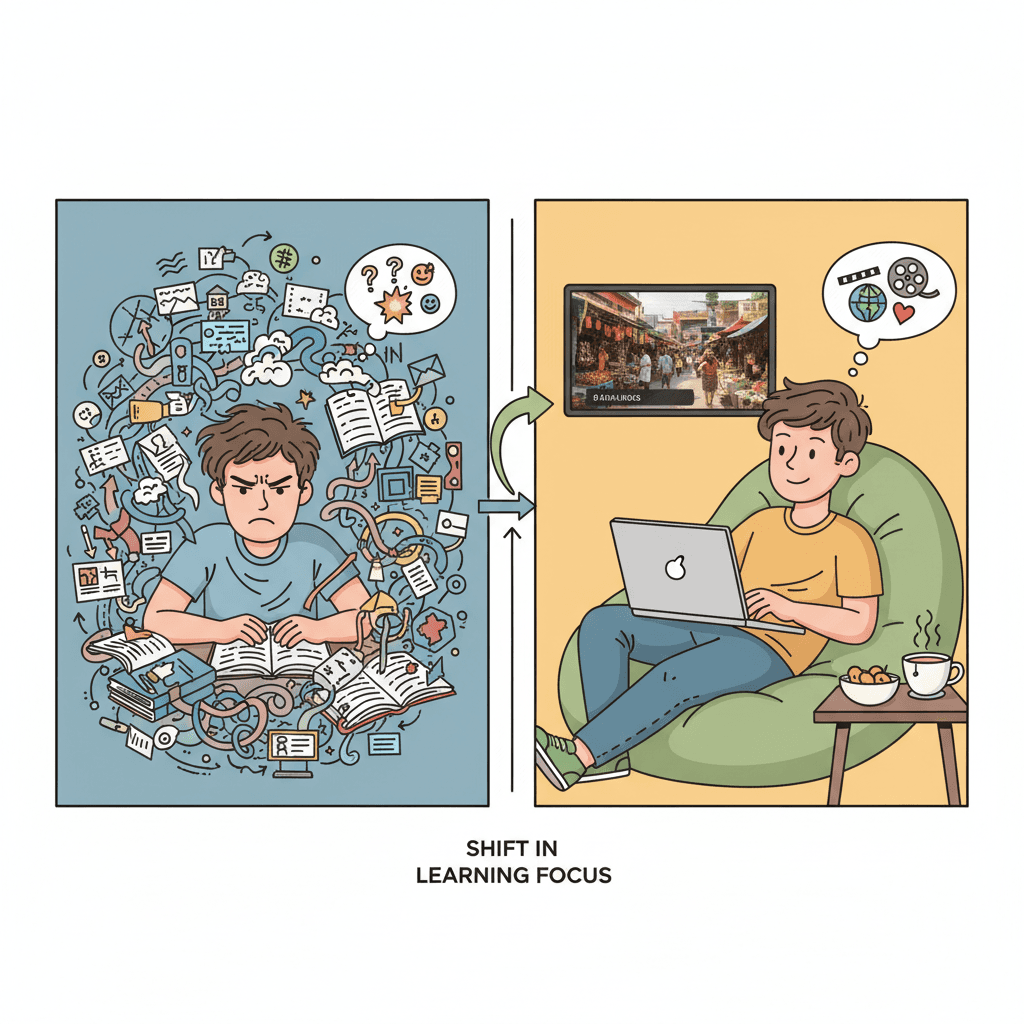
Do any of these signs of language learning burnout sound familiar?
- •You actively dread your study sessions.
- •Making progress brings you no sense of joy or accomplishment.
- •You feel constantly fatigued, even when you haven't been studying.
- •Your focus is gone, and you can't seem to retain new information.
- •You fantasize about quitting the language altogether.
- •The thought of speaking the language fills you with anxiety instead of excitement.
Why Language Learning Burnout Happens (And Why It’s Not Your Fault)
Feeling burnt out is not a reflection of your ability or your commitment. It’s a natural response to prolonged stress, and the pressures of modern language learning create the perfect storm. Many learners, especially those in the US, UK, and Australia, put immense pressure on themselves to achieve fluency fast, often driven by perfectionism. When progress inevitably slows down at the frustrating 'intermediate plateau,' that pressure can curdle into exhaustion.
The digital age has also introduced new challenges. The sheer number of apps, courses, and methods can lead to decision fatigue. Are you using the right flashcard app? Should you be watching more YouTube? This constant self-optimization is draining. In fact, a 2025 study on e-language courses identified the primary drivers of burnout as an increased workload, the demands of self-directed learning, and a significant lack of face-to-face interaction. That sense of isolation and pressure is very real.
Ultimately, your mindset is a powerful factor. Research from 2026 found that learners with a 'growth mindset'—who see challenges as opportunities to develop their abilities—are far more resilient to burnout. If you believe your language talent is a fixed trait, you're more likely to feel hopeless when you hit a wall. Recognizing these external and internal pressures is the first step to giving yourself grace.
The 3-R Burnout Protocol: Your Path to Recovery
When you're deep in language learning fatigue, you don't need another complex study schedule. You need a simple, compassionate framework to guide you back to health. That's why we created the 3-R Burnout Protocol. It's a clear, three-stage plan to help you heal the exhaustion and rediscover your love for the language.
This isn't about pushing through the pain; it's about strategically stepping back so you can move forward stronger. Each step is designed to address a core cause of burnout, from mental exhaustion to a loss of motivation.
- 1.Rest: Give your brain a conscious, guilt-free break from all formal study to allow for deep recovery and memory consolidation.
- 2.Reconnect: Re-engage with the language on your own terms through low-pressure, enjoyable activities that remind you why you started learning in the first place.
- 3.Re-engage: Gently ease back into active practice, starting with low-stakes speaking exercises to rebuild your confidence without the pressure.
Step 1: Rest The Right Way (Without the Guilt)
The most critical first step in overcoming language study burnout is also the hardest for dedicated learners: stop. Completely. We're giving you permission to take a real break for at least one to two weeks. No flashcards, no grammar drills, no podcasts. This is not laziness; it's a strategic 'productive rest'.
Why is this so important? Your brain doesn't learn when you're cramming; it learns when you rest. According to neuroscience, the process of memory consolidation—moving new words and grammar from short-term to long-term memory—happens during periods of rest and sleep. Pushing through exhaustion actively hinders this process. By forcing yourself to study when you're burnt out, you're not just failing to learn; you're actively deepening the burnout.
To get over the guilt, reframe it. You are not 'giving up.' You are executing a deliberate recovery strategy. Just as an athlete needs rest days to repair muscle, your brain needs downtime to process information and restore its capacity for engagement.
Research confirms the damage of pushing too hard. A 2025 study on language learners showed that emotional exhaustion has a direct and 'notable negative effect' on academic achievement. By taking a conscious break, you are protecting your long-term progress and motivation.
Step 2: Reconnect with the Culture, Not Just the Grammar
After your period of complete rest, it's time to gently reintroduce the language. The goal here is not to 'study.' The goal is to 'experience.' Burnout often stems from the learning method itself becoming a source of dread. Textbooks, apps, and grammar charts can feel like a chore. So, for now, ditch them.
Instead, reconnect with what made you fall in love with the language or culture to begin with. This phase is all about low-effort, high-enjoyment immersion. It reminds your brain that the language is a living, breathing tool for connection and fun, not just a set of rules to be memorized. This is especially helpful if you've hit the dreaded intermediate plateau, where replacing tedious study with genuine enjoyment can reignite your sense of progress.
Here are some ideas to get you started:
- •Watch a travel vlog about a city you've always wanted to visit in a country that speaks your target language.
- •Find a cooking tutorial on YouTube for a favorite dish and try to follow along, focusing on the actions, not every single word.
- •Create a music playlist of artists who sing in the language and just listen while you're commuting, cleaning, or relaxing.
- •Watch a movie you already know and love, but this time with audio in your target language (and subtitles in your native language, if you need them!).
- •Listen to a podcast on a topic you're already passionate about, whether it's gardening, history, or video games.
Step 3: Re-engage with Low-Pressure Speaking Practice
Of all the skills, speaking confidence is often the biggest victim of language learning burnout. The pressure to perform, the fear of making mistakes, and the mental energy required can feel overwhelming. The final step of our protocol is to re-engage with speaking in a way that feels safe, manageable, and even fun.
The key is to lower the stakes entirely. Forget about complex debates or flawless pronunciation for now. Your goal is simply to get words out of your mouth again. Experts suggest returning to basics like practicing how to order a coffee or ask for directions. This is where a tool like SpeaksyAI's AI conversation partner becomes invaluable. It offers a judgment-free space to have simple, low-stakes conversations without the pressure of a live tutor. You can practice those basic dialogues a dozen times, rebuilding your confidence at your own pace and getting real-time feedback without the anxiety of being 'graded'.
This type of low-pressure practice is crucial for rebuilding a positive outlook. A groundbreaking 2026 study found that students with a growth-oriented language mindset were significantly less likely to suffer from burnout. By practicing in a safe environment where mistakes are simply part of the process, you are actively cultivating that growth mindset. You're teaching yourself that it's okay not to be perfect and that every small attempt is a step forward, which is the perfect antidote to the perfectionism that may have caused the burnout in the first place.
Your Long-Term Strategy to Prevent Future Burnout
Recovering from burnout is a huge win. Now, let's make sure you don't end up back here again. Preventing language learning fatigue involves building a sustainable and enjoyable routine from the ground up. This means shifting your entire approach from stressful sprints to a manageable marathon.
First, change your goals. Instead of stressful outcome-based goals like 'become fluent in six months,' switch to flexible, process-based goals. For example: 'Spend 15 minutes doing something enjoyable in my target language today.' This focuses on the journey, not a high-pressure destination, which aligns with the 2026 research showing that a process-focused growth mindset helps prevent burnout.
Second, schedule variety. Monotony is a primary cause of burnout. Don't just do flashcards every day. Plan your week to include a mix of activities: passive listening on Monday, a short reading on Tuesday, a fun video on Wednesday, and maybe some low-pressure speaking practice on Thursday. Acknowledging that increased workload and the demands of self-direction are key burnout drivers (as found in the 2025 study on e-learning), having a pre-planned, varied schedule reduces decision fatigue and keeps things fresh.
- •Build a 'Simmering System': On busy days, do the bare minimum—listen to one song, review five flashcards. This keeps the habit alive without the pressure of a full study session.
- •Track Your Enjoyment: At the end of each week, ask yourself which activities felt energizing and which felt draining. Do more of what you love.
- •Schedule Breaks: Just like you schedule study time, schedule 'off' time. Taking a week off every few months can be a powerful preventative measure.
Frequently Asked Questions About Language Burnout
Frequently Asked Questions
Ready to Speak Without the Pressure?
SpeaksyAI's AI tutor is the perfect way to rebuild your speaking confidence after burnout. Practice anytime, with zero judgment.
Join the Waitlist