When to Start Speaking a New Language: A Readiness Guide
Wondering when to start speaking a new language? It's the biggest question for learners. This guide moves beyond 'day one' advice with a readiness checklist to help you decide.

The Big Question: 'Am I Ready to Speak Yet?'
It’s the question every language learner asks themselves, often with a knot of anxiety in their stomach. You've been studying flashcards, completing lessons, and maybe even watching movies in your target language. But when it comes to opening your mouth, you freeze. If you're wondering when to start speaking a new language, you're not alone. The internet is full of conflicting advice. On one side, you have the 'speak from day one' camp, and on the other, those who advise waiting until you feel 'ready.' This debate can be paralyzing.
Let's reframe the question. Instead of asking a stressful 'When am I ready?', let's ask an empowering one: 'What is the safest, smallest step I can take to start speaking today?' The truth is, delaying speaking practice for too long can unfortunately lead to demotivation. You start to feel like you're just accumulating knowledge without ever using it. Modern research and the fastest evidence-based learning methods now point to a simple, low-pressure first step: a short, daily routine of real-time conversation, often with an AI partner. This bridges the gap between knowing words and actually using them to communicate.
Even before you can form perfect sentences, the act of producing sounds and words helps your brain build crucial connections. Think of it like drawing the first lines of a map. These early attempts, no matter how clumsy, begin charting the territory between sounds and their meanings, which speeds up the entire learning journey. The goal isn't fluency on your first day; it's simply practice. This shift in mindset is so powerful that major language apps are now building AI-powered scenarios directly into their platforms, encouraging you to speak from the very beginning.
The Two Schools of Thought (And Why It's Not a Battle)
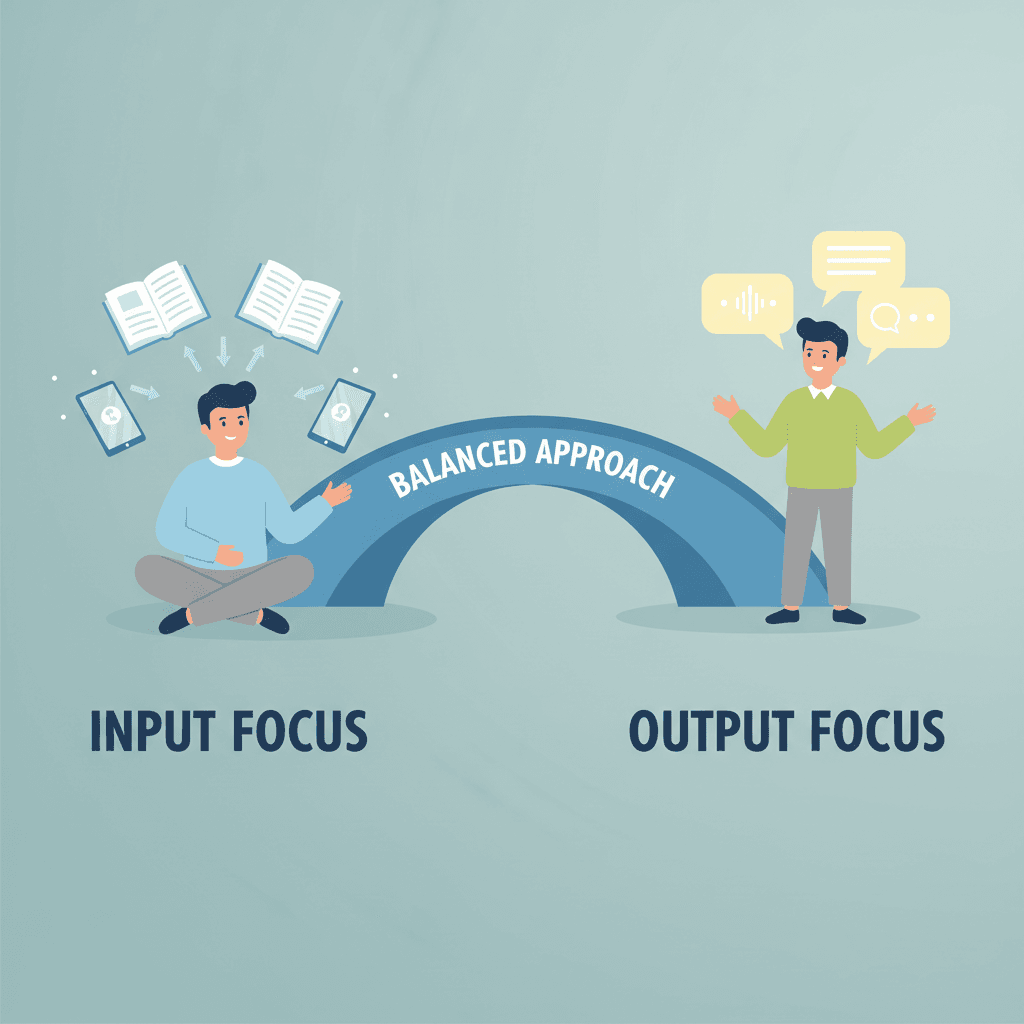
For years, the language learning community has been dominated by two main philosophies. On one end, you have the 'Speak from Day One' approach, championed by figures like Benny Lewis. This philosophy encourages learners to start speaking immediately, embracing mistakes as a core part of the process. On the other end is the 'Input-First' or 'Silent Period' approach, advocated by polyglots like Steve Kaufmann. This method prioritizes building a strong foundation of understanding through massive amounts of listening and reading before attempting to speak.
It’s tempting to view these as opposing rules you have to choose between, but that creates unnecessary pressure. A better way to see them is as two ends of a flexible spectrum. You don't have to be a 'Day One' purist or remain silent for six months. The modern consensus is that your perfect spot lies somewhere in between. Today's most effective methods encourage starting to speak and listen early to build confidence and reduce anxiety, focusing on communication over grammatical perfection from the start. Your journey is unique, and finding your comfortable starting point on this spectrum is the key to success.
Language company Pimsleur advises adults to “start speaking early” rather than waiting for a feeling of 'readiness' that may never come. Interestingly, while children are often seen as superior learners, adults tend to grasp vocabulary and grammar patterns more quickly in the early stages, making early speaking practice particularly beneficial. You have powerful pattern recognition skills—it's time to put them to work!
The fastest evidence-based methods in 2026 all share a common thread: a daily routine that includes around 20 minutes of real-time AI conversation practice. This trend is reflected in major apps like Duolingo, which now integrate AI-powered immersive scenarios, signaling an industry-wide shift towards making speaking a core part of the experience from the beginning. The message is clear: the tools are here to help you start now.
Your 'Speaking Readiness' Checklist: A Self-Assessment
So, how do you find your place on the spectrum? Instead of guessing, you can use a simple checklist to assess your own readiness. This isn't a pass/fail test. It's a tool for self-reflection that empowers you to make an informed decision. Answering these questions honestly will help you understand where you are, not just in your knowledge, but in your confidence. Remember, research shows that speaking progress is one of the hardest things for learners to measure on their own, which is why a moment of guided reflection can be so valuable.
This checklist is divided into two parts: Foundational Knowledge (what you know) and Psychological Readiness (how you feel). Both are equally important for taking that first step into conversation.
Foundational Knowledge (The 'Input' Check)
This section is about the raw materials you have to work with. According to the 'comprehensible input theory,' we acquire language by understanding messages. Before you can output, you need some input. Ask yourself the following:
- •Do I know at least 100-200 of the most common words in the language? (Think pronouns, basic verbs, question words).
- •Can I introduce myself? (e.g., 'My name is...', 'I am from...').
- •Can I understand a very simple, slowly spoken question? (e.g., 'What is your name?', 'How are you?').
- •Can I form a basic 3-4 word sentence, even if the grammar isn't perfect? (e.g., 'I want water', 'I like dogs').
If you can tick off a couple of these, you have more than enough to start. The goal isn't to have a deep conversation, but to start using the building blocks you've already collected. An evidence-based daily routine balances this kind of input with output, often combining vocabulary review with AI conversation and some grammar study.
Psychological Readiness (The 'Confidence' Check)
This is often the biggest hurdle. Language anxiety is real, but it can be managed. Your mindset is just as critical as your vocabulary. Be honest with yourself here:
- •Am I willing to make mistakes in front of someone (or something, like an AI)?
- •Am I okay with sounding like a beginner and having a strong accent?
- •Is my desire to communicate and connect stronger than my fear of being judged?
- •Do I see mistakes as failures or as opportunities to learn?
Feeling nervous is completely normal. However, if the fear feels paralyzing, it's a sign that you might need a safer first step to build confidence. A 2026 study on university students confirmed this, finding that academic confidence was the single strongest predictor of a learner's readiness to speak, while language anxiety was a significant barrier. The good news? Confidence isn't something you're born with; it's something you build, one small conversation at a time.
In fact, a 2026 trend report revealed that learners in 2025 widely adopted AI chat-partners and pronunciation tools specifically to build confidence by making mistakes in a safe, pressure-free environment before talking to real people. You can do the same.
The Safest First Step: Pressure-Free Practice With an AI Tutor
If your 'Confidence Check' revealed some hesitation, you're in the perfect position to leverage the most powerful tool available to learners today. Think of an AI tutor as 'Step 0' on your speaking journey. It’s the practice round before the game, the dress rehearsal before opening night. Platforms like SpeaksyAI (at speaksyai.com) offer a judgment-free space where the stakes are zero.
Why is this so effective? An AI tutor is infinitely patient. It doesn't care if you mispronounce a word a hundred times. It won't get frustrated if you pause for ten seconds to find the right vocabulary. This complete absence of social pressure allows you to experiment, make mistakes, and build a foundational layer of confidence privately. Advanced AI tutors can even provide instant, detailed feedback on your pronunciation and grammar, helping you correct errors without the embarrassment of being corrected by a person.
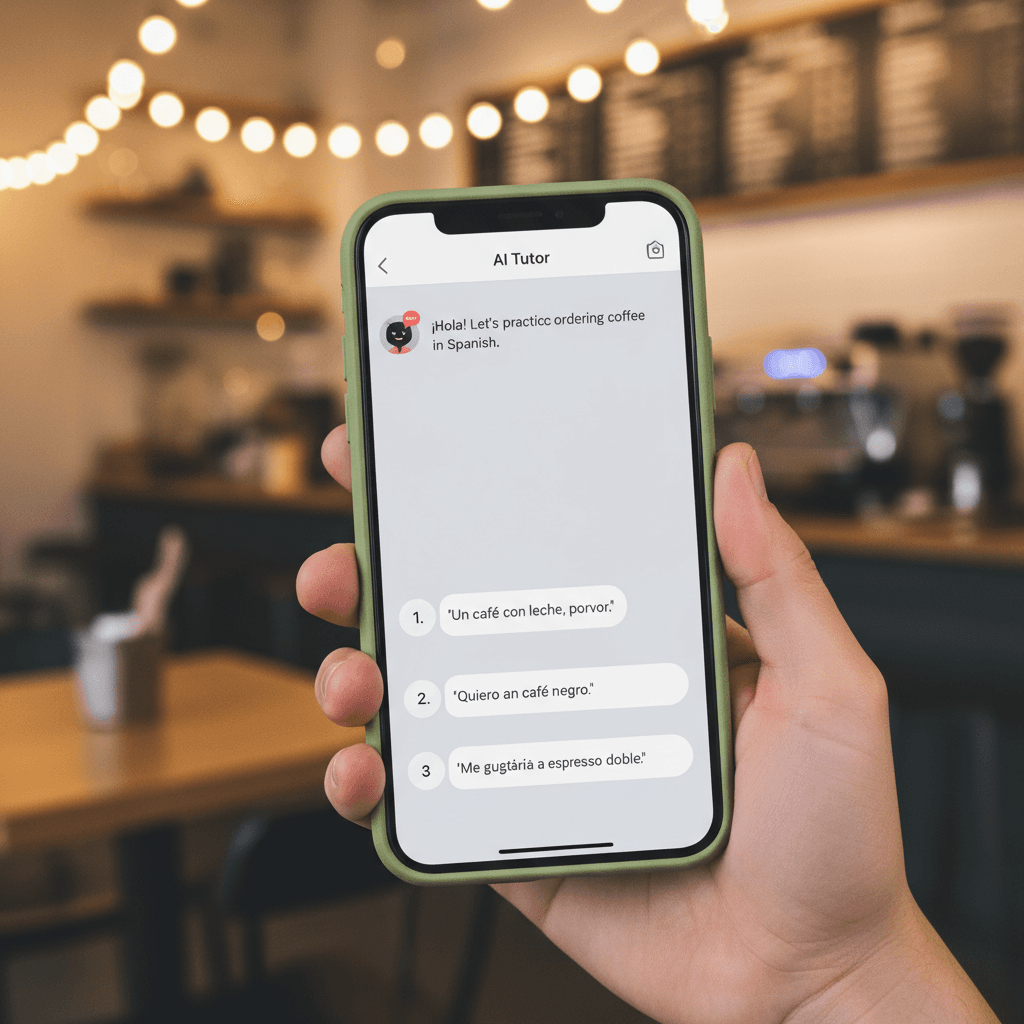
This approach isn't just a theory; it's considered the highest-leverage tool for language learners in 2026, making it possible to start speaking from day one without fear. You can use it to roleplay real-life situations, like ordering food or asking for directions, until you feel comfortable enough to try it in the real world. It’s the perfect bridge from silent study to real conversation.
How to Have Your VERY First Conversation (With Scripts!)
Theory is great, but let's get practical. One of the biggest obstacles to starting is not knowing what to say. So, we're giving you scripts. You can start speaking when you have as few as 50 to 100 core words. The secret is to use conversational 'chunks'—common phrases and sentence fragments—that you can use immediately. Below are two scenarios for your very first conversation.
Scenario 1: With an AI Tutor like SpeaksyAI
Here, you literally cannot make a mistake. The goal is just to start. You can be as simple as you need. Try one of these prompts to get the ball rolling. Just say it out loud to your AI partner:
- •"Hi. My name is [Your Name]. I am from [Your Country]. I am learning [Language]."
- •"Let's talk about food."
- •"Can you ask me simple questions?"
- •"Hello. How are you?"
That's it. The AI will respond, and you just do your best to answer. Remember, the fastest evidence-based method for 2026 involves a daily routine of just 20 minutes of this exact type of practice. It's accessible, effective, and available 24/7.
Scenario 2: With a Human Partner
Ready to talk to a person? Amazing! The key to a successful first human conversation is to give yourself a safety net. These 'scaffolding' phrases manage expectations and help you control the conversation's pace. They show your partner that you're a beginner and may need a little help.
- •"Hello, I'm just beginning to learn [Language]. Please speak slowly."
- •"How do you say [English word] in [Language]?"
- •"Can you repeat that, please?"
- •"I don't understand. What does that mean?"
Memorizing these phrases is one of the most powerful things you can do. It puts you in control and turns a potentially stressful interaction into a supportive learning experience. And with digital platforms making it easier than ever to find practice partners, you can have these first conversations from the comfort of your home.
Setting Realistic Speaking Goals for Your First 90 Days
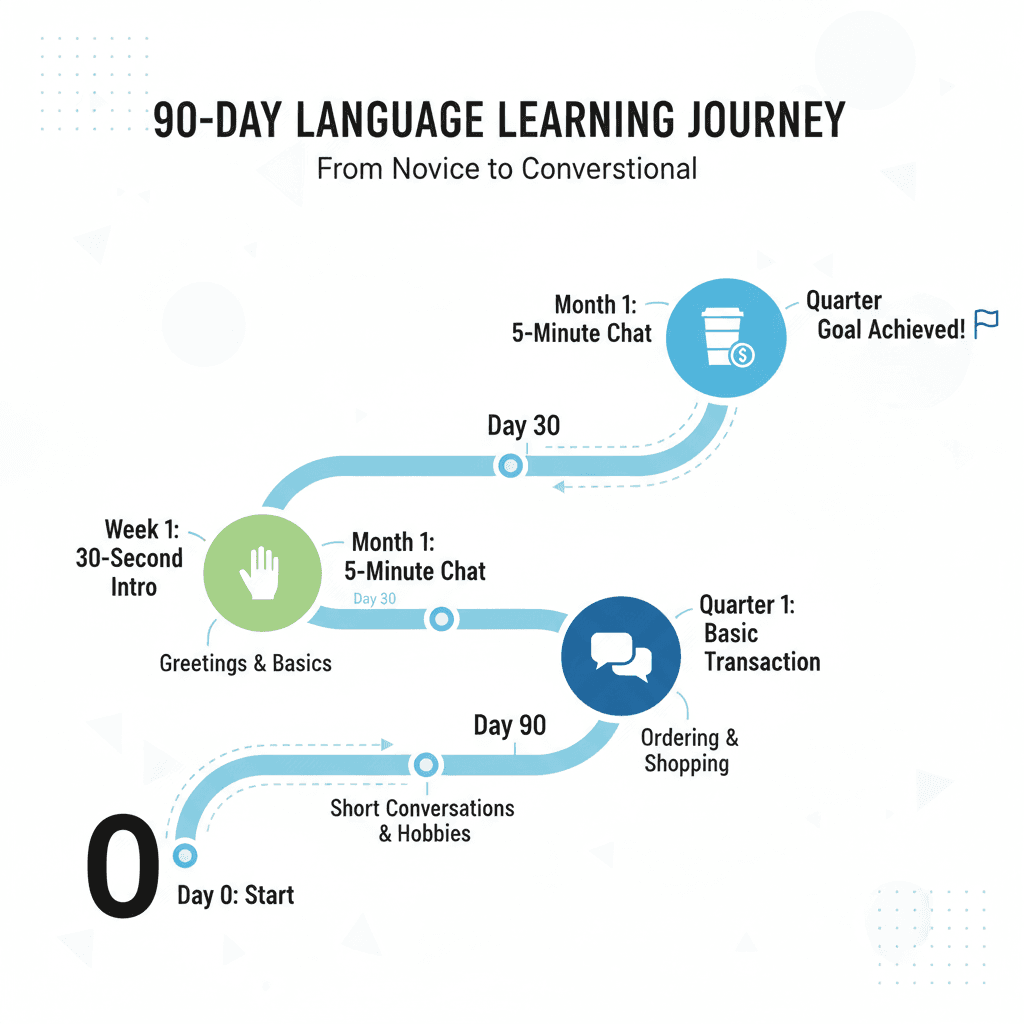
A journey of a thousand miles begins with a single step, and your language journey is no different. The key to staying motivated is to set small, achievable goals. A 90-day framework is perfect because it's long enough to see real progress but short enough to maintain focus. A great overarching goal for your first 90 days could be to have a 5-minute conversation with a native speaker. Let's break that down into even smaller wins.
Your First Week: The 30-Second Intro
Your Goal: Confidently introduce yourself, say where you're from, and state that you're learning the language. This is your elevator pitch. Practice it with an AI tutor until it feels automatic. Just 20-30 minutes of daily exposure and practice is enough to master this initial step and build momentum.
Your First Month: The 5-Minute Chat
Your Goal: Have a simple, 5-minute conversation on a familiar topic. Choose something you know well, like your hobbies, your family, your job, or your pet. Consistent, short daily sessions are crucial here. Even 10-20 minutes a day of active speaking practice will build the vocabulary and confidence you need to sustain a short chat.
Your First Quarter: The Basic Transaction
Your Goal: Handle a simple, real-world task. This is where your learning becomes tangible. Aim to complete a transaction like ordering a coffee, buying a train ticket, or asking for directions to the bathroom. This shifts your progress marker from abstract course levels to real communication, which is incredibly motivating. Practice these scenarios in an AI app first to build the scripts you'll need.
Frequently Asked Questions
Frequently Asked Questions
Ready for Your First Conversation?
Practice speaking from your first day in a judgment-free space. Get pronunciation feedback and build confidence with SpeaksyAI's AI language tutor.
Join the Waitlist