Can't Understand Native Speakers? A Diagnostic Guide to Fix It
It's frustrating when you can't understand native speakers, even after months of study. This guide helps you diagnose *why* and gives you a clear plan to improve.
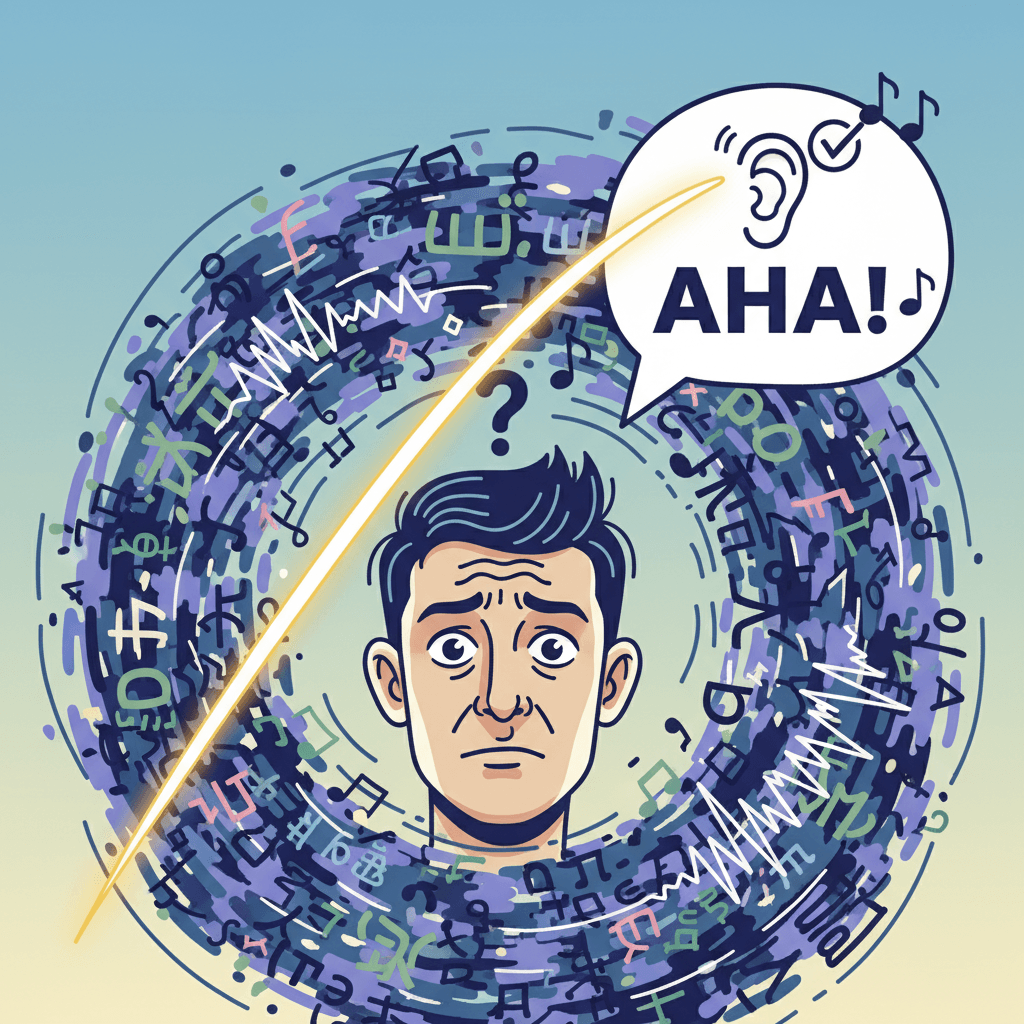
It’s Not You, It’s the Textbook: Why Real Speech Is Hard
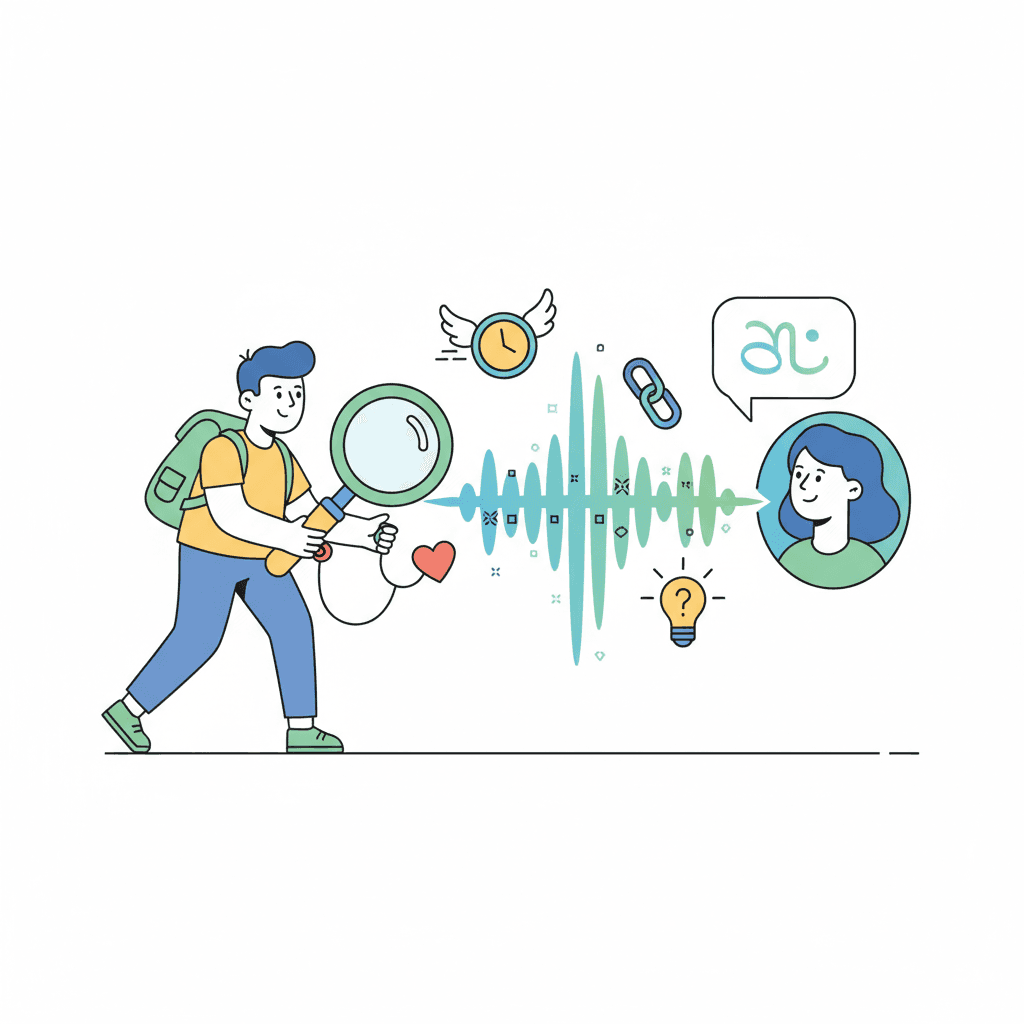
That feeling of panic when a native speaker is talking and the words just wash over you? It’s a universal experience for language learners. You’ve spent months, maybe years, learning vocabulary and grammar, but when faced with a real conversation, it all falls apart. If you're wondering what to do when you don't understand native speakers, the first step is to realize it’s not your fault. As one January 2026 article put it, 'If you can't understand native speakers, it's not because you're bad at languages. It's because you've been training the wrong skills.' The gap between the slow, careful audio in your learning app and the fast, messy reality of human speech is vast.
Modern language acquisition theory centers on a powerful idea called 'comprehensible input.' It suggests that we learn a language best not by memorizing rules, but by understanding messages that are slightly above our current level. This is where traditional methods often fail. They give you the building blocks (words and grammar) but don't train you to process those blocks in real-time, under the pressure of a live conversation. You can’t speak confidently if you don’t have confident input.
The challenge is also neurological. A breakthrough June 2026 brain study revealed that learning speech depends more on how our brains process sounds and sensations than on the motor areas used for speaking. This means listening comprehension is a unique skill that must be trained separately. You have to teach your brain to recognize new sound patterns, rhythms, and the natural flow of a new language—a skill that simply knowing more words won't solve.
To top it off, native speakers in places like the US, UK, or Australia are often unaware of these difficulties. They speak quickly, use jargon, and don't always adjust for non-native speakers. A 2025 research paper highlighted this 'demand for real-time comprehension and response... under stress' as a key challenge. This article will serve as your diagnostic guide. First, we’ll pinpoint *why* you’re struggling, and then we’ll build a targeted plan to help you finally bridge the gap.
The Diagnostic Toolkit: Pinpoint Your Listening Challenge
Before you can fix a problem, you have to understand it. Instead of just trying harder or listening more, let’s take a diagnostic approach. Improving your listening comprehension starts with identifying your specific obstacle. Are you losing the thread because of speed, unfamiliar words, or something else entirely? A 2026 paper on diagnostic assessment emphasized the importance of moving beyond a simple pass/fail score to identify a learner's specific strengths and weaknesses.
Read through the questions below and see which one resonates most with you. This self-assessment will help you focus on the exercises and strategies that will make the biggest difference for you.
- •Do you get lost when people talk quickly? (Problem: Speed)
- •Do individual words seem to blur together into one long sound? (Problem: Connected Speech)
- •Do you recognize the words but miss the overall meaning? (Problem: Slang & Idioms)
- •Do you do okay one-on-one but panic in a group or noisy place? (Problem: Environment)
Is it the Speed? (Rate of Speech)
If you find yourself constantly asking people to slow down, you’re dealing with a rate-of-speech challenge. According to the National Center for Voice and Speech, the average English speaker talks at about 150 words per minute (WPM), and can easily reach 180 WPM. In contrast, many language courses use artificially slow speech, often around 80-100 WPM. This mismatch means your brain simply hasn't been trained for the real world.
This speed difference dramatically increases your cognitive load. As noted by Lingtuitive in 2026, you have significantly less time to process sounds, identify words, parse grammar, and comprehend the overall message. It’s like trying to assemble a puzzle while the pieces are being thrown at you twice as fast as you're used to. It's no wonder you feel overwhelmed.
Is it the 'Flow'? (Connected Speech)
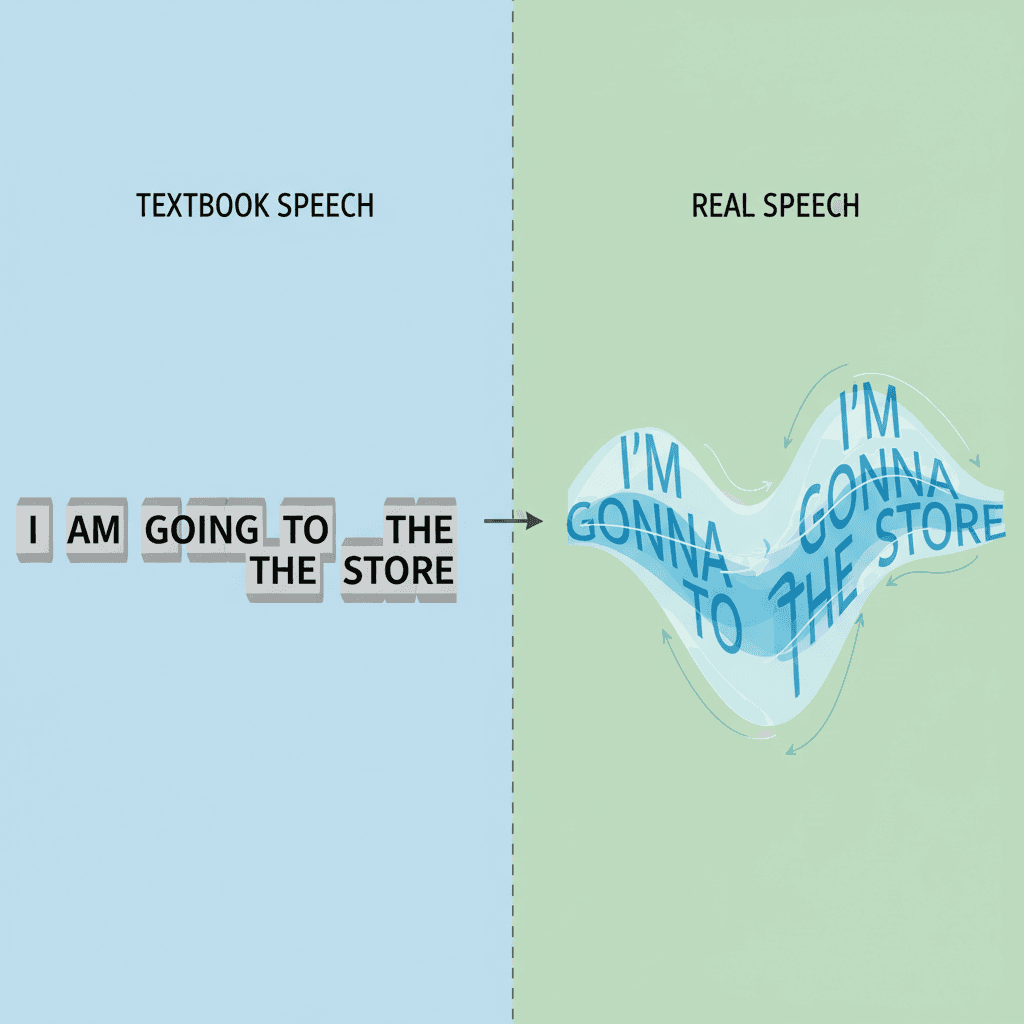
Does it ever feel like native speakers don’t actually use separate words, but one long, flowing sound? You're not imagining it. You're hearing connected speech. This is a natural feature of English rhythm where sounds are linked, dropped, or changed at word boundaries. For example, 'want to' becomes 'wanna,' and 'an apple' sounds more like 'a-napple.' As IATEFL PronSIG notes, these features are present in all fluent speech, not just fast or 'sloppy' talking.
A primary reason learners struggle is this exact gap between textbook audio and real-world speech. You’ve learned the 'correct' pronunciation of each word in isolation, but you haven't been taught to recognize them when they're squished together in a sentence. This is where dedicated active listening techniques become crucial.
One language learner on a 2025 Reddit forum shared a great tip: treat it like a game. When watching TV, pause after a line that sounds confusing, try to repeat it exactly as you heard it, and then check the subtitles. This active mimicry trains your ear to recognize these 'hidden patterns' of connected speech.
Is it the Words? (Slang & Idioms)
Sometimes you understand every single word, but the sentence makes no sense. Welcome to the world of slang and idioms! Even if you have a great vocabulary, non-native speakers often know significantly fewer words than native speakers, especially the informal, regional, or culturally specific ones. An American telling you to 'spill the tea' isn't talking about a beverage, and an Australian friend inviting you over in the 'arvo' just means the afternoon.
Even native speakers run into this. A 2025 Reddit thread showed many native English speakers admit they often encounter unfamiliar professional jargon or regional slang and have to infer the meaning from context. So if you feel lost, remember that even native speakers need to do this sometimes. The key is to not let one unfamiliar word derail your entire comprehension.
Textbooks can't keep up with evolving language. To tackle this, language experts at Elite Asia recommend consuming current, authentic media. Following social media accounts from the US, UK, India, or Canada, listening to popular podcasts, and watching current TV shows will expose you to the living language as it's spoken today, not ten years ago.
Is it the Environment? (Group Talk & Background Noise)
Maybe you do fine in a quiet, one-on-one chat, but the minute you’re in a bustling café, a business meeting, or a dinner party, it all falls apart. You’re battling two extra challenges: background noise and multiple speakers. Research confirms that while background noise makes listening harder for everyone, the negative effect is more pronounced for non-native listeners. Your brain is already working overtime to decode a foreign language; filtering out chatter and clatter adds another heavy layer of cognitive load.
Group conversations add 'Talker Variability.' A 2025 review noted that for advanced learners, hearing different accents and speaking styles can be beneficial. But for those still building their skills, it can 'thwart the discovery' of language patterns. Trying to track who is speaking, interruptions, and overlapping sentences is mentally exhausting. When listening to unfamiliar speech, your brain relies more on context to fill in the gaps, which is much harder to do with multiple, competing speakers.
Your 'In-the-Moment' Survival Kit: What to Say When You're Lost
Okay, so you’re in a conversation and you feel that 'freezing' panic start to set in. Your instinct might be to nod and smile, but that just digs a deeper hole. The goal is to regain your footing without stopping the conversation cold. Having a few strategic phrases ready can make all the difference.
First, understand why the generic 'Can you repeat that?' often fails. As sources like Talkpal AI point out, a native speaker will usually just repeat the same fast, connected speech that confused you in the first place. You need to guide them to help you better. Effective strategies involve pinpointing the problem or asking for a different approach.
- •To ask for rephrasing: 'I'm sorry, I didn't quite follow that. Could you say it in a different way?'
- •To target a specific word: 'I'm not familiar with the expression 'chuffed'. What does it mean in this context?'
- •To confirm your understanding (active listening): 'So, if I'm hearing you right, you're saying that... [rephrase what you think they said]?' This is a powerful technique that supports comprehensible input.
- •To politely ask for a slower pace: 'My English is still a work in progress. Could you slow down just a little bit for me?'
Practicing these 'conversational repair' strategies is key. A 2026 industry analysis highlighted the rise of AI tutors as a 'comprehension gym' where learners can practice asking for clarification in a low-pressure environment before trying it in the real world.
Build Your Comprehension Gym: Targeted Listening Exercises
Now that you’ve diagnosed your primary challenge, it’s time to build a workout routine to strengthen that specific listening muscle. These targeted exercises will help you actively train your ear for speed, flow, and slang.
If you struggle with SPEED: Use playback controls on YouTube or podcast apps. A common exercise recommended by FluentU is to first listen to a clip at 0.75x speed to catch every detail. Then, listen at normal speed. Finally, challenge yourself by listening at 1.25x speed. This trains your brain to process information more quickly over time.
If you struggle with FLOW: Try 'listening transcription.' Find a short audio clip (30-60 seconds) with a transcript. Listen to the first sentence and write down exactly what you hear. Then, compare it to the transcript. You’ll be amazed at the connected speech patterns you missed. This exercise is fantastic for improving your ability to distinguish words within fast speech.
If you struggle with SLANG & ACCENTS: You need more authentic materials. Instead of generic news, find a YouTube channel by a creator from Glasgow, a podcast hosted by someone from Texas, or a comedy show set in Mumbai. This targeted exposure, as recommended by the Translate AI Blog, is the only way to get comfortable with the huge diversity of the English language.
A technique for everyone (Shadowing): Shadowing is a powerful method where you mimic a native speaker in near real-time, repeating what they say just a second or two after them. It feels strange at first, but some research suggests it can boost listening comprehension by up to 40% because it forces you to focus intently on pronunciation, rhythm, and intonation.
Train Your Ear with an AI Language Tutor
One of the biggest hurdles to language listening practice has always been access. You can’t exactly ask a new acquaintance to repeat a sentence five times at different speeds. This is where AI language partners are changing the game. They solve the 'practice problem' by providing a tireless, non-judgmental conversation partner available 24/7, as noted by Vertech Academy.
This is the 'comprehension gym' in action. You can build confidence in a safe space before you step into the real world. With an AI language partner like the one from SpeaksyAI (speaksyai.com), you can create a custom listening workout. You can literally tell your tutor: 'Tell me about your day, but speak quickly and use some slang.' Or, 'Explain the idiom ‘bite the bullet’ to me and use it in three different sentences.' This level of control, where you can adjust complexity on demand, is perfectly aligned with the 'comprehensible input' theory.
The best AI tutors are trained on high-quality data from native speakers across various dialects, ensuring the AI can model the nuances you’ll encounter in the real world. By practicing with an AI, you’re not just passively listening; you’re actively engaging, asking for clarification, and building the mental muscle needed for real conversations. This is the bridge from knowing English to *using* English confidently.
Putting It All Together: Your 30-Day Listening Action Plan
Knowing what to do is half the battle; doing it consistently is the other half. Language experts agree that consistency is far more important than intensity. A short, daily listening habit is the most effective path to long-term improvement. Rather than cramming for hours on the weekend, aim for 15-20 minutes of focused practice each day.
Here is a sample weekly schedule you can adapt based on your diagnosis. The goal is to mix different activities to keep it engaging and cover all your bases.
- •Monday (Active Listening): 15 minutes. Choose a podcast or YouTube video with a transcript. Listen once without looking, just for the general idea. Then, listen again while reading along to connect sounds to words.
- •Tuesday (Speed Training): 10 minutes. Use your AI tutor or a YouTube clip. Listen to a short story at normal speed, then at 1.25x speed. Then, ask your AI tutor to re-tell it slowly (0.75x speed).
- •Wednesday (Accent Focus): 10 minutes. Find a short news report or interview with a speaker from a region you find challenging (e.g., Ireland, South Africa). Don't worry about understanding everything; just get your ear used to the rhythm.
- •Thursday (Transcription Practice): 15 minutes. Pick a 1-minute audio clip. Listen and transcribe it line by line. Check your work against the official transcript and note the connected speech you missed.
- •Friday (Fun Friday): 20 minutes. Watch a TV show or movie you enjoy. Use English subtitles. Write down one new slang word or idiom you learned.
- •Weekend (Review & Relax): Take 10 minutes to look over your notes from the week. Have a low-pressure, fun conversation with your AI partner about your weekend plans.
Remember, the goal is gradual, consistent progress. As users on the LingQ forum note, achieving the hundreds of hours needed for mastery is a long-term goal best accomplished through these small, daily steps. Celebrate the small wins, and trust the process!
Frequently Asked Questions
Frequently Asked Questions
Ready to Practice in a Safe, Controlled Space?
Stop feeling lost in conversation. With SpeaksyAI, your AI language tutor, you can adjust the speed, ask for clarification, and practice with different accents on your own terms. Build real comprehension skills and speak confidently.
Join the Waitlist