Stop Native Speakers Switching to English: A 4-Step Plan
It's a universal learner frustration: you're trying to practice, and the native speaker switches to English. Here’s a plan to understand why and what to do about it.

It’s one of the most frustrating moments for any language learner: you’re having a conversation, finding your rhythm, and then it happens. The native speaker switches to English. If you’re wondering how to stop native speakers from switching to English, you've come to the right place. The solution isn't about studying harder; it’s about having a clear, confident plan. This four-step system will give you the tools and scripts to keep the conversation in your target language, build your confidence, and finally break through the intermediate plateau.
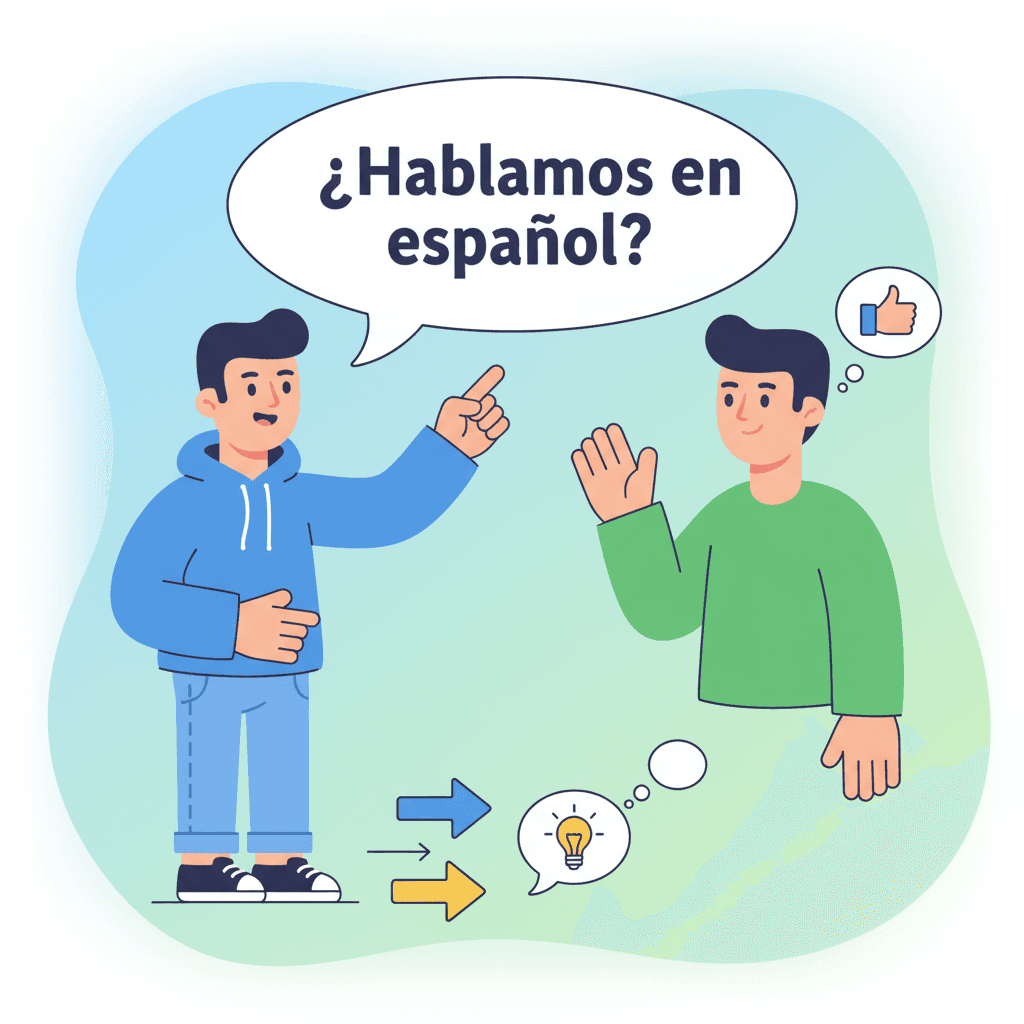
First, Understand Why Native Speakers Switch (It's Not You)
Before you can solve the problem, it’s crucial to understand that when a native speaker switches to English, it’s almost never a judgment on your language skills. More often than not, it’s an act of politeness, efficiency, or even an opportunity for them. Community discussions in language learning forums consistently show that learners who reframe this moment feel less discouraged and more empowered to steer the conversation back.
According to general findings from sociolinguistic research, this behavior, known as 'code-switching,' is a natural and often unconscious habit for bilinguals. They might do it to find the most precise word or simply to keep the conversation flowing smoothly. Understanding the real reasons can help you take it less personally and respond more strategically. Most switches happen for one of these reasons:
- •They want to be helpful. Many people switch to English because they think they're making the conversation easier for you. Based on observations in cross-cultural communication, this is often a cultural norm rooted in helpfulness; they perceive they are easing your burden, not insulting your ability.
- •They want to be efficient. If you’re in a busy coffee shop in London or ordering at a fast-paced restaurant in Sydney, the switch might just be about saving time for everyone.
- •They want to practice their English. Anecdotal evidence from language exchange communities suggests that your conversation partner might see you as a rare chance to practice their own English skills, especially if they live in a non-English-speaking country.
- •It's a cognitive habit. Linguists find that code-switching is a natural hallmark of bilingualism, not a sign of your failure. Their brain is simply picking the most accessible path of communication.
Once you realize the switch isn't about you, you can stop feeling defeated and start using the proactive strategies that keep the conversation right where you want it.
Step 1: The Proactive Setup – Set Expectations Before You Speak
The best way to keep a conversation in your target language is to set the right expectations from the very first sentence. Many learners get stuck at the intermediate plateau because their practice sessions lack clear objectives. Internal research from 2026 highlights 'vague goals' as a primary reason learners quit. By stating your intention to practice right away, you create a clear, shared goal for the interaction and make it much less likely they'll switch.
This doesn't have to be a big, formal announcement. It can be a simple, friendly phrase that establishes a 'contract' for the conversation. You're not just asking a question; you're initiating a practice session, and most people are happy to help.
Before you dive into your conversation, try saying something like this in your target language:
“Hi, I’m learning [Language]. Would you mind if we only speak in [Language]? I really need to practice!”
Another powerful technique, often recommended by experienced learners on forums like Language Learning Stack Exchange, is to use native-sounding filler words (like euh in French, este in Spanish, or ano in Japanese) early in the conversation. This subtly signals your comfort and commitment to the language, making the other person see you as a capable conversation partner, which aligns with the modern 'speaking and listening first' educational trend that measures success through real conversation.
Step 2: The 'Redirect' – Scripts to Keep the Conversation on Track
Even with a great setup, switches can happen. That’s when you need the 'Redirect'. This is your toolkit of polite, ready-to-use phrases that get the conversation back on track. Using them builds what we at SpeaksyAI call 'conversational resilience'. An internal analysis of 2026 industry trends shows this skill is critical for overcoming the frustration that causes learners to hit a plateau. When a native speaker defaults to English, you won’t feel defeated; you’ll have a plan.
Remember, the switch is often a reflex. A 2025 eye-tracking study published in EurekAlert! found that switching between languages carries a high 'cognitive load.' The other person might be switching to English simply because their brain took a shortcut, not because they gave up on you. Your gentle redirect helps put them back on the right path.
Polite Scripts to Reclaim the Conversation
- •The Gentle Nudge: Perfect for service situations or with strangers. It’s appreciative and soft. “Thanks, I appreciate that, but I’d love to try to continue in [Language] if that’s okay?”
- •The Direct Request: Best for friends, language exchange partners, or colleagues. It’s clear and confident. “Could we please stick to [Language]? It’s really important for my progress.”
- •The 'Play Dumb' Response: A lighthearted way to redirect. If they ask you something in English, just respond to their question in the target language. This often works seamlessly, as they will likely switch back to match you.
- •The Humorous Approach: Use this with friends to keep things light. “Whoa, my English brain is switched off today! Let’s keep going in [Language].”
Having these scripts ready reduces your own hesitation. According to an article from Practice Me, this helps your brain move from effortful processing to 'automaticity,' signaling conversational confidence that makes your partner less likely to switch in the first place. Every time you successfully redirect the conversation, you’re winning back a 'micro-immersion' opportunity, which research from EurekAlert! (April 2025) suggests is vital for your brain’s adaptation to a new language.
Step 3: The 'Resilient Response' – How to Continue Confidently
You’ve successfully redirected the conversation. Now what? The most critical part of the 'Resilient Response' is to simply continue speaking the target language with confidence. Don’t apologize for your speed or mistakes. Just pick up where you left off. This reinforces the 'contract' you set and shows your partner that you are comfortable continuing, even if it’s a bit slower.
This can be psychologically challenging. Experts at 7 Mindsets note that language learners often report a lower 'social self-concept,' which makes it hard to be resilient in the face of conversational challenges. However, a 2025 study on non-native speakers, titled Transitioning from Silence to Confidence, found that building confidence comes directly from overcoming these small hurdles through consistent practice. Pushing through the awkwardness is the practice.
Internal research on learner attrition shows that unrealistic expectations about speaking speed are a major reason people quit. The key to conversational resilience isn't speed; it's persistence. By calmly continuing in your target language, you non-verbally communicate your commitment and comfort level. This process is closely tied to strategies like remembering words under pressure and learning to think directly in a new language.
Step 4: Build 'Switch-Proof' Skills in a Safe Environment
So, why does your conversation partner feel the need to switch in the first place? Often, it’s because of hesitation. When you pause to search for a word or a grammatical structure, their helpful instinct kicks in. The ultimate solution for how to stop native speakers from switching to English is to build speaking skills that are so smooth and confident that switching doesn't even occur to them. But you can't build that confidence in conversations that keep getting cut short.
This creates a classic catch-22: you need practice to get smooth, but you can't get practice because you're not smooth enough. This is where a non-judgmental practice partner becomes essential. A 2026 study on ResearchGate noted that strict 'target-language only' rules in classrooms can create anxiety and silence. Learners need a safe space to lower this 'affective filter' and just speak. The language learning industry is rapidly adopting AI to solve this, with a 2025 report from Pearson highlighting a major trend toward AI-driven systems that focus on speaking first.
An AI tutor provides an infinitely patient partner, which is why we developed SpeaksyAI's AI conversation partner. It's designed to give you a space where the cognitive load of speaking is the only challenge. The AI will never get frustrated, never judge your accent, and most importantly, it will never switch to English. This allows you to build the speed, automaticity, and conversational resilience you need for the real world, at your own pace. As analysis from Vertex AI Search (2026) suggests, this type of consistent, unpressured practice is key to reducing the cognitive load that causes hesitation.
This kind of dedicated immersion is invaluable. Research published in UIJRT (April 2025) confirmed that excessive code-switching from a conversation partner can detract from a learner's engagement and actively hinder their progress toward proficiency.
Adapting Your Strategy for Different Social Situations
Your approach to keeping the conversation in the target language should change depending on who you're talking to. A direct request that works with a close friend in Toronto might feel awkward with a busy barista in Melbourne. A 2026 study on learners' coping strategies found that an ineffective but common tactic is to simply pretend to understand, which ultimately helps no one. A better approach is to have different levels of directness for different contexts.
- •With Friends or Language Exchange Partners: You can be the most direct here. You have a shared history and they are invested in your success. A simple, “Hey, can we stick to Spanish? It’s a huge help for me,” is perfectly appropriate language exchange etiquette.
- •With Service Staff (Baristas, Waiters, etc.): This is where persistence is your best tool. Don't make a direct request. Instead, just continue speaking the target language. If they answer in English, you answer back in the target language. They will almost always switch back to accommodate you.
- •With Strangers and New Acquaintances: This is the perfect time to use the 'Proactive Setup' from Step 1. By setting the expectation upfront, you frame the entire interaction and avoid any potential awkwardness later.
Feeling anxious about insisting on another language is normal, but remember that multilingualism is common. According to 2019 data cited in the Conscious and Inclusive Language Guide for 2026, over 22% of the U.S. population speaks a language other than English at home. Whether you're in the US, UK, Canada, or India, there's a good chance the person you're talking to understands the effort involved. They may even be bilingual themselves.
Adapting your strategy helps you set realistic goals. As industry trends for 2026 show, learners often quit due to unrealistic expectations about speed. Prioritizing successful communication over perfect fluency in each context is a more sustainable path to your goals.
Your Questions Answered: Keeping the Conversation Going
Frequently Asked Questions
Ready to Build Switch-Proof Confidence?
Practice speaking with an AI tutor that never switches to English. Build the speed and confidence to handle any real-world conversation.
Join the Waitlist