Your Guide to Speaking Practice When You Live With Others
Want to practice speaking a new language but feel awkward around your family or roommates? Learn practical steps for quiet practice and how to create a supportive environment at home.
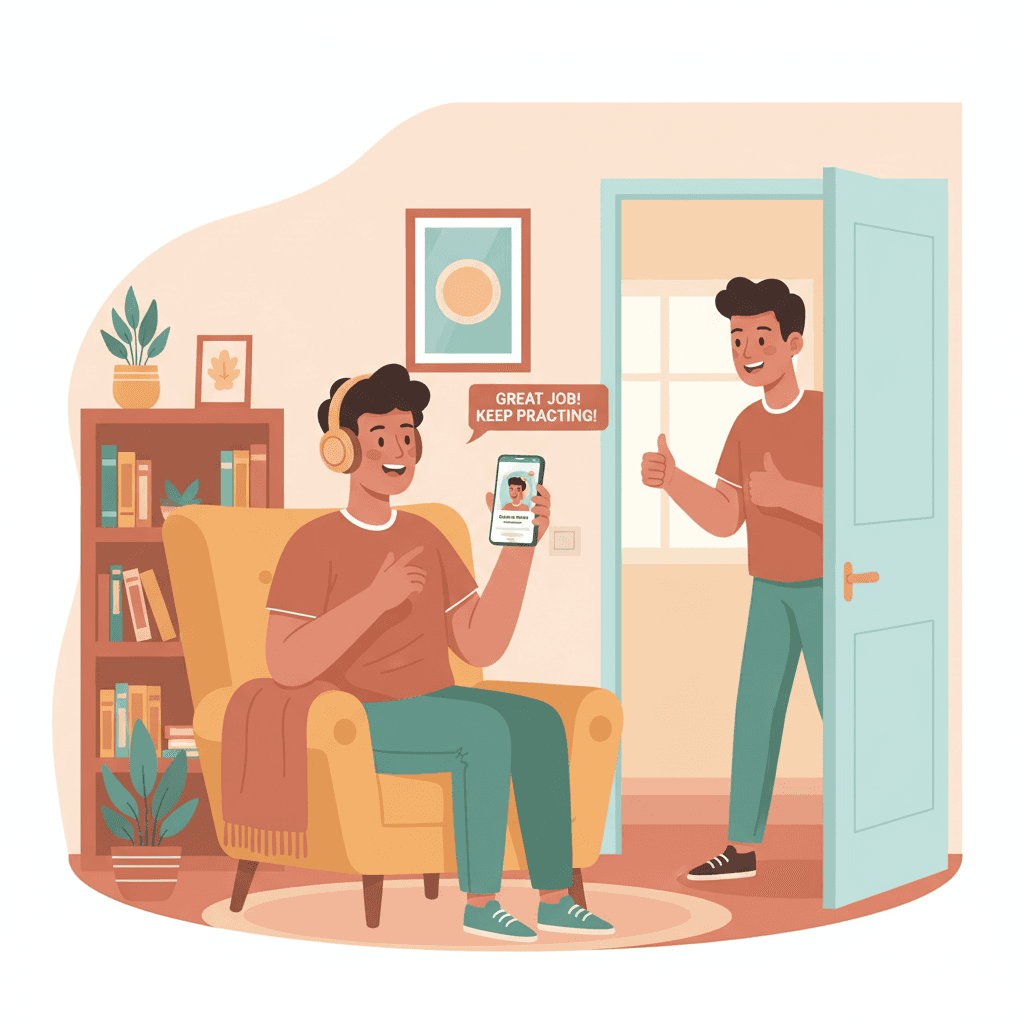
Trying to figure out how to practice speaking a language when you live with others can feel like a secret mission. You’re motivated to learn and ready to speak, but you’re also worried about disturbing your family, roommates, or neighbors—or simply feeling self-conscious. The good news is, you don’t need a soundproof booth or an empty house to build fluency. You just need the right system. This guide will give you a step-by-step approach for effective, quiet language practice at home, helping you build the confidence to speak, no matter who might be in the next room.
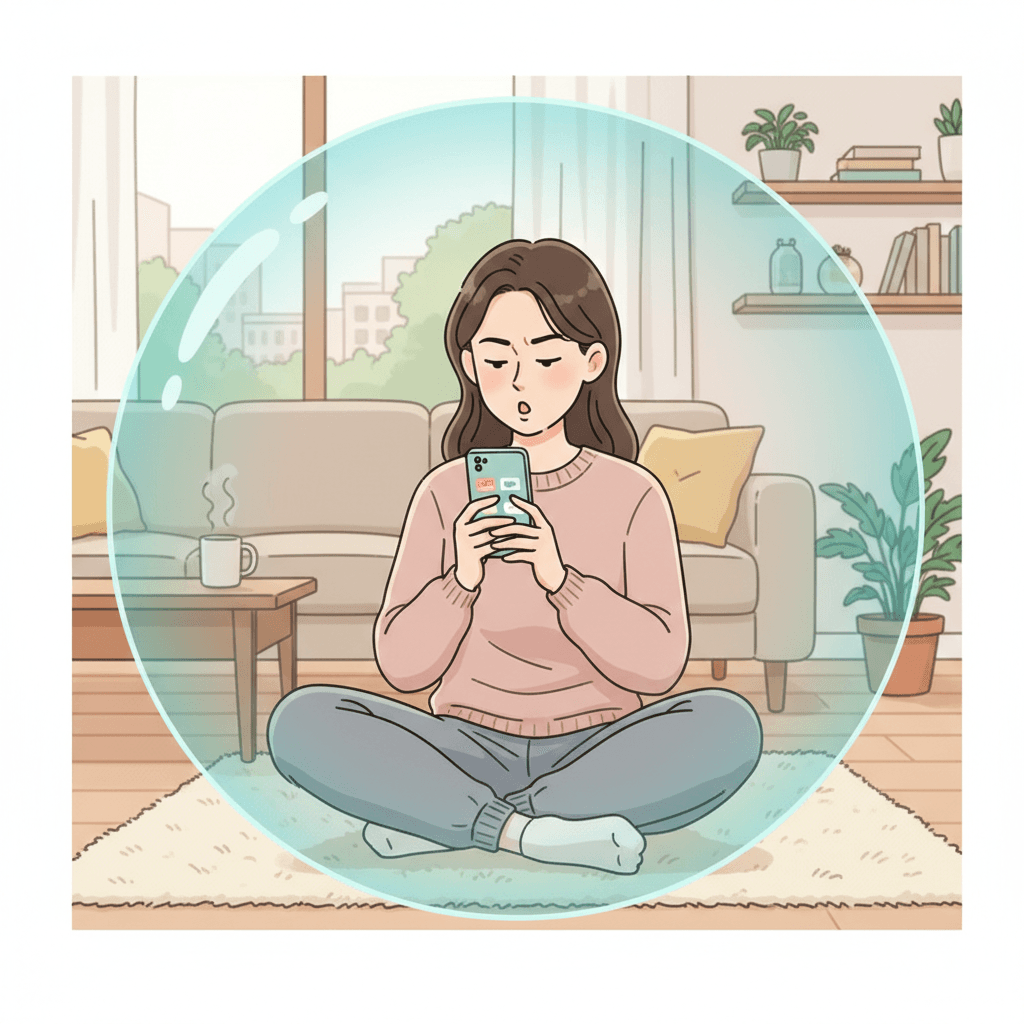
Why Practicing at Home Feels So Awkward (And How to Reframe It)
If you feel awkward practicing your new language aloud, you are not alone. That feeling of being judged or making mistakes is one of the biggest hurdles for learners. Social psychologist Dr. Alex Steinberg, writing on Medium in 2025, calls this the “perfection trap.” We worry so much about sounding perfect that we avoid practicing altogether. This fear is so common that modern guides on language practice from 2024 emphasize that managing anxiety is just as important as learning vocabulary. The first step is to recognize this feeling and give yourself permission to be a beginner.
The most powerful mindset shift you can make is to reframe your practice from a performance to a workout. You wouldn’t feel embarrassed doing push-ups at home to train for a sport, right? Speaking practice is the same. It’s a workout for your mouth, tongue, and brain. You’re building muscle memory and strengthening neural pathways. As 2025 articles on home immersion suggest, you can normalize this by starting small, like narrating your day in your head or quietly speaking to yourself. By focusing on the process, not the outcome, you take the pressure off and make practice something you do for you, not for an imaginary audience.
The 'Practice Bubble' System: Your Quiet Speaking Toolkit
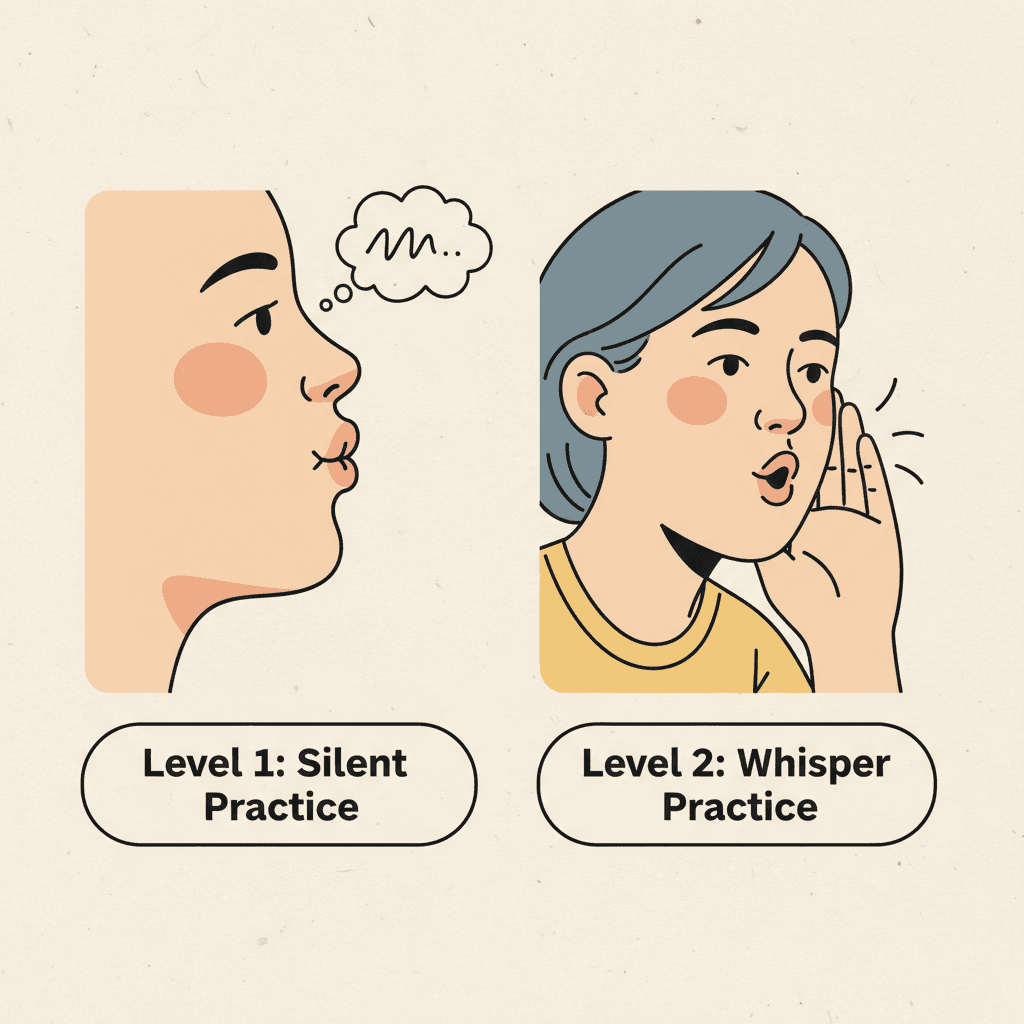
To overcome the challenge of a shared living space, we’ve developed the 'Practice Bubble' system. It’s a tiered approach that allows you to practice speaking effectively with little to no noise. You can choose a level based on how much privacy you have at any given moment. This system helps you build a consistent habit, turning moments of downtime into powerful learning opportunities. The goal is to create a personal space for practice, even when you're not physically alone. This is your toolkit for quiet language practice.
This system builds on techniques that polyglots and dedicated learners have used for years. The foundation is 'subvocalization,' or silent speech, where you articulate words to build muscle memory without making a sound. The next level up is the 'shadowing' method, where you quietly mimic a native speaker's audio. According to community discussions on platforms like Reddit in 2024, these methods are staples for at-home practice. They allow you to get the repetitions you need to improve your flow and pronunciation without disturbing anyone.
Level 1: Silent Practice (Mouthed Articulation)
The most discreet and surprisingly effective method is silent practice. This involves simply mouthing words, sentences, and conversations in your target language without making a sound. It might feel strange at first, but the science is solid. According to the principles of motor learning, high-repetition practice is what makes a physical skill automatic. As described in 'Motor Learning and Control: Concepts and Applications' (Magill & Anderson, 2021), silently articulating words is a form of high-repetition training for your mouth, tongue, and lips. You’re rehearsing the physical movements of speech, which builds crucial muscle memory for better pronunciation when you do speak aloud.
This silent rehearsal also has a powerful psychological benefit. Stephen Krashen's influential theory of second language acquisition, detailed in his 1982 book 'Principles and Practice in Second Language Acquisition,' introduced the concept of the 'affective filter.' This is a mental block caused by anxiety and self-consciousness that hinders learning. By practicing silently, you completely remove the fear of being overheard or making mistakes, which lowers this filter and creates an optimal state for your brain to absorb the language.
Level 2: Whisper Practice (The 'Practice Voice')
When you have a bit more privacy—perhaps in your room with the door closed or when your housemates are out—you can graduate to whisper practice. This is your 'practice voice.' Whispering engages your vocal cords more than silent mouthing and helps bridge the gap to full-volume speech. It's an excellent way to work on rhythm and intonation. Many learners report success with this; in a March 2026 discussion on Reddit, one user shared that they narrate their daily chores, like cooking a meal, in a quiet whisper. This turns a mundane activity into valuable speaking practice at home.
One of the biggest hurdles for learners is finding speaking partners, but as experts at language programs like Pimsleur note, you can build fluency on your own by creating consistent speaking habits. Whisper practice is a perfect example. The language industry has seen a major shift toward home-based immersion, recognizing that you don't need to travel to become fluent. Using your 'practice voice' regularly is a cornerstone of this approach, helping you speak confidently by making speech a daily, low-pressure activity.
Level 3: Private Practice (Using Your AI Language Tutor)
The final level of the 'Practice Bubble' system involves using technology to create a truly private, interactive experience. Start by using a good pair of noise-canceling headphones. This not only blocks out distractions but also creates a psychological sense of privacy, making you feel more comfortable speaking at a normal volume. From there, you can tap into the power of AI. A 2024 systematic review from ISSEN confirmed that practicing with an AI chatbot leads to significant gains in fluency and confidence while reducing anxiety. For learners who feel embarrassed practicing, experts at UCLA HumTech recommend AI partners as a private, non-judgmental environment to build skills.
This is where dedicated tools can make all the difference. An advanced AI tutor like SpeaksyAI is designed as the ultimate private practice tool, allowing you to have unlimited conversations without fear of judgment. The real magic is in the instant, private feedback. By using a speech-to-text, language model, and text-to-speech loop, it can analyze your pronunciation and give you immediate corrections—all within your headphones. This lets you overcome the fear of making mistakes and perfect your accent without anyone else ever hearing you. It's the most effective way to practice speaking alone and see rapid improvement.
How to Have the '5-Minute Talk' with Your Housemates
Sometimes, the biggest barrier isn't the actual noise you're making, but the fear of what others might think. A simple, proactive conversation can dissolve this awkwardness almost instantly. This isn't about asking for permission; it's about giving a friendly heads-up. Language learning community discussions frequently suggest this strategy, with learners sharing that it's a huge relief. As a 2026 study on roommate satisfaction published on ResearchGate found, prosocial communication improves household harmony. This small talk is exactly that.
To make it easy, use a simple, non-confrontational script. The key is to be casual and frame it as a simple notice. Waiting for the right moment—like when you’re both in the kitchen—can make it feel more natural. This one-time chat removes a massive psychological barrier, making it easier to follow through with solo practice methods like narrating your day.
Hey, just a heads-up, I'm learning Spanish so you might hear me talking to myself or whispering sometimes. Just wanted you to know so you don't think I'm going crazy!
Turn Your Home Into a Low-Pressure Language Gym
Beyond quiet solo practice, you can transform your shared space into a supportive, low-pressure 'language gym.' Research updated for 2026 from FluentCap Blog confirms that creating a home immersion environment is a powerful strategy for building fluency, no travel required. And you don't have to do it alone. Even 30 minutes of daily exposure can significantly boost your speaking confidence. Here are a few ways to get your environment—and even your housemates—to help.
- •Label Everything: Use sticky notes to label common household items (the fridge, the mirror, the coffee maker) in your target language. This turns your home into a passive learning tool for everyone.
- •Ask for Prompts: If your roommates are supportive, ask them to occasionally point to a labeled object and prompt you for the word. Research on language development suggests these simple, playful interactions are highly effective.
- •Language Movie Night: Watch a movie in your target language with English subtitles on. It’s an easy, enjoyable way to expose yourself to natural conversation, and a great shared activity.
- •Share Your Progress: Teach your family or roommates a new word or phrase you learned each day. Teaching is a powerful way to reinforce your own knowledge.
When and Where to Practice: Finding Your Time and Space
Finding a dedicated time and place is crucial for building a consistent habit, especially in a busy household. But it doesn't have to be a full hour. As experts cited by Vertex AI Search in 2025 suggest, short, frequent sessions of 10-15 minutes are incredibly effective. The key is to identify pockets of privacy you already have in your day. Research from Georgetown University Medical Center even found that just 10 minutes of daily shadowing practice can help your brain develop patterns similar to those of native speakers.
Think about the moments when you are naturally alone. For many people in the US, UK, Australia, and Canada, the daily commute is a golden opportunity. You can also go on 'language walks,' a strategy supported by 2026 research highlighting that changing your physical space helps create a dedicated mental space for practice. By stepping outside, you're free to speak at full volume without feeling self-conscious. Here are a few ideas for finding your spot:
- •During your commute: Whether you're driving, walking, or on a train.
- •While doing chores: Narrate your actions while washing dishes or folding laundry.
- •On a 'language walk': Take a 15-minute walk around your neighborhood and talk to yourself.
- •In the bathroom: The shower is a classic spot for private practice, thanks to the noise of the water.
- •Just before bed: Spend five minutes quietly reviewing what you learned that day.
Fitting practice into a packed day is a challenge for everyone. The secret is integrating it into your existing routine. For more ideas, check out our guide on learning with a busy schedule.
FAQ: Your Questions on At-Home Speaking Practice
Frequently Asked Questions
Ready for a private practice partner?
SpeaksyAI is your personal AI language tutor. Practice speaking anytime, anywhere, without judgment. Get instant pronunciation feedback and speak confidently.
Join the Waitlist