Speaking a New Language With a Stutter: An Actionable Guide
Worried about practicing a new language with a stutter? You're not alone. This guide provides a compassionate, step-by-step system to build your confidence and speak confidently.

Learning to speak a foreign language is a deeply rewarding journey, but it can feel daunting. When you also have a stutter, that challenge can feel magnified. If you've been searching for how to practice speaking a new language with a stutter, you've found the right place. The key isn't to find a magic wand to make your stutter disappear; it's about building a smart, supportive system that empowers you to communicate with confidence and joy. This isn't about achieving flawless fluency—it's about finding your voice in a new language, on your own terms. We'll explore a structured approach that combines mindset preparation, practical speech techniques, and the right practice environment to help you thrive.
Why Speaking a New Language With a Stutter Feels Different
If you stutter, you're likely familiar with the internal monologue of planning what to say and how to say it. When learning a new language, this gets layered with the extra cognitive load of new grammar, vocabulary, and pronunciation. It can feel like a 'double anxiety': the pressure to perform in a new language combined with the pressure to speak fluently. It's important to acknowledge that this experience is real and valid. Many in the stuttering and bilingualism community report this unique challenge.
However, this journey also offers a unique opportunity. Some experts, like those in a 2024 reflection titled Learning a foreign language, note that using a different accent can sometimes help reduce the physical tension associated with speaking. It can feel like a fresh start, a different vocal posture that isn't as tied to old habits or anxieties. This new linguistic identity can be a powerful tool for building new speech patterns.
The 3-Pillar System for Confident Speaking Practice
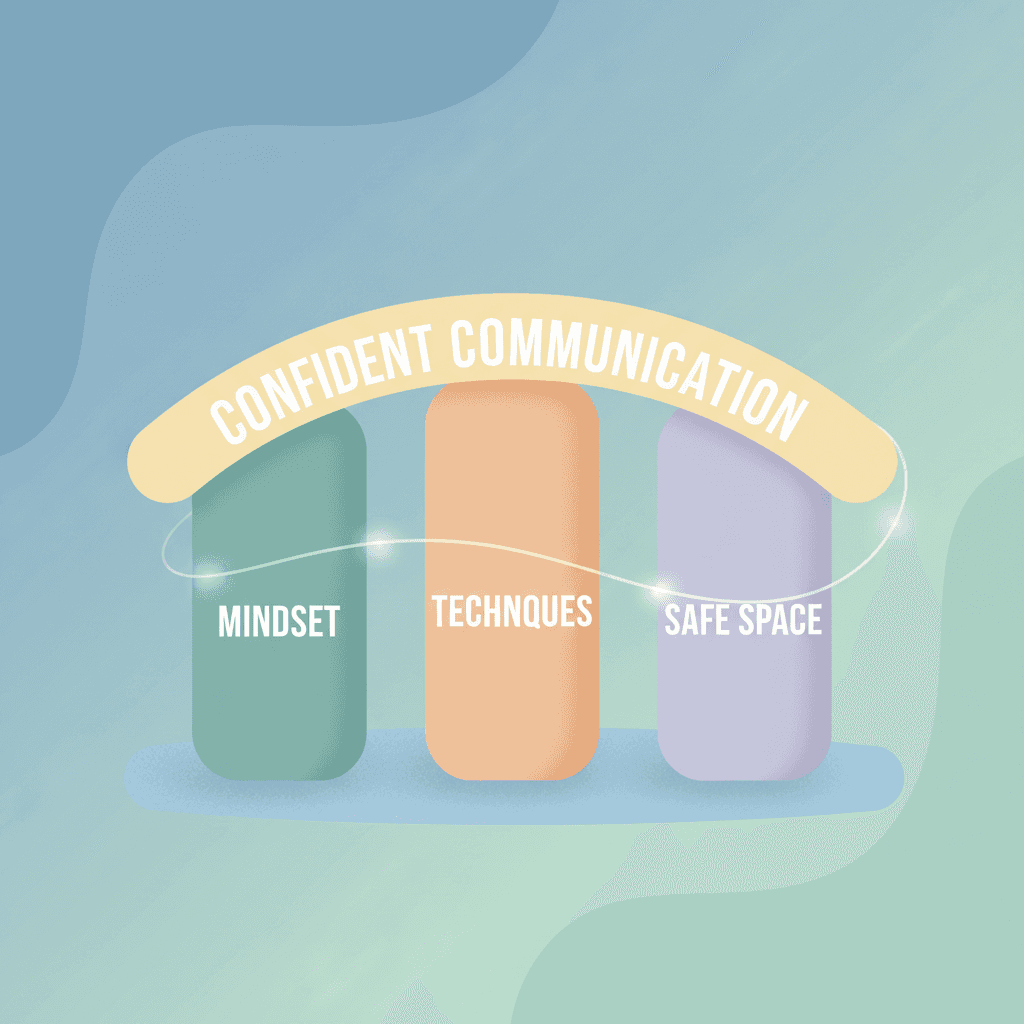
To navigate this journey successfully, you don't need a handful of disconnected tips. You need a system. This framework isn't about eliminating your stutter, but about building confidence and making communication your primary goal. This approach aligns with a major shift in speech therapy, where, as a 2025 report on stuttering knowledge states, the focus is moving from pure fluency to fostering confident and authentic communication. We've organized this into three core pillars.
- •Pillar 1: Prepare Your Mindset. Before you say a word, you'll focus on the psychological side of speaking, tackling anxiety and setting realistic, empowering goals.
- •Pillar 2: Adapt Your Speech Tools. You'll learn how to apply proven speech therapy techniques specifically to the sounds and rhythms of your new language.
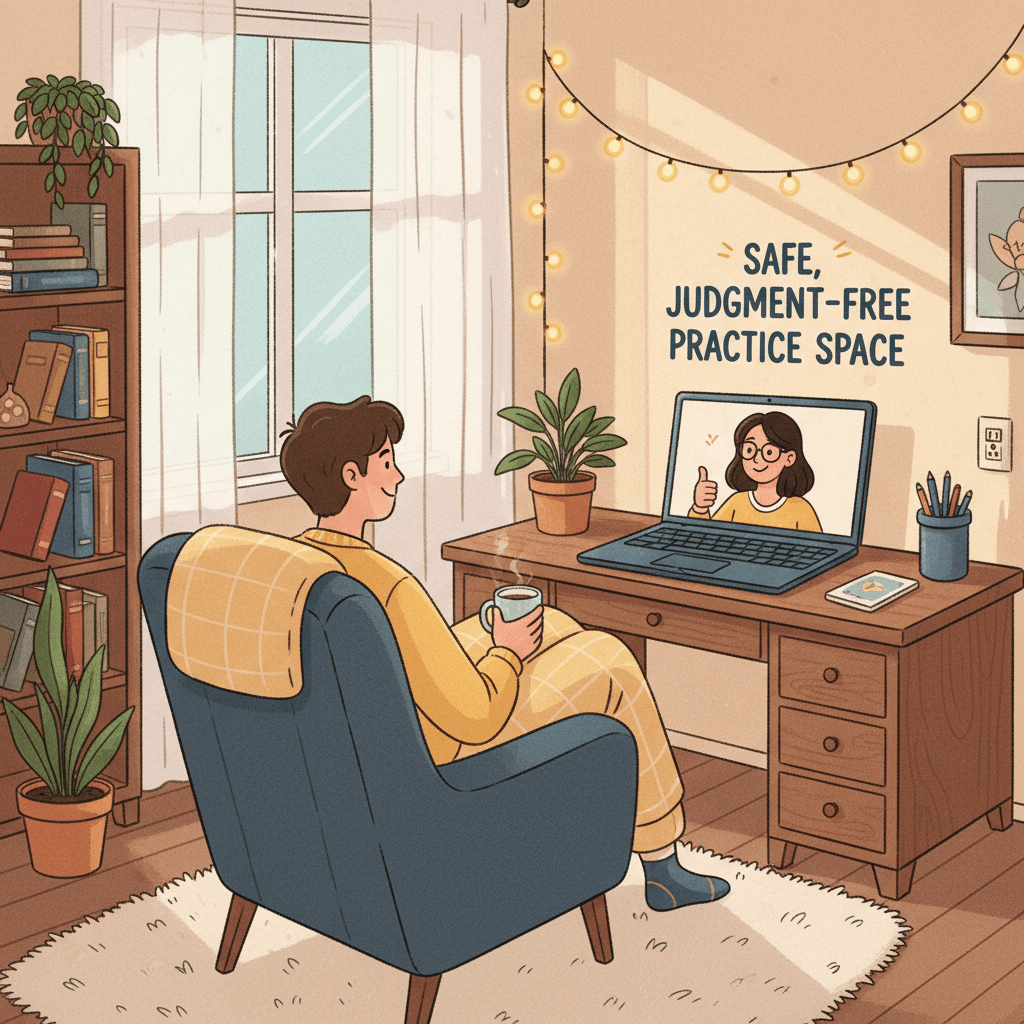
- •Pillar 3: Create Your Practice Space. You'll discover how to build a safe, judgment-free environment to practice, starting with AI tools and gradually moving to real-world conversations.
By working through these pillars, you create a supportive structure that addresses both the mental and physical aspects of speaking a new language when you stutter. This helps you build a stable foundation for speech, applying consistent management techniques across languages.
Pillar 1: Prepare Your Mindset for Confident Communication
The most important work happens before you even open your mouth. Your mindset dictates how you handle challenges, celebrate progress, and ultimately, whether you stick with it. Many language learners quit because of unrealistic expectations or hitting the 'intermediate plateau' where progress feels invisible, as noted by language experts at Noun Town in 2024. For someone who stutters, this is even more critical.
- •Shift Your Goal from Fluency to Connection: As research highlights, modern treatment goals prioritize confident and authentic communication. Embrace this. Your aim is to be understood, to share an idea, or to connect with another person—not to sound 'perfect'. A moment of stuttering doesn't erase the meaning of your message.
- •Practice Self-Advocacy: A powerful technique is 'stuttering openly' or voluntary stuttering. This involves choosing to stutter on a minor word to reduce the fear of it happening involuntarily. Another form of self-advocacy is simply being ready to inform new speaking partners about your stutter, which we'll cover later. This reframes stuttering from something to hide into a simple fact of how you talk.
- •Set Realistic Expectations: You will have fluent days and disfluent days. You will mix up verb conjugations. You will forget words. This is true for every language learner. Your journey is not defined by its perfect moments, but by your resilience in the messy ones.
Think of the new language's accent as a new suit of clothes. For some people who stutter, this change can help reduce physical tension in your speech, giving you a fresh canvas to practice on.
Pillar 2: Adapt Speech Therapy Techniques for Your New Language
You may already be familiar with speech fluency exercises or therapy techniques. The key is not just to transfer them, but to consciously adapt them for the unique sounds (phonology) and rhythm of your target language. A 2025 systematic review in PubMed found that stuttering severity can be greater in a second language, which highlights why this adaptation is so important.
Here are some core techniques and how to apply them:
- •Gentle Onsets: This involves starting words with gentle airflow, especially on vowel sounds or hard consonants. Let's say you're learning German. A hard 'k' in 'Katze' (cat) can be a challenge. Practice initiating the sound with a softer, less explosive burst of air: 'hhh-Katze'. This reduces the physical tension that can trigger a block.
- •Light Articulatory Contact: Focus on making soft contact between your lips, tongue, and teeth. For a plosive English 'p' in 'paper', this means not pressing your lips together too tightly. For a French 'r' sound, which is produced in the throat, it means avoiding excess tension in your throat muscles as you initiate the sound.
- •The Power of the Pause: Don't just focus on single words. Experts recommend 'chunking' phrases together. Practice saying a small, natural phrase in your new language, then take a deliberate pause. For example, in Spanish: "Hola, me llamo... (pause) ...y estoy aprendiendo español." This builds rhythm and gives you a moment to breathe and plan the next chunk.
The goal of these speech therapy techniques for languages is to reduce the physical struggle, which in turn helps manage speaking anxiety. By practicing them with the specific sounds of your new language, you build muscle memory and confidence where you need it most.
Pillar 3: Create Your Safe, Judgment-Free Practice Space
Fear of judgment is a major barrier for any language learner, and even more so when you stutter. That's why establishing a safe practice zone is not a luxury—it's essential. This is where you can make mistakes freely, practice your speech tools without pressure, and build a foundation of confidence. The National Stuttering Association advises creating encouraging and accepting speaking opportunities, and you can build one for yourself.
This is where technology can be a powerful ally. An AI-powered tool offers a judgment-free environment that human partners, no matter how patient, can't always provide. An AI doesn't get tired, it doesn't interrupt, and it has infinite patience. Using SpeaksyAI's AI conversation partner, for example, allows you to engage in casual conversations and role-playing exercises in a completely private, low-stress setting. You can take as long as you need to form a sentence, practice your gentle onsets, and get comfortable with the flow of the language before ever speaking to a person.
Think of this as your personal speech gym. It's where you warm up, build strength, and perfect your form. Only after you feel confident in this space do you need to move on to practicing with human partners.
How to Tell a Language Partner or Tutor You Stutter
After practicing in your safe space, the next step is talking to people. This can bring up a huge source of anxiety: should you tell them you stutter? The answer from both the community and experts is a resounding yes. Disclosing your stutter is an act of confident self-advocacy. As community discussions on forums like Reddit have shown, most tutors and language partners are incredibly understanding and appreciative of the heads-up.
Framing is everything. You are not apologizing or asking for permission. You are confidently informing them so you can have a productive conversation. Here are a few simple, non-apologetic scripts you can use:
- 1.The Direct & Simple: "Just so you know, I have a stutter. Sometimes it takes me a bit longer to get my words out. The best thing you can do is just listen patiently and let me finish."
- 2.The Pre-Session Message (for online tutors): "Hi, I'm really looking forward to our session! I wanted to let you know that I stutter. It doesn't affect my ability to learn, but I appreciate your patience if I have some disfluent moments."
- 3.The In-Conversation Mention: "You might notice I pause or repeat sounds sometimes—I have a stutter. Please don't try to finish my sentences for me, I'll get there!"
Sharing this information reduces your own mental load—you're no longer trying to hide it. It also equips your partner with the best way to support you, creating a more positive and effective learning environment for everyone.
Your First 4 Weeks: A Structured Practice Plan
Feeling overwhelmed? Let's break it down into a structured, four-week plan. This approach of graded practice helps build confidence incrementally and prevents the burnout that can come from setting unrealistic goals. As research from ISSEN in 2026 confirms, learners using AI for speaking practice show measurable gains in anxiety reduction and confidence—making it the perfect starting point.
- •Week 1: Solo & Silent. Your only goal is to get comfortable. Spend 15 minutes a day with an AI tutor. Start by just typing. Then, move to speaking single words, focusing on your speech tools (gentle onsets, light contacts). Don't worry about sentences yet. Just practice the difficult sounds of your new language without pressure.
- •Week 2: Building Blocks. Continue your daily AI practice, but now build short, 3-5 word sentences. Create and practice a simple self-introduction script: "Hello, my name is ___. I am from ___. I am learning ___." Repeat it until it feels automatic. This builds a foundation of success.
- •Week 3: Low-Stakes Human Interaction. Find a supportive language partner or tutor. Use one of the disclosure scripts before you begin. Your goal for the first session is simple: successfully deliver your self-introduction and ask one question. That's it. Celebrate that win!
- •Week 4: The Real World. Take your skills into a predictable, real-world scenario. This could be ordering a coffee in your target language. The script is short and you know what to expect. This small act is a huge step in transferring your practice into confident, effective communication.
Tools and Resources That Support Your Journey
You are not alone on this path. A wealth of resources exists to support language learning for stammerers, reflecting the broader shift towards celebrating confident communication over perfect fluency. Here are a few to get you started:
- •AI Language Tutors: As mentioned, tools like SpeaksyAI provide a crucial, judgment-free space for foundational practice. They offer infinite patience, a key ingredient for reducing the performance stress that can arise with human partners.
- •Supportive Communities: Organizations like Stamma (in the UK) and The Stuttering Association for the Young (SAY) (in the US) offer incredible resources, articles, and peer support networks. Their philosophy is centered on building confidence and embracing authentic communication.
- •Digital Therapy Tools: The world of speech therapy is expanding. As reported by 1SpecialPlace in 2026, tools using Virtual Reality (VR) and advanced speech recognition are becoming more accessible, allowing you to practice in realistic settings with real-time feedback.
- •Bilingual Speech-Language Pathologists (SLPs): If you have access, working with an SLP who specializes in stuttering and bilingualism can provide tailored strategies for your specific languages and challenges.
Frequently Asked Questions
Frequently Asked Questions
Practice Speaking Without the Pressure
SpeaksyAI offers a judgment-free space to build your confidence. Get pronunciation feedback and practice conversations with an AI language tutor who has infinite patience.
Join the Waitlist