Beyond Words: How to Sound More Natural in a Foreign Language
You've learned the grammar and vocabulary, but still feel robotic. This guide shows you how to sound more natural in a foreign language by focusing on the music of speech.

Have you ever perfected a sentence, checked the grammar twice, and then said it aloud only to feel like you’re reading from a textbook? You’re not alone. Many language learners reach a frustrating plateau where they are grammatically correct, but they just don't sound… natural. This is where the real fun begins. Moving beyond basic correctness is the key to unlocking true conversational fluency. If you’re ready to learn how to sound more natural in a foreign language, it’s time to embrace the beautiful, messy, and musical reality of how people actually speak.
Why 'Correct' Grammar Isn't Always 'Natural' Speech
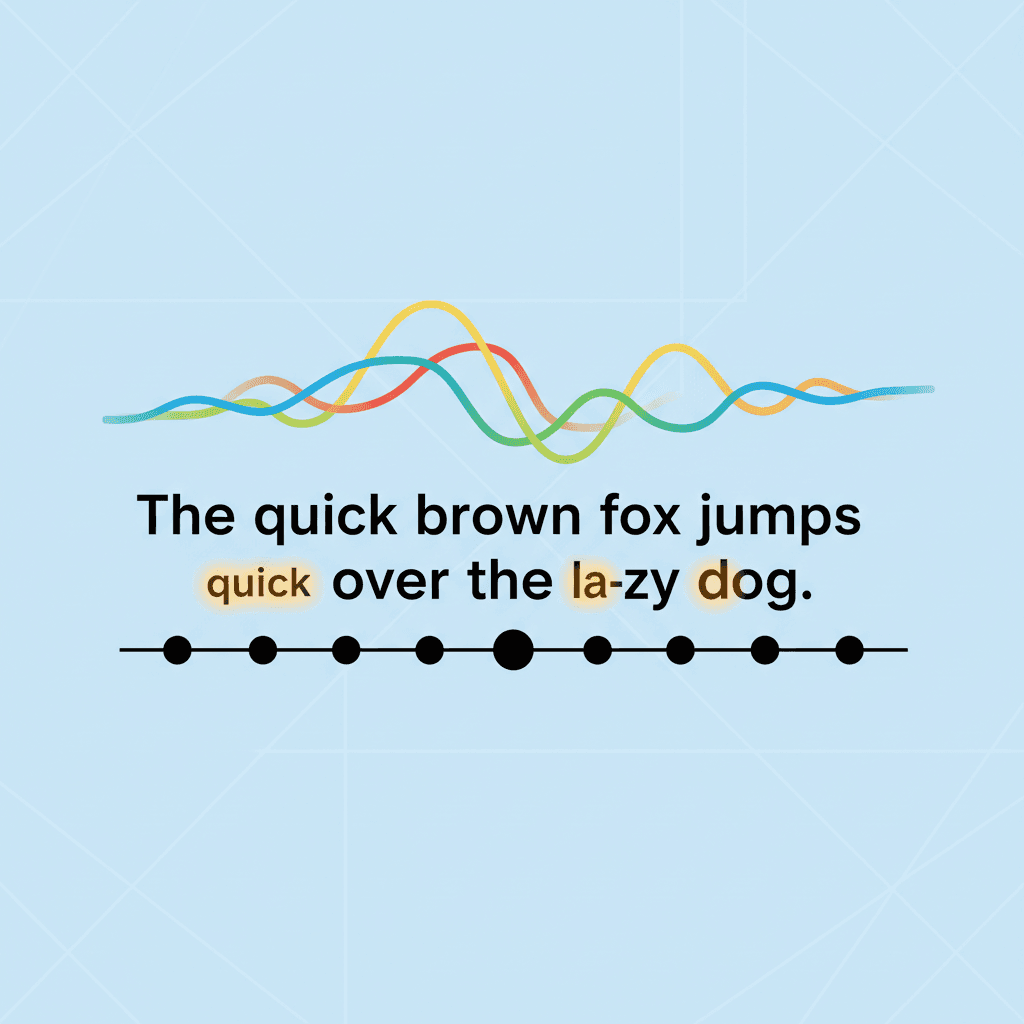
The gap between writing a perfect sentence and speaking a natural one is where many learners get stuck. We spend months mastering verb conjugations and noun cases, but native speakers in the US, UK, or Australia don't always follow those strict rules in casual conversation. They prioritize flow, context, and connection over rigid grammatical accuracy. Natural speech is full of contractions, shortcuts, and relaxed intonation that textbooks often leave out.
Think of it like this: instead of learning vocabulary words in isolation, native speakers think and speak in 'chunks' of language. These are common pairings and phrases that roll off the tongue easily. According to language experts in 2026, focusing on these chunks is essential for improving your rhythm and naturalness. It’s a shift from constructing sentences word by word to retrieving ready-made phrases, which is exactly how fluent conversation happens.
This isn't just a theory; it's backed by research. A study from April 2025 found that using these common, formulaic expressions is a stronger predictor of how fluent you sound than using rare or complex words. So, let go of the pressure to sound like a poet or a scholar. To achieve a more native-like sound, you need to learn to relax the formal rules and embrace the patterns of everyday speech.
Master the Music: Intonation, Rhythm, and Stress
If vocabulary and grammar are the words of a language, then prosody is its music. Prosody refers to the rhythm, stress, and intonation of speech, and it’s one of the most overlooked yet critical elements for sounding natural. Getting the melody right can have a massive positive impact on your journey to sound like a native speaker, as it’s what makes your speech clear, engaging, and easy to understand.
Have you ever spoken to someone whose words were pronounced correctly, but you still struggled to understand their point? The issue might have been their intonation or stress patterns. Incorrect prosody can completely change the meaning of your words or make them difficult to follow. This is a common hurdle for learners, especially when their native language has a very different rhythm from the one they're learning.
The challenge is that these musical elements are hard to practice. Human conversation partners, whether in Canada or India, are often too polite to correct subtle errors in your pace or intonation. They understand what you mean, so they don’t point out that your rhythm feels a bit off. This is where an AI tutor provides a unique advantage. It can offer immediate, objective feedback on your prosody in language learning, helping you identify and fix these subtle but important patterns in a private, judgment-free space.
Finding the Rhythm of Your Target Language
Every language has its own beat. English, for example, is a 'stress-timed' language, meaning the rhythm is determined by the stressed syllables in a sentence, with the unstressed syllables getting squeezed in between. In contrast, languages like Spanish or French are 'syllable-timed,' where each syllable gets a roughly equal amount of time. Internalizing this new beat is crucial for intelligibility.
A great way to feel this rhythm is to listen to music, poetry, or even children's rhymes in your target language. A 2026 study even found a genetic link between how we perceive speech rhythm and musical rhythm, suggesting our brains are wired to connect them. The good news? Research from 2024 shows that learners can absolutely acquire a new language's rhythm, even if it's completely different from their own. In fact, that same study found that learners whose native language rhythm *contrasts* with their target language may actually pick it up more effectively.
Using Intonation to Convey True Meaning
Intonation is how we add emotion and intention to our words. The same set of words can be a statement, a question, or an expression of surprise, all based on the rise and fall of your voice. For example, say this sentence out loud: "You’re coming." With a falling tone at the end, it’s a statement of fact. With a rising tone, it becomes a question. This vocal 'coloring' is a primary way we signal our true meaning, often more so than the words themselves.
While most learners recognize that intonation is important, a 2026 study of university students found they often struggle to apply it naturally in real conversations. It feels awkward or forced. The students in that study expressed a strong desire for more interactive practice, like listening to and repeating native speakers or rehearsing dialogues. This active practice is exactly what helps bridge the gap between knowing the rule and using it instinctively to improve intonation.
The Art of 'Imperfect' Speech: Fillers & Connected Words
Now it's time to learn the secret features that make speech sound human: the so-called 'imperfections'. These aren't mistakes; they are the glue that holds natural conversation together. We're talking about filler words, conversational phrases, and the way words blend together—elements that are often edited out of language textbooks but are essential for fluency.
Think about it: do your native-speaking friends talk in perfectly formed, grammatically flawless sentences? Of course not. They pause, they use words like 'um' and 'like', and they connect their thoughts with phrases like 'you know' or 'I mean'. A 2025 study even found that speech fillers like 'uh' and 'um' are naturally occurring and tied to our cognitive processes. The key is learning to use these elements strategically, just like a native speaker would, rather than letting them become a crutch that hinders clarity.
Embracing Filler Words and Discourse Markers
One of the biggest giveaways of a non-native speaker is pausing silently or using fillers from their own language. The solution? Learn filler words from your target language! Instead of an awkward silence, a well-placed 'pues' in Spanish, 'euh' in French, or 'ano' in Japanese makes you sound instantly more authentic while giving your brain a second to catch up.
Beyond simple fillers, you should also learn discourse markers. These are the signpost words and phrases like 'so,' 'well,' 'anyway,' or 'you know' that native speakers use constantly to organize their speech and connect ideas. Research has shown that how L2 learners use these markers compared to native speakers is a critical area of study for fluency. A 2025 study even found that the *type* of filler word you use has a significant effect on how fluent you sound. Mastering these small words makes a big difference.
Understanding Connected Speech and Reductions
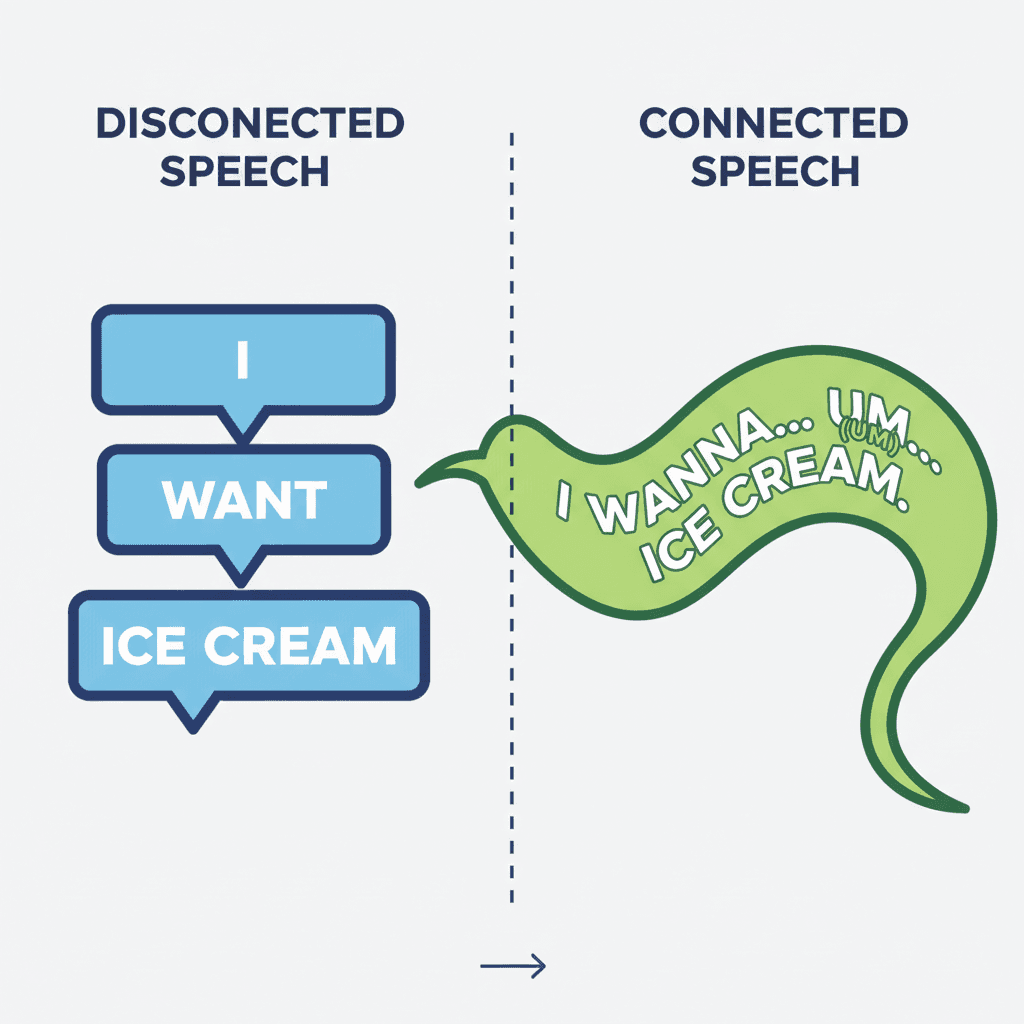
Another key to natural speech is understanding how words blend together. Native English speakers rarely say 'going to'; they say 'gonna'. 'Want to' becomes 'wanna', and 'have to' becomes 'hafta'. This is called connected speech, and these shortcuts are not slang or mistakes—they are a core feature of fluent, everyday pronunciation. A 2024 study on phonetic reduction found that native speakers constantly 'cut corners' this way, with reductions appearing in 30-35% of speech. Learning to do this yourself is a huge step toward sounding natural.
Mastering this kind of connected speech practice is vital for your confidence. As a 2026 report from Lingoda noted, there’s a surge in learners using AI pronunciation tools and chat-partners to build confidence for real-world conversations. These tools are perfect for practicing reductions because they provide a safe space to get it right. An AI can listen to you say 'gonna' a hundred times without getting bored or impatient, offering the instant, structured feedback that a human partner is often too polite to give.
Your Action Plan: A Routine to Practice Sounding Natural
Knowing what to do is one thing; building a consistent habit is another. A 2026 study confirmed that routine-based speaking practice is crucial for boosting both your skills and your confidence. Here is a simple, actionable plan to integrate these techniques into your learning schedule.
- 1.Listen with a Mission: Don't just have content on in the background. Actively listen to podcasts, interviews, or TV shows. Pay attention to the rhythm. Notice when speakers use filler words. How do they connect their words? Try to identify one or two natural phrases or reductions you can use yourself.
- 2.Master the Language Shadowing Technique: This is a game-changer for prosody. Find a short audio clip of a native speaker and try to speak along with them, imitating their pitch, rhythm, and stress as closely as possible. It might feel strange at first, but the language shadowing technique is incredibly effective for rewiring your brain's pronunciation patterns.
- 3.Collect and Practice 'Chunks': Keep a notebook or a doc for 'language chunks.' These aren't just single words, but common phrases, sentence starters ('To be honest...'), and collocations ('heavy rain'). A 2025 study found that focusing on these common expressions makes you sound more fluent than using complex words. Practice saying them until they feel natural.
- 4.Find a Safe Sandbox to Practice: The biggest barrier to sounding natural is often the fear of making mistakes in front of others. This is why platforms like SpeaksyAI (speaksyai.com) are so powerful. You can practice tricky intonation, experiment with filler words, and try out connected speech without any anxiety. As noted in a 2026 report, learners are increasingly using AI chat-partners to build this exact kind of confidence for real conversations.
By following this routine, you shift your focus from just 'what' to say to 'how' you say it. You start to internalize the music of the language, which, as a 2025 study on language immersion found, helps you think more naturally without mentally translating. Every small step you take is a win that gets you closer to speaking with the confidence and flow you’ve been working toward.
FAQ: How to Sound More Natural
Frequently Asked Questions
Ready to Practice Your Natural Speech?
Get instant feedback on your pronunciation, intonation, and rhythm with a judgment-free AI language tutor.
Join the Waitlist