Are You Ready for a Language Exchange? A Practical Checklist
Feeling nervous about a language exchange? You're not alone. This guide helps you decide if you're ready and gives you a practical checklist to build confidence before your first chat.
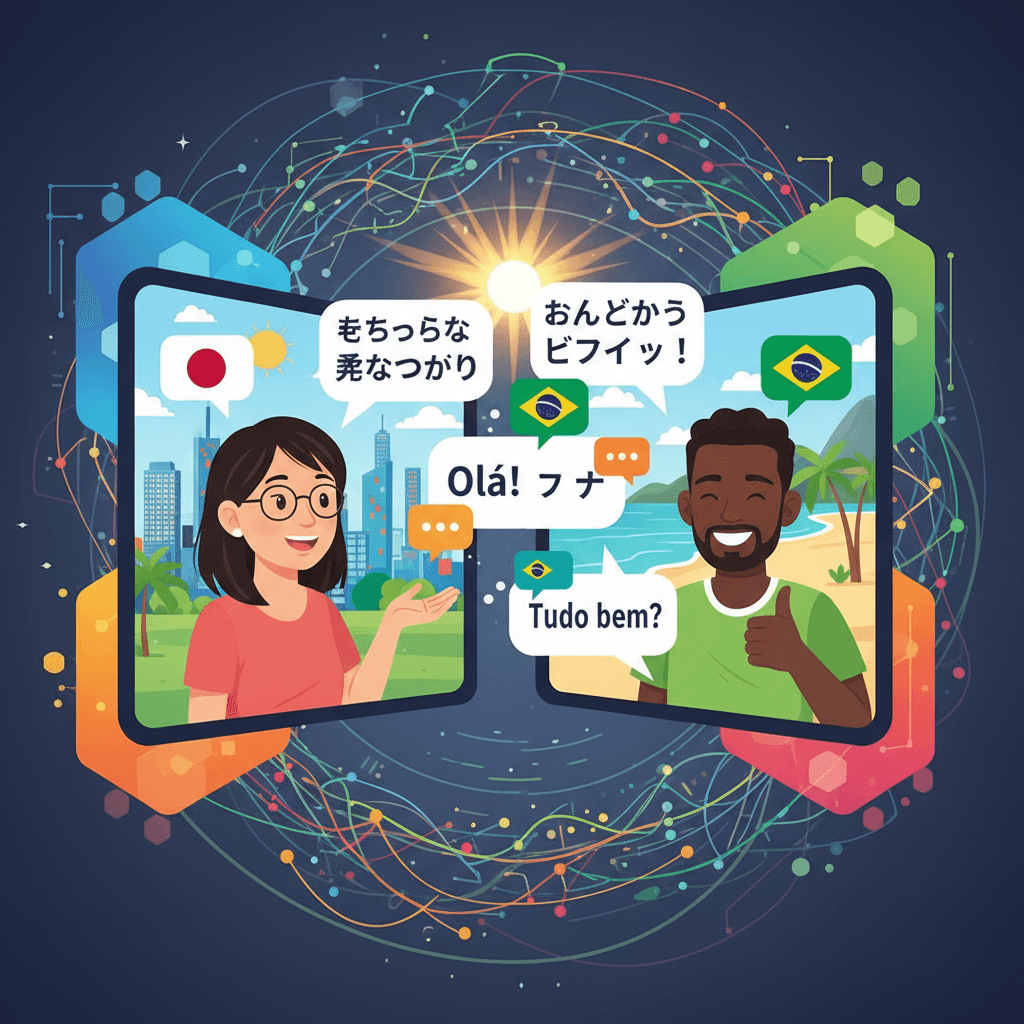
So, are you ready for a language exchange? It’s a question that can feel loaded with pressure, conjuring images of awkward silences and frantic searches for the right word. But here’s the good news: you are likely far more ready than you think. True readiness isn’t about being 'fluent' or reaching a specific level like B1 or B2. Instead, it’s a combination of having a few core skills, the right mindset, and a little bit of practical preparation. This guide is your personal readiness checklist, designed not as a test, but as a tool to help you see where you stand and build the confidence you need to take that exciting next step.
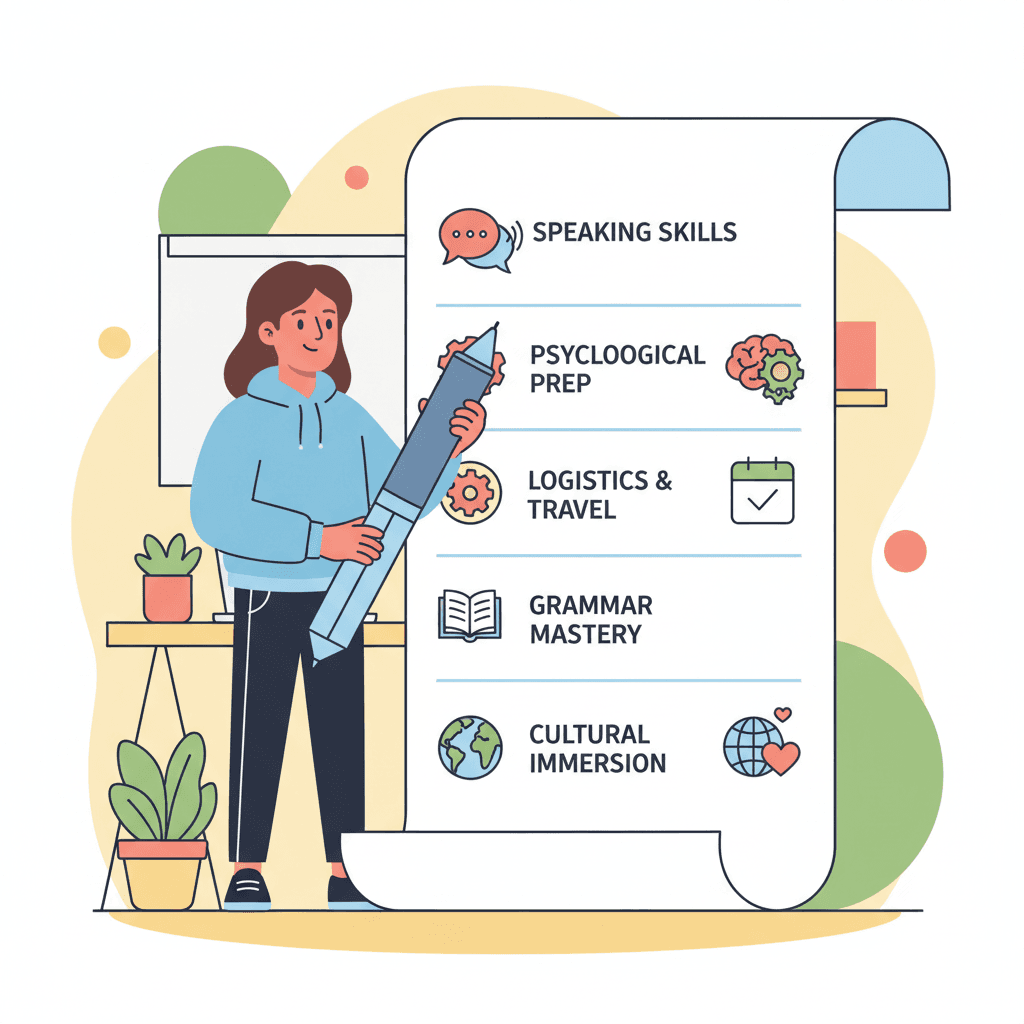
The Big Question: When is 'Ready' Really Ready?
For years, language learners were told to wait. Wait until you finish the textbook. Wait until you hit the B1 level. Wait until you feel ‘fluent.’ We’re here to tell you that this thinking is outdated. The very definition of language ability is shifting. Recent industry analysis shows a growing emphasis on real-world communication skills over traditional proficiency levels. The goal is not to pass a theoretical test; it’s to have a conversation. The anxiety you feel is completely normal, but don't let it be a roadblock. Think of it this way: you don't learn to swim by reading about water. You get in the pool. A language exchange is your pool.
The truth is, the act of speaking is what builds readiness in the first place. Research into language exchange highlights that 'productive language skills' develop through conversation itself. This means each exchange isn't a final exam; it’s a practice session that makes you better for the next one. It turns the entire learning process on its head, using real conversations as a tool to find and fill your knowledge gaps. Instead of waiting for perfection, you use imperfection as your guide. And it’s a goal worth pursuing. A 2026 Pew Research Center survey found that 40% of Americans believe foreign language instruction is 'extremely' or 'very' important, so you're in good company valuing this skill.
The Readiness Checklist Part 1: Your 'Minimum Viable Conversation' Skills
Let's get rid of the pressure of needing a huge vocabulary. Instead, let's focus on a concept we call the 'Minimum Viable Conversation' (MVC). This is the absolute core set of skills you need to have a simple, two-way exchange. It's not about discussing philosophy; it's about connecting with another person. If you can check off most of the items on this list, you have the foundation for a successful first language exchange. See how you do:
- •Self-Introduction: Can you introduce yourself with your name, where you're from, and why you're learning the language?
- •Asking Basic Questions: Can you ask your partner the same questions? (e.g., 'What's your name?' 'Where are you from?')
- •Simple Descriptions: Can you talk about your hobbies, your job, or your family in simple sentences?
- •Understanding the Gist: When someone speaks slowly and clearly about familiar topics, can you understand the main idea, even if you don't know every word?
- •Survival Phrases: Do you know how to say 'I don't understand,' 'Can you repeat that, please?' and 'How do you say...?'
This isn't an exhaustive list. It’s a starting point. As language learning frameworks like the NCSSFL-ACTFL 'Can-Do Statements' emphasize, practical ability is the key. Being able to say 'I can introduce myself' is more valuable than knowing a hundred random vocabulary words. The goal is a 'meaningful' exchange, and meaningful starts with a simple connection. You don't need an extensive vocabulary to begin; learners often find success simply by preparing three easy topics to discuss beforehand.
The Readiness Checklist Part 2: Your Psychological Prep
Language skill is only half the battle. The other half is mental and emotional. Speaking practice anxiety is real, but it’s something you can manage with the right mindset. This part of the checklist is about your psychological readiness. Are you prepared to be a learner in a live, interactive setting?
- •Willingness to be Imperfect: Are you ready to make mistakes? Because you will, and that's not just okay—it's essential for learning. Every mistake is a data point showing you what to practice next.
- •A Spirit of Curiosity: Are you genuinely interested in your partner's life and culture? A language exchange is a two-way street. The best partners are as interested in listening as they are in speaking.
- •Patience for Yourself and Others: Can you be patient when you can't find a word, or when your partner is struggling? Grace and encouragement are the fuel of a great exchange.
- •An Openness to Feedback: Are you willing to be corrected? And are you prepared to offer gentle corrections in return? This is where the real growth happens.
Research confirms the importance of this 'willingness to communicate,' showing that successful interactions build confidence and make you more likely to keep practicing. It's about more than just language; it's about developing the cultural competence needed to participate in global communities. A 2024 industry analysis has even highlighted a major trend: the rise of AI-powered tools that create a 'psychologically safe' space for learners to build this exact confidence before they ever have to speak with a human.
Your Pre-Game Warm-Up: How to Prepare with an AI Tutor
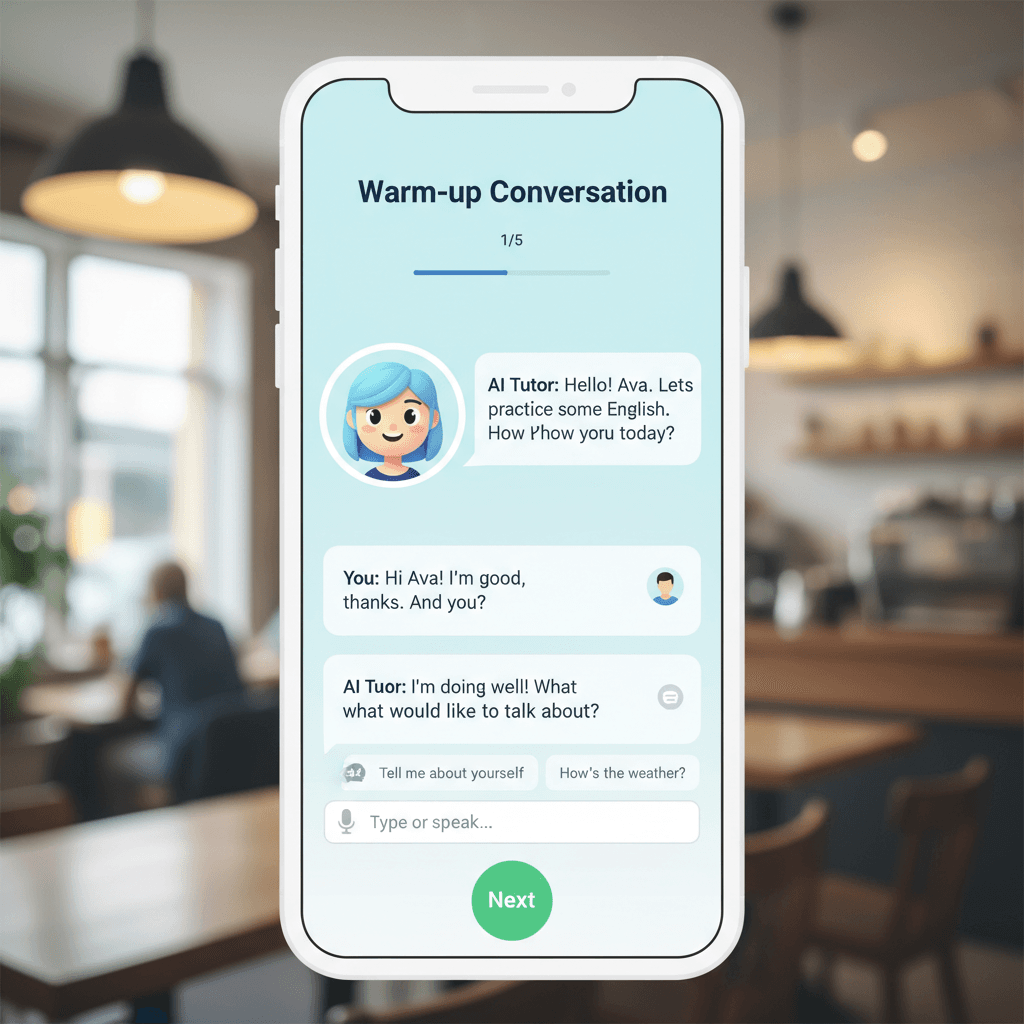
So how do you build both MVC skills and psychological readiness? This is where technology gives you an incredible advantage. Think of an AI language tutor as your personal, no-pressure training ground. It's the perfect place to warm up before the 'real game' of a live conversation, letting you practice without the fear of judgment.
This isn't just a nice idea; it's backed by data. A 2025 Harvard University study found that students who used AI tutors learned more than twice as much in less time. Furthermore, a major 2025 meta-analysis of 46 different studies concluded that AI tools have a significant positive effect on language learning. Here’s how you can use one to get ready for your exchange:
- 1.Practice Your MVC: Use an AI conversation partner, like the one from SpeaksyAI, to run through your introduction and basic questions over and over until it feels natural. You can practice your three pre-planned topics and get comfortable with the flow.
- 2.Get Instant Pronunciation Feedback: One of the biggest sources of anxiety is being misunderstood. Modern AI tutors offer instant feedback on your pronunciation, helping you refine your accent so you can make a great first impression.
- 3.Simulate the Exchange: Ask the AI to play the role of a language exchange partner. Tell it, 'Let's pretend we're meeting for the first time.' This helps you get used to the rhythm of a conversation.
- 4.Build Your Confidence: The ability to practice anytime, 24/7, in a judgment-free zone is a game-changer. This is how you solve the 'practice problem' and build the confidence you need to take on a real conversation.
The Readiness Checklist Part 3: Your Logistical Setup
Excellent! You've worked on your language skills and your mindset. The final piece of the puzzle is the practical stuff. Getting your logistics in order removes unnecessary stress and allows you to focus on the conversation. A smooth setup is a sign of respect for your partner's time and contributes to your own sense of calm and language exchange confidence.
- •Choose Your Platform: Have you decided where you'll find a partner? Platforms like Tandem or HelloTalk are popular choices.
- •Check Your Tech: Is your internet connection stable? Does your microphone work clearly? Does your camera work? Do a quick test call with a friend or use an online tool to check.
- •Prepare Your Space: Find a quiet, well-lit space where you won't be interrupted for the duration of your call.
- •Set Micro-Goals: Decide on one small, achievable goal for the session. It could be something like, 'I want to successfully ask three follow-up questions,' or 'I want to use two new vocabulary words I learned.' Popular language learning guides for 2026 emphasize this practice to make sessions more focused and rewarding.
- •Prepare Icebreakers: Have two or three open-ended questions ready to go in case the conversation stalls. 'What's something you love about your city?' or 'What's a movie you've seen recently?' work great.
Your readiness for a first language exchange is part of a massive global trend. The language learning market is projected to grow from $122 billion in 2024 to an incredible $337 billion by 2032. You're joining millions of others in the rewarding journey of connecting across cultures.
Your Verdict: How to Interpret Your Checklist Results
Okay, take a moment to look back at the three parts of the checklist: your MVC skills, your psychological prep, and your logistical setup. How did you do? Be honest with yourself. This isn’t a final grade; it’s a map.
If You Checked 'Yes' to Most Items...
Congratulations! You are absolutely ready to take the plunge. That feeling of nervousness is just excitement in disguise. You have the skills, the mindset, and the preparation needed for a fantastic first language exchange. Your next step is to simply do it. Trust in your preparation, give yourself permission to be a beginner, and focus on the goal: connection, not perfection.
If You Checked 'Not Yet' on a Few Items...
This is also fantastic news! Why? Because you no longer have a vague sense of 'not being ready.' You have a clear, actionable practice plan. You have pinpointed the exact areas to focus on. Educational checklists are designed to identify where students might need 'additional support,' and that’s exactly what you’ve done for yourself. If your 'not yet' was in the MVC skills, you know to spend more time with an AI tutor practicing those specific phrases. If it was in the psychological prep, you can focus on building confidence in that low-pressure environment. As one 2026 analysis notes, real conversations provide 'diagnostic data' to identify learning gaps; you've simply done that ahead of time.
You're Ready! 3 Simple Steps for Your First Exchange
Feeling the momentum? Let's channel it into action. With more than 50 million registered users on leading language exchange platforms as of 2025, a friendly partner is waiting for you. Remember, a huge number of them (over 72%) are peers aged 18-34, likely feeling the exact same mix of excitement and nerves as you. Here’s how to make your first interaction a success:
- 1.Set Expectations Early: Start the conversation by saying something like, 'Hi! This is one of my first exchanges, so I might be a little slow. Thanks for your patience!' This immediately breaks the ice and sets a collaborative tone.
- 2.Agree on Corrections: Ask your partner how they'd like to handle corrections. 'Should we correct each other as we go, or wait until the end?' This makes feedback helpful, not disruptive.
- 3.Embrace the 'Stall': If the conversation stalls, don't panic. It happens! Use one of your prepared icebreakers, or use it as a learning opportunity. You can say, 'I'm not sure what to say next. What's a common topic people discuss in your culture?' To help, many apps now have integrated AI translation tools as a safety net—around 68% of them, in fact.
With only 43% of U.S. public schools offering foreign language classes in 2026, language exchanges have become a critical tool for learners seeking the real-world practice needed for fluency.
Frequently Asked Questions About Language Exchanges
Frequently Asked Questions
Ready to Practice Without the Pressure?
SpeaksyAI is your personal AI language tutor. Get unlimited conversation practice and instant feedback to speak confidently in any situation.
Join the Waitlist