A Practical System to Practice Speaking Two Languages Daily
Practicing two languages at once can feel daunting. This guide offers a simple, step-by-step system to help you speak confidently in both without getting them mixed up.

The most effective way to practice speaking two languages at the same time is to use a structured, phased approach that builds from isolation to integration. It’s a method that avoids confusion and builds confidence. This guide introduces The Dual-Language Activation System, a simple three-step framework designed to strengthen each language individually before training your brain to switch between them seamlessly. By following this system, you can move beyond the fear of mixing up words and start having real, fluid conversations in both your target languages.
First, Is It a Good Idea to Practice Speaking Two Languages at Once?
Let's start by acknowledging your ambition. Learning to speak one new language is a challenge; aiming for two at once is a goal that can feel both exciting and intimidating. You might worry about getting them confused, and that's a valid concern. The key isn't to avoid this challenge, but to manage it with the right strategy. The good news is that the cognitive rewards are significant.
The primary hurdle to anticipate is what linguists call 'cross-language interference,' where grammar or vocabulary from one language might pop up while you're trying to speak the other. Studies highlighted in ScienceDirect in 2025 confirm this is a real phenomenon. However, this interference isn't a sign of failure. In fact, the mental effort your brain uses to manage this conflict is precisely what builds cognitive strength. Think of it as a workout for your brain that, with the right training plan, leads to greater flexibility and control.
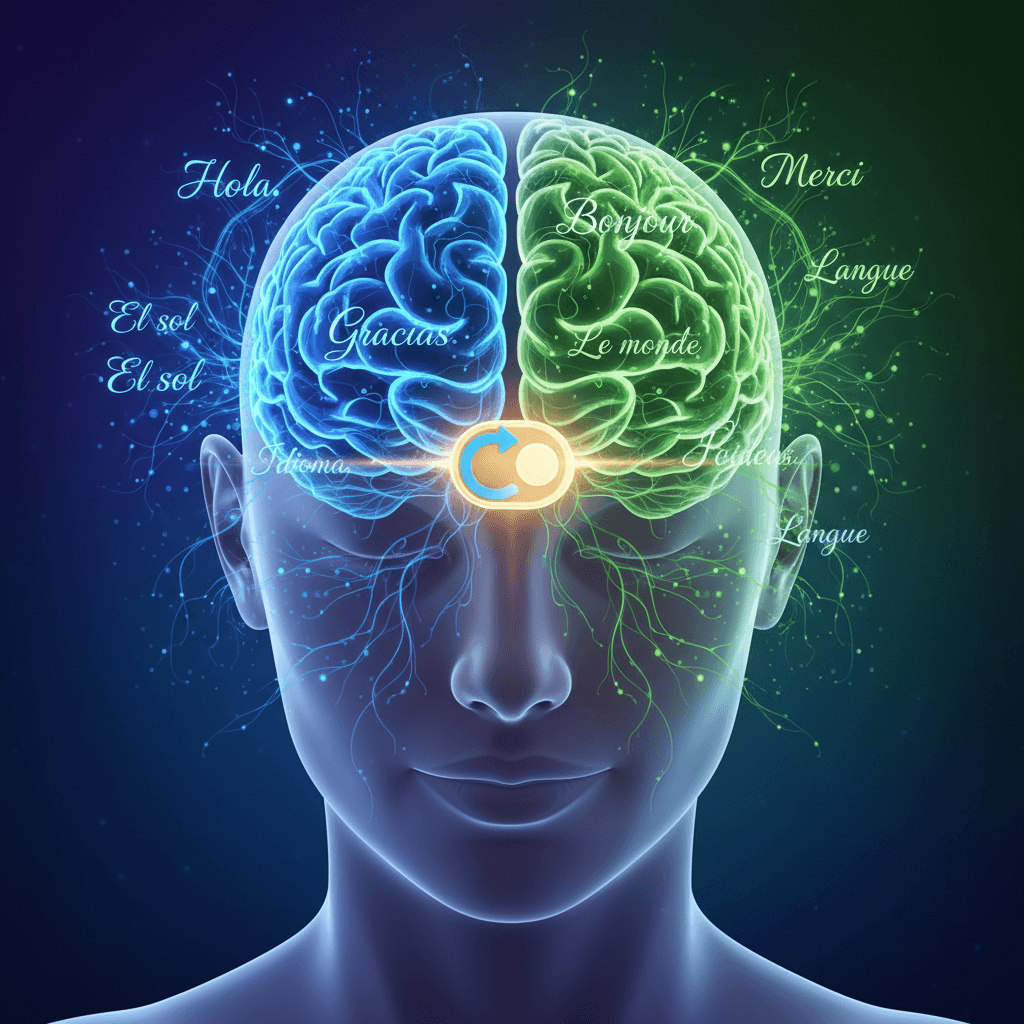
Beyond just managing confusion, the benefits are compelling. A 2025 study in Current Directions in Psychological Science found that learning multiple languages can enhance your 'executive control,' improving attention spans and problem-solving skills. Moreover, speaking multiple languages may even promote healthy aging, according to research from Harvard Health. So yes, it's a great idea, provided you have a smart system to guide your bilingual speaking practice.
Introducing The Dual-Language Activation System
To move from theory to practice, you need a clear, actionable framework. That's why we developed The Dual-Language Activation System. From my own journey practicing French and Japanese simultaneously, I found that random, unstructured practice led to frustration and mix-ups. This system brings order to the chaos, helping you build two strong pillars of language before building a bridge between them.
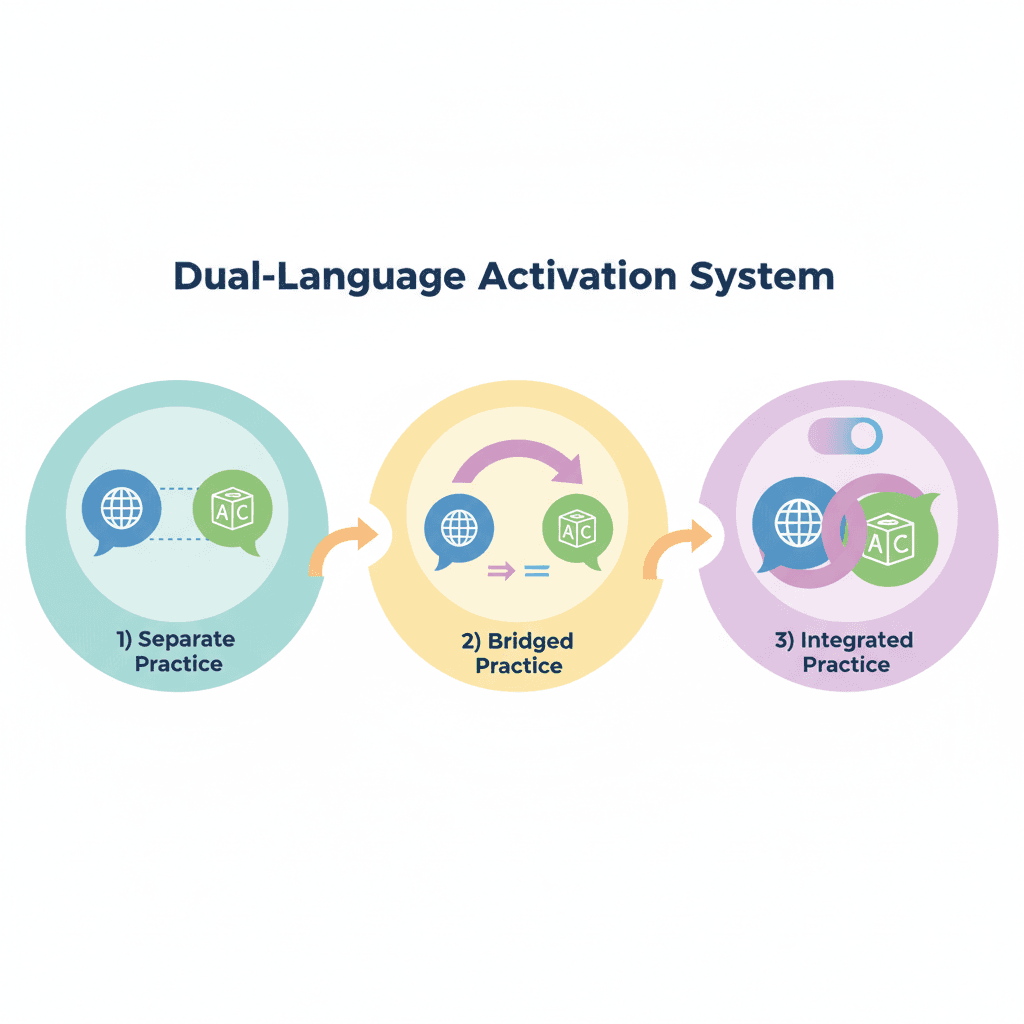
The system is built on a simple, three-step progression:
- 1.Separate Practice: You'll focus on building a solid, independent foundation in each language without any overlap.
- 2.Bridged Practice: You'll start creating deliberate connections between the two languages to improve your mental agility.
- 3.Integrated Practice: You'll practice switching between languages in real-time, training your brain for the complex skill of code-switching.
This structure is backed by modern learning science. For instance, a 2025 study from the Waisman Center discovered that 'interleaving'—or strategically mixing languages within study sessions—can lead to better vocabulary retention than keeping them completely separate forever. Our system helps you get to that point effectively, ensuring you don't try to run before you can walk.
Step 1: Separate Practice (Building the Core in Each Language)
The first phase is all about creating two distinct 'mental spaces' for your languages. The goal is to build up your core vocabulary, grammar, and pronunciation in each language independently. This foundational work is crucial for minimizing the 'cross-language interference' that researchers from ScienceDirect identify as a key challenge. By dedicating focused time to each language, you give your brain the chance to form strong, separate neural pathways.
During this stage, your practice sessions for each language should be completely separate. You can dedicate different days of the week, different times of the day, or even different physical locations to each language to reinforce this mental separation. Here are some effective polyglot practice exercises for this stage:
- •Shadowing: Listen to a short audio clip from a native speaker and repeat it aloud, trying to match their rhythm and intonation. Do this for 5-10 minutes daily in one language at a time. This is purely about mechanics, not comprehension.
- •Reading Aloud: Find a text like a news article or a short story and read it out loud. This helps connect the written word to the spoken word and improves your pronunciation.
- •Monolingual Conversations: Use an AI language tutor to have simple, guided conversations entirely in one language. For example, spend one session describing your day in Spanish, and another session ordering coffee in German.
Step 2: Bridged Practice (Connecting Your Two Languages)
Once you feel a degree of comfort in each language separately, it's time to start building a bridge. This phase is designed to make your brain comfortable with having both languages 'active' at the same time, but in a controlled way. These exercises train the mental muscles needed for task-switching, a key component of the 'executive control' benefits mentioned in Current Directions in Psychological Science.
Here are two powerful bridged practice exercises:
1. Topic Tethering: Choose a specific topic you're familiar with—your job, your favorite hobby, your weekend plans. First, spend 5 minutes speaking about it aloud in Language A. Immediately after, spend 5 minutes speaking about the exact same topic in Language B. This forces your brain to access two different sets of vocabulary and grammar for the same underlying concepts, building a direct bridge between them.
2. Translation Chains: This is a fantastic mental workout. Start with a simple thought in your native language. Translate it aloud into Language A, then translate that result into Language B. Finally, translate it back into your native language. Does it still mean the same thing? This drill highlights differences in syntax and idiom and trains you to navigate between linguistic systems intentionally.
New research shows that interleaving, or mixing two languages within the same study session, is a more effective learning strategy than studying them in separate, blocked sessions.
Step 3: Integrated Practice (Training Your Brain to Switch)
This is the final and most advanced stage, where you put everything together. The goal here is to practice actively switching between your two languages within the same conversation. This is deliberate code-switching practice. For bilinguals, code-switching is a natural, efficient communication tool, not a mistake. By practicing it intentionally, you turn potential interference into a skill.
This practice directly enhances cognitive flexibility. As confirmed by research from the Waisman Center, intentionally mixing languages forces your brain to manage the competition between them, which strengthens neural networks. Young adults who are proficient in two languages often show stronger concentration on attention tests precisely because their brains are so well-practiced at this constant management.
This can be the most intimidating step to practice with a human partner, as you might feel self-conscious. This is where modern technology becomes your best asset. An AI tool can provide a perfect, judgment-free environment for this complex task. For example, you can start a conversation with SpeaksyAI's AI language tutor and say, 'Let's practice switching between French and English.' You can then have a conversation where you deliberately mix the languages, getting instant feedback on your pronunciation in both, without any social pressure.
How to Manage and Overcome Language Confusion
Even with a great system, moments of confusion are normal. Research from ScienceDirect confirms that 'cross-language interference' happens because both languages remain active in a bilingual's brain. The key is to see this not as a setback, but as part of the process. In fact, a 2025 study found this constant mental management is what leads to the 'bilingual advantage' in executive functions.
When you find yourself mixing languages unintentionally, don't get discouraged. Here are a few practical tips to help you stay on track:
- •Acknowledge and Correct: When you use a word from the wrong language, simply notice it, correct yourself, and move on. Don't dwell on it.
- •Reinforce Context: Try to associate each language with a specific activity. For example, you might use Spanish only when listening to music and French only when reading the news. This helps your brain compartmentalize.
- •Lower the Stakes: Practice in low-pressure environments first. Talking to yourself or an AI tutor is a great way to work through mix-ups without feeling embarrassed.
While the Dual-Language Activation System is designed to build the skill of switching, you may want more strategies specifically for keeping your languages separate when you need to. For a deep-dive on this topic, our comprehensive guide, How to Stop Mixing Languages: A 3-Step System for Speakers, offers a detailed framework to keep your languages distinct.
Your Weekly Schedule for Dual-Language Speaking Practice
To make the Dual-Language Activation System concrete, here’s a sample weekly schedule you can adapt. This structure dedicates time for separate practice to build your foundation while introducing bridged and integrated exercises to grow your skills. This approach helps reduce the cognitive interference that can happen when learning two languages at once.
- •Monday: Separate Practice (Language A - 25 min). Focus on core exercises like shadowing and reading aloud.
- •Tuesday: Separate Practice (Language B - 25 min). Same focus, different language.
- •Wednesday: Bridged Practice (20 min). Choose one exercise like Topic Tethering or Translation Chains.
- •Thursday: Separate Practice (Language A - 25 min).
- •Friday: Separate Practice (Language B - 25 min).
- •Saturday: Integrated Practice (15-20 min). Try a code-switching conversation with an AI tutor or a willing friend.
- •Sunday: Rest or light review (e.g., listen to a podcast in either language).
Remember, this is a template, not a rigid rule. The most important thing is consistency. Even 15-20 minutes a day, when structured properly, is more effective than one long, unstructured session per week. Listen to your brain; if you feel overwhelmed, spend an extra week in the 'Separate Practice' phase before moving on. Celebrate the small wins and enjoy the process of becoming bilingual.
Frequently Asked Questions
Frequently Asked Questions
Ready to Practice in a Judgment-Free Zone?
SpeaksyAI is the perfect partner for practicing complex drills like code-switching. Get instant feedback and speak confidently without fear of making mistakes.
Join the Waitlist