Build Resilience to Overcome Language Exchange Anxiety
Feeling that knot in your stomach before a language exchange? It's not just you. Let's move beyond basic tips and learn how to build true conversational resilience to speak confidently.
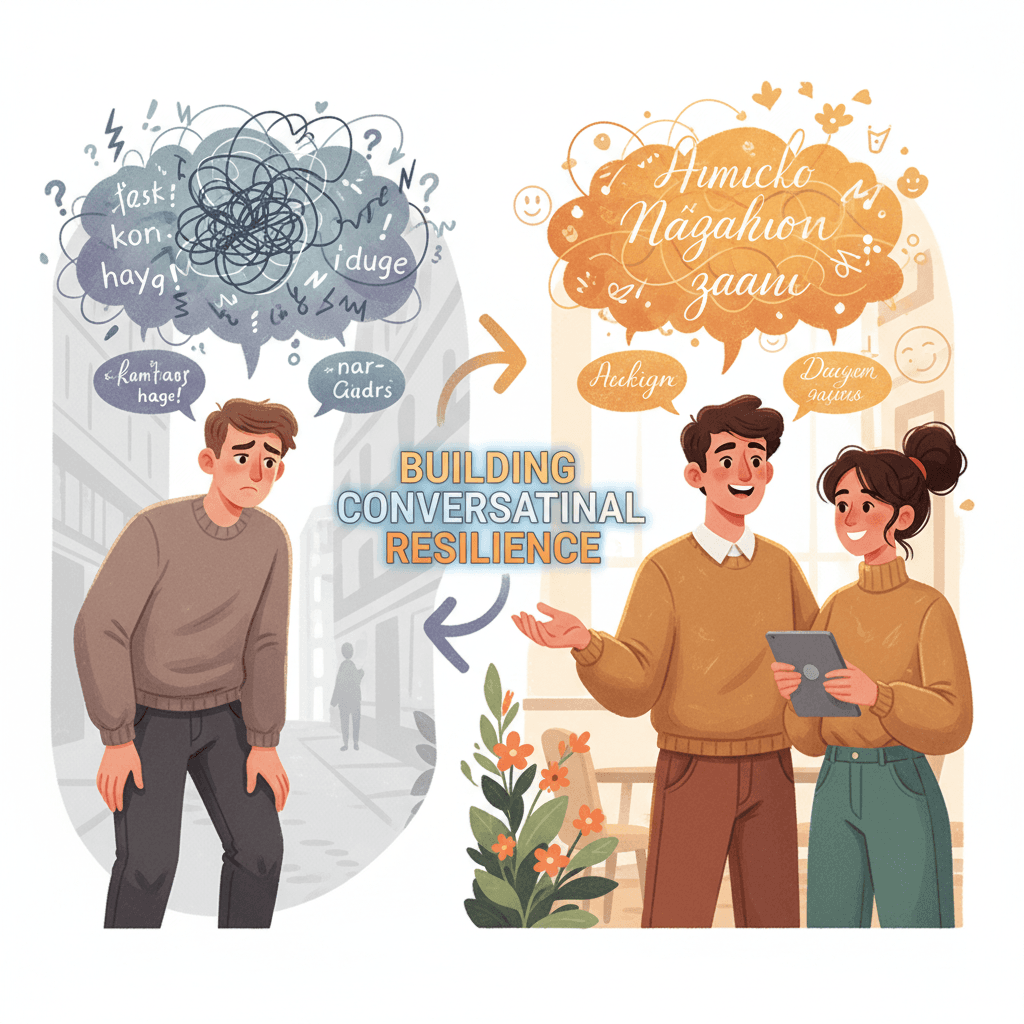
That knot in your stomach before a language exchange? It’s real, and you’re not alone. If you're looking for how to overcome language exchange anxiety, you’ve probably heard the usual advice: “Just practice more!” or “Find a good partner.” While well-intentioned, this advice often misses the point. The fear you feel isn’t just about a lack of practice; it’s a deep, psychological response tied to your identity and the fear of being judged. We’re going to show you a better way forward—not by avoiding the fear, but by building the skills to manage it gracefully.
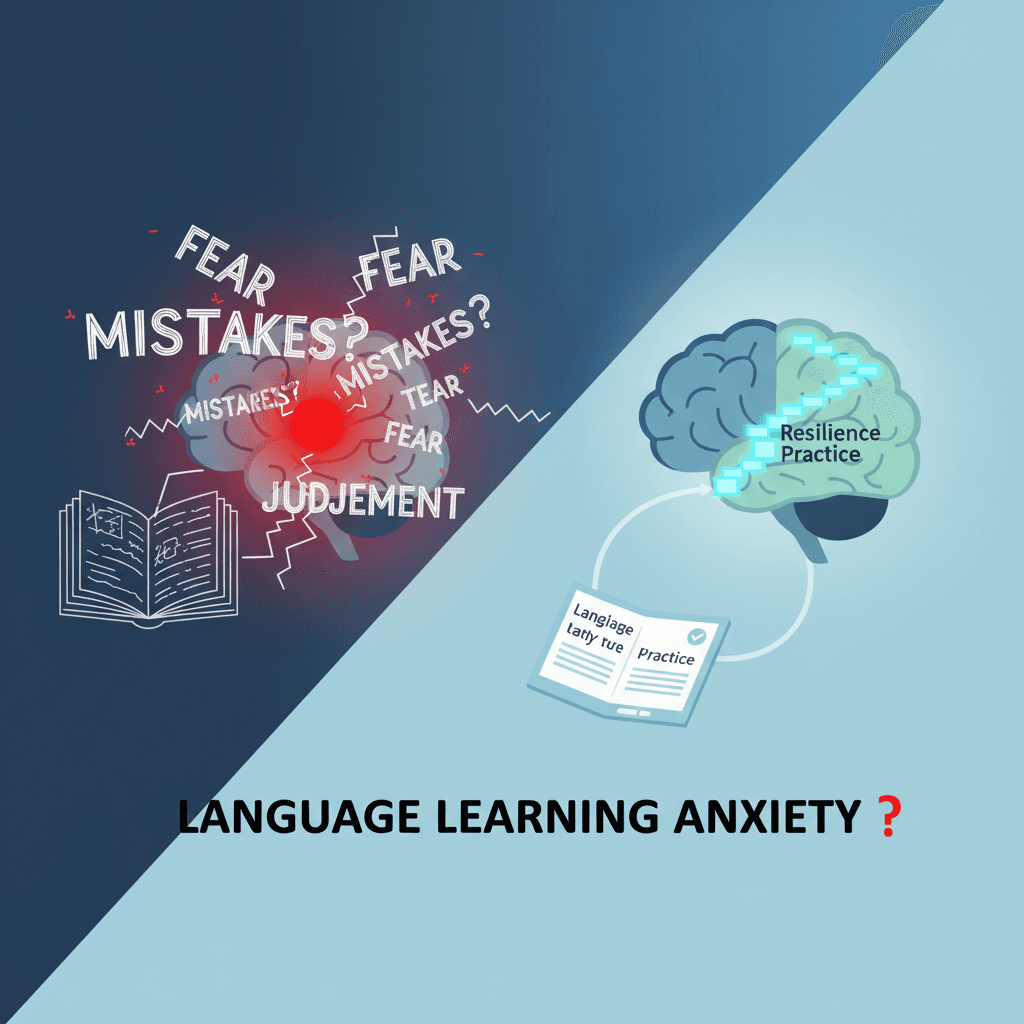
Why Typical Advice for Language Anxiety Falls Short
The challenge with speaking a new language is that it feels incredibly personal. It’s not like a math problem; it’s tied to your sense of self. Research confirms that Foreign Language Anxiety (FLA) is a unique beast, distinct from general academic anxiety because it’s so connected to a speaker’s personal identity. When you stumble over a word, you’re not just making a mistake—it can feel like a reflection of your intelligence or ability.
This is why simply practicing more doesn’t always work. If the root cause is a psychological factor like a 'fear of negative evaluation,' then more practice can sometimes mean more opportunities to feel anxious. The real issue is often deeper than a lack of vocabulary. It’s about the internal pressure we put on ourselves.
The method of practice is far more important than the amount. For example, recent studies show that using specific learning strategies, like having bilingual support (translanguaging), can cause a 'substantial reduction in anxiety levels' and increase 'emotional comfort.' This proves that how you practice—in a supportive, strategic way—is the key to unlocking your confidence.
Your Brain on Language Exchange: The Science of Anxiety
Ever felt like everyone is hanging on your every word, just waiting for you to make a mistake? That feeling has a name: the 'spotlight effect.' It’s a cognitive bias where you feel like you're on stage and your every flaw is magnified. This isn't just in your head; it’s a recognized psychological response. Your brain is trying to protect you from social threats, but in a language exchange, it misinterprets the situation.
Then there’s 'catastrophizing'—the voice in your head that says, “If I make a mistake, my partner will think I’m incompetent and the conversation will be a disaster.” This is your brain assuming the worst-case scenario. The good news? These are just mental habits, and habits can be retrained. The first step is recognizing that this is a normal brain response, not a personal failure.
You can retrain your brain through gradual, positive exposure. Research shows that immersive experiences, like the ones offered by international exchange programs, can 'significantly reduce' speaking anxiety. Why? Because they provide repeated, real-world proof that making mistakes is okay and that communication is the ultimate goal. You can create this same effect without buying a plane ticket.
What is 'Conversational Resilience'? (And Why It’s Your New Goal)
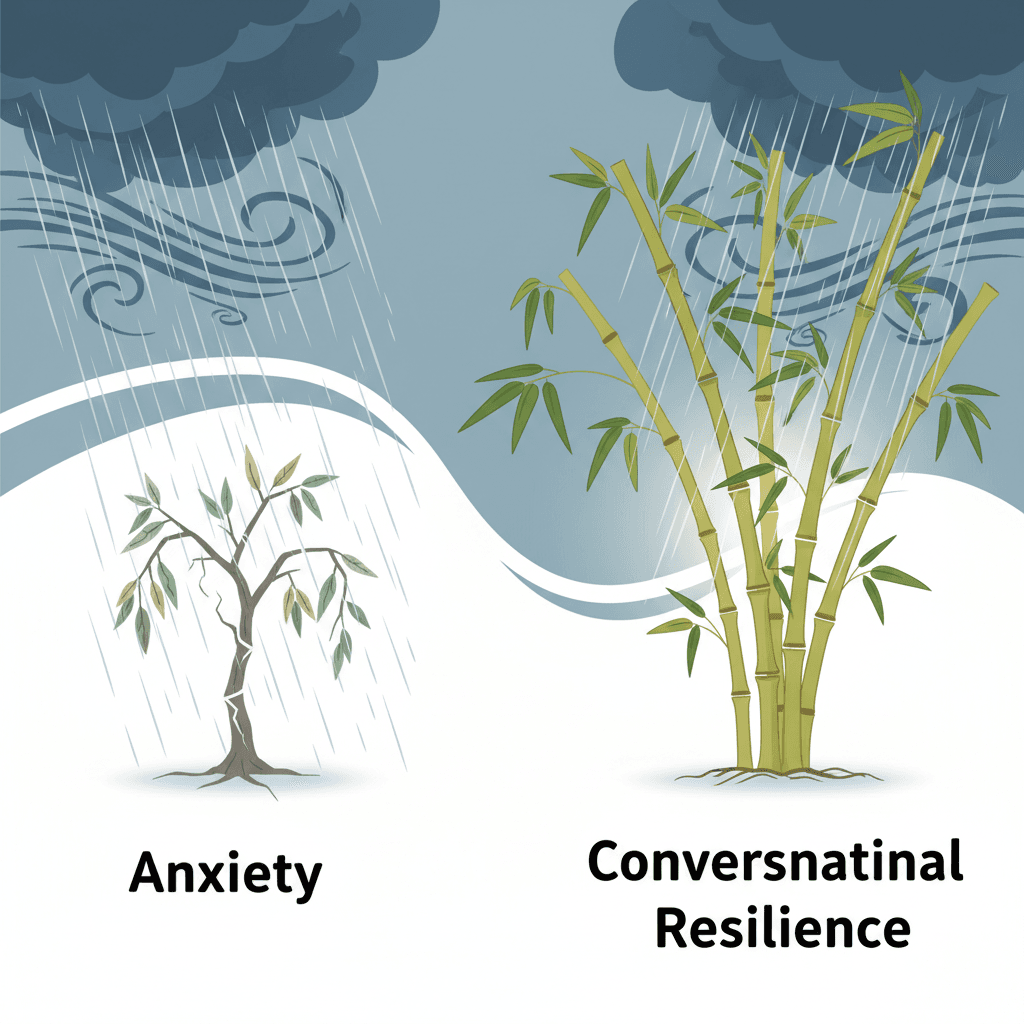
Let’s shift our goal. Instead of aiming for 'perfect, anxiety-free' conversations, let's aim for conversational resilience. This is a unique concept we champion because it's so much more empowering. It’s not about never feeling nervous; it’s the ability to handle the unpredictable nature of real-world dialogue, recover gracefully from a mistake, and keep the conversation going even when you feel flustered.
Think about it. The most confident speakers aren't the ones who never make mistakes. They’re the ones who don't let mistakes derail them. They know how to laugh it off, ask for clarification, or find another way to express their idea. That’s resilience in action. Academic research from 2022 defines it as the ability of a conversation to 'withstand adverse interruptions and recover from negative influences.' That's exactly the skill you need.
Conversational resilience is the tool for overcoming those specific high-anxiety moments, like group discussions or when you're corrected on the spot.
By focusing on resilience, you move the goalposts from 'perfection' to 'connection.' You start celebrating small wins, like recovering from a blank moment or successfully asking your partner to slow down. This mental shift is the foundation for building genuine, lasting confidence.
The Social Simulator: Preparing for Humans with an AI Tutor
So, how do you build resilience without diving headfirst into high-stakes conversations? You use a 'social simulator.' This is where an AI language tutor becomes your secret weapon. Think of it as a dedicated training ground—a safe, judgment-free space to build your skills and confidence before you ever speak to a real person.
One of the biggest drivers of foreign language anxiety is the fear of instant error correction. With an AI partner, that fear disappears. You can make mistakes, take your time, and practice those awkward moments without any social pressure. Platforms like SpeaksyAI allow you to have open-ended conversations, acting as the perfect first step on your exposure ladder. You get all the benefits of increased communication opportunities—which research has shown significantly reduces speaking anxiety—with none of the risk.
This isn't just about practicing vocabulary; it's about practicing the art of conversation itself. You can rehearse how to handle misunderstandings, practice asking for clarification, and build the mental muscle you need for real-world interactions. It’s the bridge between knowing the words and knowing how to use them with confidence.
Role-Play These Scenarios to Build Your Resilience
Take these specific prompts to an AI tutor to practice high-anxiety situations in a low-stakes environment. This is how you build true conversational resilience. Research from 2023 shows that using role-playing games can reduce language anxiety from moderate to low levels while improving oral skills.
- •The Mind Blank: Start a conversation and then say, 'Wait, I just lost my train of thought. Can you remind me what we were talking about?' Practice recovering smoothly.
- •The Forgotten Word: Tell your AI tutor, 'I want to describe something, but I forgot the word. It's a thing you use for...' Practice describing the concept to get your meaning across.
- •The Misunderstanding: Practice saying, 'I'm not sure I understand. Could you explain that in a different way?' Take control of the conversation's clarity.
- •The Graceful Correction: Make a deliberate grammar mistake. If the AI corrects you, practice responding with 'Ah, thank you! That's helpful to know,' instead of apologizing.
- •The Pace Car: Ask your AI tutor to speak faster, and then practice interjecting with, 'Sorry, could you please say that a little more slowly?'
Your Conversational Toolkit: Phrases for Anxious Moments
Building resilience also means having the right tools ready when you need them. Memorizing a few key phrases can feel like having a safety net. It gives your brain a pre-approved script to follow when anxiety kicks in, allowing you to stay in the conversation instead of retreating.
When your mind goes blank...
This is a classic symptom of speaking practice anxiety. The pressure builds, and your brain's cognitive resources get hijacked, leaving no room for word retrieval. Use these phrases to buy yourself a moment to reset.
- •"Let me think for a moment..."
- •"That's a great question. Let me see..."
- •"Sorry, I just lost my train of thought."
- •"The word is on the tip of my tongue..."
When you don't understand your partner...
Not understanding is a normal part of communication, even in your native language! It’s not a failure. It’s an opportunity to guide the conversation. Using these phrases shows you're engaged and eager to understand.
- •"I'm sorry, could you please say that a bit slower?"
- •"I'm not familiar with that word/expression. What does it mean?"
- •"Could you rephrase that for me?"
- •"So, if I understand correctly, you're saying that..." (A great way to confirm understanding)
Frequently Asked Questions
Ready to Practice Without Pressure?
Use SpeaksyAI's AI language tutor as your personal social simulator. Build confidence and conversational resilience before your next exchange.
Join the Waitlist