Your Mouth Hurts Speaking a New Language? Here's Why & What to Do
Feeling a sore jaw or tired tongue after speaking practice? It's a common sign you're giving your mouth a workout. Here's why it happens and how to manage it.
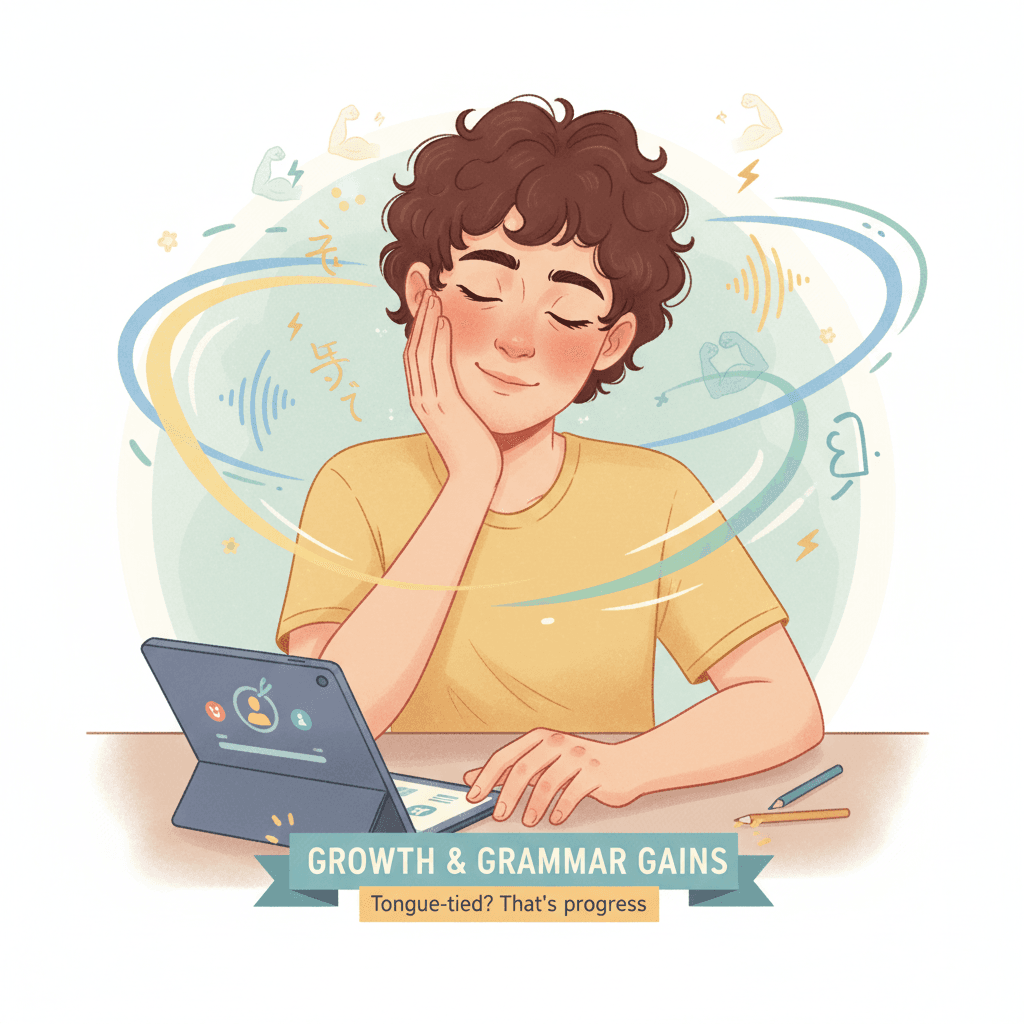
If you’ve ever finished a practice session in a new language and felt a sore jaw or a tired tongue, you’ve probably asked yourself, “Why does my mouth hurt when speaking a new language?” You’re not alone, and it’s not a bad sign. In fact, it’s a sign of progress. Think of it like the muscle soreness you feel after a great workout at the gym. You're training your mouth, lips, and tongue to make new shapes and movements, and just like any muscle group, they get tired. This phenomenon is a normal part of language learning, often called ‘articulator fatigue,’ and it's a stepping stone on your path to speaking confidently.
It's Not a Bad Sign, It's a Mouth Workout
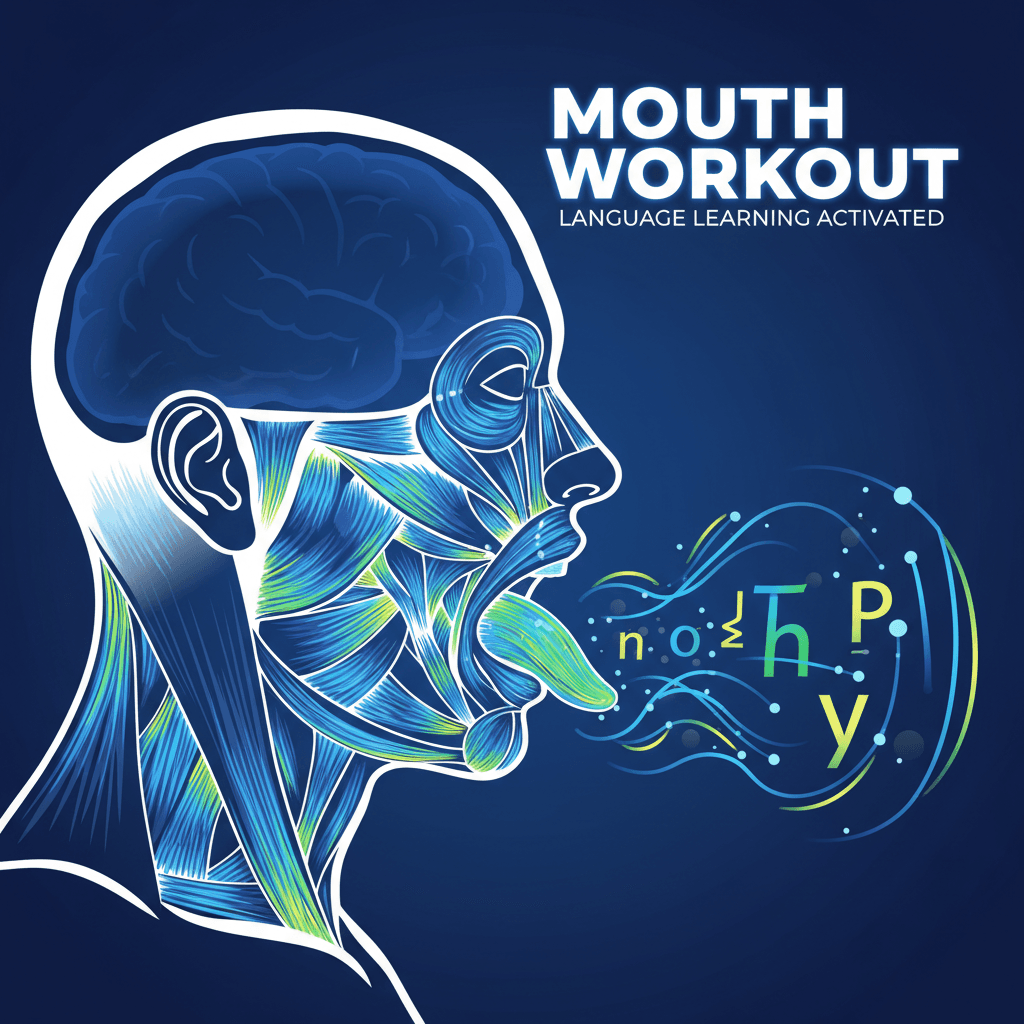
It’s helpful to reframe this discomfort. Instead of a problem, see it as evidence of a productive ‘mouth workout.’ When you speak your native language, your mouth moves automatically, relying on years of muscle memory. But a new language demands entirely new physical skills. According to linguistics coaches, this is a ‘training problem,’ not a fluency problem. Your mouth simply hasn't been trained for these specific new movements yet. This mouth muscle fatigue in language learning is especially common when the new language has sounds that are very different from your own, like the unique lip and mouth shapes required for French for native English speakers.
Community discussions among language learners confirm this. Many people on forums like Reddit’s r/languagelearning refer to this exact feeling, noting that the soreness and awkwardness typically fade after a few months of consistent practice. The initial discomfort you feel is your body building new neural pathways and muscle memory. You are literally rewiring your brain and training your muscles for a new skill. Celebrate it!
The Two Main Causes of Speaking Pain
So, what’s actually happening to cause this soreness? The discomfort you feel isn't just in your head. It stems from a combination of two powerful forces: new physical demands and the psychological stress of learning. Understanding these two root causes is the first step toward managing them and making your practice sessions more comfortable and effective.
First, the physical strain is real. As expert Hadar Shemesh of Accent's Way explains, new languages require using different muscles or using familiar muscles in completely unaccustomed ways. Second, there's a significant mental component. Self-consciousness about your accent or the fear of making mistakes can cause you to physically tense up, leading to strained and inefficient speaking. This combination of physical and psychological factors is why you might feel that nagging jaw tension when speaking a foreign language.
Cause #1: New Sounds Require New Muscle Movements
Speaking is a physical skill that relies heavily on muscle memory. When you learn a new language, you’re asking the muscles in your mouth, lips, and tongue to create shapes they’ve never made before. This can feel strange and consciously forced at first. It’s like asking your legs, which are experts at walking, to suddenly perform a complex ballet plié. The muscles are there, but they aren’t trained for those specific, nuanced movements.
Many learners experience this as a ‘heavy tongue’ or tight jaw. This is often a sign of what experts call ‘inefficient pronunciation,’ where you’re using excessive energy to articulate unfamiliar sounds. You’re overthinking the movement and physically forcing your mouth into position. For example, an English speaker learning Spanish might struggle with the rolled ‘rr,’ or a learner of German may feel strain from producing the guttural ‘ch’ sound. These sounds require building new muscle memory, which only comes with repetition.
- •Spanish rolled 'rr': Requires vibrating the tip of the tongue against the roof of the mouth, a movement absent in standard US or UK English.
- •French nasal vowels: Involves passing air through both the mouth and nose, which can feel unnatural and requires precise control of the soft palate.
- •German 'ch' sound: Made in the back of the throat, this sound can cause friction and strain for those not used to it.
- •Russian 'ы' vowel: A sound that many learners describe as being between 'i' and 'u', forcing the tongue into a new and awkward position.
Cause #2: Your Brain is Making Your Jaw Tight
The discomfort isn’t just physical; it's also psychological. The intense concentration required to find the right words, remember grammar, and nail the pronunciation often causes you to subconsciously clench your jaw and tense your face and neck. This added strain compounds the physical muscle fatigue, creating a cycle of tension and discomfort.
This is often driven by a fear of making mistakes. When you’re worried about how you sound, you tend to hold extra tension in your face. This leads to that classic feeling of a tight, awkward jaw. An expert from Accent's Way notes that this inefficient use of energy—both mental and physical—can lead directly to a tight jaw, a ‘heavy’ feeling tongue, and general exhaustion after speaking. You're not just practicing a language; you're battling your own self-consciousness, and that fight manifests physically.
Your 5-Minute 'Mouth Workout' Warm-Up
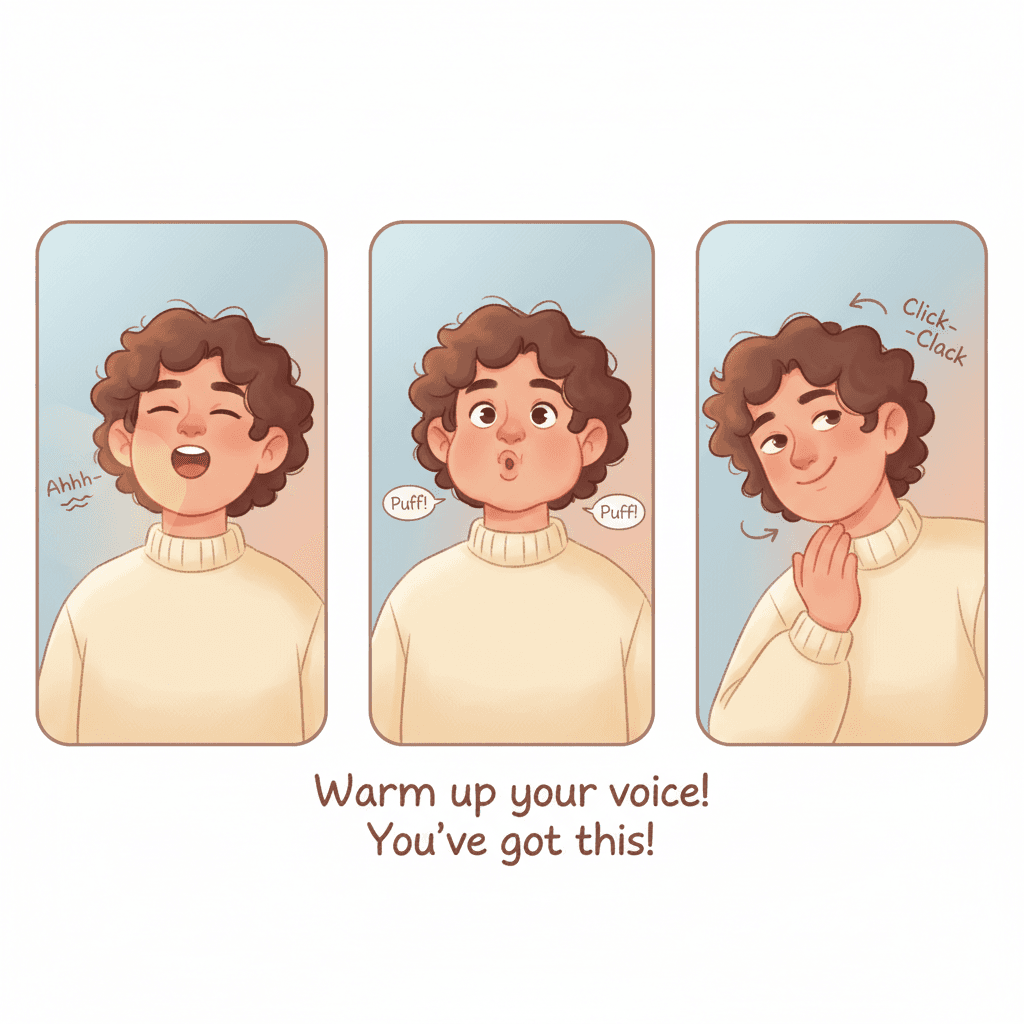
Just as you would warm up before hitting the gym, you can prepare your mouth for a speaking session. These simple pronunciation exercises for mouth relaxation can release tension, increase blood flow, and make your practice more comfortable. Spending just a few minutes on this routine can make a huge difference in preventing that feeling of a tongue tired from a new language.
- 1.Lip Trills (Lip Bubbles): Close your lips loosely and blow air through them to create a buzzing, motorboat-like sound. Do this for 30 seconds. This relaxes your lips and helps with breath support.
- 2.Gentle Jaw Circles: Let your jaw hang loosely and gently move it in slow, deliberate circles, first clockwise, then counter-clockwise. Do five circles in each direction to release jaw tension.
- 3.Tongue Stretches: Open your mouth wide. First, try to touch the tip of your nose with your tongue. Hold for 10 seconds. Then, try to touch your chin with your tongue. Hold for 10 seconds. This stretches the base of the tongue.
- 4.Cheek Puffs: Puff up your cheeks with air, then transfer the air from one cheek to the other, back and forth. This helps relax your facial muscles.
While these warm-ups are excellent for relieving discomfort, it's good to have realistic expectations. Research from 2025 notes that isolated oral motor exercises don't directly improve the brain's ability to produce speech sounds correctly, because speech is a complex motor skill, not just a matter of muscle strength. So, think of these exercises as a way to how to relax mouth when speaking and prepare for the real work: practicing the sounds themselves.
How to Practice Smarter to Reduce Strain
Beyond warm-ups, you can adjust your practice habits to build endurance without burning out. A key shift is to aim for ‘clear’ pronunciation, not ‘perfect’ pronunciation. Many learners cause their own fatigue through inefficient over-articulation. They invest excessive energy into making a sound absolutely perfect, which, according to experts at Accent's Way, is a fast track to exhaustion. Instead, focus on being understood. Clarity is the goal; perfection will come with time and practice.
Here are a few more strategies to reduce strain during your practice sessions:
- •Stay Hydrated: Speaking for an extended period, especially when you're concentrating hard, can cause dry mouth. This increases friction and makes every sound feel more difficult. Keep a glass of water nearby.
- •Practice in Short Bursts: Instead of one long, grueling hour-long session, try two or three 20-minute sessions throughout the day. This gives your mouth muscles time to recover and helps solidify muscle memory without over-straining.
- •Focus on One Sound at a Time: Don't try to master every difficult sound in one day. Dedicate a session to just the Spanish 'rr' or the French 'u'. This focused practice is more efficient for building muscle memory.
By practicing smarter, you treat language learning like a sustainable fitness program rather than a sprint. You'll build the strength and endurance needed to speak for longer periods without discomfort, making the entire process more enjoyable and less intimidating.
Using an AI Tutor as Your Private Gym
To build muscle memory, you need one thing above all else: repetition. But practicing with other people can be stressful, which adds to the psychological tension that causes jaw clenching and fatigue. This is where an AI tutor can be a game-changer. Think of it as your own private, judgment-free 'gym for your mouth.' You can practice the same difficult words and phrases hundreds of times without worrying about boring or bothering a human partner.
The key benefit is targeted, efficient practice. For example, SpeaksyAI's real-time pronunciation feedback can pinpoint exactly how your pronunciation deviates from a native speaker's. It might highlight that you’re not rounding your lips enough for a certain vowel, or that your tongue placement is slightly off. This instant feedback helps you correct the specific movements causing strain, making your practice 'reps' more effective and less strenuous. You're no longer guessing; you're training with precision.
By providing a safe space for the high volume of repetition needed to master new sounds, an AI language partner helps you push through the intermediate plateau where so many learners quit. It allows you to do the necessary 'drills' to turn conscious, inefficient movements into automatic, effortless speech.
Frequently Asked Questions
Frequently Asked Questions
Ready to Train Your Speaking Muscles?
Practice new sounds without the pressure. Get instant, private feedback with the SpeaksyAI language tutor to build your fluency.
Join the Waitlist