How to Learn a Language with a Baby: A Realistic Parent's Guide
Wondering how to learn a language with a baby? It's not about finding big blocks of study time. This guide offers a practical, guilt-free system for new parents.
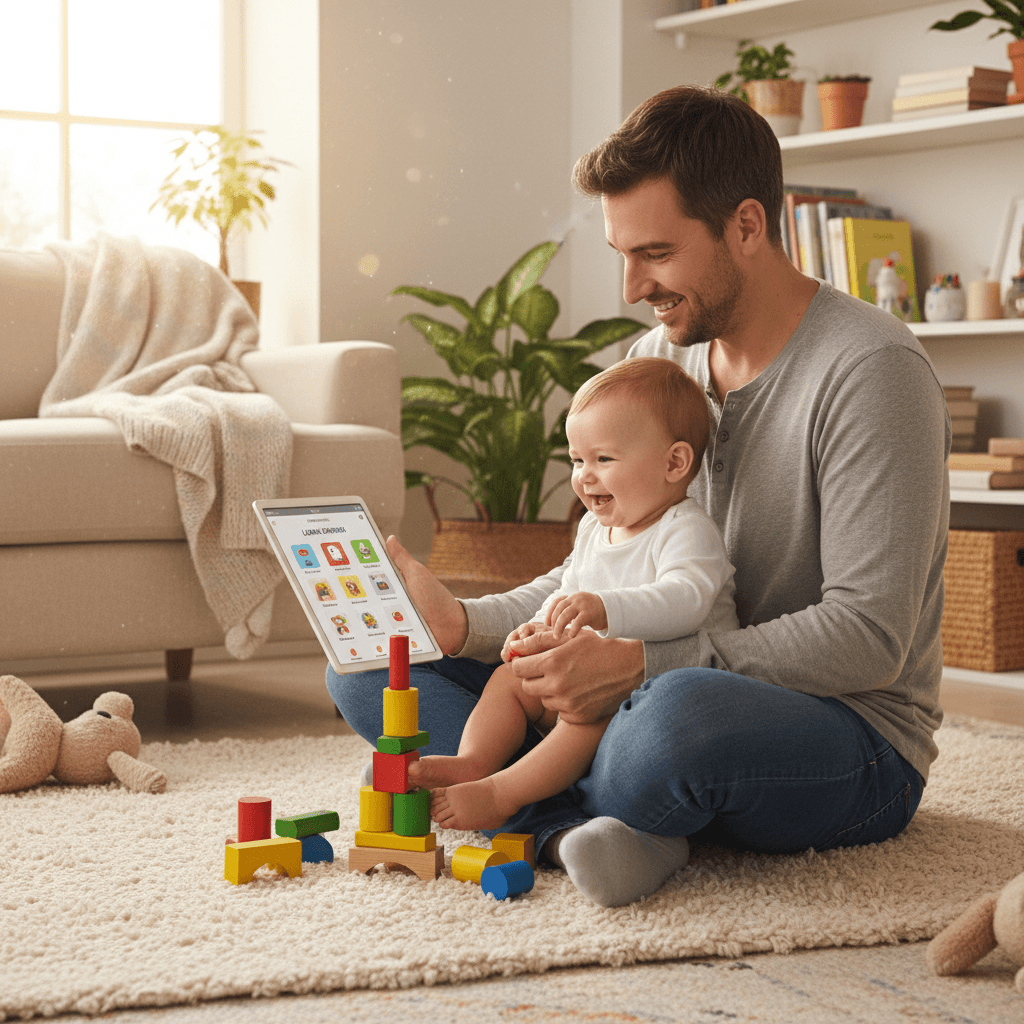
So, you want to learn a new language, but you have a new baby. The first question is always the same: how do you find time to learn a language with a baby when you can barely find time to shower? Let’s be honest: the idea of blocking out an hour for study feels impossible right now. The good news is, you don’t have to. The secret isn’t about finding large chunks of time; it’s about integrating language learning into the small, scattered moments you already have. This practical system is designed for overwhelmed but motivated parents just like you, helping you make real progress, even when you're sleep-deprived and running on fumes. Forget perfection; this is about celebrating small, consistent wins on your journey to becoming bilingual.
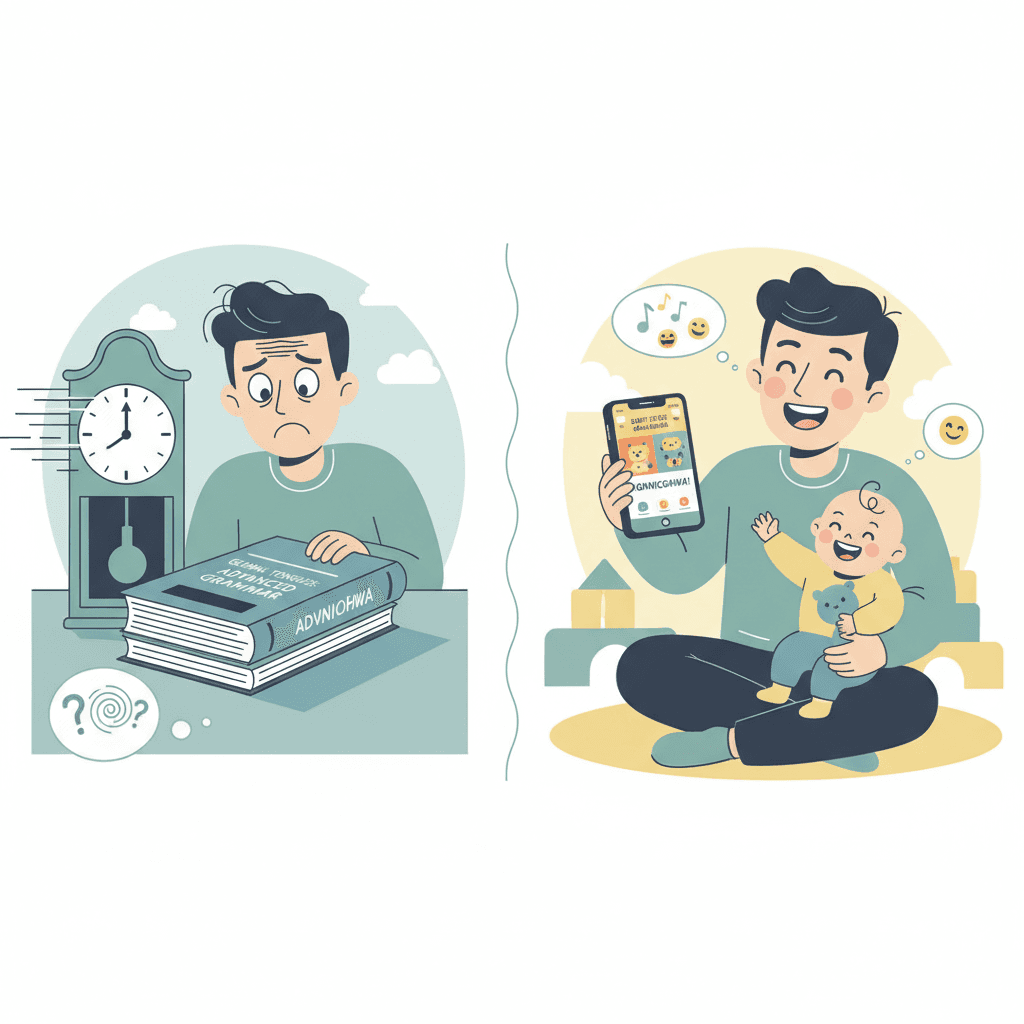
First, Acknowledge the Reality: This is Hard (and That’s Okay)
Before we dive into the 'how', let's take a moment to validate what you're feeling. Juggling a newborn and a personal goal like language learning is incredibly challenging. Many parents, as noted in candid online discussions, describe the newborn phase as 'barely surviving in just one language.' You’re dealing with sleep deprivation, the phenomenon of 'baby brain,' and perhaps even a touch of guilt for wanting to do something for yourself. It’s easy to feel like you’re underestimating your own abilities or that any time spent on a hobby is time stolen from your baby or your sleep.
This pressure is real, and it's a major reason people quit. The language learning industry has recognized this, with a growing emphasis on setting realistic, manageable goals to combat the psychological barrier of perfectionism. The all-or-nothing mindset—'if I can't study for an hour, I won't study at all'—is your biggest enemy. It’s time to let that go. Your goal is not to replicate a university language course; it’s to build a sustainable habit that fits your new life.
The Mindset Shift: Stop 'Finding Time', Start 'Integrating Moments'
The single most important shift you can make is to stop searching for a free hour in your day and start identifying the small pockets of 'dead time' that are already there. Think about the minutes spent waiting for a bottle to warm, rocking your baby to sleep, or during the first few precious moments of a nap. These are your new language learning moments. This concept, known as micro-learning, is not just a coping mechanism; it’s a highly effective learning strategy. This is a game-changer for language learning for new parents.
Instead of feeling frustrated by the lack of a long study block, you can feel accomplished by fitting in a 10-minute session. This is where tools built for flexibility shine. An AI-powered language tutor, for instance, is available 24/7. There’s no scheduling required. The moment you have a quiet 10 minutes, you can start a conversation and get valuable speaking practice. To make these micro-moments even more effective, language experts recommend 'habit stacking'—linking your new language habit to an existing one. For example: 'While the kettle boils for my morning tea, I will review five flashcards.' This removes the mental load of deciding when to study.
The '5-Minute Win' System: Your Low-Energy Learning Plan
On days when you're feeling particularly exhausted, the idea of 'active study' can feel like too much. That’s where a low-energy, passive approach comes in. The goal here is exposure and consistency, not intense mental effort. Remember, research from neuroscientists like Patricia Kuhl has shown that the brain can adapt to new language sounds with very short, repeated exposure. Think of it as marinating your brain in the language. Every little bit counts.
- •Podcast Strolls: Pop in your headphones and listen to a podcast for beginners in your target language while you walk with the stroller. Don't worry about understanding every word; just let the sounds and rhythms wash over you.
- •Musical Moments: Create a playlist of music in your target language. Play it in the background during playtime or while doing chores. It’s an enjoyable, zero-effort way to get familiar with the language's cadence.
- •Flashcard Feeds: While you’re feeding the baby (and likely scrolling on your phone anyway), open a flashcard app for a quick five-minute vocabulary review. Focus on one small set of words, like household items or baby-related terms.
- •Target Language TV: Change the audio or subtitles of a show you're watching to your target language. Even if you only catch a few words, you're building connections in your brain. Children's shows are often a great place to start due to their simple vocabulary.
This is a perfect example of low-energy language learning. You're not forcing yourself to memorize grammar rules; you're creating a language-rich environment. This is not just for you. Studies on infant language acquisition show that even short, consistent exposure can create a beneficial language environment for your child. In fact, infants can begin acquiring a second language with as little as one hour of interactive exposure per day.
The 'Naptime Power Session': Graduating to Active Learning
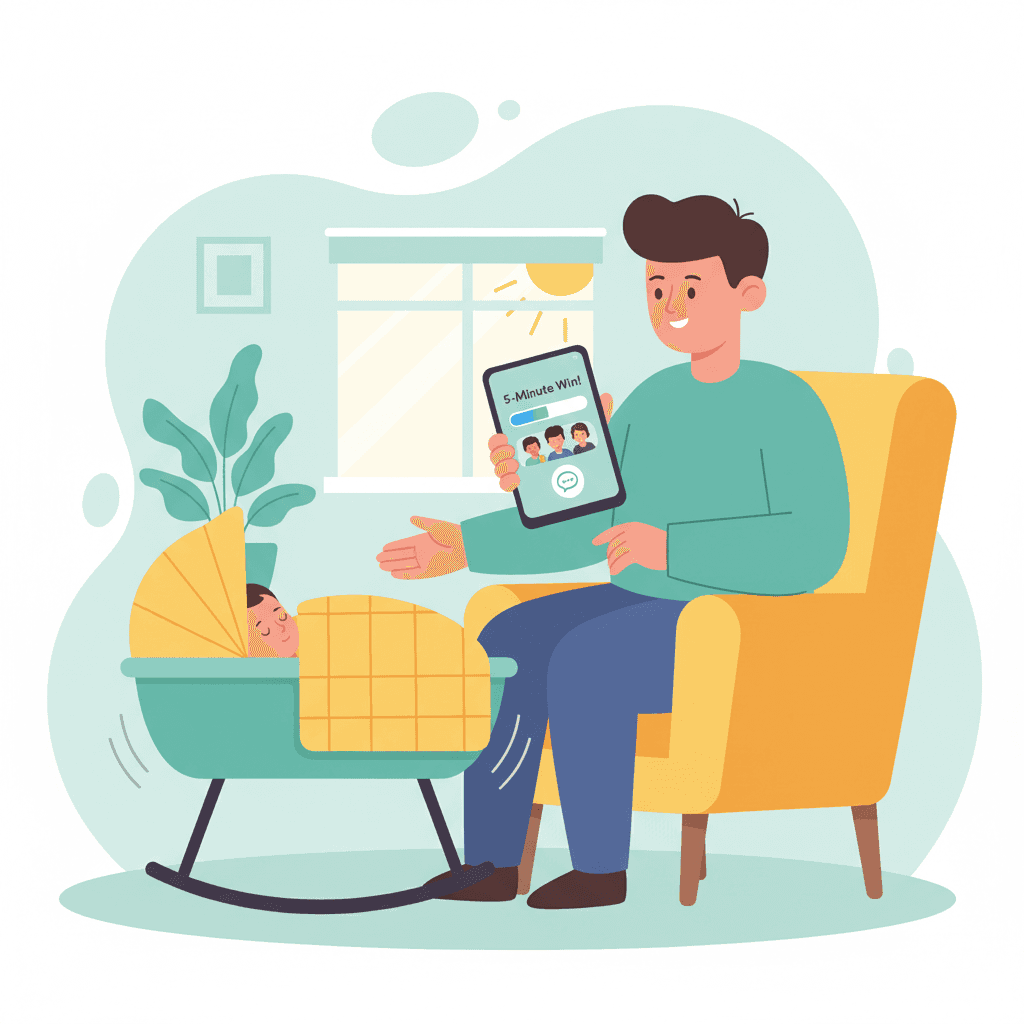
When that magical, unpredictable window of quiet time opens up—the baby is sound asleep—you can graduate from passive listening to active learning. This is your 'Naptime Power Session.' The key here is to have a plan before the nap happens. Don't waste precious minutes deciding what to do. Decide ahead of time: 'When the baby naps today, I will spend 15 minutes practicing conversation with my AI tutor.'
Active learning is what moves the needle from understanding a language to actually using it. A 2026 guide from Studycat emphasizes that learners must actively use the language, not just hear it, to achieve fluency. This is where you engage your brain more directly. Your power session doesn't need to be long; an analysis from HelloTalk (2026) shows that splitting study time is more effective than one long block.
- 1.Speak Out Loud: Use an AI language tutor to have a short, 10-15 minute conversation. The goal is to produce the language. Talk about your day, what you plan to make for dinner, or even practice baby-related scenarios.
- 2.Write a Few Sentences: Open a notebook or a notes app and write 3-5 sentences about your day in your target language. This forces you to recall vocabulary and structure sentences.
- 3.Targeted Grammar Review: Pick one—and only one—grammar concept you've been struggling with. Watch a short YouTube video explaining it, and then try to write two sentences using it correctly.
The rise of AI in language learning is a huge benefit here. Recent developments, noted in a 2026 Upstream Research report, highlight how AI enables instant speaking and pronunciation feedback, fitting perfectly into a short power session. This is the crucial step of speaking practice for busy parents that was previously so difficult to obtain.
Your Biggest Hurdle: Finding a Way to Speak Confidently
For most learners, the biggest barrier to fluency is getting consistent, low-pressure speaking practice. This is especially true for new parents. Booking a human tutor requires fixed scheduling, which is nearly impossible with a baby's unpredictable naps and needs. Language exchange partners can be unreliable and require you to be 'on' at a specific time, which is tough when you're exhausted.
This is where technology offers a perfect solution. An AI language tutor for parents, like SpeaksyAI, solves these problems. The tutor is available 24/7, meaning you can start a 10-minute speaking session the second the baby falls asleep. There’s no scheduling, no coordinating time zones, and no guilt if you have to cut a session short because the baby woke up.
For a tired parent, the thought of making mistakes in front of another person can be paralyzing. Practicing with a non-judgmental AI tutor removes that fear. It creates a private space to build confidence and stumble through sentences without feeling self-conscious. You can mispronounce words, forget vocabulary, and take long pauses, and the AI will wait patiently and help you improve.
Furthermore, you can customize the conversation to your life. With SpeaksyAI's AI conversation partner, you can practice the exact vocabulary you need, like discussing feeding schedules, describing a trip to the park, or learning lullabies in your target language. This makes your practice immediately relevant and useful.
Use Your Baby as Your Secret Language Partner
Here’s a powerful reframe: your baby isn’t an obstacle to your learning; they are an asset. One of the most effective ways to practice is to narrate your day to your baby in your target language. This turns mundane tasks into active language practice. You're not just learning vocabulary; you're using it in context.
Start simply. As you change a diaper, say, 'I am changing your diaper. This is a clean diaper.' As you get them dressed, say, 'Let's put on your red socks. One sock, two socks.' This method of engaging in 'conversational turns' is not only great for your recall but also incredibly beneficial for your baby's cognitive development. Babies are natural 'pattern detectors,' and by hearing you speak consistently, they begin to identify linguistic patterns.
If you feel unsure about your vocabulary or pronunciation, you can use a tool like SpeaksyAI to prepare. Have a quick conversation with the AI to master baby-related vocabulary before you start narrating. And if you're worried about 'confusing' your baby by mixing languages, you can relax. A 2025 paper from the Concordia Infant Research Lab found that language mixing by parents does not negatively impact a child's vocabulary development. Your efforts are a win-win.
How to Handle Setbacks, 'Baby Brain', and Bad Days
There will be days—maybe even a full week—when you don't do any language learning. The baby will be sick, you'll be sleep-deprived, or you'll simply have no mental energy left. This is normal. The most important thing is not to quit. The key to long-term success is giving yourself grace and getting back on track without guilt.
On those tough days, aim for a 'minimum viable effort.' This could be learning just one new word, listening to one song, or doing a single one-minute lesson on an app. The goal is to keep the chain of habit alive, even if it's just by a thread. Celebrating these tiny wins is crucial for maintaining motivation. You didn't study for an hour, but you did learn the word for 'sleepy.' That's a victory!
This is another area where practicing with a non-judgmental AI tutor can be a lifeline. As user research from SpeaksyAI shows, the fear of making mistakes is a major barrier to speaking, especially when you're tired. An AI doesn't care if you're experiencing 'baby brain' and can't find the right word. It's a low-stakes environment that encourages you to try, even when you're not at your best. Remember, consistency beats intensity every single time.
Your Questions Answered
Frequently Asked Questions
Ready for On-Demand Speaking Practice?
SpeaksyAI is your 24/7 AI language tutor. Practice speaking in 10-minute sessions that fit your unpredictable schedule. No booking, no judgment.
Join the Waitlist