Learn a Language When You're Tone Deaf: A Practical Guide
Think being tone deaf means you can't learn languages like Mandarin or Thai? Good news: you can. Here’s how your brain processes language pitch differently and a plan to help you speak confidently.
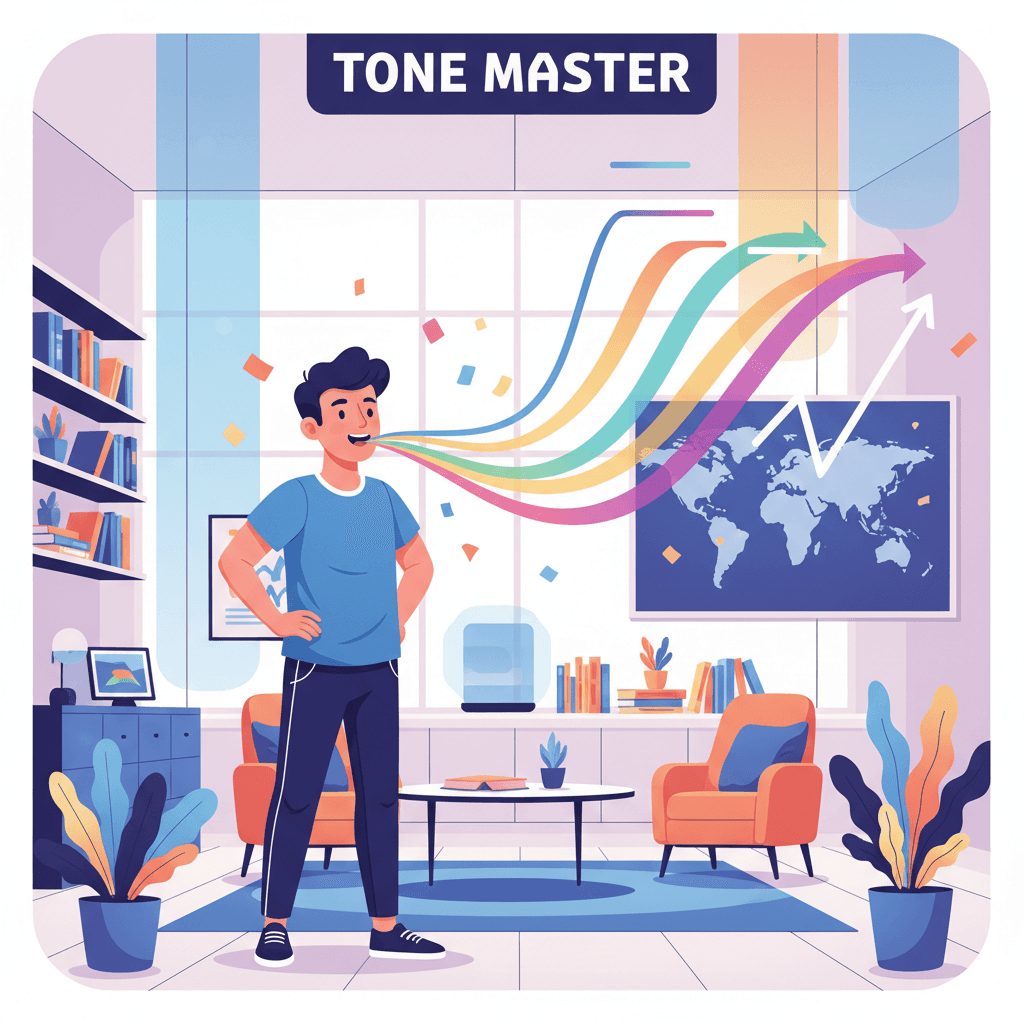
Wondering how to learn a language if you are tone deaf? You're not alone, and the answer is more encouraging than you might think. The simple truth is that it's entirely possible. Being “tone deaf” — more clinically known as congenital amusia — primarily affects your ability to perceive music, not language. Your brain is already an expert at processing the pitch and intonation of language; you use it every day to understand questions, statements, and emotions in your native tongue. Learning a tonal language like Mandarin or Thai isn't about becoming a musician; it's about extending that existing linguistic skill in a new way.
This guide will walk you through a proven, step-by-step process to demystify tones, train your ear, and build the confidence to speak a new tonal language, even if you can't carry a tune. We’ll look at the science, practical exercises, and the tools that can make all the difference.
Why 'Tone Deaf' Doesn't Mean 'Language Deaf'

The biggest mental block for many aspiring learners is the belief that their musical challenges will make learning tones impossible. Fortunately, science tells a different story. The way our brains process musical pitch and linguistic pitch, while related, are not the same. This is why you can struggle to identify a musical note but have no problem hearing the upward inflection in a friend's voice when they ask, “You’re coming tonight?”. That’s you processing linguistic pitch!
Your brain uses a powerful subconscious mechanism called 'distributional learning' to make sense of language. It’s a pattern-recognition machine that tracks how sounds appear in different contexts to figure out their meaning. A groundbreaking 2023 study published in Psychological Science confirmed that this ability remains largely intact for language, even in individuals with congenital amusia. The study found that so-called tone-deaf individuals were indeed capable of learning the lexical tones of Thai, proving that musical tone deafness doesn't stop you from learning linguistic pitch.
Think about it this way: you learned the grammar of your first language by hearing patterns, not by studying rulebooks. Your brain can apply that same pattern-finding skill to tones. The goal isn't to hear a tone and name it like a musical note (e.g., 'That's a C#'). The goal is to hear the contour—is it flat, rising, falling, or dipping?—and associate that shape with a word's meaning. You already have the hardware for the job; you just need to install the new software.
Your 4-Step Action Plan for Mastering Tones
So, if the brain is capable, what's the actual method? The key is to follow a structured plan that builds skills progressively, moving from simple listening to real-world conversation. Many learners falter because they try to do everything at once—hear, understand, and speak perfectly from day one. This approach avoids that pressure by breaking the process into four manageable steps. It’s designed to build your confidence at each stage, celebrating small wins along the way.
- 1.Isolate and Identify: Start by training your ear to hear the difference between tones using focused listening drills.
- 2.Mimic with Cues: Use visual and physical aids like hand gestures to connect the sound of a tone to a physical movement or shape.
- 3.Get Objective Feedback: Use technology to get instant, non-judgmental feedback on your pronunciation that your own ear might miss.
- 4.Rebuild and Contextualize: Move from single syllables to full words and sentences, using context to aid understanding.
Difficulty in producing tones often originates from unreliable tone perception. Active ear training should be the foundational first step in any learning plan.
Step 1: Isolate and Identify with Tone Pair Drills
Before you can produce tones correctly, you must be able to hear them distinctly. Trying to speak before you can listen is like trying to run before you can walk. The most effective starting point is 'tone pair' or 'minimal pair' drills. These are exercises where you listen to two words that are identical except for their tone, like the famous Mandarin examples mā (妈, mother, high-flat tone) and mǎ (马, horse, dipping tone).
Your only job at this stage is to listen and identify if the two sounds you heard were the same or different. Don't worry about what they mean or how to say them. This targeted listening practice is what a 2023 study identified as 'distributional learning' in action—you're training your brain to recognize the pitch pattern as a key feature of the word. Many learners report that after one to two weeks of consistent practice with a tone recognition exercise app or audio drills, tones that once sounded identical begin to feel noticeably different.
For example, you might use a simple app that plays a tone and gives you two choices (e.g., 'Rising' or 'Falling'). You tap what you think you heard. Getting it right provides a small hit of positive reinforcement; getting it wrong provides instant correction. This is a low-stakes way to retrain your brain to pay attention to linguistic pitch, a crucial first step if you want to learn Mandarin tone deaf or tackle any other tonal language.
Step 2: Mimic with Visual and Physical Cues
Once your ear is beginning to pick up on the differences, it's time to bring in your other senses. Connecting sounds to physical movements and visual aids can create powerful new neural pathways for learning, completely bypassing a reliance on musical hearing. This is a common strategy in many forms of communication; for instance, 'Cued Speech' uses handshapes to help individuals with hearing loss distinguish between speech sounds—and you can adapt the same principle for tones.
- •Use Hand Gestures: As you listen to and say a tone, trace its contour in the air. For Mandarin's first tone (flat), move your hand in a straight, level line. For the second tone (rising), swoop your hand up. For the third (dipping), dip your hand down and up. This physicalizes the abstract concept of pitch.
- •Color-Code Your Notes: Assign a specific color to each tone. For example, always write first-tone words in red, second-tone in blue, and so on. This creates a strong visual association that helps your memory, especially if you're a visual learner.
- •Draw the Contours: Next to each new vocabulary word, draw the tone contour—a straight line, a rising line, a 'V' shape, etc. This reinforces the 'shape' of the sound.
These non-auditory methods aren't just workarounds; they're powerful learning tools. Research from neuroscientist Dr. Laura-Ann Petitto shows that engaging with visual language can strengthen visual attention skills. By turning an auditory challenge into a visual and kinesthetic exercise, you're playing to your strengths and building a more robust understanding of how tones work.
Step 3: Get Objective Feedback with an AI Language Tutor
One of the biggest fears for any language learner, especially with tones, is 'Am I saying this right?'. You can listen to native speakers and mimic them, but how do you know if you're succeeding? Your own ear, especially if you have amusia, might not be a reliable judge. A human tutor can be great, but you may feel self-conscious practicing the same sound over and over. This is where modern technology offers a breakthrough.
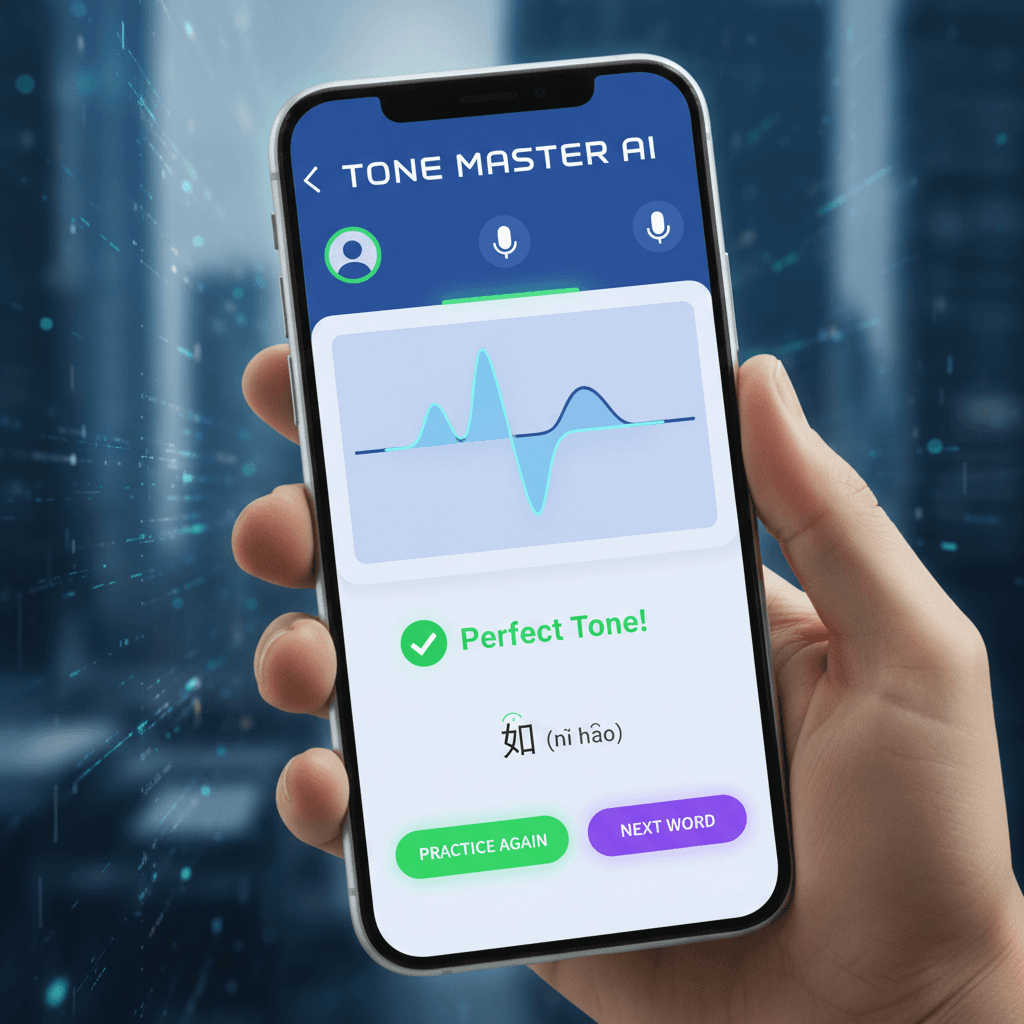
An AI language tutor provides a non-judgmental, infinitely patient practice partner. More importantly, it gives you objective, visual feedback that transcends hearing. For example, SpeaksyAI's AI tutor can analyze your speech and display your pitch contour as a line on a graph, right next to the line of a native speaker. You don't just have to hear if you're right; you can see it. You can see if your rising tone is actually flat, or if your dipping tone isn't dipping low enough.
This is a game-changer for anyone struggling with linguistic pitch. It transforms the learning process from frustrating guesswork into a clear, data-driven exercise. You can practice a single tone 50 times in a row without fear of judgment, making tiny adjustments until your visual contour matches the target. This targeted practice builds both accuracy and the self-assurance you need to speak confidently in real conversations.
Step 4: Rebuild Words and Practice in Context
With a foundational ability to hear and produce tones in isolation, the final step is to integrate them back into real language. Tones don't exist in a vacuum; they exist on words, which form sentences, which create meaning. This is where context becomes your most powerful ally. In many cases, even if your tone is slightly off, the context of the sentence will make your meaning clear to a native speaker.
According to the 'levels of processing' theory in psychology, information learned within a rich context is far more memorable than information studied in isolation. Instead of just drilling single syllables, start practicing them in two-syllable words, then short phrases, then full sentences. For instance, after practicing mǎ (horse), practice it in the word mǎshàng (马上, immediately). This helps you get a feel for tone transitions and the natural rhythm of the language. It's a core principle we discuss in our guide to stop translating in your head and think more naturally.
Research on how D/deaf and hard-of-hearing students learn foreign languages shows they successfully use contextual clues to infer meaning when auditory information is ambiguous. You can do the same. If you're at a restaurant and say, “I want to buy shuǐjiǎo (dumplings),” but your tones are a bit off and it sounds closer to shuìjiào (to sleep), the waiter isn't going to bring you a pillow. Context saves the day! Aim for clear communication, not flawless perfection.
Beyond Mandarin: A Look at Tones in Other Languages
While Mandarin Chinese is the most common example, over half of the world's languages are tonal, with vibrant communities of speakers in the US, UK, Australia, and beyond. The skills you develop for one tonal language are often transferable. Understanding this can make the challenge feel less like a one-off struggle and more like gaining a globally relevant linguistic superpower.
- •Vietnamese: The Northern dialect has six tones, some distinguished by pitch contour and others by voice quality, like the creaky 'ngã' tone.
- •Thai: Features five tones—mid, low, falling, high, and rising. The word 'mai' can mean 'new,' 'burn,' 'wood,' or 'not,' depending entirely on the tone.
- •Yoruba: Spoken by over 50 million people, primarily in Nigeria, Yoruba uses three basic tones (high, mid, and low) to differentiate the meaning of identical syllables.
- •Cantonese: Another major Chinese language, Cantonese has six tones (or more, depending on the analysis), creating a rich and melodic sound.
The fact that your brain's capacity for 'distributional learning' of linguistic pitch is separate from musical ability means that the answer to 'how to learn a language if you are tone deaf' is the same whether you're tackling Thai, Vietnamese, or Igbo. The same strategies of focused listening, visual cues, and contextual practice apply across the board.
How to Find and Work with the Right Tutor
While AI tools offer incredible support, the personalized feedback of a human tutor remains invaluable. However, it's important to find a tutor who understands the specific challenge of learning tones without a strong musical ear. Not all teachers are equipped to move beyond 'just listen and repeat'.
When interviewing potential tutors, be direct about your needs. An effective tutor should be a coach, not just a conversation partner. Based on a 2023 study confirming that people with amusia can learn tones, you should look for a tutor who believes in your ability and has concrete strategies to help. Here are some questions you can ask:
- •"Have you ever taught students who describe themselves as 'tone deaf'?"
- •"What methods do you use for teaching tones besides simple repetition?"
- •"Are you familiar with using visual aids like hand gestures or pitch contour diagrams?"
- •"How do you give feedback on tones? Can you help me identify specific errors?"
Remember, the goal is a sustained, personalized relationship. Research shows tutoring is most effective when sessions are frequent and consistent. Whether you use a platform like italki or a local teacher, prioritize a partner who is patient, strategic, and encouraging. For a deeper look at your options, check out our comparison of AI Tutors vs. Human Tutors to find the right blend for your learning style.
FAQ: Your Tone Deaf Language Learning Questions
Frequently Asked Questions
Get Objective Feedback on Your Tones
Stop guessing if you're saying it right. SpeaksyAI's AI language tutor gives you instant, visual feedback on your pronunciation and pitch to help you speak confidently.
Join the Waitlist