How to Use the Shadowing Technique to Speak Confidently
Heard of the language shadowing technique but not sure where to start? This simple guide breaks down how to use it to improve your pronunciation and fluency.

Why You Still Sound ‘Like a Learner’ (And How to Fix It)
You’ve spent countless hours learning grammar rules and memorizing vocabulary. You can read and write with decent accuracy, but when you speak, something feels… off. You might sound a bit robotic, or maybe your rhythm just doesn’t match the native speakers you hear. This is a common frustration, and it’s not about how many words you know. It’s about prosody—the music of a language. The good news is there’s a powerful method to fix this, and this guide will show you exactly how to do the language shadowing technique to start sounding more natural and speak confidently.
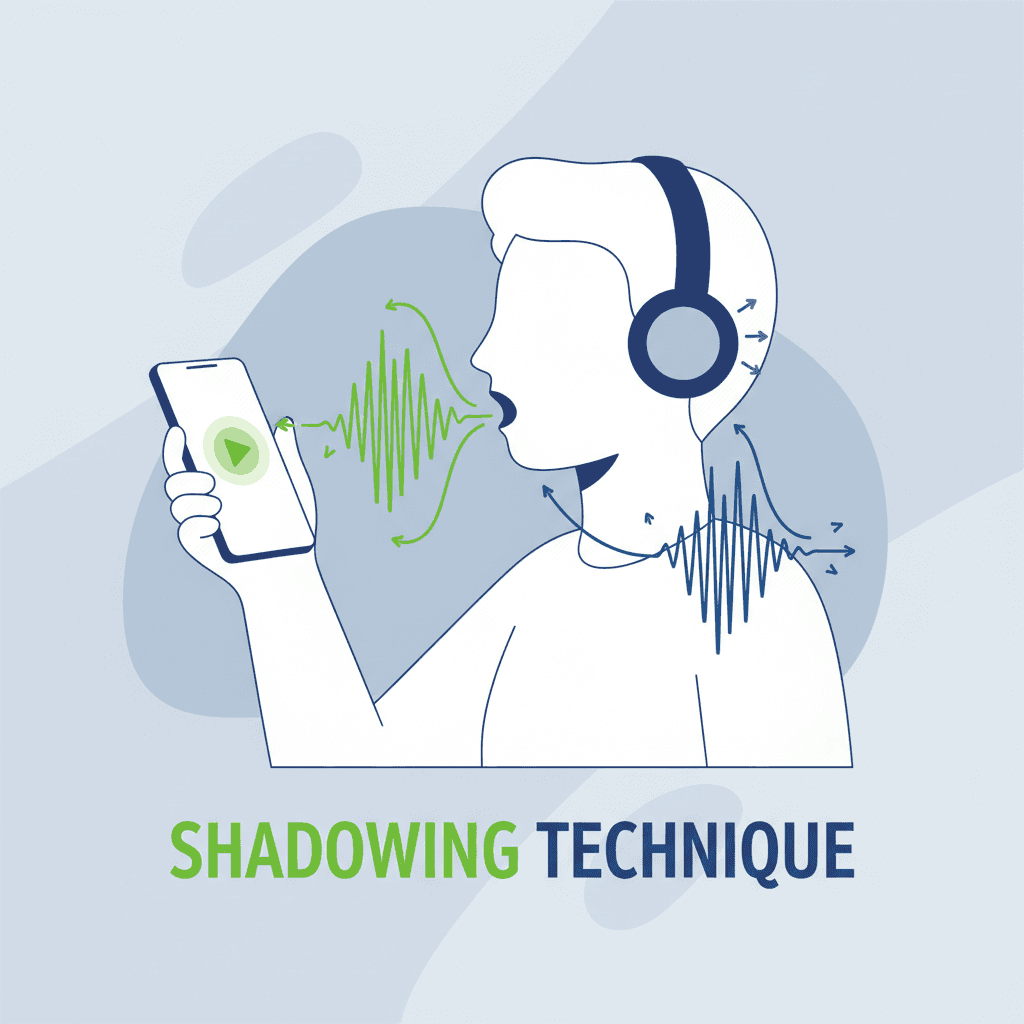
The reason many learners sound 'stiff' is that they haven't yet internalized the natural rhythm, stress, and intonation of their new language. Traditional learning often misses this crucial element. That’s where the shadowing practice comes in. It's an active, immersive exercise that trains your brain and mouth to work in perfect harmony. By mimicking a native speaker in near real-time, you're not just repeating words; you're strengthening the brain's 'phonological loop,' a cognitive function vital for processing and adopting new speech patterns. You're building muscle memory for your mouth, making unfamiliar sounds and cadences feel second nature.
This isn't just theory; it's backed by solid research. For example, a 2024 study comparing shadowing to more traditional repetition drills found it to be significantly more effective. Participants who used the technique showed greater improvements in both pronunciation accuracy and overall speaking fluency. Second Language Acquisition (SLA) research also highlights that this practice leads to significant gains in 'prosodic fluency,' which is the key that separates a knowledgeable learner from a natural-sounding speaker. It’s your path to finally closing that gap.
What Is Shadowing, Really? (It’s More Than Just Copying)
At its core, shadowing is the simple act of listening to a piece of audio and repeating it aloud, with just a split-second delay. Think of yourself as the speaker’s 'shadow.' This is fundamentally different from the classic 'listen and repeat' exercise. Instead of waiting for a sentence to end, you are speaking almost simultaneously with the source audio. This creates an intense neurological loop between your ears, brain, and mouth, forcing them to sync up in a way that passive listening never could. You’re not just copying words; you're absorbing the entire acoustic package: pitch, rhythm, and emotion.
Studies from July 2025 confirm that shadowing practice directly leads to significant gains in prosodic fluency, helping learners master the natural rhythm, stress, and intonation of a language.
While the benefits for speaking are clear, one of the most surprising advantages is how much it improves your listening. Because you have to listen so intently to keep up, you train your ear to catch the subtle nuances you might otherwise miss. A 2025 quasi-experimental study proved this by showing a significant increase in students' listening comprehension scores after a period of shadowing. The technique is so effective that a peer-reviewed paper from December 2024 officially recommended its integration into language classrooms to boost student fluency and pronunciation across the board.
How to Shadow: A Step-by-Step Guide
Getting started with the shadowing technique for language learning can feel intimidating, but it doesn't have to be. By breaking it down into small, manageable steps, you can build a consistent habit that yields incredible results. The key is to start simple and focus on progress, not perfection. Here is a clear, step-by-step process you can follow today.
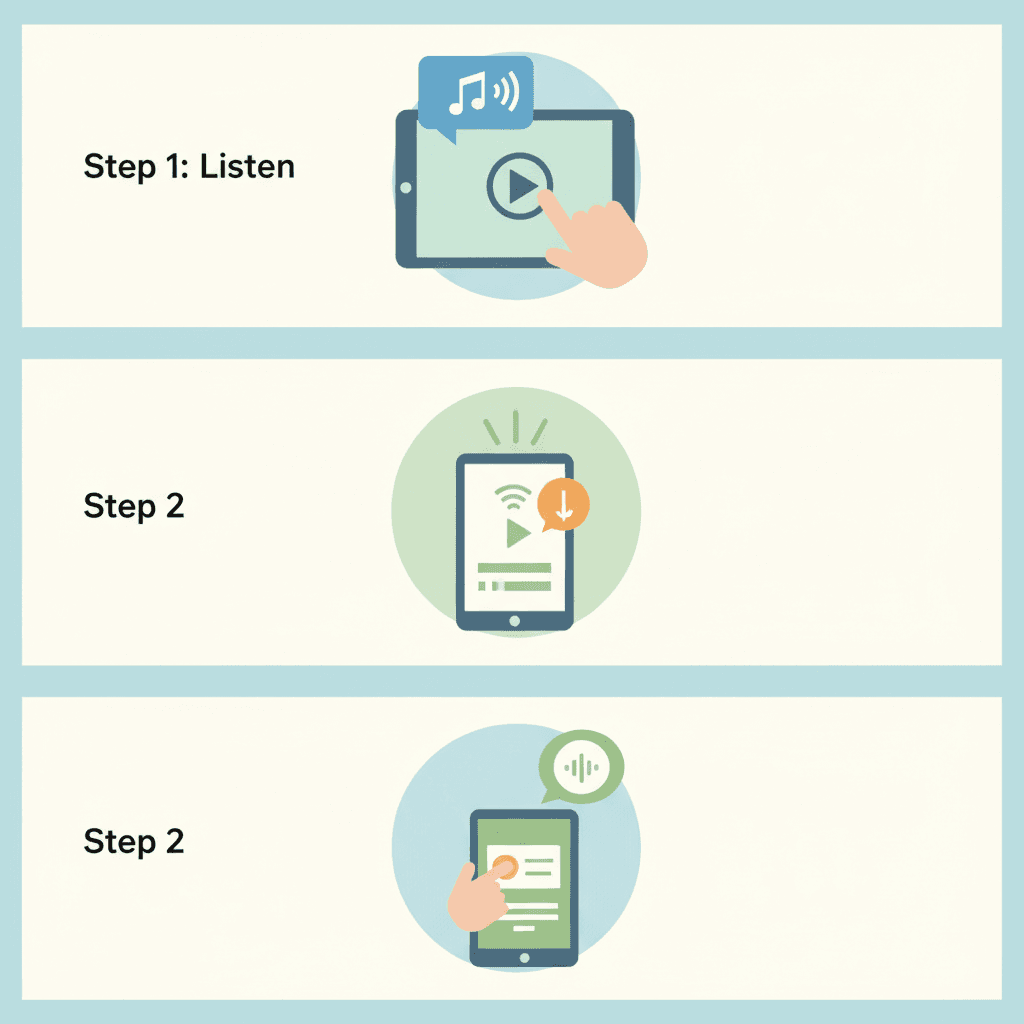
- 1.Find Your Audio: Choose a short audio clip (1-3 minutes) that is clear and slightly challenging but mostly understandable. It's crucial that you have a transcript. Podcasts, audiobooks, or even YouTube videos with accurate captions work well.
- 2.Listen First: Play the audio once while reading the transcript. The goal here is to understand the context and flow. Don't try to shadow yet, just listen and read.
- 3.Mumble Along (Passive Shadowing): Play the audio again, but this time, try to mumble along with the speaker. Don't worry about forming perfect words. Focus entirely on matching the rhythm and intonation—the 'music' of the speech.
- 4.Speak Aloud (Active Shadowing): Now, it’s time for the real thing. Play the audio and repeat what you hear aloud, staying just a second or two behind the speaker. Don't stop if you make a mistake. Just jump back in and keep going.
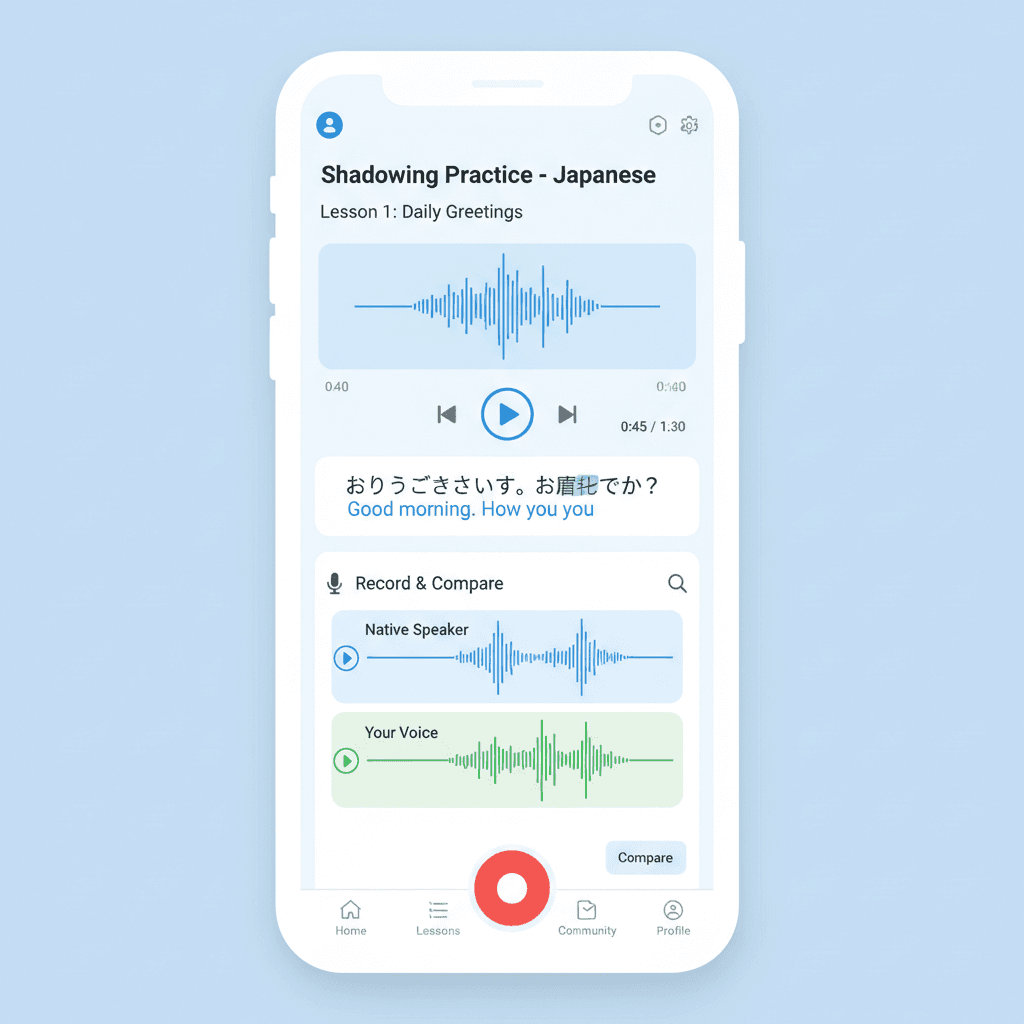
- 5.Record Yourself: This step is a game-changer. Once you feel comfortable shadowing the clip, record yourself doing it. Use your phone or any simple recording app.
- 6.Compare and Refine: Listen to your recording and compare it to the original audio. Where does your pronunciation differ? Is your rhythm matching up? This self-assessment is where the deepest learning happens. Pick one or two things to improve and repeat the process.
Choosing the Right Audio for Your Level
The success of your shadowing practice hinges on choosing the right material. If it's too easy, you won't be challenged. If it's too hard, you'll get frustrated and give up. A 2026 guide on the topic recommends a simple rule: pick audio that is 80-90% comprehensible to you without a transcript. This allows you to stop focusing on decoding every word and instead pour your energy into mimicking the sound, rhythm, and flow.
For Beginners: Build Your Foundation
If you're just starting out, your priority is building a solid base. Look for materials specifically designed for learners. This could include slow-paced news reports, beginner-level podcasts, or even children's audiobooks. Research from July 2025 highlights the need for 'careful scaffolding' at this stage. Slower, clearer audio allows you to master fundamental sounds and intonation patterns before moving on to more complex, natural-speed conversations.
For Intermediate to Advanced Learners: Increase the Challenge
Once you're comfortable with the basics, it's time to challenge yourself with authentic, native-level content. This is how you'll truly start to improve speaking fluency. Good sources include TED Talks, interviews with native speakers, YouTube channels on topics you enjoy, and audiobooks. The key is to find a speaker whose voice and accent you find clear and want to emulate. A July 2025 study with university students found that shadowing authentic material significantly improves not just listening accuracy but also speech rate, helping you speak more fluidly and naturally.
Your First 7-Day Shadowing Challenge
The best way to see if a technique works is to try it. We've designed this approachable 7-day challenge to help you build momentum without feeling overwhelmed. Studies confirm that learners have 'high interest and positive attitudes' toward shadowing because it encourages active, independent learning. This plan is your first step. And remember, the goal isn't just better speaking; a 2025 study showed that even short-term shadowing significantly boosts listening skills, too.
- •Days 1-2: The Rhythm Check. Find a 5-minute clip from a slow podcast for learners. Shadow for just 5 minutes each day. Don't worry about getting every word right. Your only goal is to match the speaker's rhythm. Feel the beat of the language.
- •Days 3-4: The Intonation Match. Increase your practice to 10 minutes. Use the same clip or find a new one that's slightly faster. Now, focus on matching the speaker's intonation—the rise and fall of their voice.
- •Days 5-6: The Recording Test. Practice for 15 minutes. Choose a 2-minute YouTube clip with accurate subtitles. On Day 5, practice shadowing it. On Day 6, record yourself shadowing the same clip and compare it to the original.
- •Day 7: The Confidence Boost. Review your recording from yesterday. Notice how much you've improved! Today, shadow for 15 minutes with any clip you enjoy. The goal is to feel the flow and celebrate your progress.
To help you stay on track and make this challenge even more actionable, we've created a simple worksheet. You can use it to log your daily practice, note down tricky words, and track your growing confidence. A structured plan helps transform a daunting task into a series of small, achievable wins.
Troubleshooting: What to Do When Shadowing Feels Hard
Let's be honest: your first few attempts at shadowing might feel awkward, messy, and even impossible. This is completely normal. Every expert was once a beginner, and struggling is a sign that you are pushing your brain to build new connections. Here’s how to handle the most common frustrations.
Problem: “I can’t keep up with the speaker!”
This is the most common challenge. The solution is simple: slow down. Most modern audio and video players (including YouTube and many podcast apps) have a playback speed setting. Reduce the speed to 0.75x or even 0.5x. This allows you to get comfortable with the content before gradually increasing the speed back to normal. Remember, it's better to shadow a short section slowly and accurately than to stumble through a long one at full speed.
Problem: “I don’t understand what I’m saying.”
This is a surprising benefit, not a bug! For your first few passes, your goal isn't comprehension—it's imitation. You are training your mouth, not your vocabulary. One expert guide recommends shifting your focus from 'meaning to music.' Concentrate solely on mimicking the sounds, rhythm, and pitch. Once your mouth gets used to the patterns, comprehension will follow much more easily on later repetitions.
Problem: “I feel silly and awkward doing this.”
Welcome to the club! Speaking aloud to yourself can feel strange. One guide from April 2026 acknowledges this 'feeling of strangeness' but points to studies showing that learners who push through it see dramatic improvements. Find a private space where you won't feel self-conscious. Remind yourself that this is a targeted workout for your speaking muscles. The temporary awkwardness is a small price to pay for the long-term confidence you'll gain.
How to Perfect Your Shadowing with an AI Language Tutor
One of the biggest hurdles in shadowing is finding a perfect, patient partner. You need a source that provides clear audio, is always available, and doesn't mind repeating the same phrase a hundred times. This is where modern technology offers a brilliant solution. An AI-powered language tutor can be the ideal shadowing partner, removing friction and accelerating your progress.
A key to effective practice is drilling small chunks of speech repeatedly. An AI tutor like SpeaksyAI is perfectly designed for this. Instead of awkwardly trying to rewind a podcast to the exact right spot, you get clear, consistent audio for phrases that you can repeat on demand with a single tap. This streamlines the process, allowing you to focus your mental energy on the practice itself rather than fumbling with controls.
Furthermore, a major challenge with solo shadowing is the lack of feedback. Are you actually mimicking the sounds correctly, or are you just reinforcing your own mistakes? A January 2026 experimental study found that AI can provide the 'consistent, immediate feedback' learners need to improve. Platforms like SpeaksyAI can analyze your pronunciation and give you targeted input, turning a simple mimicry exercise into a powerful, guided learning loop and helping you improve pronunciation accuracy.
Frequently Asked Questions About Shadowing
Frequently Asked Questions
Ready to Speak Confidently?
Practice what you've learned and get instant pronunciation feedback with SpeaksyAI, your personal AI language tutor.
Join the Waitlist