Beat Language Exchange Anxiety: A Step-by-Step Guide
The idea of a language exchange is exciting, but the reality can be terrifying. If you're feeling a specific 'stage fright' about it, you're not alone. This guide is for you.

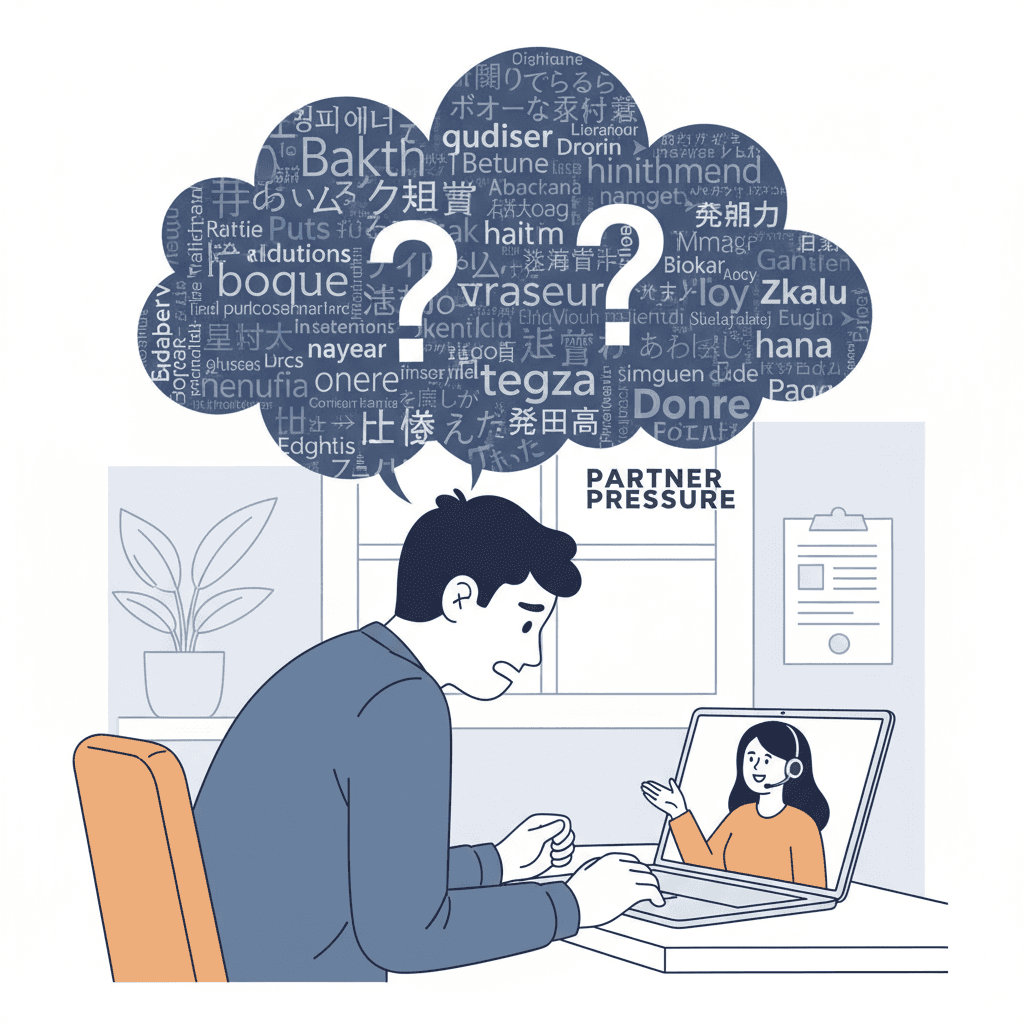
You’ve found the perfect language exchange partner. Their profile is great, your schedules align, and they’re a native speaker of the language you’re dying to learn. There’s just one problem: the thought of actually clicking the “call” button fills you with a unique, gut-wrenching dread. If this sounds familiar, you’re not alone. You’re experiencing language exchange anxiety, a specific and powerful fear that stops countless learners in their tracks. But what if the fear isn’t the problem, but a signal that you just need a better strategy? It’s not about being fearless; it’s about being prepared.
The 'Partner Pressure' Is Real: Why Language Exchange Is Uniquely Scary
The fear of speaking a new language is one thing, but language exchange anxiety adds a whole new layer of social pressure. It’s not just about making a grammar mistake; it’s about the fear of wasting your partner’s time, of being boring, of not being able to keep up your end of the conversation. This isn't just general shyness. Foreign language anxiety is a distinct psychological response, often stemming from the jarring gap between your fluent, witty self in your native language and the stumbling, searching beginner you are in your target language.
This “partner pressure” creates a high-stakes environment. You worry about the skill imbalance—what if their English is way better than your Spanish? What if you run out of things to say and you both just sit there in awkward silence? These aren't just irrational fears; they reflect a growing awareness in the language learning community about the intersection of mental health and education. The pressure to perform can feel overwhelming, especially in a one-on-one online setting.
In fact, this anxiety has a measurable impact. A 2026 study of university students found that language anxiety was a significant negative predictor (β = –.29) of a student's readiness for an international exchange. In simple terms, the more anxiety a student felt, the less prepared they were to actually use the language with a partner. Research from late 2024 backs this up, showing that psychological factors like ‘cognitive control’—your ability to manage your thoughts and feelings—are significant predictors of foreign language anxiety, completely separate from your actual language level. This helps explain why even advanced learners can freeze up.
The good news is that recognizing these feelings is the first step to managing them. A 2026 study in Frontiers showed that using cognitive strategies like reappraising a situation (for example, reframing “I might make a mistake” to “Mistakes are how I learn”) can directly combat anxiety and help you stay engaged. It’s about building a new toolkit for a new kind of challenge.
The Two-Step Method to Confident Language Exchange
So how do you move from feeling anxious to feeling confident? Instead of trying to force yourself into a high-pressure situation, we recommend a simple, two-step approach that builds your skills and confidence systematically. It’s a method designed to get you speaking with real people, but without the initial terror.
- 1.Build Foundational Confidence in a Safe Space. Before you ever speak to a human partner, you practice the core skills of conversation—introductions, asking questions, using filler words, and getting instant feedback—in a zero-pressure environment.
- 2.Engage with a Human Partner Using Your New Skills. Once you’ve built a baseline of confidence and have a few conversational patterns under your belt, you move on to a real language exchange, armed with the skills and mindset to make it a success.
This approach is grounded in what research tells us about anxiety and learning. We know that language anxiety negatively impacts your ability to engage. A 2026 study confirmed this, showing it hinders readiness for exchange programs. The same study, however, also found that academic confidence is a strong positive predictor (β = .45). By building confidence first in a controlled environment, you are directly preparing yourself for success in the real world.
This strategy directly addresses the key predictors of foreign language anxiety identified in late 2024 research: 'language exposure' and 'cognitive control.' Step one provides the controlled, regular exposure you need, while step two is where you apply your cognitive control in a live setting. You wouldn't run a marathon without training first, so why treat language exchange any differently?
Step 1: Practice in a Safe Space with an AI Tutor
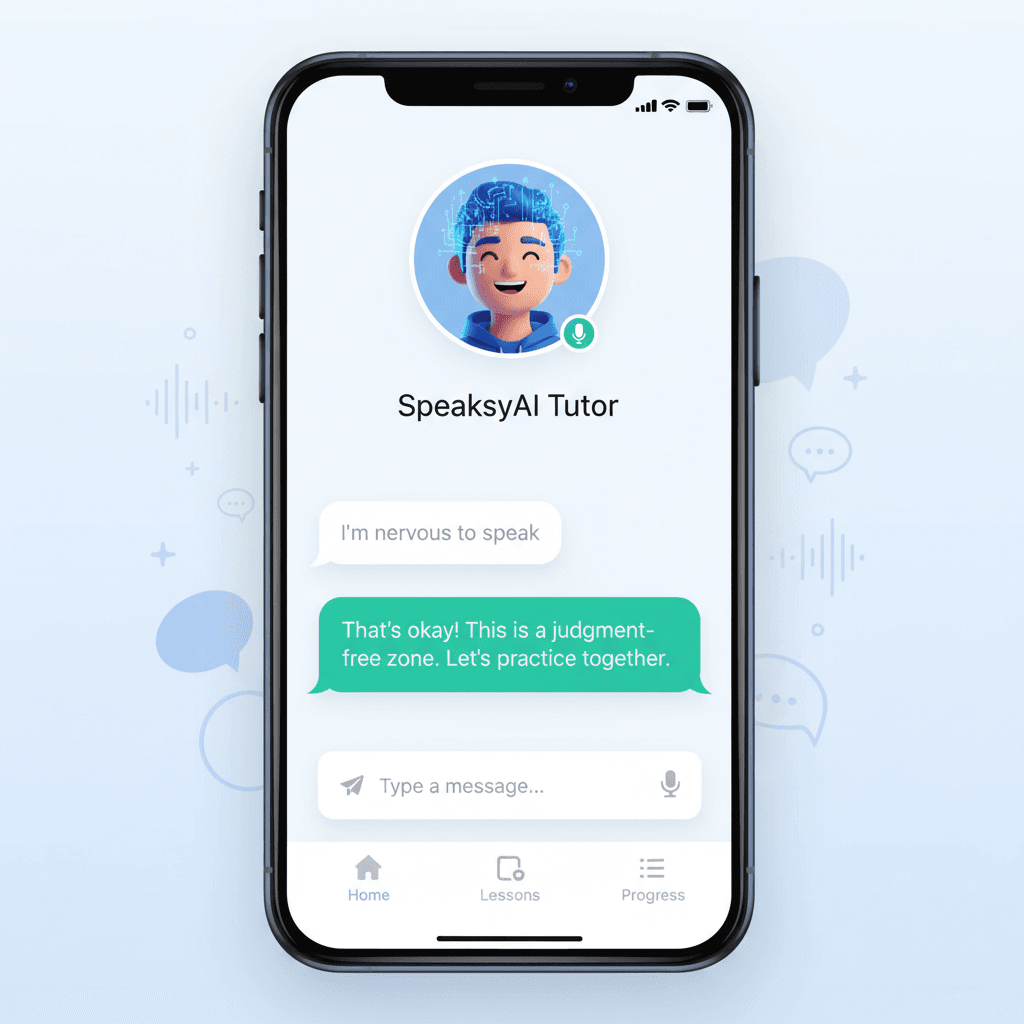
The biggest hurdle for any anxious language learner is the fear of judgment. This is where the first step becomes your secret weapon: practicing with an AI tutor. Platforms like SpeaksyAI (at speaksyai.com) are designed to be the perfect, non-judgmental practice partner. An AI tutor doesn’t care if you mispronounce a word a hundred times. It won’t get bored if you need to pause and think. It has infinite patience.
This creates a psychologically “safe space” that is critical for learning. A systematic review of studies from 2024-2026 found that AI agents significantly lower a learner's “affective filter”—the emotional block that anxiety creates, preventing you from absorbing and using new information. In this low-stakes format, you can practice the very things that cause panic in a real conversation:
- •Mastering Introductions: Rehearse how you’ll introduce yourself and your goals until it feels automatic.
- •Handling Pauses: Learn and practice filler words (“um,” “well,” “like” in your target language) so you have something to say when you need a moment to think.
- •Getting Pronunciation Feedback: Get instant, objective feedback on your pronunciation without feeling self-conscious.
- •Simulating Scenarios: Practice ordering coffee, asking for directions, or discussing a hobby. This way, you’re prepared for common conversational paths.
This isn't just theory; it's proven. A 2026 study of 134 learners found that using an AI tutor led to reduced anxiety and increased motivation precisely because it provides a non-judgmental, personalized experience. It directly solves the “I don’t want to waste someone’s time” fear by giving you a place to practice where time is unlimited and mistakes are the entire point.
Step 2: Finding a Compatible Partner (and What to Say)
Once you’ve used an AI tutor to build a foundation of confidence, you’re ready for Step 2. But you don’t have to jump in the deep end. The key is to find a compatible partner—someone who is patient, understanding, and has similar goals. Apps like Tandem, HelloTalk, or booking a community tutor on iTalki are great places to look.
When browsing profiles, look for keywords like “patient,” “happy to help beginners,” or “let’s learn together.” Avoid profiles that seem intensely focused on rapid fluency or who come across as impatient. Your goal is to find someone you can build a rapport with. Remember, research shows that anxious speakers are more likely to have negative perceptions of their own fluency and feel their partner is less engaged. Finding a genuinely supportive partner helps short-circuit this negative feedback loop.
Sending that first message can feel like the hardest part. Social anxiety creates what researchers call a 'disproportionately high threshold' for initiating contact. That’s why having a plan is so important. Instead of a generic “hi,” you’re going to send a message that sets expectations, shows your intentions, and filters for the right kind of person. The practice you did in Step 1 will make hitting 'send' much easier.
Icebreaker Scripts for Your First Interaction
Here are a few copy-pasteable templates for that first message. They are designed to be honest and clear, which, according to a 2026 study, is an adaptive strategy called 'cognitive reappraisal' that helps learners stay engaged. Hiding your anxiety is counterproductive; acknowledging it helps you find the right partners.
Hi [Name]! I saw you’re a native [Their Language] speaker learning English. I’m a beginner in [Their Language] and am looking for a patient partner to practice speaking with. I’m a bit nervous but really motivated! Would you be open to a chat sometime?
Hello [Name], I’m [Your Name]. I read on your profile that you’re interested in [Shared Interest]. I am too! I’m learning [Their Language] and would love to practice by chatting about [Shared Interest] if you’re interested. My goal is just to have a simple conversation for 10-15 minutes.
Hi [Name], I’m looking for a language exchange partner. Full disclosure: I have some language exchange anxiety, so I’m looking for someone who is patient and encouraging. Your profile seemed really friendly! Let me know if you’d be up for a low-pressure chat.
How to Structure Your First Few Sessions for Success
One of the biggest triggers for the “what do I say?” panic is a lack of structure. A 2025 study confirmed that a fear of speaking spontaneously is a major source of anxiety in online learning. You can eliminate this fear by agreeing on a simple structure for your first few calls. This isn't a rigid business meeting; it’s a simple framework to make both of you comfortable.
Propose this plan to your partner beforehand. It shows you’re organized and considerate of their time. Here’s a simple, balanced structure:
- 1.5 mins: Small Talk in English (or shared language). Just a quick check-in. How was your day? This warms you both up.
- 2.10 mins: Your Target Language. Now, you switch. You try to speak their language. The goal is not perfection, it's practice.
- 3.10 mins: Their Target Language. The roles reverse. You help them practice your native language. This ensures the exchange is fair and balanced.
- 4.5 mins: Wrap-up and Feedback. Switch back to the shared language. Briefly discuss how it went. What was hard? What did you learn? Schedule your next session.
Pro Tip: Before each session, prepare 2-3 simple questions to ask your partner. They can be about their weekend, a movie they saw, or a shared interest. Knowing you have these questions in your back pocket dramatically reduces the fear of the conversation stalling. This is a practical way to apply 'cognitive reappraisal'—reframing the stressful, unstructured void into a manageable, planned conversation.
Managing Anxiety in the Moment: Real-Time Techniques
Even with the best preparation, you might still feel a surge of panic during a conversation. Your mind goes blank, your heart races, and you can’t find the word you know you know. This is a real physiological event; a 2026 study confirmed that language tasks cause measurable fluctuations in heart rate and other biometric data in anxious learners. When this happens, don’t fight it. Use these techniques to manage it.
- •Breathe. Before you speak, take one slow, deliberate breath. This simple action calms your nervous system and gives you a split second to organize your thoughts.
- •Use your cheat sheet. Have a small list of useful phrases nearby. Things like “How do you say…?”, “Can you repeat that?”, or “I don’t know that word.” Using these is not cheating; it’s communicating.
- •Take a strategic sip. Keep a glass of water handy. If you feel overwhelmed, take a sip. It’s a natural-looking pause that gives you a moment to reset your brain.
- •Admit you’re stuck. It is 100% okay to say, “Sorry, I forgot the word.” A good partner will be happy to help. Vulnerability builds connection.
- •Smile. It sounds silly, but physically smiling can trick your brain into feeling more relaxed and confident. It also signals friendliness to your partner, making the entire interaction warmer.
Remember, the ability to manage your thoughts in the moment—what researchers call ‘cognitive control’—is as important as your vocabulary. Difficulty retrieving a word is a primary trigger for speaking anxiety. By having a pre-planned response to that feeling, you stay in control of the conversation, even when you don’t know a word.
From Anxious Learner to Confident Speaker
Building confidence is a long game. Some sessions will feel amazing, and others will feel like a struggle. The goal is to reframe those “bad” sessions. They aren’t failures; they are data points. What did you struggle with? What vocabulary were you missing? That’s your homework for next time. This is how you turn a moment of anxiety into a concrete learning opportunity.
Overcoming this fear is about more than just having a fun chat. The 2026 study we mentioned earlier is crucial here: it found that language anxiety significantly predicts a student's readiness for international exchange (β = –.29). This means that by learning to manage your speaking anxiety, you are not just preparing for a language exchange; you are building a core skill that opens doors to academic, professional, and personal opportunities around the globe, whether you're in the US, UK, Australia, or Canada.
If you feel anxious, you are normal. An estimated 75% of people have some form of public speaking anxiety. The key is consistent, low-stakes practice. Research has shown that 'language exposure' and 'cognitive control' are the antidotes to anxiety. You build both by starting small, practicing in a safe space like an AI tutor provides, and gradually moving into more challenging, real-world conversations. Each small step forward is a win. Celebrate it.
FAQ: Your Language Exchange Anxiety Questions Answered
Frequently Asked Questions
Ready to Practice Without Pressure?
Build your confidence with SpeaksyAI, your personal AI language tutor. Get instant feedback in a safe space before your first real exchange.
Join the Waitlist