How to Think in a Foreign Language Without Translating (A Plan)
Struggling to stop translating in your head? It's a common hurdle to fluency. This guide gives you a practical plan to start thinking directly in your new language.
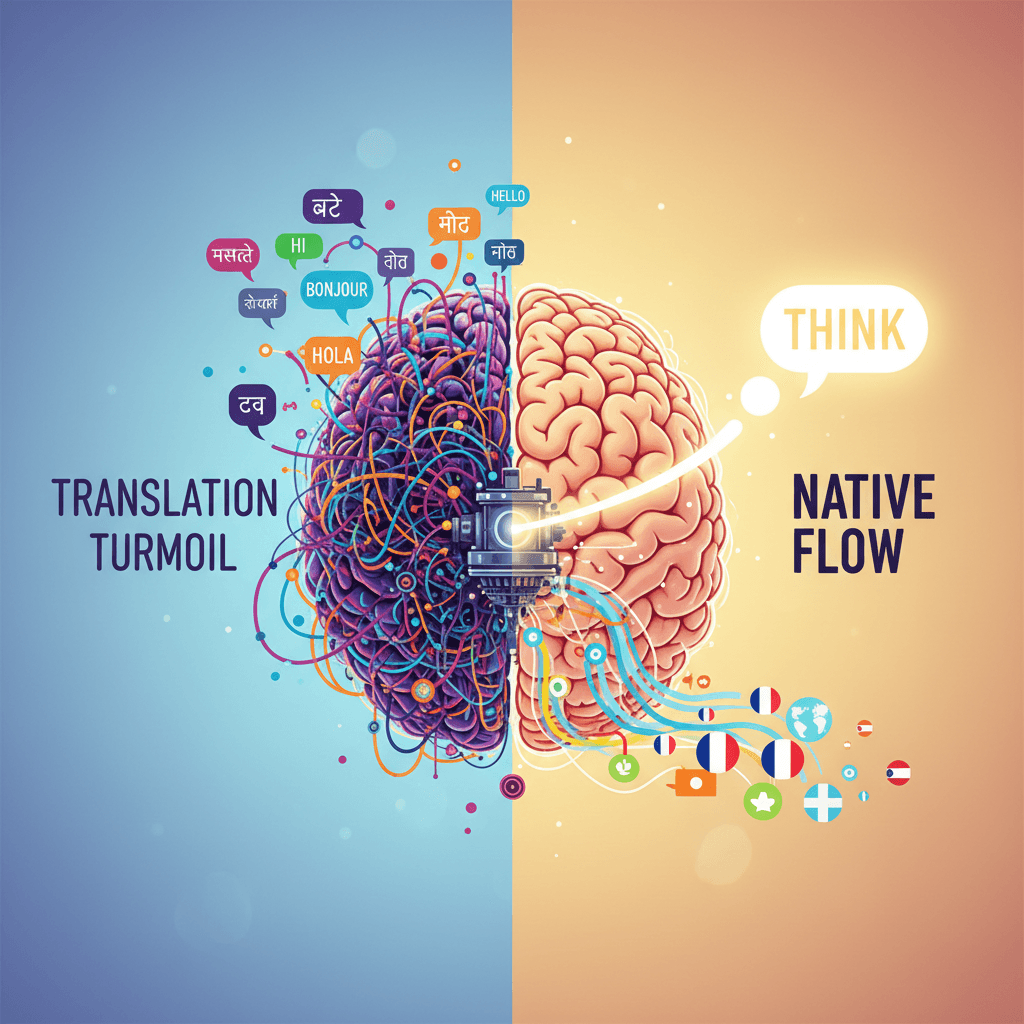
Have you ever been in a conversation in a new language, only to feel your brain freeze? You know the words, but there's a frustrating delay as you mentally translate from your native tongue. This guide will show you how to think in a foreign language without translating, a skill that feels like a superpower but is entirely achievable. It’s about moving from being a visitor in a language to making it your second home, and it’s the most important step you can take toward true fluency.
Why Translating in Your Head Is Holding You Back
It’s a perfectly normal habit. When you start learning, your brain naturally builds bridges from the new language back to the one you already know. But while this is useful for your first few words, it quickly becomes a major roadblock. This constant mental 'tug-of-war' slows down your response time, creating awkward pauses that make conversations feel robotic and stressful.

Language experts call this the 'translation trap'—an obstacle course you force your brain to run for every single sentence. Fluent speakers don't do this. They've trained their minds to bypass the translation step entirely, attaching new words directly to concepts, feelings, and images. While translating is a common starting point, relying on it, especially as you move to the sentence level, is what prevents many intermediate learners from ever reaching their fluency goals.
The Goal: Achieving 'Thought Fluency' in Your New Language

The ultimate objective is a powerful concept gaining traction called 'Thought Fluency'. This isn't just about speaking faster; it’s the cognitive skill of understanding and generating meaning directly in your new language, without passing it through your native language filter first. Think of it as building a 'second brain'—a new mental space where the language lives on its own terms.
Instead of your brain seeing a dog, thinking 'dog' in English, and then searching for 'chien' in French, it simply sees the furry animal and thinks 'chien'. This shift from conscious retrieval to a more natural, emotionally connected use is what makes a language feel like something you 'inhabit' rather than just speak. Developing this skill requires learning how to think about your own thoughts, organizing them directly in your new language—a process that modern language acquisition studies now see as a cornerstone of true proficiency.
The 3-Stage Method to Thinking Directly in a New Language
The idea of building a 'second brain' sounds intimidating, but it's an achievable skill if you break it down. We've framed the process as a structured, three-stage journey. This method is designed to create new neural pathways through daily micro-drills, gradually 'rewiring' your brain for direct thinking. It’s a progressive workout that takes you from simple words to complex thoughts, making the process feel manageable at any level.
- 1.The Single Word Phase: Associate individual objects and actions with their new names, bypassing translation from day one.
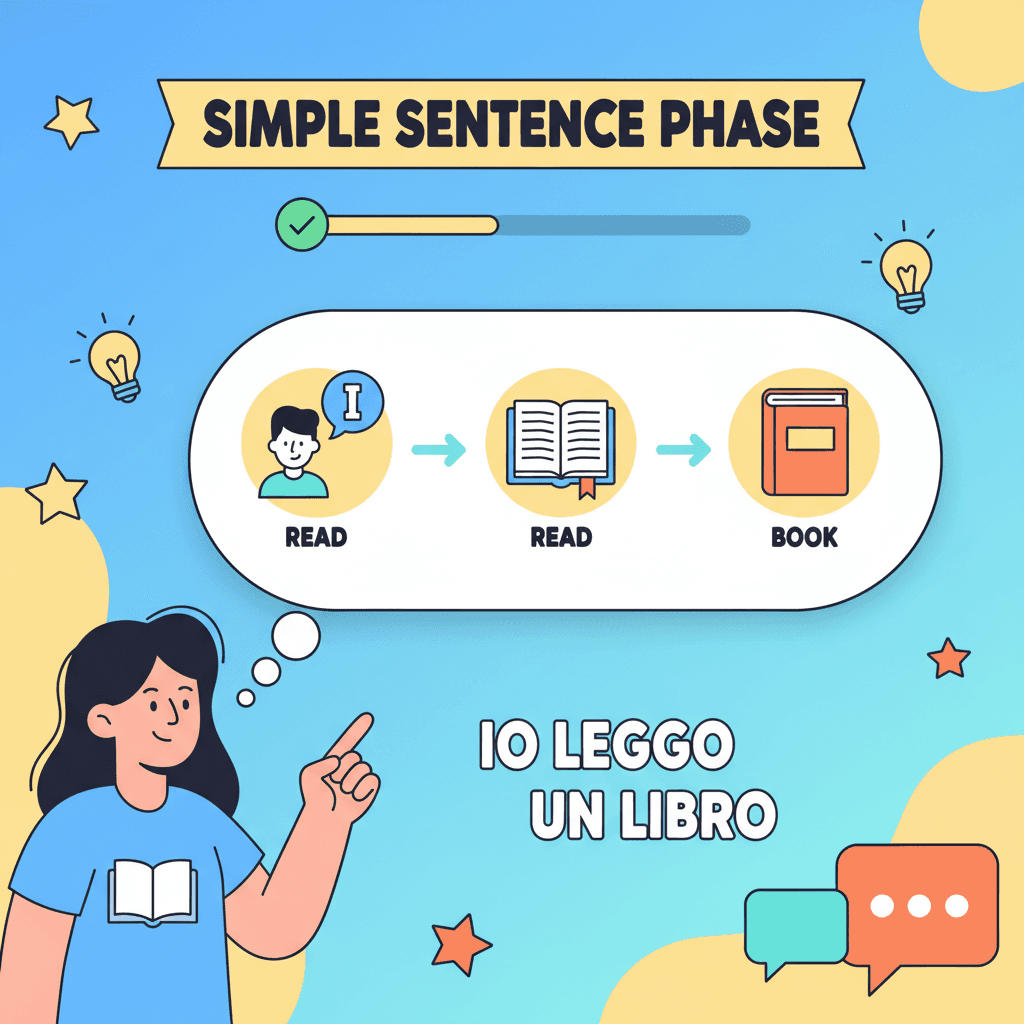
- 2.The Simple Sentence Phase: Start narrating your life internally with short, basic sentences to build foundational thought patterns.
- 3.The Complex Thought Phase: Move on to forming opinions, plans, and summaries entirely within the target language.
Stage 1: The Single Word Phase (Your First 2 Weeks)
This is your foundation. The goal here is simple: stop translating single words. You will connect objects and ideas directly to their names in the new language. This isn't just about vocabulary memorization; it's a form of active recall that builds a new, direct mental pathway. It's the most critical first step.
Start today with these consistent small steps. Turn your passive observation into active learning:
- •Label your world: Look around you right now. See your chair? Mentally say its name in your target language. 'Silla'. 'Chaise'. 'Stuhl'. Do this with five items in your room.
- •Narrate your walk: On your commute or walk, mentally identify things you see. 'Car', 'tree', 'building', 'person'. Don't form sentences yet. Just single words.
- •Use image flashcards: When learning new vocabulary, use flashcards with an image on one side and the foreign word on the other. Completely remove your native language from the equation.
Stage 2: The Simple Sentence Phase (Weeks 3-6)
Now that you're comfortable with single words, it's time to start connecting them. In this phase, you'll begin using what linguists call the 'Early Production' stage of language acquisition. The key exercise is 'internal narration language learning'—using simple sentences to describe what you're doing, seeing, or feeling.
Keep it incredibly simple. The goal is to build the habit, not to be a poet. If you're making breakfast, your internal monologue could be: “I am walking to the kitchen. I am opening the fridge. I see the milk. I am making coffee.” These simple sentences build a direct pathway between a concept and the language, and because they are short, they help you build the skill without becoming overwhelmed.
Stage 3: The Complex Thought Phase (Week 7+)
After several weeks of simple narration, you'll find it becomes more automatic. Now you can expand into more complex thoughts. This is where you move from just observing to actively thinking and forming original ideas in the new language. This is the skill that moves vocabulary from your short-term to your long-term memory.
This emergent skill appears once you've acquired enough vocabulary and sentence structures. Instead of just 'I see a movie poster,' you can start thinking, 'I think this movie is interesting because...' or 'What should I do today? First, I will go to the store, then I need to call my friend.' You can even try summarizing a YouTube video you just watched or planning your weekend—all inside your head. This is where using 'chunked' phrases and set answers can act as scaffolds for building more elaborate opinions.
Your Daily 'Mental Gym': Practice with an AI Language Tutor
Practicing internal narration is great, but eventually, you need to say the words out loud. This is where many learners freeze. The fear of judgment or making a mistake is real. This is why the rise of capable AI tutors is a game-changer for learning how to stop translating in your head.
Think of it as your private 'mental gym'—a safe, non-judgmental space to practice 'thinking aloud.' You can work through all three stages: starting with single words, moving to simple sentences, and then having complex conversations about your opinions. Platforms like SpeaksyAI are designed for this exact purpose. As experts in late 2025 noted, this kind of daily conversational practice can dramatically accelerate the process of breaking the mental translation habit.
With a patient AI tutor like the one at speaksyai.com, you remove the pressure of a human partner. You can take your time, try to form a thought, stumble, and try again without feeling rushed or embarrassed. This provides the perfect environment to build the crucial habit of forming thoughts directly in your new language before you need to speak confidently with people.
What To Do When Your Mind Goes Blank (And It Will!)
You're in the middle of a thought, and suddenly... nothing. Your mind is a complete blank. First, don't panic! It’s not just you. Recent neuroscience research confirms 'mind blanking' is a real, distinct brain state that happens to everyone. The most important thing is what you do next.
Your first instinct might be to grab your phone and look up the translation. Resist this urge. Constantly resorting to translation when you get stuck creates an 'illusion of learning' that actually slows down your long-term progress. Instead, use a powerful strategy called 'circumlocution'.
Circumlocution is the skill of describing a word you can't remember with other words you do know. If you've forgotten the word for 'key' in Spanish, don't give up. Try describing it: 'la cosa de metal que uso para abrir la puerta' (the metal thing I use to open the door).
This isn't a failure; it’s an advanced communication skill. It turns a frustrating memory lapse into active problem-solving and deepens your engagement with the language. While powerful AI translation tools are now common, experts warn that over-reliance on them can prevent you from developing crucial creative-thinking skills like this.
FAQ: How to Think in a Foreign Language
Frequently Asked Questions
Ready to Build Your 'Thinking Muscle'?
SpeaksyAI is your personal AI language tutor, providing a safe space to practice thinking aloud and speak confidently. Get instant pronunciation feedback and build fluency faster.
Join the Waitlist