How to Structure a Language Exchange: A 4-Step System
Turn aimless chats into powerful practice. This guide gives you a repeatable 4-step system to structure your language exchange for real speaking progress.

You found a language exchange partner. You’re excited, motivated, and ready to finally start speaking. But after a few sessions of “How was your week?” and “What did you do today?”, the conversation stalls. The momentum fades, and your speaking practice turns into repetitive small talk. If this sounds familiar, you’re not alone. Many learners find their exchanges lose steam because they lack one crucial ingredient: structure. Knowing how to structure a language exchange for speaking practice is the secret to transforming awkward chats into powerful learning sessions. It’s not about being rigid; it’s about creating a clear roadmap that reduces anxiety, ensures both partners benefit, and helps you speak your new language with confidence.
Why Your Language Exchanges Need a Structure
Without a plan, even the most promising language exchange can become unproductive. Experts point out a common issue with many platforms is the lack of a structured path, leaving you unsure how to progress. As highlighted in recent language learning trends, exchanges without clear guidance often suffer from imbalances in skill or participation, limiting the benefits for at least one partner. You might find yourself speaking English 80% of the time with a partner who is learning it, or you might feel too intimidated to correct your partner’s mistakes.
This is where a good language exchange format comes in. A structured approach ensures fairness and focus. Language exchange theory itself is built on pillars of reciprocity and learner autonomy. To achieve this, experts suggest planning the goals in advance and setting ground rules together. A 2023 study by Zhou confirmed what many successful learners already know: engaging in authentic, structured dialogue with a peer or native speaker is a powerful driver for improving fluency. By creating a framework for your sessions, you build a reliable and effective partnership focused on mutual growth.

A structured plan turns a casual chat into a targeted practice session. It’s the difference between wandering aimlessly and following a map to your destination: fluency.
The 4-Step System for Productive Exchanges
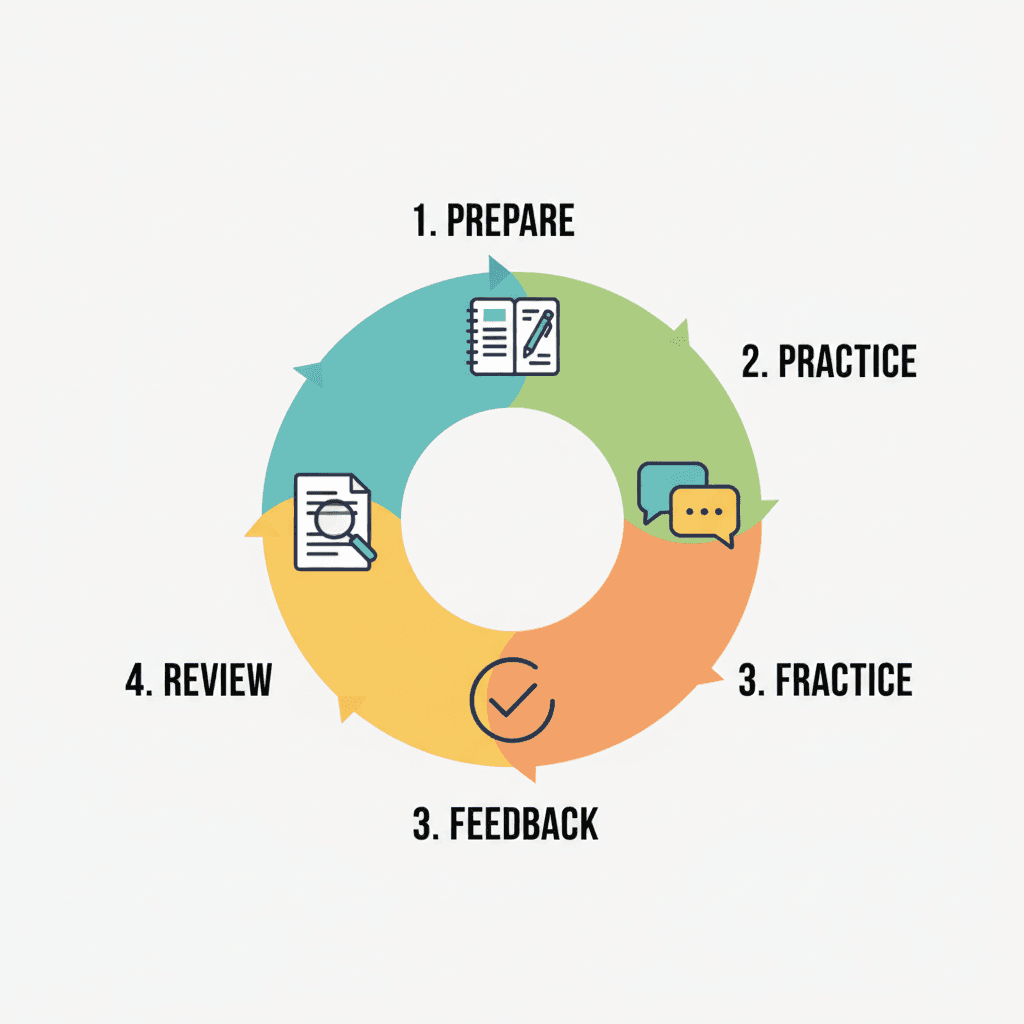
To give you a clear path forward, we developed the SpeaksyAI Language Exchange System. This simple, repeatable 4-step framework removes the guesswork and helps you build a productive routine with your partner. It ensures every session is balanced, focused, and contributes directly to your speaking goals. The core principle is that consistency is more effective than intensity; short, regular practice sessions built on this framework will yield far better results than occasional, marathon chats.
- 1.Prepare (Before the Call): Set the stage for success by defining your goals and choosing a topic.
- 2.Practice (During the Call): Engage in focused, balanced conversation using a strict time split.
- 3.Feedback (The Art of Correction): Give and receive constructive corrections based on pre-agreed rules.
- 4.Review (After the Call): Solidify your learning by reviewing notes and new vocabulary.
This system turns your exchange into a powerful learning loop. By preparing, you reduce anxiety. By practicing with structure, you guarantee speaking time. By exchanging feedback, you correct errors. And by reviewing, you ensure the new knowledge sticks. This approach aligns with a major trend in language learning: using short, structured spoken tasks to build confidence through frequent, low-stakes practice.
Step 1: Prepare (Before the Call)
A great language exchange begins long before you hit the “call” button. Preparation is about setting an intention for your session so you’re not just showing up and hoping for the best. This is your chance to define a 'micro-goal.' Instead of a vague goal like “practice Spanish,” aim for something specific, like “use three new subjunctive phrases” or “tell a story about my last vacation.”
- •Agree on a Topic: Message your partner beforehand. Will you discuss a movie you both watched, an article, or a specific theme like food or travel?
- •Prepare Key Vocabulary: Jot down 5-10 words or phrases related to the topic you want to try using.
- •Write Down Questions: Prepare a few open-ended questions to keep the conversation flowing. For example, instead of “Did you like the movie?”, ask “What did you think of the main character’s decision?”
- •Warm Up Your Brain: Spend five minutes before the call with an AI tutor or a language app to get your mind into the right gear. This helps you switch languages more smoothly.
With the rise of short-term, goal-oriented learning communities for work or travel, this kind of preparation is more critical than ever. It ensures you’re using your time to meet a specific, real-world need. The goal is to make your practice as efficient and targeted as possible.
Step 2: Practice (During the Call)
This is the core of your exchange. The key to a productive session is managing time and focus. The most effective tandem exchange tip is to enforce a strict 50/50 time split. If your call is 30 minutes, spend 15 minutes speaking your target language and 15 minutes speaking your native language. Use a timer! It might feel awkward at first, but it’s the only way to guarantee the exchange is a true “two-way street.”
During your speaking time, focus on communication, not perfection. This is where you practice 'negotiated meaning'—actively working to understand and be understood. If your partner says something you don't get, ask them to rephrase it. If you're struggling to find a word, try to describe it. These moments of clarification are powerful learning opportunities. While you talk, have a shared document or use the chat to jot down new words or things you want to ask about later. This allows you to capture learnings in real-time without constantly interrupting the flow of conversation.
- •Picture Description: Both find a photo and take turns describing what you see in your target language. The other person can ask questions.
- •Role-Playing: Act out a real-world scenario, like ordering at a restaurant, checking into a hotel, or a job interview.
- •Show and Tell: Each person brings an interesting object and explains what it is and why it's meaningful.
- •Article Discussion: Read a short news article or blog post beforehand, then summarize and discuss your opinions on it.
- •Two Truths and a Lie: A fun way to practice storytelling and asking questions. Each person shares three “facts” about themselves, and the partner has to guess which one is the lie.
Step 3: Feedback (The Art of Correction)
Feedback is what separates casual chat from deliberate practice, but it can be intimidating. The most important rule is to agree on a feedback method before you start. There's no single 'best' way; it's about what works for you and your partner. This conversation removes the awkwardness and ensures you’re both comfortable giving and receiving help.
- •Immediate Correction: Your partner gently corrects you as soon as you make a mistake. This is good for pronunciation but can break the flow of conversation.
- •Chat Box Notes: Your partner types corrections into the chat window as you speak. You can review them during or after your turn.
- •End-of-Turn Review: Your partner takes notes while you speak for your allotted time. Then, they spend a few minutes reviewing the most important errors with you.
- •“Ask-Only” Method: Your partner only corrects mistakes when you specifically ask for help or seem stuck.
To get more targeted help, be proactive. If you’ve been struggling with a specific grammar point, let your partner know you’d like them to listen for it. You can even bring a log of recent 'language fails' to ask about. A great goal is to leave each exchange with three concrete takeaways: one new vocabulary word, one grammar rule, and one pronunciation tip. Keeping a dedicated log of corrections will help you spot recurring error patterns and track your progress over time.
Step 4: Review (After the Call)
The exchange isn't over when you hang up. The 15 minutes immediately following your call are golden. This is when the new information is freshest in your mind. Don't skip this step! Resisting the urge to close your notebook and move on is crucial for turning practice into permanent knowledge.
Your review session doesn’t need to be long. Just five or ten minutes can make a huge difference. Go through the notes you took and the corrections your partner gave you. Write down the new words and phrases in a dedicated notebook or add them to a flashcard app. For each correction, try to write a new, correct sentence. This simple act helps solidify the rule in your brain. For a simple but effective review, aim to remember just three takeaways from each session to avoid feeling overwhelmed.
For an even deeper analysis, you can practice reciting your new phrases and get instant feedback on your pronunciation with an AI tutor. Platforms like SpeaksyAI (speaksyai.com) allow you to use what you learned in a low-pressure environment, identifying mistakes and offering targeted practice. This helps you review and refine before your next session, creating a powerful cycle of learning and improvement.
Troubleshooting Common Exchange Problems
Even with a great structure, you might run into a few bumps. Here’s how to handle the most common challenges.
Problem: My partner dominates the conversation or always switches to my native language.Solution: This is where the timer is your best friend. A guide from Migaku advises strictly enforcing a 50/50 time split. Politely say, “Let’s use the timer to make sure we both get equal practice time!” If they switch languages, gently guide them back: “How would you say that in [target language]?”
Problem: We run out of things to talk about.Solution: This is a sign you need better preparation. A guide from renowned polyglot Luca Lampariello advises preparing sessions by choosing topics or media to discuss. Send your partner an interesting article, a YouTube video, or a list of 'would you rather' questions before the call.
Problem: I’m not getting useful feedback.Solution: You need to be more direct. Revisit the feedback conversation from Step 3. A 2026 guide recommends implementing a dedicated 'correction window' at the end of each person's turn. You can say, “At the end of my 15 minutes, could we spend 2-3 minutes going over any big mistakes I made?”
Problem: I’m too nervous to speak.Solution: Anxiety is normal! A guide from Preply advises learners to proactively 'embrace discomfort.' Remember that your partner is a learner, too. Setting micro-goals helps—your objective isn’t to be fluent, it’s just to use three new words. Warming up with an AI tool before the call can also build confidence for the live interaction.
Frequently Asked Questions
Frequently Asked Questions
Ready to Practice Without the Pressure?
Get unlimited, judgment-free speaking practice with an AI tutor that's always available. Build confidence before your next language exchange.
Try SpeaksyAI for Free