How to Prepare for a Job Interview in a Foreign Language: A Plan
Preparing for a job interview is stressful enough, let alone in a second language. This guide provides a clear, 7-day plan to help you build confidence and speak clearly.

Landing a job interview is a huge win. But preparing for that interview in a foreign language can feel like a whole new challenge. If you're worried your language skills aren't 'perfect' enough, here's some reassuring news: they don't have to be. According to the 2025 LinkedIn Global Talent Trends Report, a staggering 72% of international hiring managers prioritize a candidate's communication effort and cultural adaptability over perfect fluency. This guide will show you exactly how to prepare for a job interview in a foreign language by focusing on what truly matters: clear communication, thoughtful preparation, and confident storytelling. We'll walk you through a 7-day plan that turns anxiety into action, helping you feel ready and empowered to showcase your skills.
Why Communication Effort Matters More Than Perfect Fluency
Let's reframe the goal. Your objective isn't to sound like a native speaker with flawless grammar; it's to be an effective communicator who is understood. Research from the European Journal of Social Psychology backs this up, showing that interviewers consistently value a candidate's preparation and cultural awareness more than their linguistic perfection. They want to see that you've made an effort to understand them and to make yourself understood. Your willingness to engage, even with a few mistakes, speaks volumes about your problem-solving skills and dedication—qualities every employer in markets from the US to India is looking for.
This is crucial because language anxiety is a very real hurdle. The 2025 Hays Global Skills Report identifies it as the second biggest barrier for international job seekers. This anxiety can reduce speaking performance by up to 30%, which means the problem often isn't a lack of skill, but a lack of confidence and preparation. By focusing on clarity instead of perfection, you lower the pressure and allow your actual abilities to shine through. This 7-day plan is designed to do just that, building your confidence one day at a time.
Days 1-2: Build Your Foundation with Research and Vocabulary
Solid preparation is your best defense against interview anxiety. The first two days are about building a strong foundation. This isn't just about the company's products; it's about understanding their culture and communication style. Go to the company's website and social media pages in your target language. Read their press releases and employee spotlights. Is the tone formal and corporate, common in some German industries, or is it casual and direct like many startups in the US and Australia? This research shows initiative and helps you mirror their communication style, a key aspect of cultural adaptability.
Create Your Professional 'Phrase Bank'
Forget memorizing long, generic vocabulary lists. A more effective strategy is to build a 'phrase bank' of reusable language 'chunks.' A 2025 guide for students recommends building a toolkit of 40-60 of these chunks. These aren't just single words, but professional sentence starters, connectors, and phrases that provide a scaffold for your answers. This approach helps your speech flow more naturally and reduces the mental load of building every sentence from scratch.
- •Professional Openers: "In my previous role, I was responsible for…", "One of my key achievements was when I…"
- •Transition Phrases: "As a result…", "Therefore…", "In addition to that…", "On the other hand…"
- •Phrases for Expressing Opinions: "From my perspective…", "I believe that…", "In my experience, it's important to…"
- •Polite 'Rescue' Phrases: "Could you please elaborate on…?", "If I understand correctly, you're asking about…"
Having this phrase bank at your disposal is a powerful way to mitigate the language anxiety identified in the Hays Global Skills Report. When you know you have reliable ways to start and structure your thoughts, you can focus on the content of your message, not the grammar.
Days 3-4: Master Your Story with the STAR Method
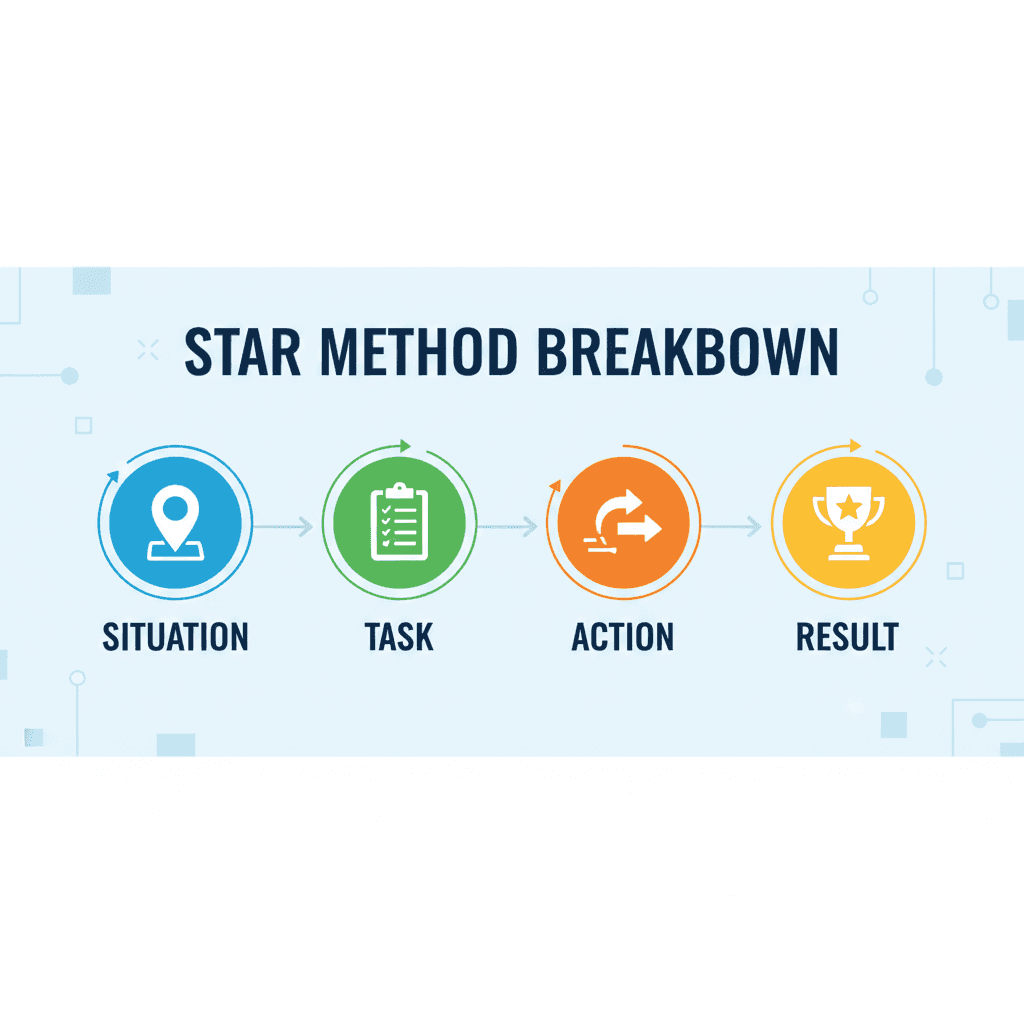
Behavioral questions—like "Tell me about a time you faced a challenge"—are staples of modern interviews. Your best tool for answering them clearly is the STAR method. It's a simple framework that helps you tell a complete and compelling story. For a job interview in a second language, its structured nature is a huge advantage. It prevents you from rambling and ensures you deliver a clear, logical narrative, which is precisely what hiring managers are looking for.
- •Situation: Briefly describe the context. Where were you? What was the project? (1-2 sentences)
- •Task: Explain your specific goal or responsibility in that situation. What were you supposed to achieve? (1 sentence)
- •Action: Detail the specific, concrete steps you took to address the task. Use strong action verbs. This should be the longest part of your story.
- •Result: Share the outcome. What happened? Quantify it whenever possible with numbers, percentages, or positive feedback. (1-2 sentences)
Adapting STAR for a Foreign Language Interview
The key to using the STAR method in another language is simplicity. Don't try to translate complex English idioms or construct elaborate sentences. Use the vocabulary from your phrase bank and focus on clear, direct language. Experts advise preparing 5-7 core stories that you can adapt to various questions. Practice telling them aloud, timing them to be concise—ideally between 90 seconds and two minutes. This ensures your answer is thorough but respects the interviewer's time. Remember, as some AI-powered applicant tracking systems are even being trained to recognize STAR-structured answers, mastering this is a valuable skill for your entire career.
The STAR method is a structured storytelling technique that studies show can help candidates stand out by 40% in competency-based interviews. For foreign language interviews, it is critical for demonstrating clear communication.
Days 5-6: Your AI Interview Coach: Simulating the Real Thing
You've done the research and prepared your stories. Now, it's time to practice. This is the single most important step for building fluency and confidence. The best way to do this is to simulate the real experience. This is where an AI-powered tutor becomes your personal interview coach. A practice interview in a foreign language lets you apply your knowledge under pressure in a safe, judgment-free environment. Platforms like SpeaksyAI (at speaksyai.com) allow you to have open-ended conversations, replicating the dynamic nature of a real interview and providing instant feedback.
This isn't just about reciting lines; it's about building conversational muscle memory. With 47% of active job seekers now using AI for interview preparation, it's a proven strategy for success. The goal is to get so comfortable with your material that you can focus on connecting with the interviewer rather than searching for words.
Prompts to Use with Your AI Tutor
To get the most out of your AI coach, use specific prompts that simulate each stage of the interview:
- •To Practice Small Talk: "Let's start our conversation with some interview small talk. You are a hiring manager in the UK. I am a candidate for a marketing manager role. Ask me about my journey to the interview or the weather to warm up."
- •To Practice Your Introduction: "I want to practice my 'tell me about yourself' answer. Ask me that question, and then give me feedback on my answer's clarity, confidence, and whether it was under 90 seconds."
- •To Practice STAR Answers: "Act as an interviewer and ask me a behavioral question like, 'Tell me about a time you worked with a difficult colleague.' I will answer using the STAR method. Then, critique my structure and vocabulary."
- •To Practice Asking Questions: "We are at the end of the interview. It's my turn to ask questions. I will ask two questions about the company culture. Give me feedback on how natural and insightful my questions sound."
Day 7: Your Interview Day Game Plan
The big day is here! Your final day of preparation isn't about cramming new information. It's about mindset management, warming up, and building last-minute confidence. Trust the work you've put in all week. Your primary goal today is to enter the conversation feeling as calm and prepared as possible.
Handling Communication Breakdowns Gracefully
One of the biggest sources of anxiety is the fear of getting stuck—not understanding a question or forgetting a word. The key is to have a plan. Preparing a few 'rescue phrases' turns a moment of panic into an opportunity to demonstrate proactive communication skills.
- •If you don't understand the question: Don't just guess. Politely ask for clarification. "I'm sorry, could you please rephrase that?" or "Just to be sure I understand, you're asking about my experience with [topic], correct?"
- •If you forget a word: It happens to everyone, even in their native language. Don't freeze. Say, "Apologies, the word has escaped me for a moment. What I mean to express is..." and then describe the concept in other words.
- •If you need a moment to think: It's better to pause thoughtfully than to rush into a weak answer. Say, "That's an excellent question. Allow me to take a moment to think of the best example."
Using these phrases demonstrates composure and a commitment to clear communication—exactly the traits that 72% of hiring managers are looking for. Before your call, warm up by speaking the target language for 15-20 minutes. Review your phrase bank and your top 5 STAR stories. Take a deep breath, smile, and remember: your effort is what matters most.
Beyond the Interview: The Follow-Up Note
Your opportunity to impress doesn't end when the video call does. A thoughtful, culturally aware follow-up note is a powerful final touch. This is a common content gap in many guides, but it's a crucial step that reinforces your professionalism and interest. It's one last chance to demonstrate the preparation and cultural awareness that interviewers value so highly.
Cultural Nuances in Thank-You Notes
Post-interview etiquette varies significantly across the globe. A quick, enthusiastic email that works perfectly in the United States might seem overly familiar in Germany. Showing you understand these nuances is another way to highlight your cultural norms for job interviews knowledge.
- •United States/Canada: A prompt email (within 24 hours) is standard. The tone can be enthusiastic and personal. Starting with "Hi [Interviewer's First Name]," is often acceptable.
- •Germany: Formality is key. Always use correct titles like "Sehr geehrte/r Herr/Frau [Last Name]," and maintain a professional, structured tone. An email is fine, but it should feel like a formal letter.
- •United Kingdom/Australia: A polite and professional email is expected. It's a middle ground between US enthusiasm and German formality. "Dear [Interviewer's First Name]," is a safe bet.
- •India: Politeness and respect are paramount. A slightly more formal tone is generally appreciated, but it's often best to mirror the level of formality used by the interviewer during the conversation.
Use this simple, adaptable structure for your follow-up note:
- 1.Clear Subject Line: Thank You - Interview for [Job Title]
- 2.Culturally-Appropriate Salutation: Use the correct formal or informal greeting based on your research.
- 3.Direct Thank You: Start by thanking them for their time and reiterate your strong interest in the role and the company.
- 4.Specific Connection: Mention one specific thing you discussed that resonated with you. This shows you were actively listening.
- 5.Confident Closing: Reiterate your enthusiasm and express your eagerness for the next steps.
- 6.Professional Sign-Off: Use a sign-off like "Best regards," "Sincerely," or the local equivalent, followed by your full name.
Frequently Asked Questions
Frequently Asked Questions
Ready to Practice for Your Interview?
Get personalized interview practice and instant feedback with an AI language tutor. Speak confidently when it matters most.
Join the Waitlist