How to Practice a Language With Your Partner: A System
Want to practice a new language with your partner? It can be an amazing way to connect, but also tricky. This system helps you navigate the journey together.

Wondering how to practice a language with your partner without it ending in frustration or a fight? You're not alone. It can feel like a high-stakes test of your relationship. But what if we told you it could be your relationship's greatest superpower? Turning language learning into a shared project isn't just about memorizing verbs; it's about building a new, private world together, one conversation at a time. It’s an opportunity to connect on a deeper level, transforming a challenging goal into a journey you take as a team.
This guide will walk you through a clear, step-by-step system to make learning a language as a couple not only successful but also fun. We'll cover everything from setting clear expectations to navigating different skill levels and finding creative ways to practice that will strengthen both your language skills and your bond.
Why Language Learning for Couples is a Relationship Superpower

Let's be honest: the idea of your significant other correcting your pronunciation can be intimidating. It’s a vulnerable process. But reframing this challenge is key. Think of it less as a student-teacher dynamic and more as building something new together. When you learn a language as a couple, you're creating a shared goal that requires teamwork, empathy, and a lot of laughter.

This isn't just a feeling; it's backed by research. A study in the Journal of Family Theory & Review found that the act of learning a partner's native language deepens emotional intimacy. It sends a powerful message: 'Your world is so important to me that I want to be a part of it.' This shared effort can make you feel more deeply connected, creating a private language that's all your own.
Step 1: Create Your 'Couple's Compact' for Practice
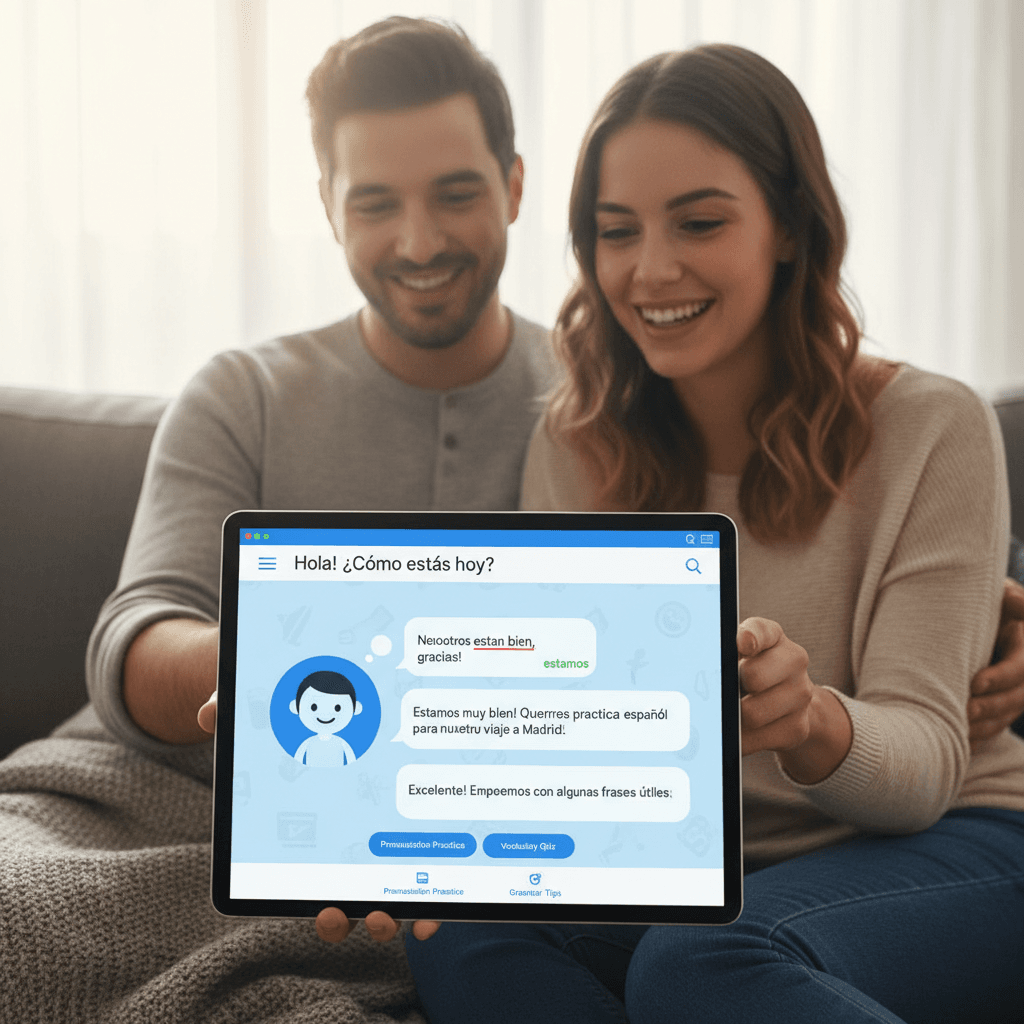
The road to fluency is paved with good intentions, but the journey can get bumpy without a map. To avoid arguments and maintain momentum, the first and most important step is to create a 'Couple's Compact'—a clear, simple agreement on how you'll practice together. This isn't about rigid rules; it's about managing expectations and making sure you're both on the same team from day one.
Your compact turns 'we should practice more' into a concrete plan. Sit down together (before you start practicing!) and agree on the following points:
- •The Goal: What are you aiming for? Conversational fluency for a trip? Being able to talk to family? Define what success looks like for you as a couple.
- •The Time & Place: When and where will you practice? Be specific. Vague plans are the first to fail.
- •The Feedback Method: How will you handle corrections? (We'll cover this in Step 4, but decide now that you *will* have a system).
- •The 'No-Pressure' Clause: Agree that it's okay to have off days. The goal is progress, not perfection.
- •The Fun Factor: How will you celebrate milestones and keep it enjoyable? This is crucial for long-term success.
Set Your 'When' and 'Where'
Consistency matters more than intensity. A structured routine is your best friend. Instead of trying to find time, make time. Start small and build from there. Here are a few ideas that successful couples use:
- •'Target Language Tuesdays': Dedicate one evening a week to immersive practice. Cook dinner, watch a movie, or just chat—all in the target language.
- •Dinner Table Rule: Make the dinner table a language-only zone. Even 15 minutes a day adds up to nearly two hours of practice a week.
- •Texting in the Target Language: This is a fantastic, low-pressure way to practice. It gives you time to think, look up words, and get comfortable with sentence structure.
- •Morning Coffee Chat: Start your day with a 5-minute conversation in your target language. 'How did you sleep?' and 'What's on your schedule today?' are perfect openers.
Step 2: Bridge the Skill Gap (Beginner + Advanced)
What if one of you is a total beginner and the other is nearly fluent? This is the most common challenge in language learning for couples and where many get stuck. It requires a conscious effort from both partners to find a balance.
For the more advanced partner: Your role is not to be a teacher, but a patient, encouraging coach. Your goal is to make your partner feel comfortable speaking, even if they make mistakes. Celebrate every small win—every new word, every correctly formed sentence. Remember how hard it was when you started. Focus on communication over grammatical perfection. The goal is connection, not a perfect conjugation.
For the beginner partner: Embrace the vulnerability. You are going to make mistakes, and that's not just okay—it's essential for learning. Try to let go of the fear of sounding silly. Your partner is your biggest supporter. To build your own foundation and confidence, spend some time learning independently. Research shows that using AI chatbots for 'low-pressure speaking practice' can be an 'incredible bridge' to feeling ready to practice with a real partner.
Step 3: Make it Fun with Creative Practice Ideas
If your practice sessions feel like a chore, you won't stick with them. The key to consistency is to make it an activity you both look forward to. Transform language practice from a 'should' into a 'want to' by integrating it into fun, shared experiences. Here are some language practice ideas for couples that go beyond flashcards:
- •Plan a 'Future' Trip: Research and plan a dream vacation to a country where the language is spoken. Do all the research—booking flights, finding hotels, looking up restaurants—entirely in the target language.
- •Become Kitchen Co-pilots: Find a recipe online written in your target language and cook it together. This is a great way to learn food vocabulary, verbs, and instructions.
- •Host a Movie Night: Watch a movie you both know well, but this time with audio and/or subtitles in the target language. Afterwards, discuss your favorite scenes.
- •Collaborative Storytelling: Start a story with one sentence, 'Once upon a time, there was a penguin who loved to bake...' and take turns adding the next sentence in the target language. The results are often hilarious and memorable.
- •Label Your World: Put sticky notes on items around your house with their names in the target language. It's a simple, passive way to build vocabulary every day.
Step 4: The Gentle Feedback Loop
Correction is necessary for progress, but it's also the most sensitive part of practicing with a partner. Constant interruptions can kill the flow of conversation and make the speaker feel self-conscious. You need a system—a 'Gentle Feedback Loop' you both agree on in your Couple's Compact.
Instead of correcting every mistake on the spot, try one of these methods:
- 1.The 'Recast' Method: This is the most natural approach. When your partner says something with a small error, you simply repeat it back to them correctly in your response. For example, if they say 'I go to the store yesterday,' you can reply, 'Oh, you went to the store yesterday? What did you buy?' You're modeling the correct form without stopping the conversation.
- 2.The 5-Minute Recap: Have your conversation, and then set aside five minutes at the end to discuss feedback. The more advanced partner can jot down 1-2 major, recurring errors to focus on. This respects the flow of conversation while still providing valuable correction.
- 3.The 'Correction Signal': Agree on a gentle, non-verbal signal (like tapping your nose) that means 'there's a mistake there, try again.' Use this sparingly, only for important errors that impede understanding.
The goal of feedback isn't to point out every flaw. It's to provide just enough guidance to facilitate learning while keeping confidence and motivation high. Remember, research from ResearchGate shows that feedback-supported activities can positively impact a learner's self-esteem, not just their language skills.
Using an AI Tutor as Your Neutral Practice Partner
Even with the best intentions, the feedback loop can be tricky. This is where a neutral third party can be a game-changer. An AI language tutor offers a pressure-free zone to practice speaking, build confidence, and get the corrected practice hours you need without any emotional baggage.
For the partner who is less advanced, this is invaluable. You can have hundreds of conversations, make thousands of mistakes, and get instant, non-judgmental feedback on your pronunciation and grammar. Platforms like SpeaksyAI are designed for this exact purpose, allowing you to simulate real-world scenarios, from ordering coffee to discussing your day, all at your own pace. You can then bring that newfound confidence to your practice sessions together.
Think of it as your personal speaking gym. You work out and build muscle on your own with the AI, so you feel stronger and more capable during your 'game time' with your partner. This approach removes the teaching burden from the more advanced partner and empowers the beginner, making the time you spend practicing together more about connection and less about correction. You can read more about how to get the most out of these tools in our guide to AI tutors.
FAQ: Practicing a Language With Your Partner
Frequently Asked Questions
Ready to Speak Confidently, Together?
SpeaksyAI is your personal AI language tutor, perfect for practicing without pressure. Get unlimited conversation and instant feedback to build fluency.
Join the Waitlist