How to Measure Language Speaking Progress: A Modern Guide
Feeling stuck? It's hard to stay motivated when you can't see your progress. This guide shows you how to measure language speaking progress using a modern, data-driven approach.

You’ve been practicing for months, but when someone asks if you’re fluent, you hesitate. You feel like you should be better, but how can you be sure? If you're tired of relying on vague feelings, you're in the right place. The modern way to answer the question of how to measure language speaking progress is not about subjective emotions, but about objective data. It’s time to move beyond the frustrating 'intermediate plateau' and build a system that shows you exactly how much you're improving, one conversation at a time.
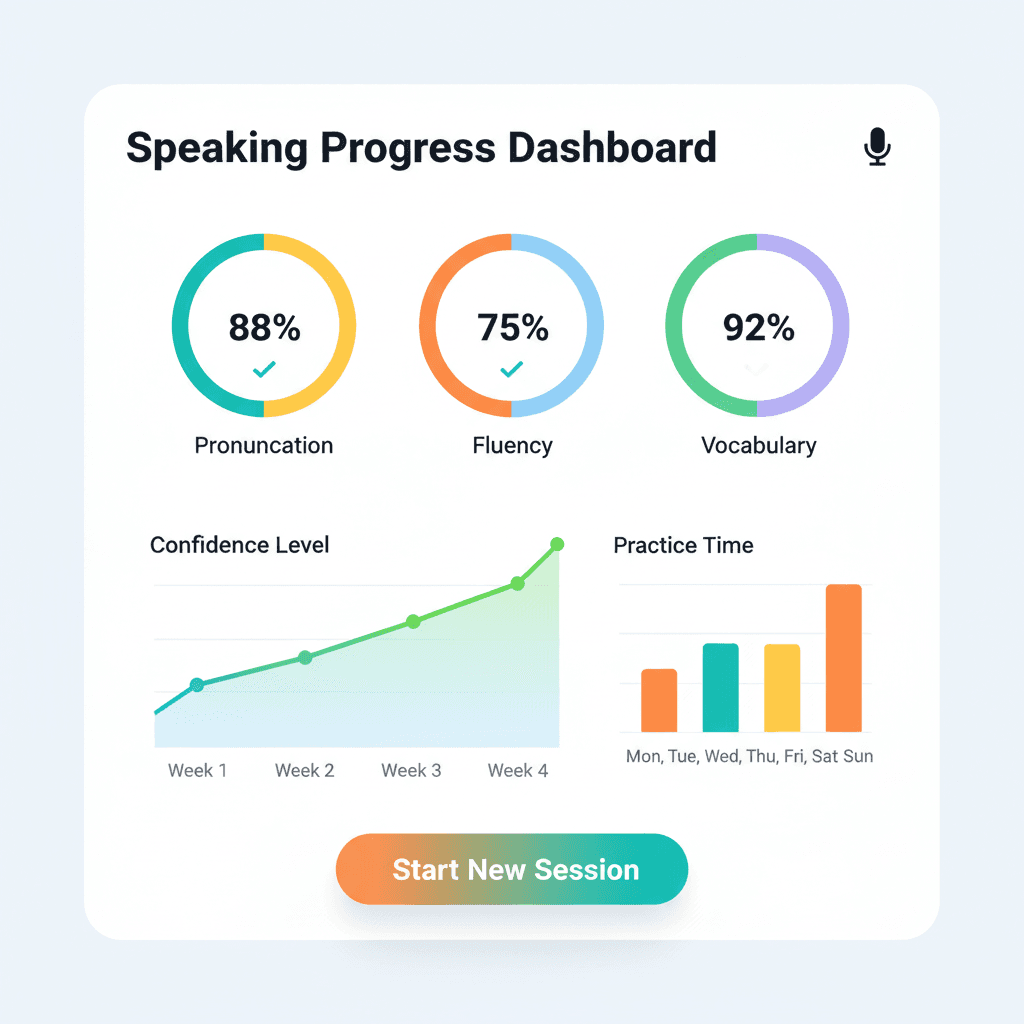
Why 'Feeling' Fluent Isn't a Reliable Metric
Let's be honest: some days you feel like a linguistic genius, and other days you can barely string a sentence together. This emotional rollercoaster is normal, but it's a terrible way to measure growth. A 2026 report from LanguaTracker confirms that most learners track progress incorrectly by relying on feelings, a misleading approach because language learning isn't linear. You'll have peaks, valleys, and long plateaus where progress feels invisible.
Relying on these 'Feel-Good' metrics—or 'Feel-Bad' metrics on tough days—is a recipe for lost motivation. Traditional school grades often aren't much better, as they tend to measure your ability to recall isolated grammar rules rather than your real-world skill in holding a conversation. The real magic happens when you shift your focus from subjective feelings to objective 'Output Analytics'. These are concrete data points that prove you're getting better, even when it doesn't feel like it.
Instead of getting stuck on subjective feelings of frustration, learners can track objective metrics like '60–90 Second Story Smoothness' and 'Listening Retell Accuracy' to see real progress.
Metrics like 'Filler Word Density' (how often you say 'um' or 'uh'), your speaking pace in 'Words Per Minute (WPM)', and the 'Hesitation Gap' offer undeniable proof of your improvement. A research summary even found a direct correlation between a higher speech rate and a speaker's perceived proficiency. By tracking these numbers, you replace vague frustration with a clear, data-driven path forward.
Introducing Your 'Speaking Progress Dashboard'
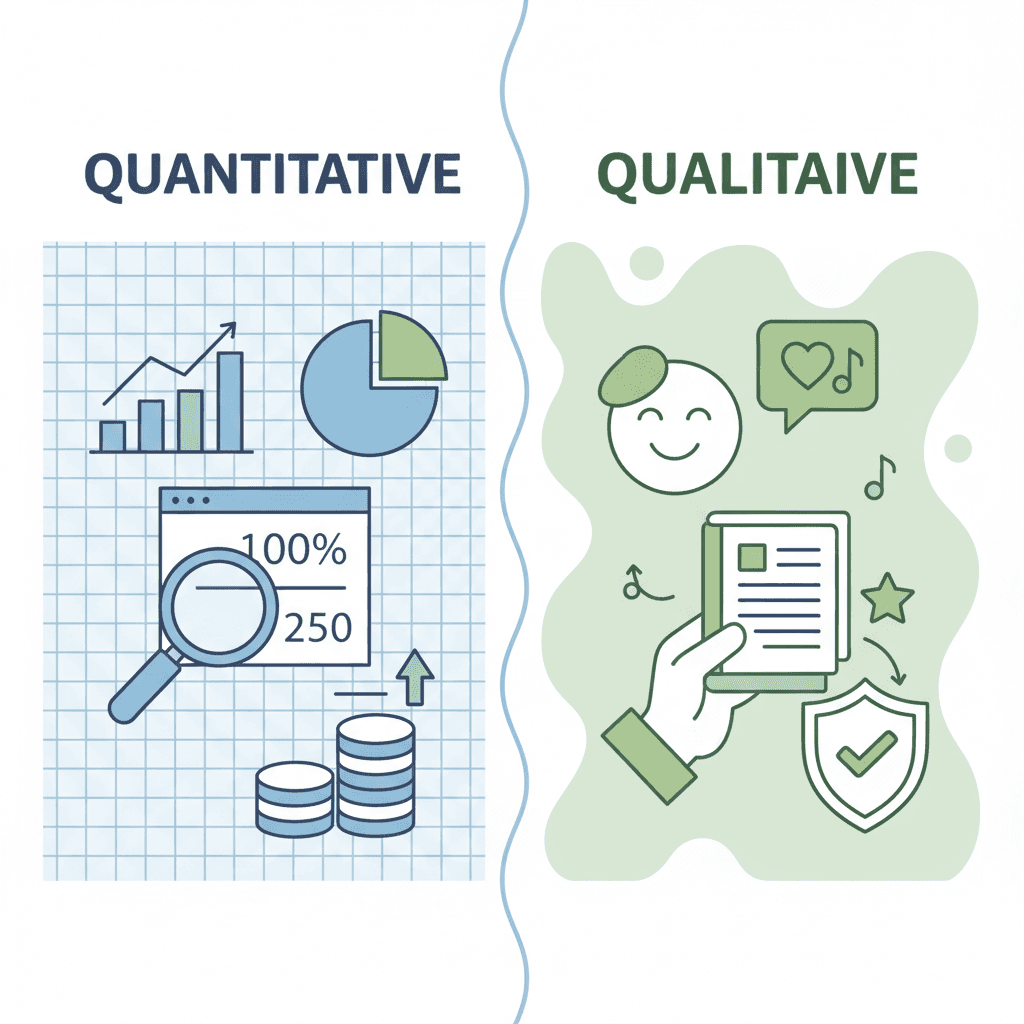
So, how do you start tracking this data without getting overwhelmed? You build a 'Speaking Progress Dashboard.' This isn't a complex piece of software; it can be as simple as a notebook or a spreadsheet. It’s your personal, single source of truth for tracking speaking progress, combining the best of both worlds: hard data (quantitative metrics) and structured self-reflection (qualitative metrics).
Your dashboard is a living document. It might include a log of your recorded speaking sessions, ratings from language partners, and a journal for your thoughts. Experts recommend maintaining a 'linguistic portfolio' with these work samples and reflections to create a continuous assessment of your skills. This approach aligns with modern research, which emphasizes the importance of 'usage-based learning'. As highlighted in a 2025 study in Language & Literacy, actively using the language and tracking that use is key. Your dashboard helps you do just that.
- •Quantitative Data: AI-generated scores for pronunciation, fluency, and vocabulary.
- •Qualitative Data: Self-assessed confidence ratings and journal entries about specific wins and challenges.
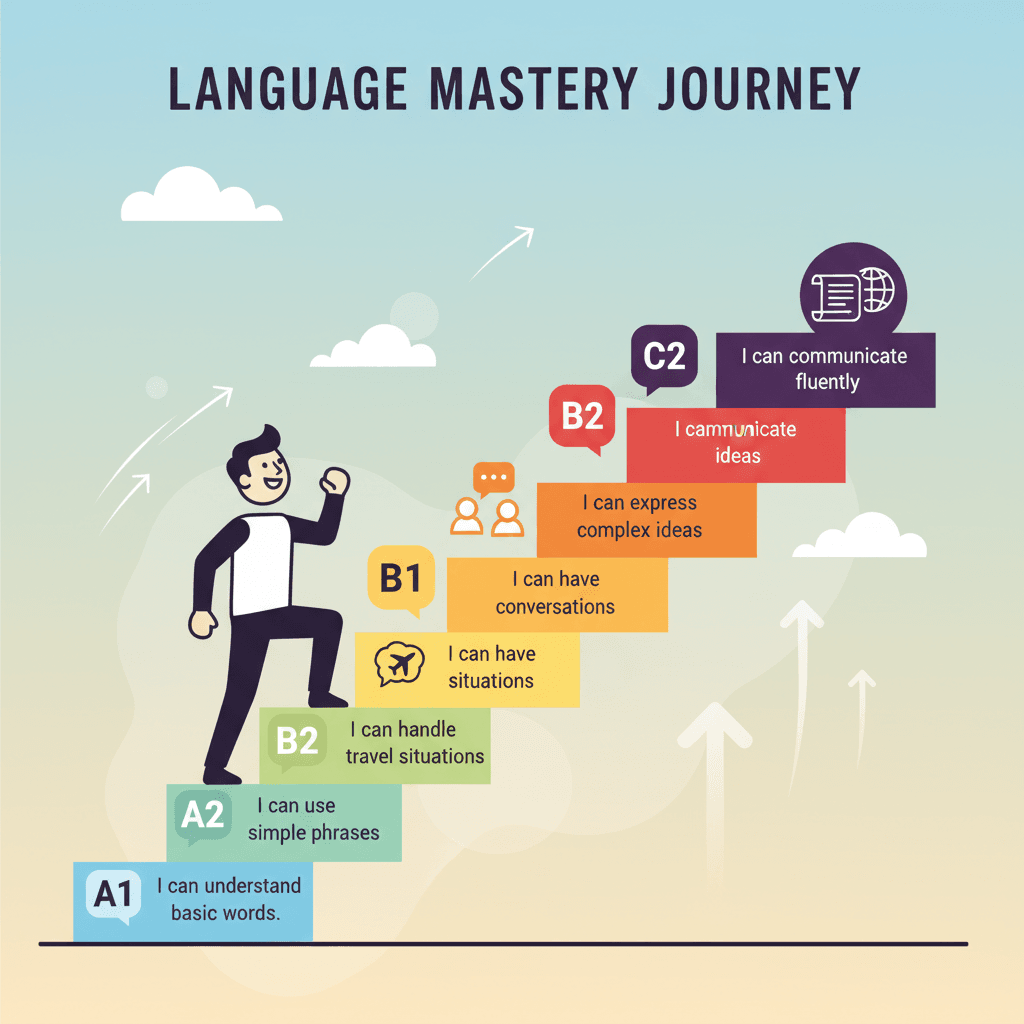
- •Performance Goals: Concrete 'Can-Do' tasks you're working toward, based on frameworks like the CEFR.
The same 2025 research also points to the value of 'talker variability'—exposing yourself to different accents and speakers. You can even add a section to your dashboard to track this: 'This week I practiced with a speaker from the UK and another from Australia.' This ensures your practice is as diverse as the real world.
Quantitative Metrics: The Hard Data of Speaking
The biggest shift in language learning is the move from abstract grading to concrete data, largely powered by AI. Modern digital platforms are transforming language assessment by giving you immediate, detailed feedback on your speaking. This isn't a future trend; it's happening now. The technology has evolved from simply identifying words to analyzing the nuances of how you say them.
The costs of implementing these advanced AI features are significant. Duolingo's CEO, for instance, projected in 2026 that their gross margins would fall to around 69% due to increased AI costs, with bookings growth also slowing. This highlights the immense investment required to provide sophisticated analysis—an investment that directly benefits you, the learner, by providing access to powerful diagnostic tools that were once unavailable outside of a research lab.
This trend is even reaching the highest levels of international education. The PISA 2025 assessment, for the first time, will test foreign language skills to generate comparable data on students' speaking abilities across dozens of countries. Tools like Language Environment Analysis (LENA) technology, detailed in a 2025 PMC study, can automatically track speech development, showing how deeply data has been integrated into language assessment. Let's break down the key numbers you can start tracking today.
Pronunciation & Clarity Scores
How do you know if your pronunciation is *really* improving? AI-powered tutors can give you an instant, objective score. Platforms like SpeaksyAI analyze your speech and provide a clear number, so you can see if you're 5% better this week than last. This score isn't arbitrary; it's based on a detailed analysis of your word stress, pacing, and individual sounds, a method validated in professional settings like the Physician Oral Language Observation Matrix (POLOM).
Modern AI speech assessment goes even further by analyzing prosody—the rhythm, stress, and intonation of your speech. A 2025 study in Language & Literacy found this helps generate more accurate, less biased scores. This instant feedback allows for highly targeted practice. Instead of just knowing your pronunciation needs work, you’ll know *exactly* which phonemic error to focus on, turning a simple score into a personalized lesson plan.
Fluency & Flow Metrics
Fluency is more than just correct grammar; it's about the flow and rhythm of your speech. AI tools are uniquely capable of capturing these nuances. A 2026 study on L2 learners published on ResearchGate identified several key metrics that you can add to your dashboard to track speaking fluency.
- •Speech Rate (WPM): The average number of words you speak per minute. A steady, natural pace is a hallmark of fluency.
- •Pausing Patterns: This tracks how often you use filled pauses like 'um' and 'uh.' A reduction in these filler words is a clear sign of progress.
- •Mean Length of Utterance (MLU): The average number of words per spoken sentence. As you become more proficient, your sentences naturally become longer and more complex. This is a powerful metric for tracking your expressive ability.
Tracking these temporal measurements gives you an objective look at how your conversational flow is improving. While 'words correct per minute' (WCPM) is traditionally a reading metric, 2025 research confirms its high correlation with comprehension, making it a valuable indicator for speaking as well. Seeing your WPM increase or your filler word count decrease provides the motivating, tangible evidence of progress that feelings alone can't offer.
Qualitative Metrics: How You Feel and Sound
While data is powerful, it doesn't tell the whole story. How you feel about your speaking ability—your confidence—is just as important. The key is to move from vague feelings to structured self-assessment. Research from 2022 confirmed that structured self-assessment is a valid and reliable method for measuring oral proficiency and tracking growth. It’s about asking the right questions.
This is where we can measure confidence as a tangible outcome. A 2026 forecast on qualitative research trends highlights the need for this kind of data to understand the 'why' and 'how' behind a learner's progress. By pairing your objective AI scores with subjective reflections, you get a complete picture. For example, celebrating a 5% improvement in your pronunciation score becomes even more powerful when you can link it to feeling more confident during a specific conversation.
The Confidence Scale & Journaling
Here’s a simple but effective system. Before and after each speaking practice session, rate your confidence on a scale of 1 to 10. A 2024 study confirmed a significant positive relationship between higher self-confidence and better speaking performance. Tracking this number helps you see patterns. Do you feel more confident after practicing certain topics? Less confident at the end of a long day? This is valuable intel.
Pair this rating with a simple language progress journal. After a practice session, take two minutes to answer one of these prompts. The goal is to make your 'tiny weekly check-ins' a habit.
- •What was one conversation this week where I felt proud of my speaking?
- •What specific challenge did I face today, and how did I handle it?
- •Did I use a new word or grammar structure successfully?
- •On a scale of 1-10, how anxious did I feel before speaking? How about after?
This practice helps build what researchers call 'speaking self-efficacy.' Formal scales like the Foreign Language Confidence Scale (FLCS) break confidence down into perceived competence and linguistic security. Your journal is your personal, simplified version of that, giving you a structured way to reflect on your journey and celebrate the small wins.
Using Frameworks for Practical Self-Assessment
Frameworks like the Common European Framework of Reference for Languages (CEFR) or the Interagency Language Roundtable (ILR) can feel academic and intimidating. But you don't need to be an expert to use them. Their real power lies in providing a roadmap of practical, real-world skills you can work toward. This is the essence of 'usage-based learning'—a concept 2025 research in Language & Literacy confirms is vital for language acquisition. It’s not about passing a test; it’s about guiding your practice toward what you can *do* with the language.
And don't worry about being biased. A massive 2026 meta-analysis found a significant correlation (.466) between a learner's self-assessment and their objective performance, proving that you are a surprisingly good judge of your own abilities when using a structured framework. Another 2026 study showed that when students were trained to self-assess their speaking using a simple checklist, their skills and confidence measurably improved. The key is translating the framework's levels into everyday goals.
Translating CEFR to 'Can-Do' Speaking Goals
This is where a CEFR speaking self-assessment becomes truly practical. Instead of wondering if you're 'B1,' focus on the specific 'can-do' statements for that level and turn them into personal goals. This transforms an abstract label into a concrete to-do list for your language learning. Here are a few examples:
- •A2 (Elementary) Goal: Can you successfully handle simple, routine transactions? Your mission is to order a coffee, ask for the price, and ask where the bathroom is, all in your target language.
- •B2 (Upper Intermediate) Goal: Can you interact with a degree of fluency and spontaneity? Your mission is to explain the plot of a recent movie you watched, including your detailed opinion on it, without pausing excessively.
- •C1 (Advanced) Goal: Can you use language flexibly for social and professional purposes? Your mission is to clearly present a complex subject related to your work or hobbies to a partner or tutor.
You can practice these specific scenarios with a tutor, a language partner, or even with an AI conversation partner. Advanced AI tutors like SpeaksyAI allow you to engage in these goal-oriented conversations and get instant feedback, helping you practice and refine your ability to complete these 'can-do' tasks. As research from the Speak & Improve Challenge shows, automated analysis of this kind of spontaneous speech is the new frontier for accurately scoring and improving real-world language skills.
FAQ: Measuring Your Language Speaking Progress
Frequently Asked Questions
Ready to Track Your Progress with AI?
Get objective feedback on pronunciation and fluency to see your speaking skills improve. Be the first to try the SpeaksyAI language tutor.
Join the Waitlist