How to Make Small Talk in a Foreign Language: The 3-Part System
Starting a conversation in a new language can be terrifying. This guide provides a simple, repeatable system for making small talk, helping you build confidence and speak naturally.
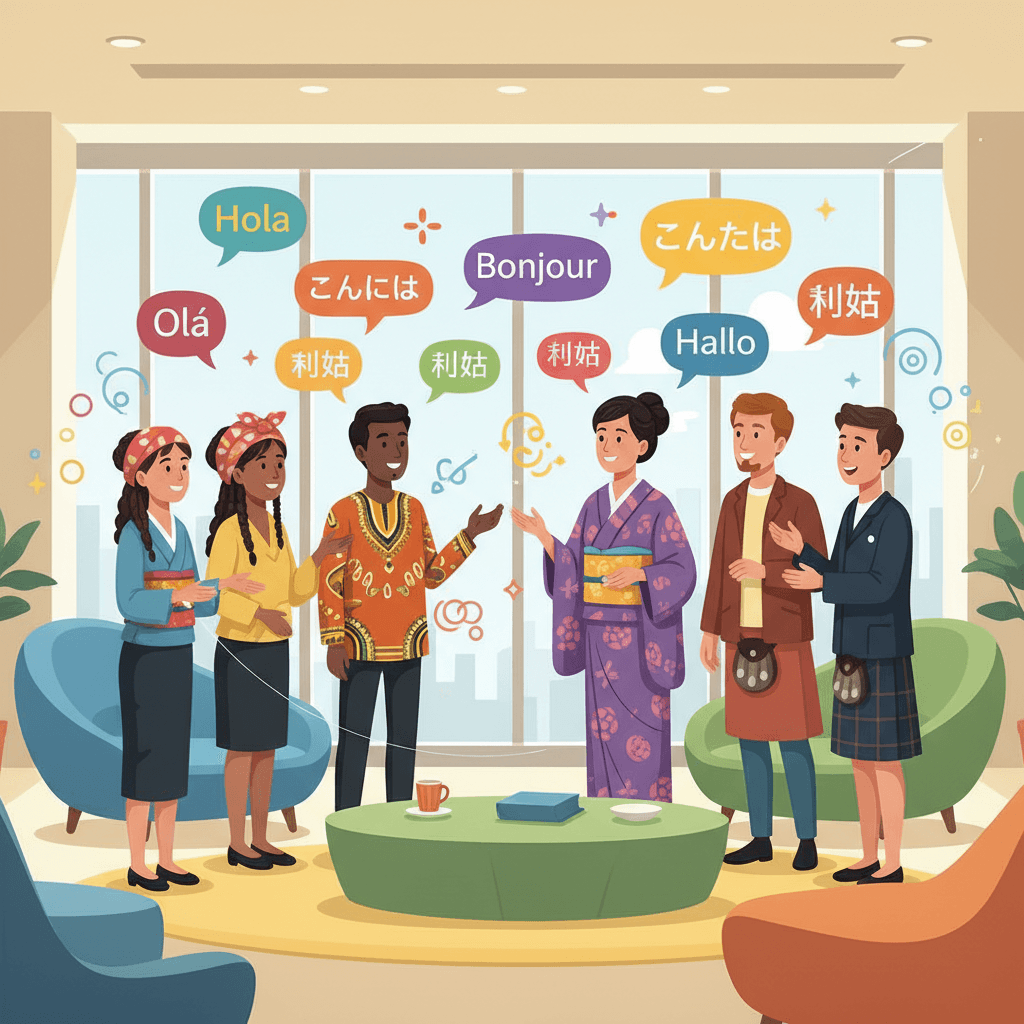
Why 'Just Start Talking' Is Bad Advice for Small Talk

If you're learning a new language, you've probably heard the advice: “Just get out there and start talking!” While well-intentioned, this can feel like being told to swim by being pushed into the deep end. The fear of awkward silences, saying the wrong thing, or simply freezing up is real. This is especially true when figuring out how to make small talk in a foreign language, where the stakes feel even higher. The good news? Your anxiety might be based on a false premise. You don’t need more courage; you need a better system.
Interestingly, we often misjudge small talk. A study mentioned in TIME in 2026, based on research from the American Psychological Association, found a huge gap between how boring people expected casual conversations to be and how much they actually enjoyed them once they started. The problem isn't the conversation itself, but the anxiety we feel leading up to it. Overcoming this initial hurdle is the key, and a structured approach is far more effective than simply hoping for a burst of confidence.

This is where The Small Talk System comes in. Instead of viewing casual chat as a chaotic, unpredictable event, we can reframe it as a series of simple, repeatable steps. Casual conversation isn't as random as it seems; it often follows predictable patterns. By learning these patterns, you can walk into any interaction with a clear plan, which dramatically reduces conversation anxiety and makes the whole experience feel more manageable.
Many guides suggest a structured flow to make interactions less intimidating. A popular model is: Open → Ask → Share → Connect. This simple, four-step process gives you a roadmap to navigate a conversation from the first hello to a genuine connection.
This isn't just a nice idea; it's backed by research. A 2025 study published on ResearchGate argued that using 'pedagogically structured small talk' is a powerful method for language learners. It directly serves to advance communication skills, reduce anxiety, and foster genuine human connection. So, let's break down this system into three practical parts you can start using today.
Part 1: How to Gracefully Initiate a Conversation
The most intimidating moment is the very beginning. How do you break the silence without feeling awkward? The secret is to use your environment. A simple and effective method recommended in a 2025 guide for international students is the 'observe and comment' technique. Instead of searching your brain for a brilliant opening line, simply comment on your immediate, shared surroundings. Is the coffee shop beautifully decorated? Is the bus running late? Is the music in the store interesting? This creates an instant, low-pressure connection.
To make this even easier, you can build a 'chunk bank'—a collection of ready-to-use sentences for common situations. This isn't about memorizing single vocabulary words; it’s about having complete, natural-sounding phrases ready to go. This reduces hesitation and helps you start the conversation smoothly. Here are some small talk examples for your foreign language chunk bank:
- •At a café: “This place has a great atmosphere, doesn't it?” or “I've never been here before, what do you recommend?”
- •In a queue: “It looks like we’ll be here for a while!” or “I hope this line moves quickly.”
- •At an event: “What brings you to this event today?” or “This is a great turnout, isn't it?”
- •Commenting on the weather (universal): “It's a beautiful day, finally!” or “I can't believe how much it's raining.”
The best way to build confidence with these openers is to practice them in a risk-free setting. Using an AI language tutor allows you to rehearse these lines in a 'judgment-free' environment, which is a crucial step for overcoming the fear of making mistakes before you try them out with native speakers. This practice is fundamental to learning how to make small talk in a foreign language with confidence.
Part 2: How to Maintain the Flow (and Avoid Awkward Silence)
You've successfully started the conversation. Great! But now comes the next challenge: keeping it going. The fear of the dreaded awkward silence can cause many learners to panic and forget everything they know. The key to maintaining momentum is to shift your focus from speaking to listening. Your goal is to become genuinely curious about the other person.
Harvard University research shows that asking follow-up questions is one of the most powerful tools for building rapport. It signals that you are listening, engaged, and interested in what the other person has to say. This is the heart of active listening. Instead of worrying about what you’ll say next, listen for keywords in their response that you can ask about. If they say, “I had a busy weekend,” don’t just nod. Ask, “Oh really? What kept you so busy?”
To master this, focus on asking open-ended questions—questions that start with Who, What, Where, When, Why, or How. These invite longer answers and give you more material to work with, unlike closed questions that can be answered with a simple 'yes' or 'no'. This approach helps you move beyond your memorized phrases and is a major step toward achieving conversational fluency.
- •Instead of: “Did you have a good weekend?” (Closed)
- •Try: “What did you get up to over the weekend?” (Open)
- •Instead of: “Do you like this city?” (Closed)
- •Try: “What are some of your favorite things about living here?” (Open)
This systematic approach of listening and asking thoughtful questions directly addresses conversation anxiety. As a 2025 ResearchGate study notes, a structured, pedagogical approach to small talk is a powerful way for learners to advance their skills. By having a framework for how to continue, the conversation feels less like a test and more like a natural, enjoyable exchange.
Part 3: How to Politely Exit the Conversation
Knowing how to exit a conversation politely is a superpower. So many learners focus on how to start talking that they forget to plan for the end. Getting stuck in a conversation you don’t know how to leave can be just as stressful as starting it. Having a few graceful exit lines in your 'chunk bank' gives you a feeling of control and ensures you leave a positive final impression.
A 2025 guide on small talk emphasizes that mastering polite exits requires cultural awareness to avoid seeming abrupt, but the basic structure is universal: signal the end, state a reason (optional), say something pleasant, and say goodbye. It’s a simple formula that works in almost any context, whether you're in the US, UK, Australia, or Canada.
- •General polite exit: “Well, it was so nice talking to you! I have to get going now, but I hope you have a great day.”
- •When you need to leave for a reason: “I'm about to meet a friend, but it was a pleasure to meet you. Enjoy the rest of the event!”
- •Leaving a shop or cafe: “Thanks for the chat! I'd better finish my errands. Take care!”
- •Expressing future hope: “I really enjoyed our conversation. I hope we run into each other again soon!”
Practicing these exit lines is just as important as practicing your openers. This is another area where a patient, AI-powered tool can be incredibly helpful. Industry developments show that AI language apps provide a 'judgment-free' environment, which is perfect for intimidated learners to build confidence with these crucial, but often ignored, conversational skills.
Practice Your Small Talk System with an AI Tutor
Theory is great, but confidence comes from practice. This is where an AI language tutor becomes your secret weapon for mastering small talk. Platforms like SpeaksyAI (at speaksyai.com) are designed to close the 'speaking gap'—the space between knowing the grammar and being able to use it in a real conversation. They offer a safe, low-pressure environment to practice every part of the Small Talk System without the fear of judgment.
An AI tutor is available 24/7, so you can practice whenever you have a few spare minutes. You can ask it to slow down, rephrase words, or explain grammar instantly—patience that's hard to find in the real world. This process of trial, error, and correction in a 'judgment-free' space is essential for building the muscle memory you need to speak confidently with native speakers.
- 1.To practice openers: “Let's role-play. We are at a bus stop in Sydney. It's a very hot day. Start a conversation with me about the weather.”
- 2.To practice follow-up questions: “I want to practice keeping a conversation going. Ask me about my job, and I will try to ask you good follow-up questions.”
- 3.To practice exiting: “Let's have a short conversation about movies. After a few minutes, I will practice a polite way to end the chat.”
This targeted practice is precisely what the 2025 ResearchGate study referred to as 'pedagogically structured small talk.' By using an AI language tutor for conversation, you’re not just chatting randomly; you're systematically building skills and confidence, one step at a time.
From Small Talk to Real Talk: Building Deeper Connections
Small talk is the gateway, not the destination. Its purpose is to build a bridge of comfort and rapport that allows for a more meaningful conversation to happen. Once you're comfortable with the basics, you can start learning how to transition from talking about the weather to discovering shared interests, passions, and experiences.
The key is, once again, active listening. As you chat, listen for 'sparks'—moments when the other person’s energy lifts, they share a small personal detail, or they ask you a thoughtful, open-ended question in return. These are invitations to go deeper. If you mention you love hiking and they reply, “Oh, me too! I’ve been wanting to explore the trails around here,” that’s your cue to leave small talk behind and ask, “Which ones have you been thinking about?”
A 2025 study from ResearchGate reinforces this idea, arguing that structured small talk is a 'powerful pathway for advancing communication skills.' It serves to reduce learner anxiety, which in turn opens the door to strengthening human connection. Mastering small talk gives you the confidence and the foundation to build real relationships, which is the ultimate goal for most language learners.
Building this skill also involves adapting to cultural cues, which is essential for establishing the trust needed for deeper conversations. By starting with the safe, predictable patterns of small talk, you give yourself the mental space to observe these nuances and respond appropriately, making your interactions feel more natural and authentic.
Small Talk in a Foreign Language: FAQs
Frequently Asked Questions
Ready to Practice Your Small Talk?
Get pronunciation feedback and build confidence with unlimited conversation practice on SpeaksyAI.
Join the Waitlist