How to Make Friends Speaking a Foreign Language: A System
Finding a language partner is easy, but turning that practice into a real friendship can be tough. This guide gives you a step-by-step plan to build genuine connections.

Learning a new language opens up a world of new connections, but let's be honest: you’re not just looking for a practice partner. You’re looking for a friend. While grammar drills and vocabulary lists are essential, the real magic happens when you move beyond transactional exchanges and form genuine, lasting friendships. If you've ever felt that gap between knowing a language and knowing how to connect with its speakers, you're not alone. This guide provides a clear, actionable system for how to make friends speaking a foreign language, turning awkward small talk into meaningful relationships and helping you speak confidently in any social situation.
The journey from learner to friend isn't just about what you say; it's about how you think. It's time to make the mindset shift from 'practice' to 'people'.

From Practice Partner to Friend: The Mindset Shift
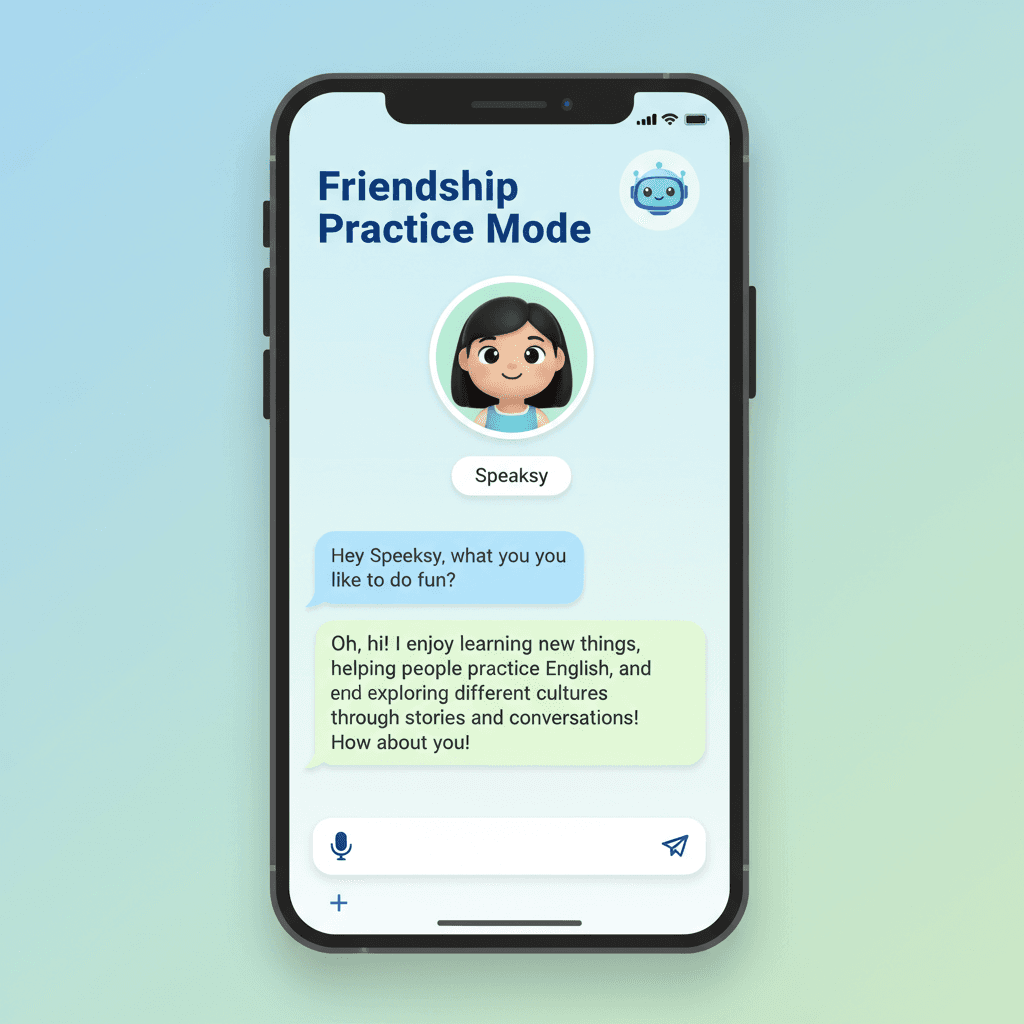
So many language learners approach exchanges with a single goal: improve my skills. It feels like a transaction—your Spanish for my English. But this mindset can hold you back from the very thing many of us secretly want: real connection. It’s okay to want more than just a tutor; it’s natural to crave friendship. The first step is giving yourself permission to move from a transactional mindset to a relational one. Focus on the person behind the language. What are their passions? What makes them laugh? When you start seeing your partner as a whole person, you open the door to a real friendship.
You are part of a massive, global movement. The language learning market was valued at an astounding $122 billion in 2024, a figure that underscores just how many people worldwide are seeking connection through language (Tutorbase, 2026). This isn't a niche hobby; it's a fundamental human drive to communicate and belong. And the desire is mutual. Research shows that local students are often just as eager to make international friends to understand new cultures and broaden their own horizons. They aren't just there to correct your grammar; they’re looking for a friend, too.
This shift is already happening on the platforms you use. Language exchange apps are evolving beyond simple chat tools, adding social features like interest-based matching, group voice rooms, and livestreams. This design encourages users to build relationships based on shared hobbies and personalities, not just language pairs. The most successful learners embrace this, focusing on mutual interests as the foundation for building friendships abroad, a strategy strongly recommended in online communities.
How to Find People You'll Actually Vibe With
The secret to finding language exchange friends isn’t about sending hundreds of generic messages; it's about finding the right people from the start. Think quality, not quantity. When you’re scrolling through apps like Tandem or HelloTalk, treat profiles like you’re searching for a new friend, not just a language match. Look beyond the flags and target languages. Does their bio mention a band you love? Do they have photos of them hiking, painting, or cooking? These are your entry points for a real conversation.
- •Look for a detailed bio: A person who takes the time to write about their hobbies and passions is more likely to be invested in genuine conversation.
- •Scan for shared interests: Actively search for mentions of movies, books, music, sports, or activities you enjoy. This is your conversational gold.
- •Pay attention to their 'Moments' or 'Posts': These social features give you a glimpse into their daily life and personality. Comment on something that resonates with you.
- •Note their learning goals: Someone who writes “looking to make friends and share culture” is a much better prospect than someone who just writes “need to pass exam.”
Sociologists talk about 'third places'—social environments outside of home and work where community is built. A 2023 study found that adults who frequented these places increased their social networks by 25% in just six months. In our digital age, language apps can be your new third place. But don't limit yourself to just apps. Platforms like Meetup, which has seen a 30% increase in hobby-based event attendance since 2022, are perfect for finding local groups. Whether it's a cooking class, a book club, or a hiking group, participating in a shared activity creates a natural context for friendship to bloom.
The Art of the Transition: From Small Talk to Real Talk
You’ve matched with someone who seems cool. You've exchanged a few “how are yous.” Now what? This is where many language learners get stuck. The key is understanding that small talk isn't a dead end; it's the bridge to deeper connection. A 2024 study confirmed that pairs who engaged in small talk were 3.5 times more likely to have more conversations later. Small talk is your training ground for building rapport, practicing active listening, and learning to show your personality in a new language.
To cross that bridge, you need to be the one who gently nudges the conversation forward. Go beyond surface-level questions. Instead of asking “What did you do today?”, try “What was the most interesting part of your day?” The goal is to invite storytelling and share a bit of yourself in return. This shared vulnerability is the foundation of friendship. When you share a small, personal anecdote, you give them permission to do the same.
Communication is a skill you can learn. It's like riding a bicycle or typing. If you're willing to work at it, you can rapidly improve the quality of every part of your life.
Start by linking your questions to things you already know about them from their profile. Did they mention they love sci-fi films? Ask for a recommendation and share your favorite. Do they play the guitar? Ask what song they’re learning. These questions show you’ve been paying attention and are genuinely interested in them as a person. Every great friendship starts with this simple act of paying attention.
The AI Bridge: Practice Making Friends with No Risk
Let’s face it: asking someone to move the conversation off-app or suggesting a video call can be nerve-wracking, especially in a foreign language. You worry about phrasing it correctly, about coming on too strong, or about the awkwardness of potential rejection. This is where you can use a powerful tool: the 'AI Bridge'.
The AI Bridge is the concept of using a safe, private space to practice the specific social conversations that build friendships. An AI language tutor like SpeaksyAI is perfect for this. It allows you to role-play these exact moments in a zero-judgment environment. You can practice the script over and over until it feels natural and confident. This isn't just about grammar; it's about building the social skills and confidence you need to form real connections.
- •Practice asking to switch platforms: Role-play saying, “I’ve really enjoyed our chats! Would you be open to connecting on WhatsApp or Instagram to talk more easily?”
- •Practice suggesting a video call: Try out phrases like, “It would be great to put a face to the name. Are you free for a quick video call sometime this week?”
- •Practice proposing a shared activity: Rehearse asking, “Since we both love coffee, would you be interested in a virtual coffee chat sometime?”
With a growing number of people, especially adolescents, already turning to AI for friendship-related advice, using it as a practice tool is a logical next step. By rehearsing these key transitional moments, you dismantle the fear and anxiety associated with them. When the time comes to say it to a real person, you’ll be ready to speak confidently because you’ve already done it before.
From Online to IRL: How to Suggest Your First 'Friend Date'
If your language partner lives in the same city—or if you're traveling abroad—the ultimate goal is often to meet in person. This can feel like the biggest hurdle of all, but it doesn't have to be. The key is to make the invitation casual, low-pressure, and centered around a shared interest you’ve already discovered. This transforms the interaction from a 'language practice session' into a 'friend hangout,' which is exactly the dynamic you want.
Instead of a formal dinner, suggest something simple that allows for easy conversation. A walk in a park, a visit to a local market, or grabbing a coffee are perfect first 'friend dates.' These activities are short, casual, and don't come with the pressure of a long, structured event. As friendship guides recommend, this allows you both to gauge the connection in real life without a heavy commitment.
Remember the AI Bridge? You can use it here, too. Before you hit send, practice the invitation with an AI tutor. Role-play the conversation to smooth out any awkward phrasing and build your confidence. By preparing in a private, zero-judgment space, you make the real-life ask feel significantly less daunting. This preparation helps you bridge the gap between online chatter and real-world friendship.
Navigating Cultural Differences in Friendship
Once you start forming international friendships, you’ll quickly realize that the 'rules' of friendship can vary widely across cultures. Things like punctuality, how you make invitations, gift-giving, and the level of directness in conversation can all differ. These unspoken norms, or 'cultural blueprints for intimacy,' can lead to misunderstandings if you're not aware of them.
For example, in some cultures, arriving 15 minutes late to a casual hangout is perfectly acceptable, while in others it’s considered rude. An invitation to “come over sometime” might be a polite formality in one country but a genuine offer in another. This isn't a reason to be scared; it's an opportunity to be curious. The initial challenges of navigating these differences are common, with one 2026 guide noting that 60% of international students report feeling lonely in their first few months, often due to such cultural hurdles.
- •Be observant: Pay attention to how your friend interacts with others.
- •Ask polite questions: It’s okay to say, “In my culture, we usually do this. How is it here? I’d love to understand better.”
- •Assume good intentions: If a friend does something that seems odd or abrupt, chalk it up to a cultural difference rather than a personal slight.
- •Share about your own culture: Friendship is a two-way street. Explaining your own norms can be just as enlightening for them.
Studies show that even between closely related cultures, like mainland China and Taiwan, the concepts of friendship can be distinct. The best approach is to be humble, open, and willing to learn. Seeing these differences as a fascinating part of the journey will not only prevent misunderstandings but also deepen your bond and cultural understanding.
What If It Doesn't Work Out? Handling Rejection & Moving On
Here is an important truth: not every language partner will become your best friend. In fact, most won't. And that is completely normal. Sometimes the conversation fizzles out. Sometimes you suggest a video call and get no reply. Sometimes you just don't have enough in common. This isn’t failure; it’s a natural part of the process of making friends, whether at home or abroad.
The key is to reframe it. A connection that doesn't blossom isn't a personal rejection—it's simply a mismatch of personality, goals, or timing. Your partner might be too busy, or they might just be looking for casual practice. Don't let it discourage you. Instead, celebrate what you gained: you practiced your social skills, you improved your fluency, and you learned something new. Each interaction is a stepping stone, making you more confident for the next one.
Resilience is your superpower in language learning and friendship-building. The more you put yourself out there, the more you’ll realize that ghosting or a lack of chemistry is rarely about you. Keep your focus on the process of connection and the personal growth you achieve along the way. Your next great conversation—and your next great friend—could be just around the corner.
FAQ: Making Friends in a New Language
Frequently Asked Questions
Ready to Speak Confidently and Make Friends?
Practice the exact conversations you need with SpeaksyAI, your personal AI language tutor. Get instant feedback and build the courage to connect.
Join the Waitlist