How to Maintain a Foreign Language: A 15-Minute Daily System
Reached your language goal but now afraid of losing it? This guide shows you how to maintain a foreign language with a low-stress, 15-minute daily system.

You’ve spent months, maybe years, learning a new language. You celebrated the moment you could finally order coffee, hold a simple conversation, or understand a movie without subtitles. But now, life has gotten in the way. That hard-earned fluency feels like it’s slipping through your fingers, and the thought of starting over is daunting. If you’re worried about how to maintain a foreign language you’ve worked so hard for, you’re not alone. The good news is that preventing this 'language skill atrophy' isn't about grueling study sessions. It’s about building a simple, sustainable system.
This guide will walk you through a low-stress framework called the 'Minimum Effective Dose'—a powerful way to keep your language skills sharp with just 15-30 minutes of focused practice a day. Forget the pressure and frustration; it’s time to protect your investment and turn maintenance into an enjoyable habit.
Why We 'Forget' a Language (And How to Stop It)
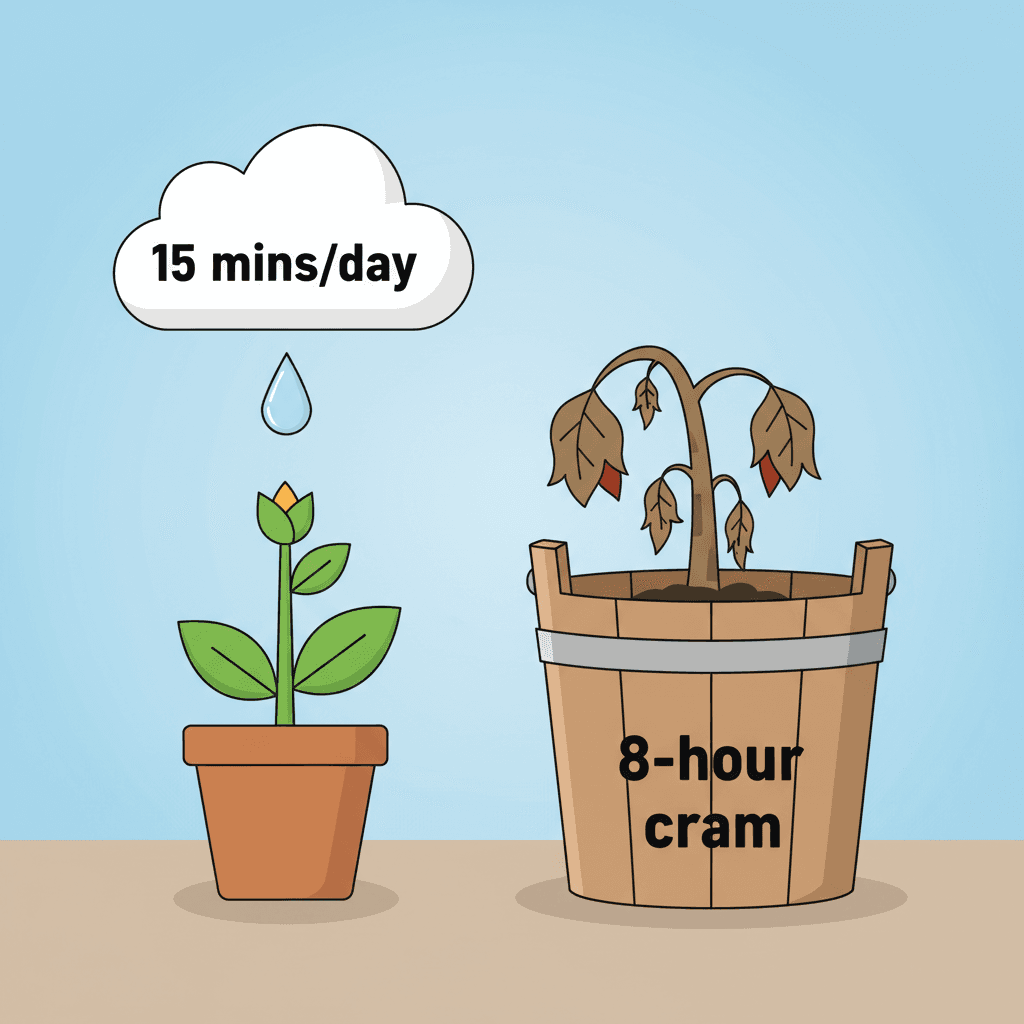
The process of 'forgetting' a language has a name: language attrition. It’s a natural decline that happens when you stop actively using your skills. A 2023 study confirmed what many of us feel instinctively: the rate at which you forget is directly tied to the quantity and quality of your language use. The less you use it, the faster it fades. This can be frustrating. That feeling of being 'rusty'—where words are on the tip of your tongue but just won't come out—is a common experience. But experts assure us that this is normal and can be quickly overcome with consistent practice.
Instead of viewing maintenance as a chore, think of it as an investment in your brain. A groundbreaking December 2025 study in Nature Aging revealed that engaging in everyday multilingual habits helps preserve memory, attention, and cognitive flexibility, effectively slowing down brain aging. You’re not just holding onto vocabulary; you’re actively boosting your cognitive health. This is one of the most powerful language maintenance strategies you can adopt.
Fortunately, technology makes this easier than ever. A June 2026 longitudinal study found that technology-mediated activities, especially reading input-rich content online, were highly effective in helping learners retain their language skills after they stopped living abroad. Accessible habits like reading online news, watching movies, or using chat applications are proven ways to keep your knowledge fresh and prevent it from decaying.
The 'Minimum Effective Dose' (MED) for Language Maintenance
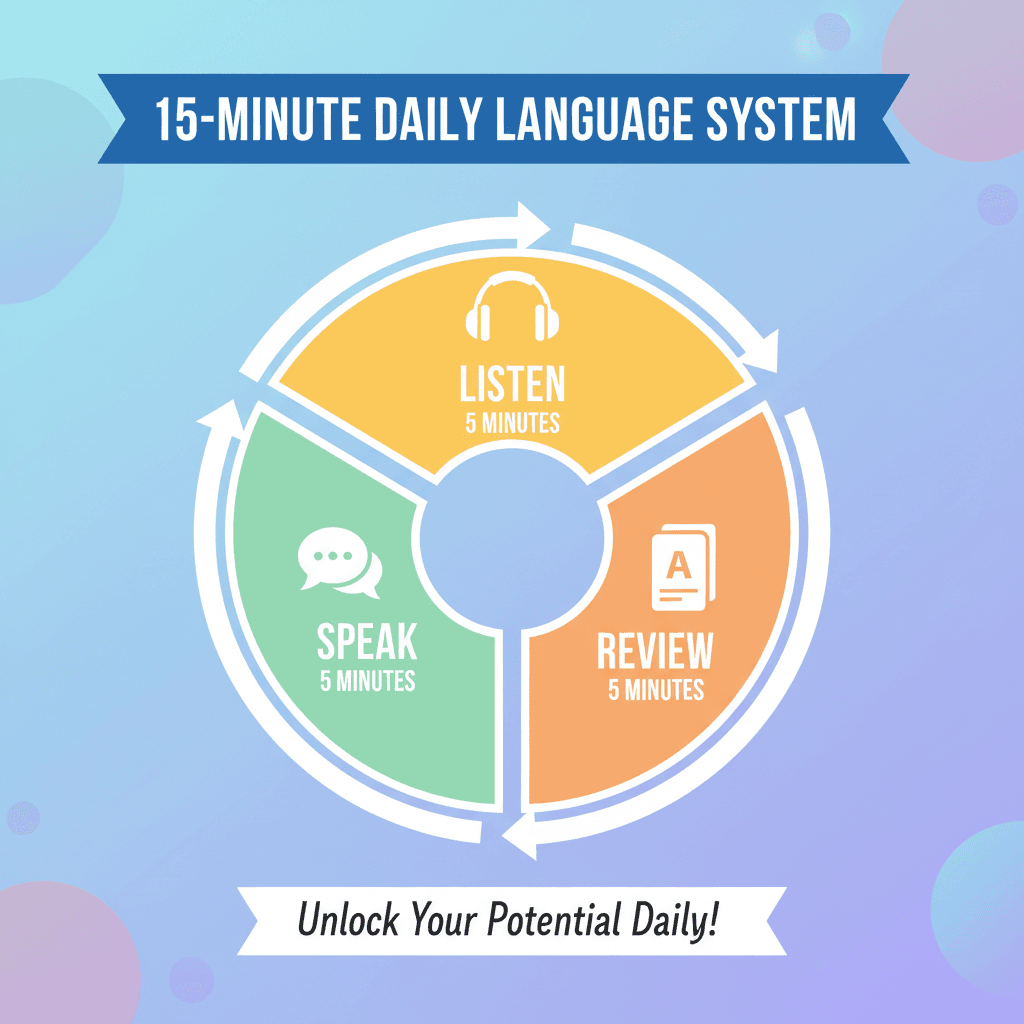
The secret to how to not forget a language isn’t a demanding, multi-hour daily routine. It's the Minimum Effective Dose (MED): the smallest amount of effort required to produce the desired result. In this case, the result is maintaining your current proficiency level without burnout. We're talking about a sustainable 15-30 minute daily habit that fits into your life, rather than taking it over.
This approach is backed by science. A November 2025 study found that the cognitive benefits of multilingualism are tied not to perfect fluency, but to 'regular multilingual activity.' This effective 'dose' simply involves daily listening, speaking, and switching between languages. The goal is consistency, not intensity. This shift in mindset is supported by the rapid growth of the digital language learning market, which is projected to expand through 2026 as learners in the US, UK, Australia, and beyond embrace AI-powered apps designed for targeted, bite-sized microlearning sessions.
Furthermore, a 2026 study published in the journal MDPI identified that a primary driver of skill loss is the failure to establish consistent, explicit rules for language use. In other words, without a deliberate daily 'dose' or system, your skills are naturally prone to decay. Creating a simple language maintenance system is your defense against that.
Step 1: Diagnose Your 'Rusty' Skills (A Quick Self-Audit)
Before you can build your maintenance plan, you need to know where to focus. Your skills in reading, writing, listening, and speaking often atrophy at different rates. For many, speaking is the first skill to feel rusty because it requires active, on-demand recall, which is more mentally demanding than passive skills like reading or listening. Take a moment to honestly assess your current abilities.
- •Speaking: Can you still express your thoughts, even if you make mistakes? Do you hesitate frequently to find words?
- •Listening: Can you follow a podcast or a TV show? Do you need to slow down the audio or rely heavily on subtitles?
- •Reading: How comfortable are you reading an article or a book chapter? Do you have to look up every other word?
- •Writing: Could you write a short email or journal entry? Does it feel awkward to form sentences?
Don't be discouraged by your answers! The beauty of language learning is a cognitive phenomenon called the 'savings effect,' which shows that relearning a 'rusty' language is significantly faster than learning it from scratch. Your brain has saved the information; you just need to reactivate it. And according to experts, a successful habit can be built with as little as 10-15 minutes of practice a few times per week. The rise of AI-powered language tutors is also making this process easier, helping users diagnose specific weaknesses and get targeted practice in a judgment-free zone.
Step 2: Build Your 15-Minute Daily Language Maintenance System
Now it's time to build your own MED routine. The goal is to create a simple, repeatable weekly schedule that touches on all four skills, with a special emphasis on the ones you identified as your weakest. Consistency is everything—just 15 minutes of daily practice adds up to over 91 hours of study in a year! Remember that research from 2025 shows it takes an average of 60 days to form a new habit, so be patient with yourself as you get started.
Here is a sample weekly template you can adapt. Notice the focus on speaking, as it’s the most active and often most fragile skill.
- •Monday (Speaking): 15 minutes of conversation with an AI tutor or a language partner.
- •Tuesday (Listening): 15 minutes of a podcast or news broadcast in your target language during your commute.
- •Wednesday (Reading): 15 minutes of reading a news article or a blog on a topic you love.
- •Thursday (Writing): 15 minutes of journaling about your day or writing a comment on a social media post.
- •Friday (Speaking): 15 minutes of 'active recall' where you describe your surroundings out loud or talk through your plans for the weekend.
Your maintenance needs may also vary by proficiency. 'Fragile' intermediate (B1-B2) languages require more frequent practice to keep skills sharp, while highly proficient (C1-C2) languages can often be maintained with just 15-30 minutes of exposure a few times per week. The key is to make it a non-negotiable part of your routine.
Active Recall vs. Passive Review: The Key to Staying Fluent
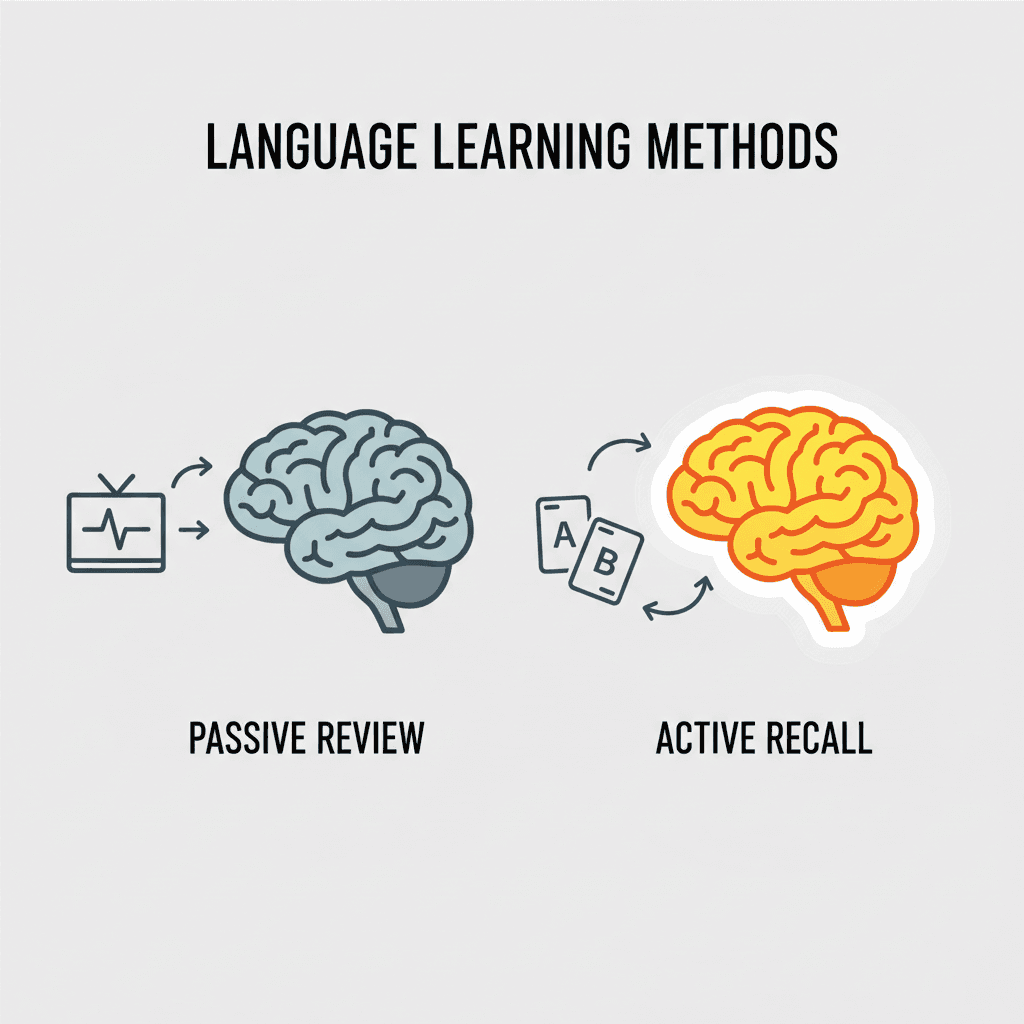
To truly maintain a language, especially your speaking skills, you must understand the difference between passive review and active recall. Passive review is consuming content—like watching a movie or listening to music. It’s great for comprehension and exposure, but it doesn't force your brain to produce language. Active recall is the act of retrieving information from your memory, like trying to recall a word or forming a sentence yourself. This is where real maintenance happens.
Research confirms that 'output-oriented techniques' are critical for maintenance, demonstrating superior long-term retention and comprehension compared to traditional input-based methods.
The data is clear. A University of Edinburgh study found that learners who engaged in just 10 minutes of daily speaking exercises—a form of active recall—retained 60% more vocabulary over six months than those who only used passive methods. Modern learning tools that use spaced repetition algorithms can boost information recall by as much as 200%. This is why your maintenance system must include activities that force you to produce the language.
This is where conversational AI has become a game-changer. For the 'Speaking' days in your system, using a tool designed for on-demand conversation is one of the most effective ways to practice active recall. Platforms like SpeaksyAI (at speaksyai.com) provide a low-pressure environment to speak, get instant feedback, and build the confidence you need to keep your conversational skills from getting rusty.
Your Maintenance Toolkit: Low-Effort Resources
Building your daily habit is easier when you have the right tools. The best approach for adult learners involves consistent, short study sessions of 10-15 minutes, and there are countless apps and resources designed for exactly that. The key is to find tools you genuinely enjoy using.
- •For Speaking Practice (Active Recall): AI chatbots and tutors like SpeaksyAI are becoming powerful resources for practicing real-time, dynamic conversations without the pressure of speaking to a person.
- •For Vocabulary (Spaced Repetition): Apps like Clozemaster or Anki use spaced retrieval practice—revisiting words at increasing intervals—which is a core technique for strengthening memory.
- •For Reading & Listening (Input): Use platforms like LingQ to read articles and import your own content, or simply switch your favorite news site or YouTube channel to your target language.
- •For Daily Review (Gamification): Apps like Duolingo or Busuu are excellent for daily, gamified review that can help maintain motivation and consistency through rewarding daily streaks.
Frequently Asked Questions (FAQ)
Frequently Asked Questions
Ready to Maintain Your Speaking Skills?
Practice speaking on your schedule with a judgment-free AI language tutor. Keep your hard-earned fluency and speak confidently, anytime.
Join the Waitlist