How to Improve Your Accent: A Guide to Clarity & Confidence
Improving your accent isn't about sounding perfectly native. It's about speaking with clarity and confidence. This guide provides a structured plan to help you do just that.

Ever feel like your mouth just can't form the sounds of a new language? You're not alone. But what if the goal wasn't perfection, but clarity? A surprising 2023 study found that listeners use 30% more cognitive energy to understand speech that lacks clarity, leading to 'listener fatigue.' This single fact changes everything. Learning how to improve your accent in a new language isn't about erasing your identity; it's about making it easier for others to connect with your ideas. It’s about building a bridge, not a barrier.
First, Let's Reframe Your Goal: Clarity Over Perfection
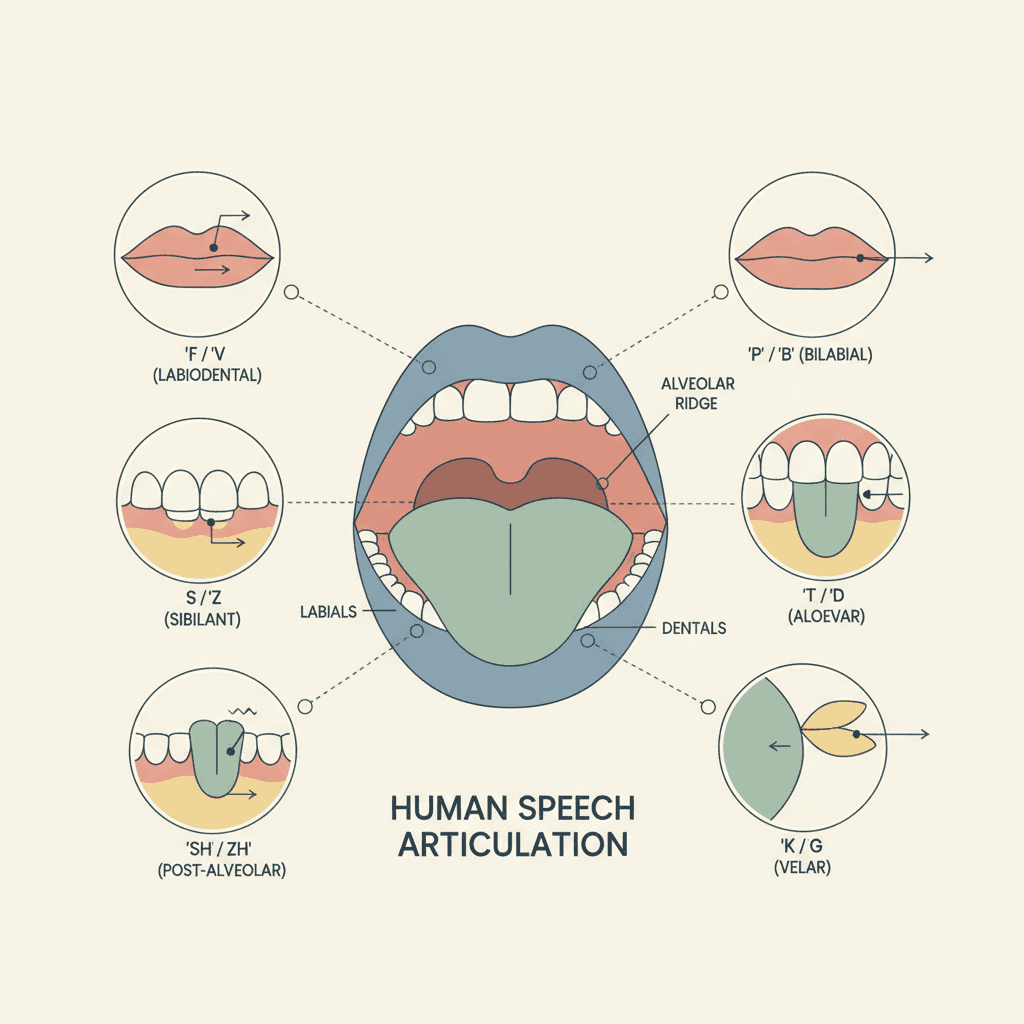
Let's get one thing straight: having an accent is completely normal. It’s a reflection of your linguistic journey. The pressure to achieve a 'perfect' native accent can be a huge source of anxiety, stopping you from speaking at all. The real goal is to speak 'clearly, confidently, and comfortably,' as one popular 2026 podcast puts it. This small shift in mindset is your first and most important step. Instead of aiming for accent elimination, focus on accent improvement for the sake of clear, effective communication.
In today’s globalized world, whether you're in the US, UK, or Australia, clear communication is the currency of connection. Research from 2025 confirms that pronunciation clarity is far more critical for effective communication and cultural integration than having a native-like accent (ResearchGate, 2025). When people can understand you with ease, you can build rapport, share your thoughts, and feel more included. This is the true prize.

Step 1: Tune Your Ear to New Sounds (Phonemes)
Before you can produce new sounds, you have to be able to hear them. A foreign accent often emerges because our brains try to apply the sound system of our first language to the new one (Research on Accent Perception, 2025). These unique sounds are called 'phonemes.' Your mission is to train your ear to notice the subtle differences it may currently be filtering out. Think of it like a musician learning to distinguish between two very similar notes.
This isn't just a theory; it's backed by science. A massive 2025 meta-analysis of over 2,700 learners discovered that 'perceptual training'—focused listening exercises—had a larger positive effect on learning new sounds than just trying to speak them. You have to hear it right before you can say it right. This is the foundation of effective language pronunciation practice.
- •Focus on One Sound at a Time: Put on a podcast or news report from a native speaker and listen for a single target sound. For example, focus only on the 'th' sound in English. How does it differ from a 't' or 'd' sound?
- •Drill Minimal Pairs: Minimal pairs are words that differ by only one sound, like 'ship' and 'sheep' or 'cat' and 'cut'. Search online for 'minimal pair lists' for your target language and listen to them repeatedly. This is a powerful way to train your ear to catch subtle distinctions.
- •Listen to Diverse Speakers: Don't just listen to one person. A 2025 study found that the ability to identify sounds across different speakers predicts success in learning new phonemes. Listen to speakers from the US, UK, Canada, and India to get a feel for the range of natural variation.
Step 2: Understand the Mechanics of Pronunciation
Improving your accent is a physical skill, much like learning to play an instrument. It involves retraining the muscles in your mouth, tongue, and lips to make new shapes. A 2025 guide on accent acquisition explains that this requires focused repetition to build new neural pathways for your speech muscles. The good news? Adult brains have high plasticity for this type of learning (Intonetic, 2025), meaning you can absolutely teach an old dog new sounds!
To get started, it helps to have a map. The building blocks of any language are its phonemes—North American English, for example, has 44. The International Phonetic Alphabet (IPA) is a universal chart for these sounds, helping you pinpoint exactly which ones don't exist in your native language. You don't need to memorize it, but using an IPA chart can help you see, for instance, that the vowel in 'seat' is physically different from the one in 'sit'.
Making this physical process more intuitive is where new technology is breaking ground. Industry reports highlight the development of '2D Sound Motion Technology,' which aims to visually show learners the mouth and tongue movements required for specific sounds. Instead of just hearing a sound, you can see how it's made, which is a game-changer for phonetics for language learners.
Step 3: Create Your AI-Powered Feedback Loop
This is where your practice accelerates. One of the biggest hurdles in accent training is getting immediate, accurate feedback. How do you know if you're actually making the sound correctly? The answer lies in creating an 'AI-Powered Feedback Loop.' This is a simple but powerful process where you use a smart tool to get instant, non-judgmental feedback on your pronunciation.
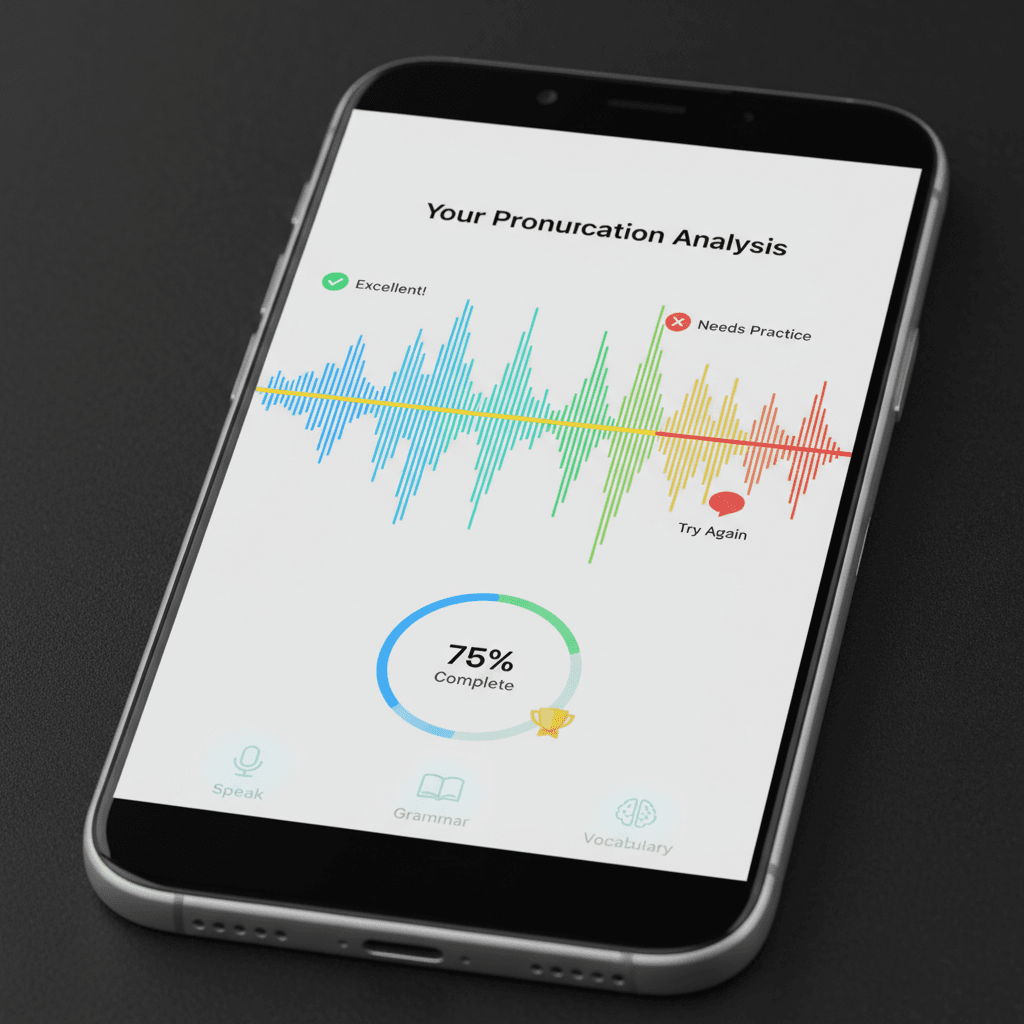
The process is straightforward: You pick a challenging sound or sentence. You speak it into an AI accent coach. The tool instantly analyzes your speech and shows you exactly where you can improve. A key trend in educational technology is using AI to create this 'judgment-free' practice environment. It allows you to make mistakes in private, which is crucial for building the confidence to speak out loud in the real world (Industry Developments, 2026).
The rise of sophisticated AI is transforming language learning. A March 2026 report from Preply predicts that AI will become an everyday companion for learners, generating practice material and offering targeted feedback. This isn't just hype; a 2025 meta-analysis of 46 studies confirmed that AI has a medium-to-large positive effect on learning outcomes. Platforms like SpeaksyAI (at speaksyai.com) are at the forefront of this, using advanced AI to provide precise feedback on individual sounds, often showing you visually how your pronunciation compares to a native speaker's model.
Step 4: Master the 'Music' of the Language
Have you ever noticed how you can identify a language even if you can't understand the words? That's because you're hearing its 'music'—the unique combination of stress, rhythm, and intonation. Mastering these 'suprasegmental' features is often more important for sounding clear and natural than perfecting every single vowel and consonant.
One of the most effective techniques for this is 'shadowing.' It's simple: you play a recording of a native speaker and try to speak along with them in real-time, imitating their pitch, rhythm, and pauses as closely as possible. It feels strange at first, but 2026 language learning guides consistently recommend shadowing to develop a natural flow. You’re not just learning words; you’re learning the melody they fit into.
You can supercharge your shadowing practice with technology. By recording yourself shadowing and then playing it back, you can compare your intonation to the original speaker's. Better yet, modern AI tools can provide visual feedback on your pitch and stress patterns. This is incredibly powerful, as a 2024 study showed that students using visual articulation tools retained phonetic patterns 55% better than those using audio-only methods. You can literally see the music of the language and learn how to play it.
A Structured Weekly Accent Practice Routine
Consistency is everything. A few minutes of focused practice each day is far more effective than a long, sporadic session. Research confirms that learners in structured accent training programs show consistent improvement in their clarity and intelligibility (The Growing Demand for Accent Coaching, 2025). Here is a simple, manageable routine to get you started. The goal is progress, not perfection.
- •Monday: Ear Training (15 mins). Pick a short podcast or news clip. Listen actively for one or two target sounds that are difficult for you. Don't just hear them; analyze them.
- •Tuesday: Minimal Pair Drills (15 mins). Use an AI accent coach or an online list to practice hearing and saying minimal pairs (e.g., live/leave, bat/bet). Get instant feedback on your production.
- •Wednesday: Shadowing (10 mins). Choose a 2-minute audio clip of a native speaker. Play it and speak along, focusing on matching their rhythm and intonation. Record yourself if you can.
- •Thursday: Production Practice (15 mins). Read a paragraph from a book or article out loud. Use an AI tutor like SpeaksyAI to get a full analysis of your pronunciation, highlighting specific sounds to work on.
- •Friday: Intonation Focus (10 mins). Practice saying simple questions and statements. Focus on the rising pitch of a question versus the falling pitch of a statement. Exaggerate it at first to feel the difference.
- •Weekend: Real-World Use. Try to use what you've practiced in a low-stakes conversation, either with a language partner or even just speaking your thoughts out loud to yourself.
This routine is built on the 'intelligibility principle,' where the main goal is simply to be understood clearly (Fluency Corp). With AI predicted to become an everyday learning companion (Preply, 2026), integrating these tools into a weekly structure makes consistent, high-quality practice more accessible than ever.
Overcoming Accent Anxiety and Building Confidence
Let's talk about the elephant in the room: fear. A 2026 study on the 'Accent Anxiety Scale' found that learners' fears typically stem from three things: worrying about negative judgment, being rejected for having a 'foreign' accent, and anxiety over communication breaking down. If this sounds familiar, you are not alone. This fear of making mistakes can be paralyzing.
So, how do you move past it? You build confidence in a safe space. This is perhaps the most significant benefit of practicing with an AI tutor. These digital platforms create a 'safe language learning environment' where you can stumble, make mistakes, and try again without any fear of judgment (Linguineo). You get the feedback you need without the anxiety of a live audience. Each time you practice, you're not just improving your pronunciation; you're building a foundation of confidence.
Think of it as a rehearsal. By using AI as your 'everyday companion' for practice (Preply, 2026), you can work out the kinks in private. When it's time to speak with a person, you'll feel more prepared and self-assured. Recent studies show that LLMs are effective as language tutors, especially for providing this kind of complementary practice (Lingoda, 2026). Every small win in your private practice sessions builds the courage you need for real-world conversations.
FAQ: Your Accent Improvement Questions Answered
Frequently Asked Questions
Ready to Practice Your Accent in a Safe Space?
Get instant, non-judgmental feedback on your pronunciation with the SpeaksyAI language tutor. Speak confidently.
Join the Waitlist