How to Find a Good Language Exchange Partner: A Vetting System
Finding a language partner is easy, but finding a *good* one is hard. This guide gives you a step-by-step system to vet, choose, and connect with a compatible partner.

You’ve downloaded the apps, scrolled through hundreds of profiles, and maybe even exchanged a few 'hellos.' Yet, finding a reliable person for language practice can feel impossible. This is the biggest challenge learners face, and it’s why knowing how to find a good language exchange partner is more about your system than the app you use. Most partnerships fizzle out within weeks due to ghosting or scheduling conflicts. It’s frustrating, and it can make you feel like giving up.
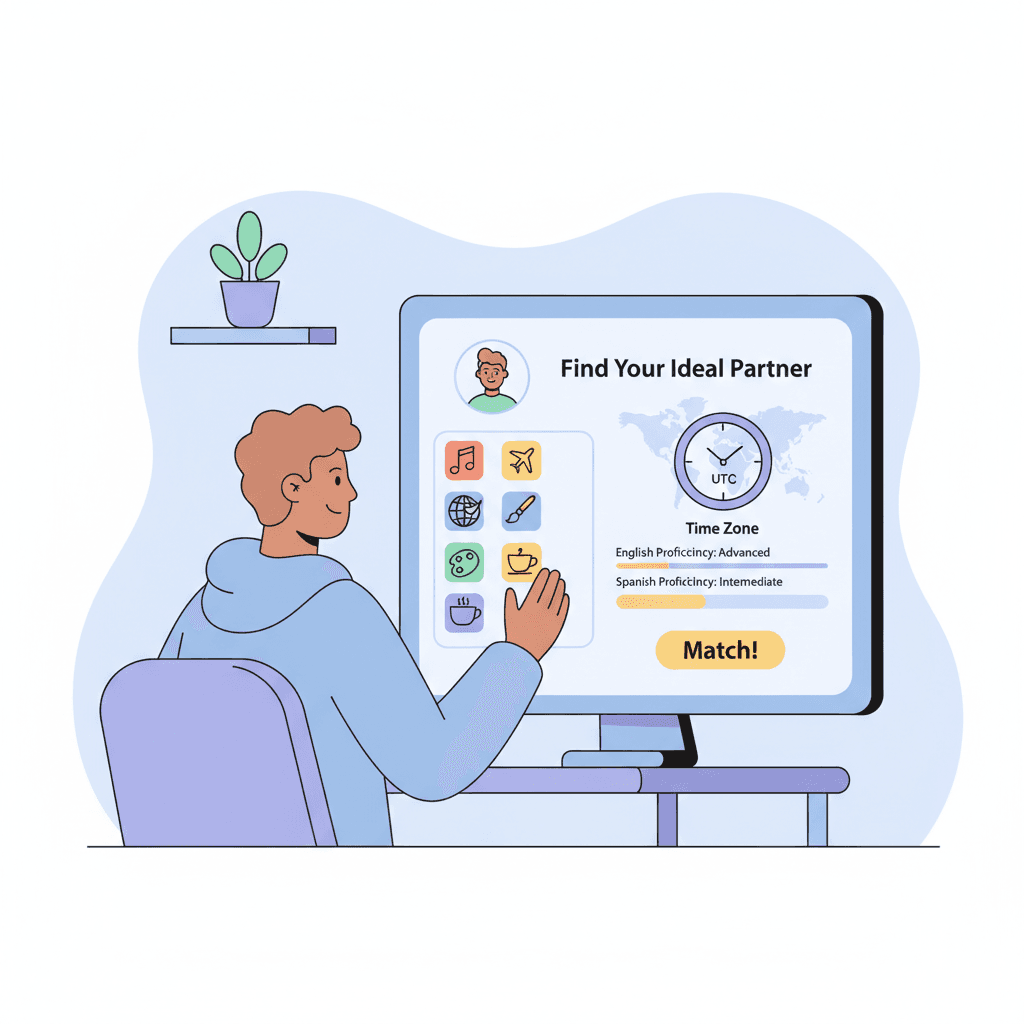
But what if you had a clear, actionable plan? This article introduces the Partner Compatibility System, designed to help you move beyond endless swiping and find a partner who is just as motivated and dedicated as you are. We’ll focus on the ‘how-to’ of vetting people, not just the ‘where-to’ of finding platforms. You're about to learn how to identify partners who are encouraging, patient, and non-judgmental—the kind of partner that makes learning feel like a shared adventure, not a test.
Beyond the App: A System for Finding a Compatible Partner
The truth is, language exchange apps like HelloTalk and Tandem are fantastic for connecting you with millions of native speakers across the US, UK, India, and beyond. The problem isn’t a lack of people; it’s a lack of compatibility. As Tandem's Language Education Specialist, Michelle Kubitza, wisely put it, “You won't click with everybody.” A study from the Modern Language Association even found that most exchange partnerships fail within a few weeks due to mismatched expectations, ghosting, and scheduling issues.
This is why our Partner Compatibility System doesn't start with opening an app. It starts with a strategy. Instead of treating it like a numbers game, we’ll treat it like building a meaningful connection. The goal is to find someone you genuinely enjoy talking to, whose commitment level matches yours. Because when you find that person, the results are incredible.
The payoff is worth the effort. A 2026 study on virtual language exchanges revealed that students perceived major improvements in not just their language skills but also their intercultural competence. Research backs this up, finding that learners paired with a live tutor reported over 60% higher speaking confidence after just 12 weeks compared to those using self-directed apps alone. Finding the right human connection is a powerful catalyst for fluency.
Step 1: Define Your Ideal Partner Profile
Before you can find the right partner, you need to know exactly what you’re looking for. A clear vision acts as your compass, guiding you toward compatible matches and helping you filter out the rest. This isn’t about being picky; it’s about being intentional. Taking ten minutes to define your Ideal Partner Profile will save you hours of wasted time later. Ask yourself the following questions.
- •What are my primary learning goals? Am I aiming for casual conversation, business fluency, or exam preparation? My partner’s goals should be similar.
- •What is my current proficiency level? Aim for a partner within two CEFR levels of your own to ensure the conversation is challenging but not overwhelming.
- •What is my weekly availability? Be realistic. Define specific days and times you can commit. Look for partners in compatible time zones in markets like the US, CA, or AU.
- •What qualities do I need in a partner? Patience, reliability, and enthusiasm are key for building mutual support, especially if you feel intimidated.
- •What are my interests? Shared hobbies—from gaming to gardening—make conversations more engaging and help build genuine chemistry.
This profile is your foundation. When your goals are clear, you can articulate them in your app profile and initial messages. This immediately signals your seriousness and attracts others who are just as committed. Finding a partner with matched objectives isn't just a 'nice-to-have'—it is essential for a successful exchange.
Step 2: The Vetting Process: From First Message to First Call
With your Ideal Partner Profile in hand, it's time to start the search. This step is where most learners go wrong. They send generic messages and hope for the best. Our system focuses on a deliberate vetting process to gauge language exchange partner compatibility from the very first interaction. It’s a three-part process: the opening message, spotting green and red flags, and the pre-session call.
Your first message sets the tone. A successful opener should be personalized and include four key things: a brief introduction, your learning goals, a specific comment about their profile, and an open-ended question. For example: “Hi [Name]! I’m [Your Name], an A2 French learner from the US focusing on improving my conversational skills. I saw you’re a native French speaker who loves hiking—me too! I’d love to exchange stories about our favorite trails. What’s the most beautiful place you’ve ever hiked?” This shows you’ve read their profile and are interested in a real conversation.
- •Green Flags: They send a personalized response, ask you questions, have a detailed profile with clear goals, and are open to a voice or video call.
- •Language Exchange Red Flags: Their message is a generic “hi,” their profile is empty or suspicious, they immediately ask for personal information, or they are hesitant to move from text to a voice call. A text-only exchange rarely provides the meaningful speaking practice you need.
After a few positive messages, suggest a brief 'pre-session' call. This is one of the most effective language exchange tips. Propose a quick 5-10 minute chat to officially introduce yourselves, confirm your goals align, and check for personal chemistry. This small step helps you weed out incompatible partners early, before you commit to a full hour-long session. It respects both your time and theirs.
Use an AI Tutor to Prepare and Speak Confidently
Knowing what to say is one thing, but feeling confident enough to say it is another. The fear of making mistakes in front of a new person is real, and it can hold you back. This is where a hybrid approach to language practice becomes your secret weapon. Before you even message a potential partner, you can perfect your approach in a safe, judgment-free zone.
An AI language tutor like SpeaksyAI (at speaksyai.com) is the perfect tool for this. Its AI voice modes allow you to role-play your introduction and practice your screening questions. You can rehearse your opening message and ask your vetting questions out loud until they feel natural. This is a key trend in modern language learning—using AI to build the confidence needed for real human interaction.
The benefits are immense. You get instant, specific feedback on your pronunciation and grammar, which research from the Educational Testing Service shows accelerates learning. Most importantly, you can practice anytime, 24/7, without fear of judgment. While traditional language exchanges can be unreliable, your AI tutor is always available, filling a critical gap and providing unlimited conversation practice to ensure you're fully prepared and confident for your first meeting with a human partner.
Step 3: The 'Session Zero' Agreement for Long-Term Success
Congratulations! You’ve vetted a partner and you both feel it’s a good match. Your first full session is what we call 'Session Zero.' This isn't just a casual chat; it's a strategic meeting to establish clear guidelines for your partnership. Setting expectations from the start is the single best way to ensure a productive and long-lasting exchange. As experts at Tandem emphasize, deciding on guidelines before the first real session is a key principle for success.
During Session Zero, you should discuss and agree on a few key points. A great way to do this is to create a shared document or chat where you can list your agreements.
- 1.The Time Split: Agree to a fair 50/50 split. For a one-hour session, a 30/30 split is perfect. Use a timer to keep it official and ensure both partners get equal practice.
- 2.The Correction Style: How do you want to be corrected? Immediately when you make a mistake, or with a summary of feedback at the end of your speaking turn? There's no right answer, but you both need to be on the same page.
- 3.The Schedule: Consistency is crucial. A 2026 report found that with just two 60-minute sessions per week, most learners see meaningful improvement in spoken fluency within 8–12 weeks. Agree on a recurring day and time.
- 4.Future Topics: Brainstorm a short list of topics for your next few sessions. This removes the pressure of thinking of something to say on the spot and allows you both to prepare vocabulary if you wish.
Remember, as Michelle Kubitza noted, not every partnership will 'click,' even with the best intentions. If your partner becomes unresponsive, don't take it personally. Politely follow up once, and if there's no reply, it's okay to move on. This is also where paid tutors can be an alternative, as a paid arrangement often leads to higher commitment than a free exchange. Your time is valuable, so invest it in a partnership that is mutually beneficial.
The Hybrid Model: AI Practice + Human Connection
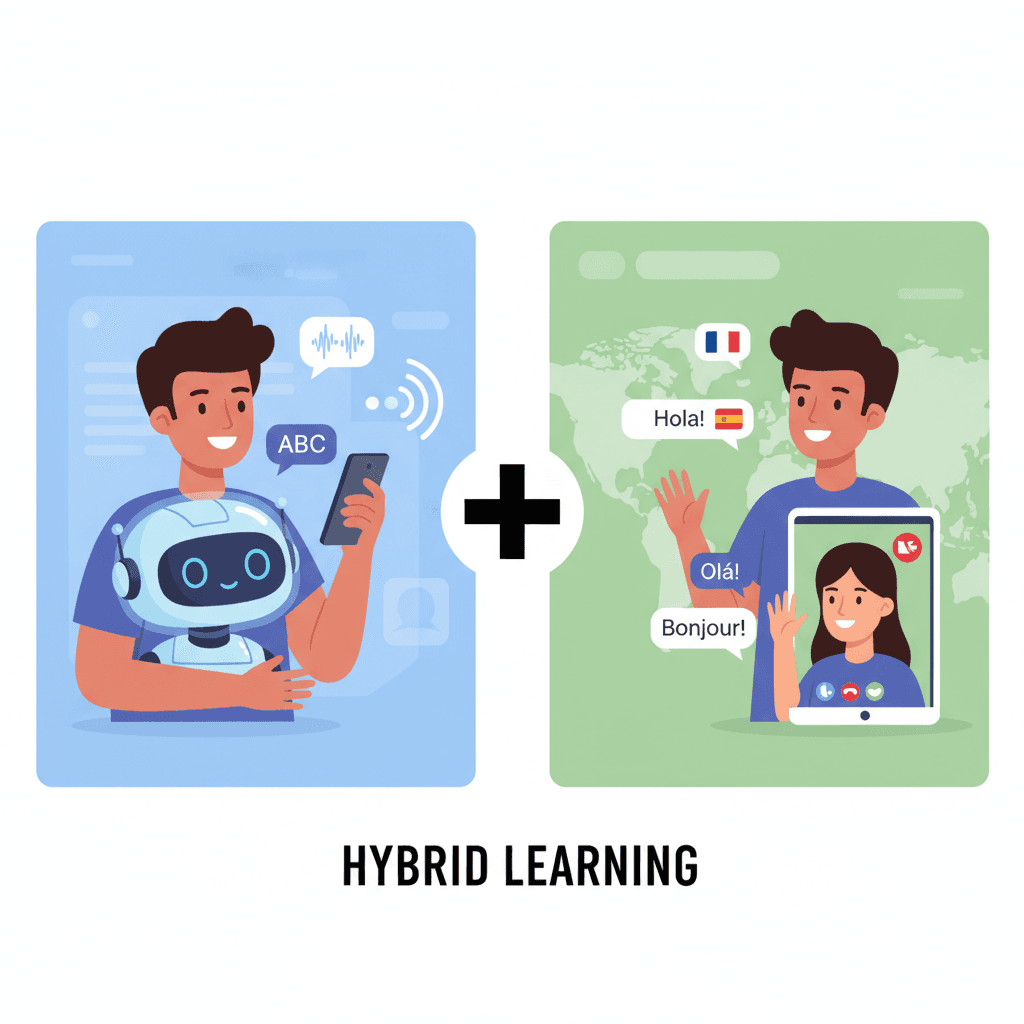
The future of language learning isn't about choosing between an AI tutor and a human partner; it's about leveraging the unique strengths of both. This hybrid model is a powerful trend that offers a complete learning solution. It combines consistent, AI-driven practice with the nuanced, cultural connection of human interaction.
Think of it this way: your AI tutor is your personal trainer, and your human partner is your sparring partner. Use an AI tool like SpeaksyAI to drill grammar, perfect your pronunciation, and build your vocabulary in a judgment-free environment. It's your 'always-on' partner, ensuring you never miss a day of practice, even when your human partner is busy or in a different time zone. This solves the biggest challenge of platforms like HelloTalk and Tandem: maintaining momentum.
Then, you bring that confidence and knowledge to your sessions with your human partner. Those conversations are where you learn cultural nuance, practice spontaneity, and build a real friendship. Experts agree that while AI can't fully replace the magic of human interaction, it is a powerful tool to prepare for it. By using AI to practice your introductions and topics, you’ll feel more confident and make a better impression from day one, leading to more successful and lasting partnerships.
Frequently Asked Questions (FAQ)
Frequently Asked Questions
Ready to Practice Speaking Confidently?
Get unlimited, judgment-free practice with the SpeaksyAI language tutor. It's always online when you need it.
Join the Waitlist