Get Unstuck Speaking a Language: A 3-Step Recovery System
That moment of panic when a word won't come? It happens to everyone. This guide offers a simple 3-step system to recover and keep the conversation going.
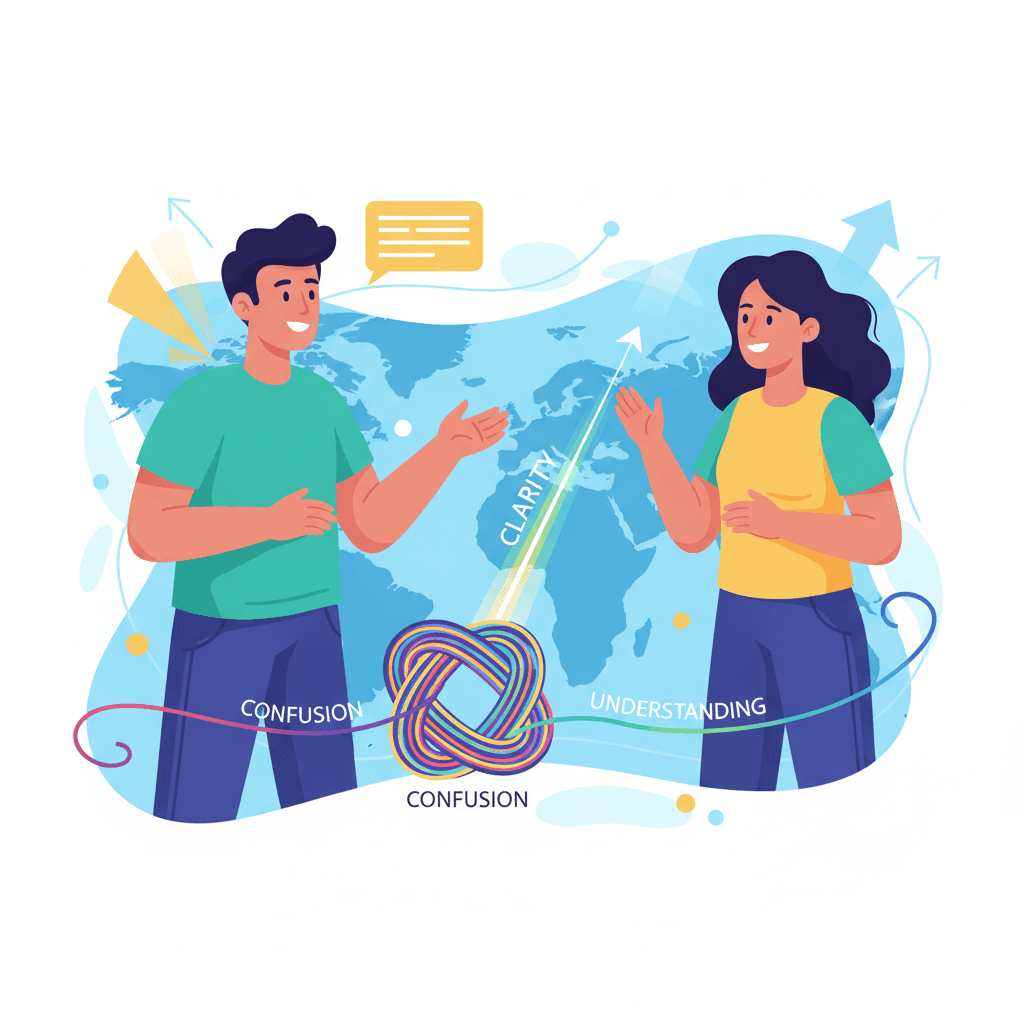
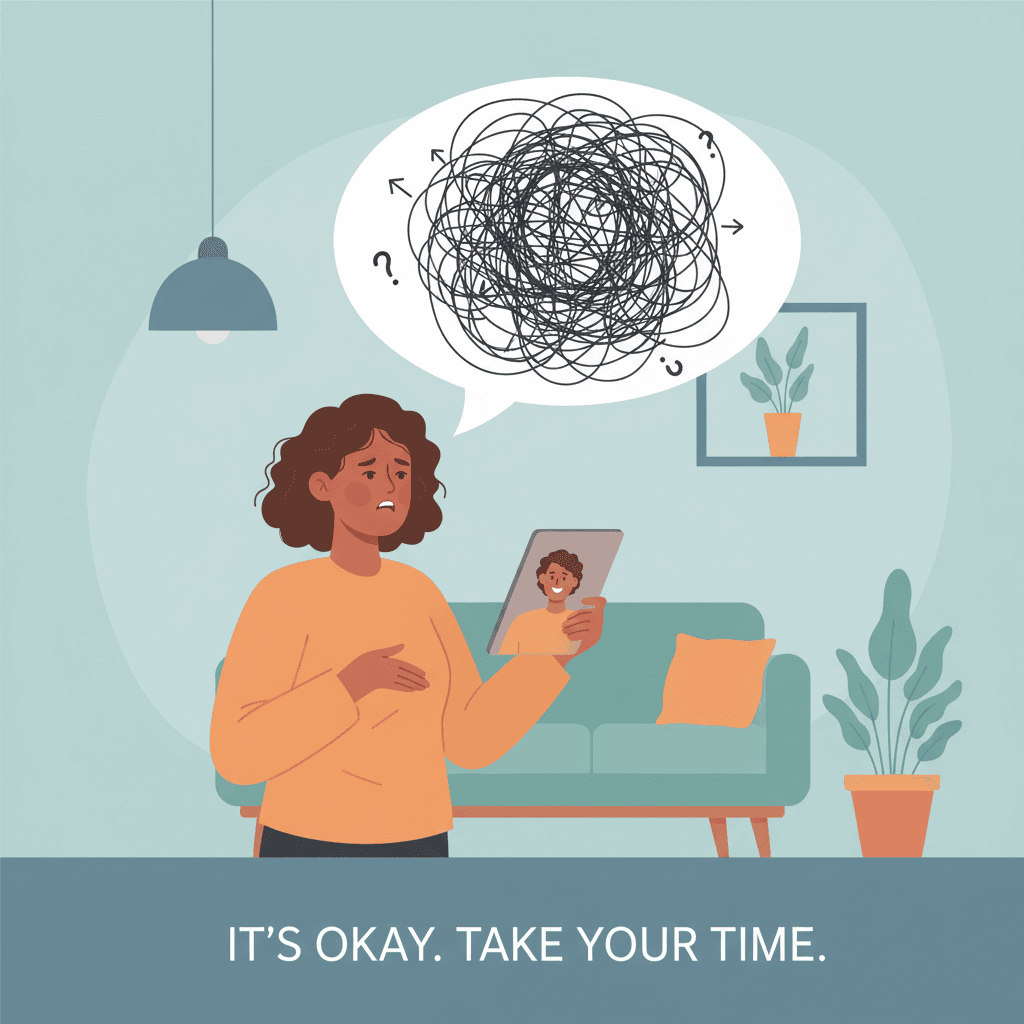
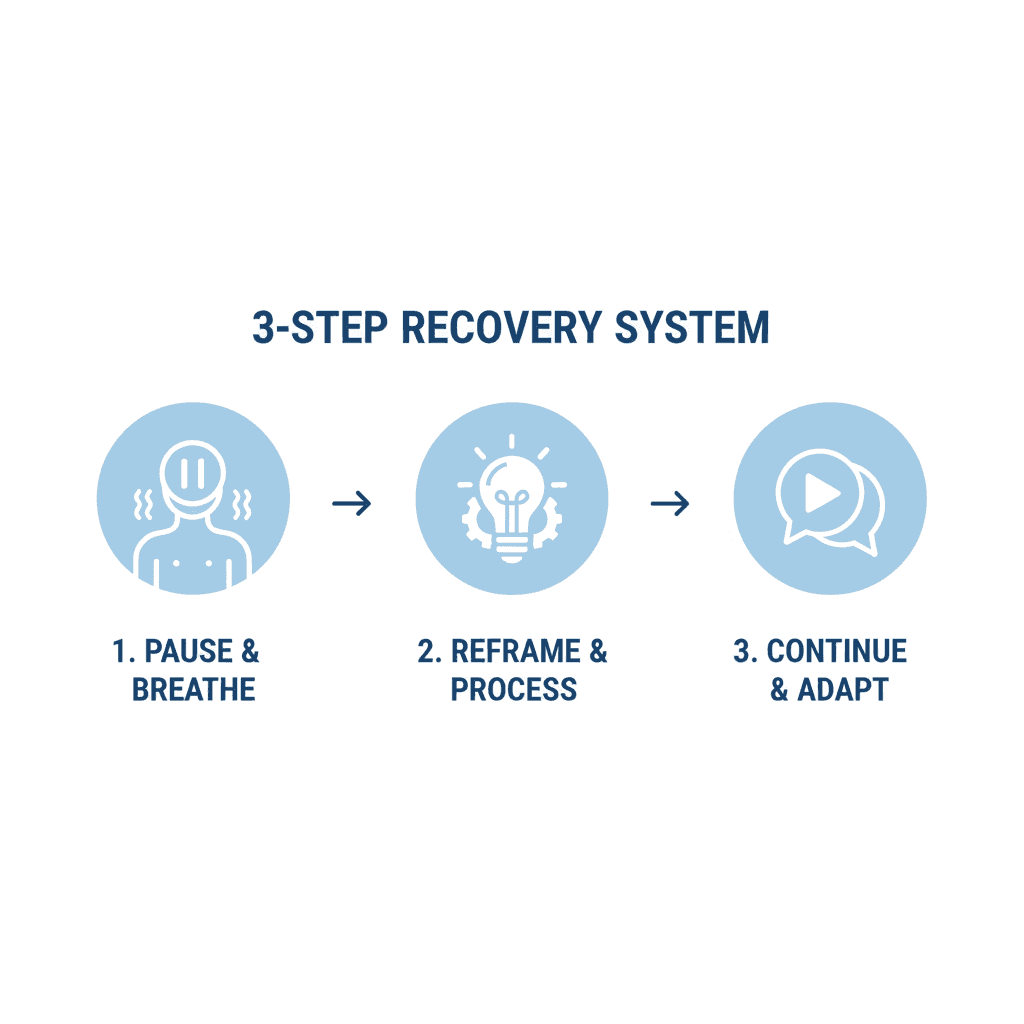
Wondering what to do when you get stuck speaking a foreign language? The most powerful response is a simple, three-step method: Pause to manage the initial panic, Reframe your thought using words you already know, and Continue the conversation with confidence. That moment of your mind going blank is incredibly common, but it doesn't have to derail your progress. Instead of seeing it as a failure, you can learn to see it as an opportunity—a sign that you're pushing your boundaries and a chance to practice the graceful recovery skills that lead to true fluency.
Why Getting Stuck When Speaking is a Good Sign (Really!)
Let's be honest: that heart-sinking feeling when a word vanishes from your memory is awful. Your palms might get sweaty, your mind goes blank, and you feel a wave of panic. This isn't just you being nervous; it's a biological survival reaction. According to community discussions among language experts, your brain's amygdala can interpret the social risk of making a mistake as a genuine threat, temporarily blocking access to higher functions like language. This experience, often called 'xenoglossophobia,' affects the vast majority of language learners and is a natural part of the journey.
In fact, getting stuck is a sign that you are doing something right. It means you are operating at the very edge of your abilities, which is precisely where learning happens. You're not sticking to the same five phrases you learned last year; you're trying to express new, more complex ideas. Research from Cambridge University Press & Assessment in 2025 found that for many learners, the anxiety about not remembering a word is an even greater source of stress than the fear of making a grammar mistake. This shows how much we want to connect and be understood.
The key is to reframe this moment. Instead of a roadblock, it's a stepping stone. It’s proof that you’re ambitious in your learning. A 2025 study in Frontiers in Psychology discovered that practicing in low-pressure environments can neutralize the negative effect of this anxiety on performance. By building strategies to handle these moments, you're not just learning a language; you're building resilience and confidence.
The 3-Step Recovery System: Pause, Reframe, Continue
So, how do you handle that moment gracefully? Instead of letting the panic take over, you can rely on a simple, repeatable system. Think of it as your conversational recovery plan, ready to deploy whenever you need it. This system helps you move from freezing up to flowing through the conversation.
- 1.Pause: Take a deliberate breath. This isn't about giving up; it's about giving your brain a second to catch up and managing the emotional reaction. As 2026 research on Foreign Language Anxiety (FLA) highlights, this anxiety often stems from our sense of identity, making this emotional management step critical.
- 2.Reframe: Use the words you do know to get your message across. This could mean simplifying your sentence, or describing the word you can't remember (a technique called circumlocution). As many learners on platforms like Reddit suggest, saying 'the thing you use to open a wine bottle' is just as effective as saying 'corkscrew'.
- 3.Continue: Keep the conversation moving forward. Once you've successfully reframed your thought, transition back into the flow. This step reinforces your confidence and shows your conversation partner that you're resilient.
This system turns a moment of potential embarrassment into a demonstration of your communication skill. It's not about knowing every single word; it's about knowing how to communicate effectively with the words you have.
Step 1: Pause and Manage the Moment (Don't Panic)
The real enemy when you get stuck isn't the forgotten word—it's the panic that follows. According to a 2026 report from Lingvist, Foreign Language Anxiety (FLA) negatively impacts performance and can affect people who aren't typically anxious. Your brain's alarm system can trigger a 'fight-or-flight' response, making it even harder to think clearly. Neuroscientist Dr. Patricia Kuhl's research confirms that anxiety can physically block the brain regions responsible for language production. Your first job is to short-circuit this response.
When you feel that freeze, take a slow, conscious breath. Smile at your conversation partner. This small physical act can interrupt the panic cycle. It signals to your brain—and to them—that everything is okay. Remember, with speaking anxiety affecting up to 75% of language learners, this feeling is completely normal. The goal isn't to never feel it, but to have a plan for when you do.
Step 2: Reframe Using Words You Already Know
Once you've taken a breath, your next move is to work around the missing word. This is where you transform from a language 'student' into a savvy 'communicator'. Fluent speakers do this all the time; it’s about being resourceful. There are two main conversational recovery strategies you can use here: circumlocution and simplification.
Circumlocution: Describe the Concept
Circumlocution is the art of talking around a word you don't know. Instead of searching for one specific noun, you describe the concept using a few other words. Research on intermediate Chinese language learners found that direct training in this strategy builds confidence and fluency. It's a tool, not a crutch.
- •Instead of: 'I need a stapler.'
- •Try: 'I need the little machine you use to attach papers together.'
- •Instead of: 'My flight has a layover in Dubai.'
- •Try: 'My flight stops in Dubai for a few hours before going to the final place.'
Native speakers use circumlocution naturally to negotiate meaning, so using it actually makes you sound more human and relatable. It keeps the conversation going and often, your partner will supply the word you were looking for, helping you learn it in context.
Simplification: Say It in a Simpler Way
Sometimes we get stuck because we're trying to translate a complex or idiomatic sentence directly from our native language. The solution is to 'downgrade' the sentence to a simpler structure. A 2025 guide on overcoming communication barriers recommends using shorter sentences and avoiding idioms as a key tactic. If your brain is trying to say, 'This project has a plethora of unforeseen complications,' you might freeze. Instead, simplify it: 'This project has many new problems. It is very difficult.'
One powerful way to train this skill is with the '4-3-2 Speaking Technique,' a science-backed method where you explain the same topic in progressively shorter intervals (4 minutes, 3 minutes, then 2 minutes). This forces you to find the most direct and efficient way to express your core ideas—an essential skill for when you're under pressure.
Your In-the-Moment Toolkit: Phrases to Use When Stuck
Having a few pre-memorized phrases is like having a toolkit for conversational repairs. These phrases help you manage the moment, signal your needs to your partner, and maintain the flow of conversation. Research from 2026 highlights that such targeted methods can directly help learners build communicative competence by lowering the psychological barriers of speaking anxiety. Here are some essential phrases to add to your repertoire.
- •Phrases to Buy Time: 'Let me think for a moment...', 'Hmm, that's a good question...', 'Let me see...'
- •Phrases to Ask for Help: 'How do you say...?', 'What's the word for the thing that...?', 'I've forgotten the word for...'
- •Phrases to Rephrase: 'Let me say that another way...', 'What I mean is...', 'In other words...'
Memorizing these accomplishes two things. First, it keeps you speaking in your target language instead of reverting to your native tongue out of frustration. Second, it gracefully includes your conversation partner in the problem-solving process, turning a solo struggle into a collaborative moment. It’s a reflection of a broader trend in language learning, which is shifting toward adaptive, AI-powered systems focused on active use, because consistent speaking is proven to be the most effective path to fluency.
How to Prevent Getting Stuck in the First Place
While knowing how to recover is crucial, you can also be proactive to reduce how often you get stuck. Preventing the freeze is about building a foundation of confidence and readily accessible vocabulary. This aligns with a key pedagogical trend: 'doing more' over 'studying harder,' treating language as a practical skill built through daily habits.
One of the best strategies, backed by experts, is to prepare a few key talking points before a conversation. If you're meeting a friend for coffee, think of two or three simple stories or questions you can bring up. This warms up your brain and gives you a confident start. A 2026 study in Examining Foreign Language Learners' Speaking Anxiety confirmed that limited vocabulary and pronunciation are major contributors to anxiety, so proactive practice is key.
Prioritize active output (speaking and writing) over passive input (listening and reading). While listening is important for learning natural phrasing (check out our guide on active listening skills), your brain won't build the rapid-recall pathways for vocabulary until you force it to produce language. A great way to do this is by committing to a daily speaking habit, even if it's just five minutes of talking to yourself about your day.
Practice Your Recovery Skills in a Safe Space
Knowing these strategies is one thing; using them under pressure is another. The key to making the 3-Step Recovery System second nature is practice. Research from 2026 on the causes of speaking anxiety points out that fear of 'losing face' is a primary barrier. Therefore, practicing these recovery techniques in a low-pressure, judgment-free environment is essential for building real-world competence.
This is where technology provides a powerful advantage. The growing demand for accessible practice tools is clear—Duolingo, for example, reported a 23% year-over-year growth in daily active users in Q2 2026. Learners are actively seeking ways to build confidence. Practicing circumlocution and using filler phrases with an AI partner allows you to experiment and make mistakes without any social anxiety. Regular conversational practice is critical, as studies show it helps the brain access vocabulary more effectively.
Effective language practice relies on consistency, variety, and personalization. A judgment-free environment is crucial for building the confidence to apply skills in the real world.
Modern tools are designed around the principle of active, habit-based training. For instance, using SpeaksyAI's AI conversation partner lets you intentionally put yourself in situations where you might get stuck, and then practice your recovery. You can try to describe a complex object or tell a story, and if you freeze, you can calmly try out your filler phrases and rephrasing techniques. It’s the perfect training ground to build the muscle memory and confidence you need for speaking fluently without freezing.
Frequently Asked Questions
Frequently Asked Questions
Ready to Speak Confidently?
Practice recovering from mistakes in a judgment-free zone with SpeaksyAI's AI language tutor.
Join the Waitlist