Feeling Judged When Speaking a Foreign Language? A Guide
That knot in your stomach before you speak a new language is real. This guide validates why you feel judged and gives you a step-by-step system to find your voice.
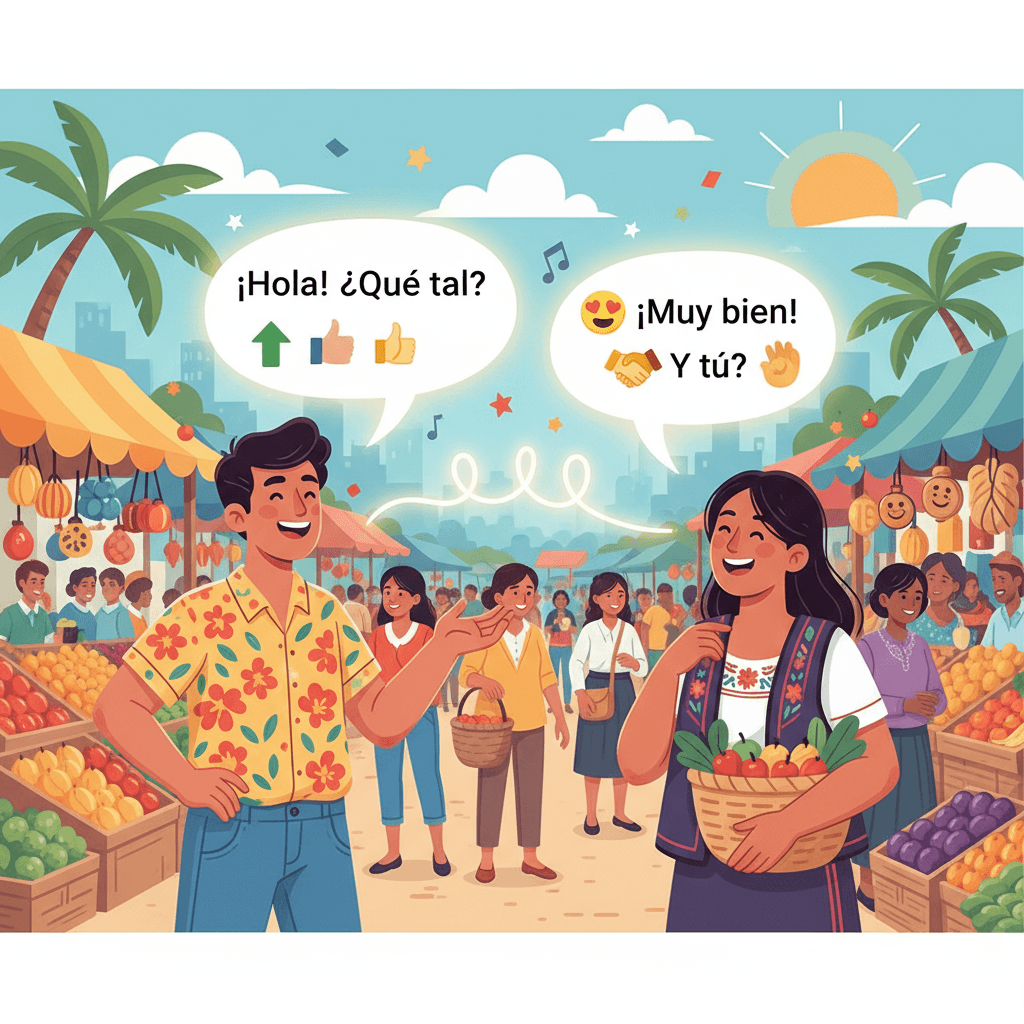
That sinking feeling in your stomach right before you have to speak a new language? It’s not just you. The experience of feeling judged when speaking a foreign language is incredibly common, and it has a name: foreign language anxiety. It’s a completely normal part of the learning journey, rooted in a fear of making mistakes and being negatively evaluated. But here’s the good news: you can absolutely overcome it. Understanding where this fear comes from is the first step to dismantling it and speaking with the confidence you deserve.
It’s Not Just in Your Head: Why We Fear Being Judged
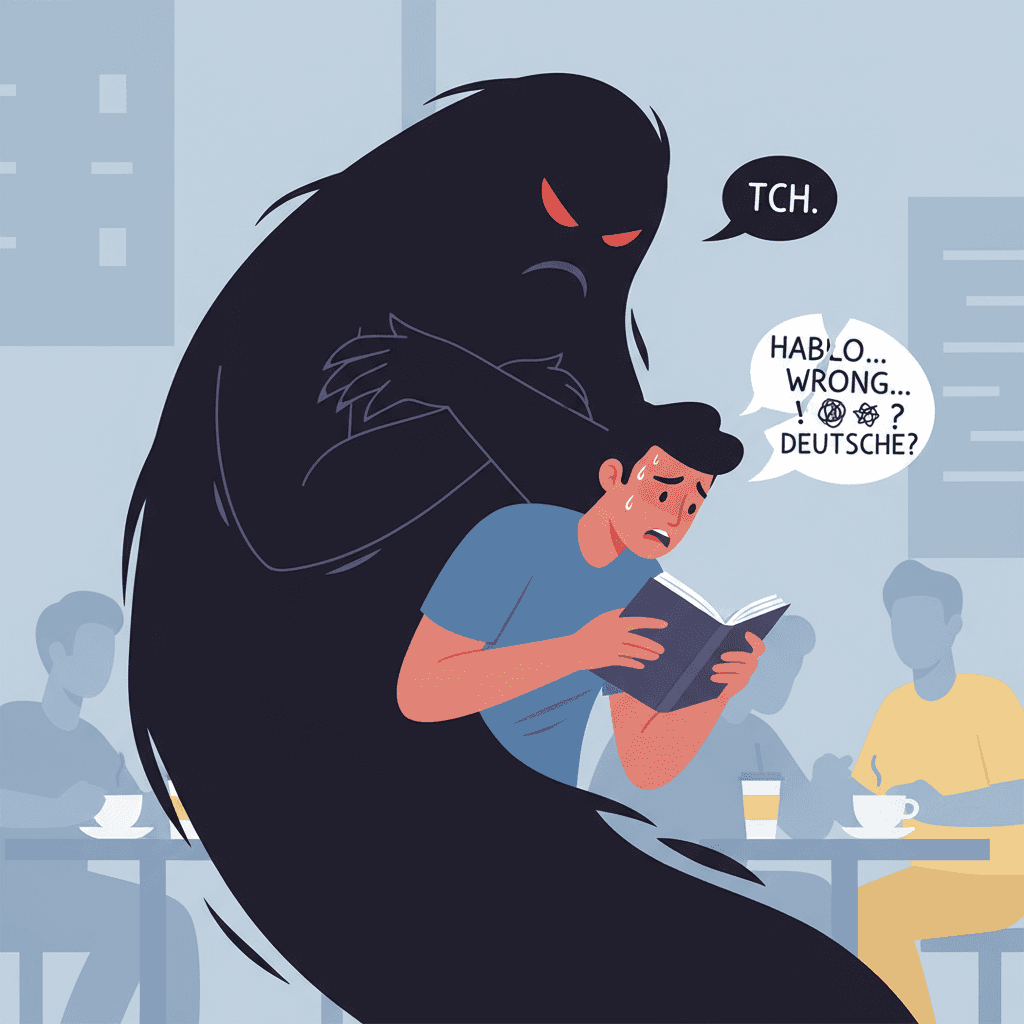
That worry you feel isn’t a personal failing; it’s a well-documented psychological phenomenon. Experts call it Foreign Language Anxiety (FLA) or Xenoglossophobia. At its core is a powerful trigger: the 'fear of negative evaluation.' A 2026 research compilation defined this as a primary component of FLA, where you expect others to judge you for your accent, grammar, or vocabulary choices. It’s the voice in your head that says, “They’re going to think I’m incompetent,” and it can be paralyzing.
This anxiety is a deeply human experience. According to researchers, it's linked to an evolutionary survival mechanism to seek social acceptance and avoid rejection. When you speak a new language, you’re making yourself vulnerable. You’re stepping outside your comfort zone and taking a social risk. The fear you feel is your brain’s ancient wiring trying to protect you from being cast out of the group, even if that 'group' is just a barista or a stranger on the street.
For some, this feeling is even more intense. Research from 2025 confirms that learners with pre-existing social anxiety often face heightened fear when speaking a target language. The 'fear of negative evaluation' is a core symptom of social anxiety, so language practice can feel like facing your biggest fear head-on. However, there's a silver lining. Interestingly, a 2024 study from ScienceDaily found that speaking with a foreign accent can sometimes make listeners more tolerant of grammatical mistakes compared to errors made by a native speaker. The judgment you fear may not be as harsh as you think.
Is the Judgment Real or Just a Feeling?
It's crucial to distinguish between perceived and actual judgment, because the feeling of being judged is often internal. A 2024 study in Frontiers in Psychiatry discovered that a learner's self-perception of their skills was a stronger predictor of foreign language anxiety than their actual, measured ability. In other words, how you think you sound often matters more to your confidence than how you actually sound to others.
However, that doesn't mean external judgment isn't a real phenomenon. A 2026 news report highlighted recent research showing that 'accent bias' remains a persistent problem in professional environments, with some workers in the US and UK reporting it has cost them a promotion. This anxiety often stems from three main triggers identified in a 2025 research review: the 'fear of negative evaluation' (worrying what others think), concern over your own 'linguistic deficiencies' (fixating on mistakes), and pressures from 'classroom dynamics' (feeling watched by peers).
Imagined Judgment: Your Inner Critic Takes Over
More often than not, the harshest judge is the one in your own head. This 'inner critic' is fueled by the 'fear of negative evaluation,' a specific anxiety where your intense worry about being judged for mistakes actively harms your speaking performance. Research from 2025 shows this can lead to a 'self-imposed block in speaking,' where your own negative self-perception becomes a bigger barrier to fluency than any external judgment.
Ever had your mind go completely blank when you try to speak? That’s a real cognitive phenomenon. Research from 2026 indicates that using a foreign language dampens your brain's intuitive processing, forcing it to work harder. When you add the stress of self-judgment, your brain can become overloaded and simply freeze up. While one study found external criticism hurts less when received in a foreign language, this doesn't apply to our internal monologue. You are, and always will be, your own toughest critic.
Constructive Correction: Feedback That Feels Like Judgment
Sometimes, feedback that is meant to be helpful can feel like a personal attack. A well-meaning teacher, friend, or partner might correct your pronunciation, but it lands like a criticism of your effort. A 2026 Leadership IQ study found that adding a judgment to feedback makes employees 17 times more likely to become defensive. When someone says, “You said that wrong,” your brain can interpret it as, “You failed.”
The way you are corrected matters immensely. A 2026 study on ESL students discovered that explicit correction (“That’s the wrong word”) and metalinguistic feedback (“You need to use the past tense here”) are strongly linked to higher second language anxiety. In contrast, less direct methods like recasts—where someone simply rephrases your sentence correctly—cause much lower anxiety. The frequency of corrections also plays a role; the same study found a positive correlation between how often a learner is corrected and their level of emotional discomfort.
Actual Judgment: Dealing with Unhelpful Encounters
Let’s be honest: true, unhelpful judgment does happen, even if it's rare. This can be due to 'accent bias,' a documented issue that, according to 2026 research, many workers still see as a problem, especially in professional settings in places like the US, UK, and Australia. Some even report it has cost them a promotion. This bias can stem from the listener's own 'processing fluency'; as a 2024 article on edpsy.org.uk explains, the increased cognitive effort required to understand an unfamiliar accent can lead some people to judge the speaker more negatively.
However, this is not a universal experience. It’s crucial to remember that a single negative encounter does not reflect how most people think. In fact, a 2024 ScienceDaily study found the opposite is often true: speaking with a foreign accent can make listeners more tolerant of grammatical errors. Most people are simply impressed that you’re making the effort to speak their language. When you do encounter real, unhelpful judgment, give yourself permission to disregard it. That negativity is about the other person’s lack of patience, not your lack of skill.
The Solution: Create a Judgment-Free Practice Zone
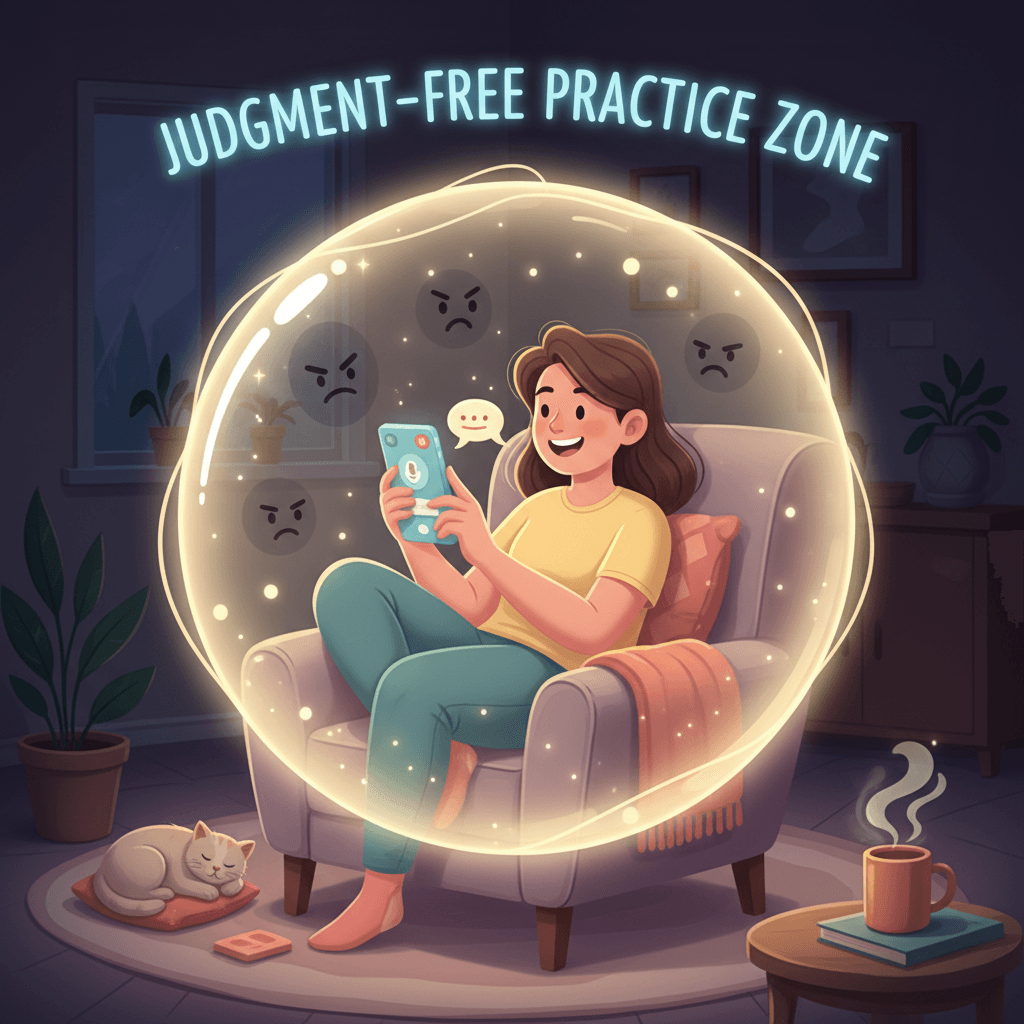
So how do you move past this fear? The most effective method is through safe, repeated exposure. The fear of negative evaluation is a huge trigger for language anxiety, with studies showing 47% of anxious learners feel self-conscious speaking in front of others. To overcome this, you need a space where the stakes are zero—a place where you can make mistakes, stumble over words, and experiment with new phrases without any social pressure.
This is where technology provides an incredible advantage. A 2025 study in Frontiers in Psychology found that practicing with an AI conversation partner effectively neutralized language anxiety's negative effect on performance. The AI doesn't get impatient, it doesn't judge your accent, and it’s available 24/7. This creates the perfect training ground to build a foundation of confidence before you ever have to speak to a person.
Think of it as your personal fluency gym. In this judgment-free zone, you can practice the conversational reps you need to build muscle memory. Foreign language anxiety is formally defined as 'the feeling of tension and apprehension specifically associated with second language contexts.' By practicing in a safe environment, you slowly strip away that tension and prove to yourself that you *can* communicate effectively, which is the key to building real-world confidence.
A 3-Step System to Speak Without Fear of Judgment
Feeling motivated but not sure where to start? We’ve developed a simple, actionable system to help you deflect judgment and speak freely. This system is designed to tackle the 'fear of negative evaluation' head-on, which a 2025 study identified as a primary cause of foreign language anxiety. It’s not about becoming fearless overnight; it's about building confidence step by step.
- 1.Calibrate in Private with an AI Tutor: Build your core confidence and practice specific scenarios without an audience.
- 2.Test the Waters in Low-Stakes Conversations: Apply your skills in real-world situations where the pressure is low.
- 3.Reframe Real-World Feedback & Move On: Develop the mental resilience to turn corrections into data, not defeats.
This system works because it progressively exposes you to more challenging situations while giving you the tools to succeed at each stage. And remember, research from 2024 shows that native listeners are generally more tolerant of errors from non-native speakers, so the real world may be kinder than you expect. Let’s break down each step.
Step 1: Calibrate in Private with an AI Tutor
The first step is to create a psychologically safe space where you can practice speaking without any fear of judgment. This is where you get comfortable with the sound of your own voice, experiment with new vocabulary, and practice realistic conversation simulations without an audience. A February 2026 JALT study found that AI chatbots significantly reduced situational speaking anxiety, validating their use for practice before real-world interactions.
This is where a tool like the SpeaksyAI language tutor becomes your secret weapon. It offers judgment-free conversations that allow you to rehearse and build confidence at your own pace. According to research, AI-mediated speaking practice directly reduces anxiety by enabling low-stakes repetition, which is critical for learners who fear negative evaluation. You can practice ordering food, handling a business call, or just making small talk, as many times as you need.
- •Practice specific scenarios you're nervous about.
- •Ask for instant, private pronunciation feedback.
- •Repeat tricky phrases until they feel natural.
- •Experiment with new words without fear of misusing them.
Meta-analyses from 2025 and 2026 highlight a significant improvement in learning outcomes when using 'affective' AI tutors that create a safe space and reduce emotional barriers like anxiety. By starting here, you're not just learning a language; you're unlearning the fear associated with it.
Step 2: Test the Waters in Low-Stakes Conversations
Once you’ve built a solid foundation with an AI tutor, it’s time to take your skills into the real world—but strategically. The goal is not to jump into a high-pressure debate; it’s to find low-stakes situations where you can practice with minimal anxiety. These are interactions where the communication goal is simple and the other person is likely to be patient.
- •Ordering a coffee or buying a ticket.
- •Asking a shopkeeper for the price of an item.
- •Saying 'hello' and 'thank you' to a bus driver.
- •Speaking with a patient language exchange partner who understands your goals.
It’s normal to still feel some anxiety. A 2026 study confirmed a direct link between language anxiety and poorer speaking performance, even in these situations. But that’s okay. The key is to start small and celebrate your wins. This feeling is so common that it has been documented as the 'Able to Speak but Afraid to Speak' phenomenon, affecting even advanced learners. Each successful, low-stakes conversation you have proves your inner critic wrong and builds momentum for the next step.
Step 3: Reframe Real-World Feedback & Move On
Sooner or later, someone will correct you in the real world. This is the moment of truth. Instead of letting your confidence crumble, your goal is to reframe the experience. A fascinating psychological quirk called the 'foreign language effect' can help; research shows that processing feedback in a non-native language can be a more analytical and less emotional task. You can lean into this.
When someone corrects you, try these mental scripts:
- •Instead of thinking: “I’m so stupid for making that mistake.”
- •Reframe it as: “Great! That’s a free piece of data I can use to improve.”
- •Instead of getting flustered, say: “Oh, thank you for the tip! I’m still learning.”
This isn't just positive thinking; it's a proven strategy. A 2025 meta-analysis confirmed that interventions to reduce foreign language speaking anxiety, like reframing, have a 'medium-level effect.' By naming your fear—the 'fear of negative evaluation'—and consciously choosing to see feedback as helpful data, you take back control. You turn a moment of potential shame into a moment of growth.
Are Native Speakers Actually Judging You?
This is the question at the heart of every learner's anxiety. The answer, overwhelmingly, is no. Contrary to what many learners fear, a 2024 ScienceDaily study found that speaking with a foreign accent can actually make native listeners more tolerant of grammatical errors. Most people are not dissecting your every mistake; they are focused on understanding your message and are often impressed by your effort.
While the fear of being judged is very real, studies show it's often misplaced. A 2024 study on foreign language anxiety found that this 'fear of negative evaluation' is typically tied to specific, high-pressure situations, such as speaking in front of a classroom or with a teacher. It is less common in casual, everyday conversations with native speakers in places like Canada or India.
The vast majority of native speakers are not your critics; they are your potential conversation partners. They want to understand you, not score your grammar.
Your anxiety is valid, but it often projects a level of scrutiny that simply doesn't exist in most real-world interactions. By understanding that the judgment is largely imagined, you can begin to lower your guard, relax, and focus on what truly matters: connection and communication.
FAQs About Speaking a Foreign Language with Confidence
Frequently Asked Questions
Ready to Practice Without Judgment?
Join the waitlist for SpeaksyAI, your personal AI language tutor. Get unlimited conversation practice and real-time feedback in a safe, encouraging space.
Join the Waitlist