The Best Way to Learn a Language With a Full-Time Job (A System)
Feel too busy to learn a language? It's not about finding more time; it's about managing your energy. Discover a realistic system designed for professionals to finally speak confidently around a 9-to-5.

You’ve set a goal to learn a new language. You're motivated, you've bought the books, maybe even downloaded an app or two. But then, life happens. Your full-time job demands your best energy, your commute is draining, and by the end of the day, the idea of conjugating verbs feels impossible. What if the problem isn’t your schedule, but your strategy? The truth is, finding the best way to learn a language with a full time job isn't about cramming more into your day. It’s about building a smarter system that works with your energy, not against it. This guide will show you how to do just that, focusing on consistency over intensity and leveraging powerful tools like an AI language tutor to help you finally speak with confidence.
Stop Managing Time, Start Managing Your Energy
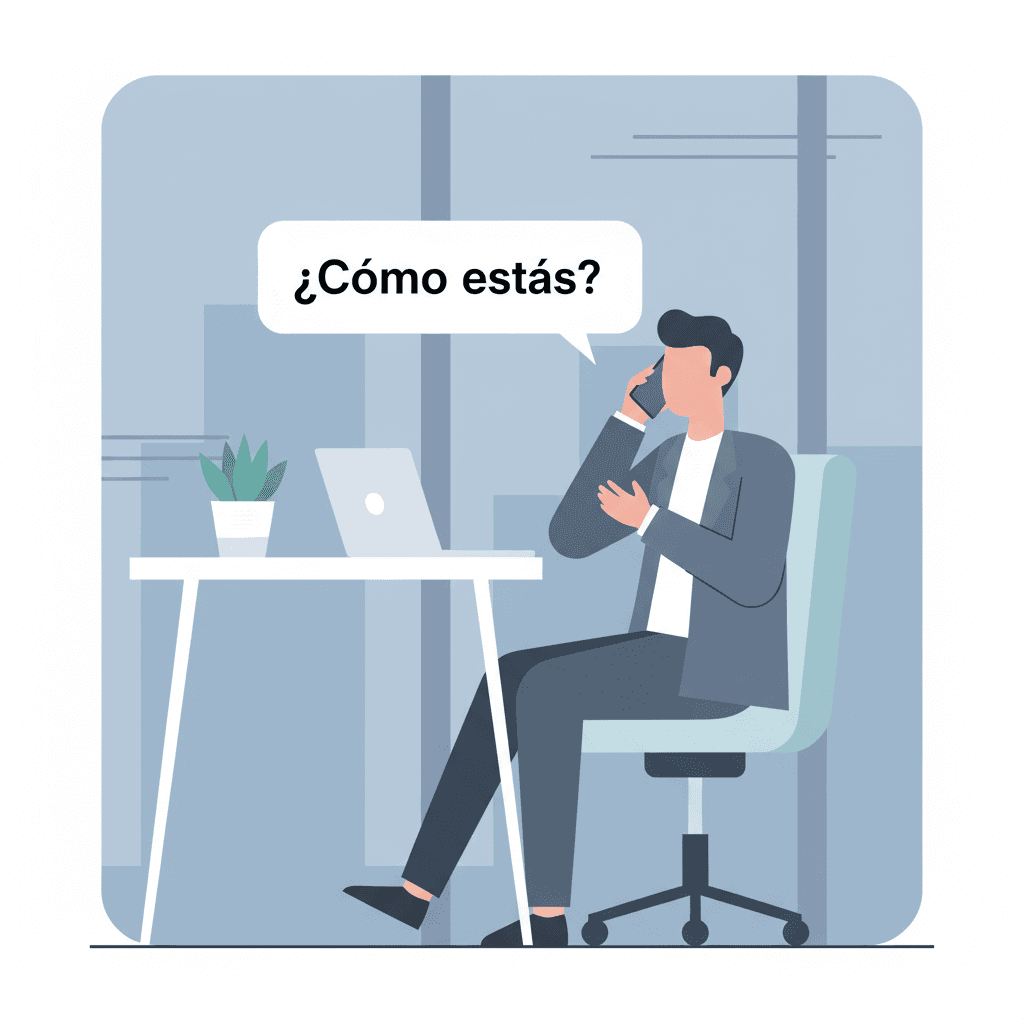
For busy professionals, the biggest hurdle to learning a language isn't a lack of time—it's a lack of usable energy. You might have an hour blocked out on your calendar, but if you're mentally exhausted, that time is worthless. The most successful learners don't just manage their calendars; they manage their energy. This is a paradigm shift anticipated to be a key productivity driver by 2026, where avoiding burnout is seen as the path to sustainable success. It’s about recognizing that not all learning activities require the same amount of mental fuel.

Think of your daily energy in cycles. Some moments are 'high-energy,' when your mind is sharp and ready for a challenge. Other moments are 'low-energy,' when you're better suited for passive or review activities. The core concept of energy management, cited in research from Harvard Business School and McKinsey, is to align tasks with these cognitive cycles. Instead of trying to force a difficult grammar lesson after a draining 10-hour workday, you match the task to your current state.
- •High-Energy Tasks: These require focus and active brainpower. Examples include having a conversation, learning a new grammar concept, or practicing your speaking skills.
- •Low-Energy Tasks: These are more passive and can be done when you're tired. Examples include listening to a podcast, reviewing flashcards with a spaced-repetition app, or watching a TV show in your target language.
Productivity research highlights the importance of understanding your personal chronotype—your natural sleep-wake cycle—to organize your day. Are you a morning lark or a night owl? Schedule your high-energy language tasks, like speaking practice, during your peak hours. Save the low-energy tasks, like passive listening, for your commute or while winding down in the evening. This approach makes your learning journey feel less like a chore and more like a natural part of your day.
Step 1: Define Your 'Minimum Viable Habit'
The advice to 'be consistent' is good, but it's not actionable. A better approach is to define your 'minimum viable habit'—one small, non-negotiable language learning activity that you can commit to every single day. This isn't about aiming for an hour of intense study. It's about choosing a 15-20 minute activity that is so achievable you have no excuse to skip it, even on your busiest, lowest-energy days.
This strategy embraces the 'consistency over intensity' trend that has proven so effective for professionals. Lingoda's analysis of 2025 learning trends noted that successful learners increasingly favor short, frequent study sessions of just 10-15 minutes daily. This builds a powerful foundation through small, compounding efforts. The goal here isn't immediate fluency; it's habit formation. Once the habit is established, you can always do more on days you have the time and energy, but you have a baseline that protects you from burnout and keeps your momentum going.
To maintain momentum on low-energy days, language experts advise defining a 'minimum viable session'—a short, non-negotiable activity, even if it's just five minutes, to keep the learning habit alive without causing burnout.
Your minimum viable habit could be anything that moves you forward. The key is to make it specific. Instead of 'study Spanish,' your habit could be 'complete one lesson on a grammar app,' 'review 20 flashcards,' or 'listen to one 15-minute podcast episode.' This single, achievable goal becomes the cornerstone of your language learning system.
Step 2: Master the 'Micro-Speaking Session'
One of the biggest challenges when you learn a language with a busy schedule is finding time for speaking practice. This is where the 'micro-speaking session' comes in. These are short, 5 to 10-minute bursts of focused speaking practice that you can fit into the small pockets of 'dead time' that pop up throughout your day—waiting for a meeting to start, brewing your morning coffee, or during a short break between tasks. These sessions are about building confidence and making speaking a daily reflex rather than a scheduled event.
Historically, this kind of spontaneous practice was difficult. You had to schedule time with a human tutor, which introduces friction and inflexibility. This is where modern technology, especially an AI language tutor, becomes a game-changer. An AI tutor is available 24/7, right on your phone. There's no scheduling, no pressure, and no fear of making mistakes in front of another person. You can have a quick conversation about your day while walking the dog or practice ordering food while waiting for your lunch. This private, zero-judgment space is critical for adult learners who often feel self-conscious when speaking with a live person.
The motivation for this kind of practical skill-building is incredibly high. For professionals in the US, UK, Canada, and beyond, language skills translate directly into career opportunities. According to a 2026 report from FluentCap Blog, a staggering 90% of U.S. employers relied on multilingual workers, and bilingual employees are projected to earn up to 19% more on average. A micro-speaking session isn't just a language exercise; it's a direct investment in your professional future.
Step 3: Integrate 'Smart Immersion' into Your Day
Immersion is a powerful tool, but for a busy professional, moving to another country isn't an option. 'Smart immersion' is about curating your existing environment to maximize exposure to your target language. The foundation of this concept is Stephen Krashen's 'comprehensible input' theory, which posits that we acquire language by understanding messages, not by consciously learning rules. The goal is to fill your day with meaningful and understandable input that allows your brain to absorb grammar and vocabulary naturally.
This goes beyond just switching your phone's language. It's about actively training your digital world. For example, you can teach the YouTube and social media algorithms to show you content in your target language by searching for topics related to your profession or hobbies. Instead of listening to a business podcast in English, find one in Spanish or French. A key aspect of making this effective is understanding the difference between passive listening and active practice, a concept we explore further in our article on Comprehensible Input vs. Speaking Practice.
- •Media Swapping: Replace something you already consume (a news podcast, a Netflix show, a YouTube channel) with a version in your target language.
- •Professional Curation: Search for industry-specific articles, influencers, and videos in your target language to learn career-relevant vocabulary.
- •Narrate Your Day: A simple but powerful active technique is to mentally (or quietly) narrate your actions throughout the day. This quickly reveals the gaps in your everyday vocabulary.
AI is also creating new forms of professional immersion. You can now use AI-powered tools to role-play real-world work scenarios, like practicing for a client negotiation or rehearsing a presentation in your target language. This allows you to build practical, job-specific skills on your own schedule, in a low-stress environment.
Step 4: Align Language Learning with Your Career Goals
To stay motivated long-term, you need a 'why.' For many professionals, the most powerful 'why' is career growth. When your language learning is directly tied to your professional goals, it stops feeling like a hobby and starts feeling like a vital part of your personal development. Generic, one-size-fits-all programs are often less effective for professionals because they don't address specific, role-relevant needs.
Make your learning immediately applicable to your work. Are you trying to expand into a new international market? Focus on the vocabulary for that industry. Do you have colleagues in another country? Practice conversations you might have with them. You can use an AI tutor to role-play a sales call or practice explaining a complex product feature. This turns abstract knowledge into a practical, valuable career skill.
The numbers back this up. A February 2026 report from FluentCap Blog revealed that 90% of U.S. employers depended on employees with language skills. Furthermore, bilingual employees are projected to earn 19% more on average in 2026. By aligning your learning with these clear career outcomes, you create a powerful, built-in motivation system.
To make this concrete, set specific, measurable goals related to your career. For instance, you could aim to 'learn 30 key industry-related terms in the next month' or 'be able to conduct a 5-minute project update in my target language within three months.' These clear targets provide direction and make your progress tangible.
A Sample Weekly System for the Busy Professional
So, how does this all fit together in a typical week? The key is to build a flexible framework, not a rigid schedule. Here is a sample structure showing how you can layer these different activities into a busy 9-to-5 day, managing your energy as you go.
- •Morning Commute (Low Energy): Use this 'dead time' for smart immersion. Listen to a podcast, an audiobook, or music in your target language. This is perfect for passive listening to get your brain warmed up.
- •Coffee Break (5-10 Mins): This is the perfect slot for a 'micro-speaking session.' Use an AI tutor to have a quick, low-pressure conversation about your upcoming day or a recent project.
- •Lunch Break (15-20 Mins): Dedicate this time to your 'minimum viable habit.' This is a great moment for a more focused, active task like completing a grammar lesson in an app or reviewing vocabulary with spaced repetition.
- •Afternoon Slump (5 Mins): Instead of scrolling social media, do a quick mental exercise. Try narrating what you've done so far today in your target language. It’s a great way to identify vocabulary gaps.
- •Evening Commute (Low Energy): More passive immersion. This is a good time to review what you've learned or listen to something slightly more challenging than your morning podcast.
- •Evening Wind-Down (Variable Time): Practice 'media swapping.' Instead of watching your usual show in English, find one in your target language with subtitles. It's an enjoyable way to increase exposure without adding another 'task' to your day.
Remember, this is a template. On some days, you might have more energy and can fit in a longer speaking session. On other days, you might only manage your 15-minute minimum habit. The goal is to have a system that adapts to you, ensuring you make progress every single day.
The Professional's Toolkit: Choosing Tools for Your System
The right tools can make or break your language learning system. Instead of collecting a random assortment of apps, choose tools that are specifically designed to support the energy management system we've outlined. The goal is to build a complementary toolkit where each tool serves a distinct purpose.
AI Tutors for 24/7 Speaking Practice
For micro-speaking sessions and on-demand practice, an AI tutor is your most valuable asset. Platforms like SpeaksyAI (at speaksyai.com) are designed for this exact purpose, offering 24/7 access to conversation practice without the friction of scheduling. You can role-play work scenarios, get instant feedback on your pronunciation, and build speaking confidence in a private, judgment-free environment. This is the core engine for turning passive knowledge into active speaking ability.
Structured Apps for Your Daily Habit
For your 'minimum viable habit,' you need a tool that provides structure and clear progress. This is where apps like Duolingo or Babbel excel. They offer bite-sized lessons, grammar drills, and vocabulary builders that are perfect for a focused 15-20 minute session. With giants like Duolingo aiming for 100 million daily active users by 2028, it's clear that these platforms are incredibly effective at helping people build consistent daily habits.
Human Tutors for Accountability
While an AI tutor is ideal for daily practice, a human tutor plays a different but equally important role: accountability and nuance. Platforms like Preply are great for scheduling a weekly or bi-weekly check-in. Use this time with a human tutor to ask complex questions, get feedback on cultural nuances, and practice more formal conversation. They act as your personal guide, helping you set goals and ensuring your learning stays on track, which is critical given that 90% of U.S. employers are seeking out these skills.
Frequently Asked Questions (FAQ)
Frequently Asked Questions
Ready to Speak Confidently on Your Schedule?
Stop trying to find a speaking partner. Start practicing in minutes with your 24/7 AI language tutor. Get instant pronunciation feedback and build real fluency.
Join the Waitlist