Find the Best VR Language Learning Apps for Your Goals (2026)
Virtual reality can transform your speaking practice. This guide goes beyond simple lists to give you a system for choosing the best VR language learning app for you.

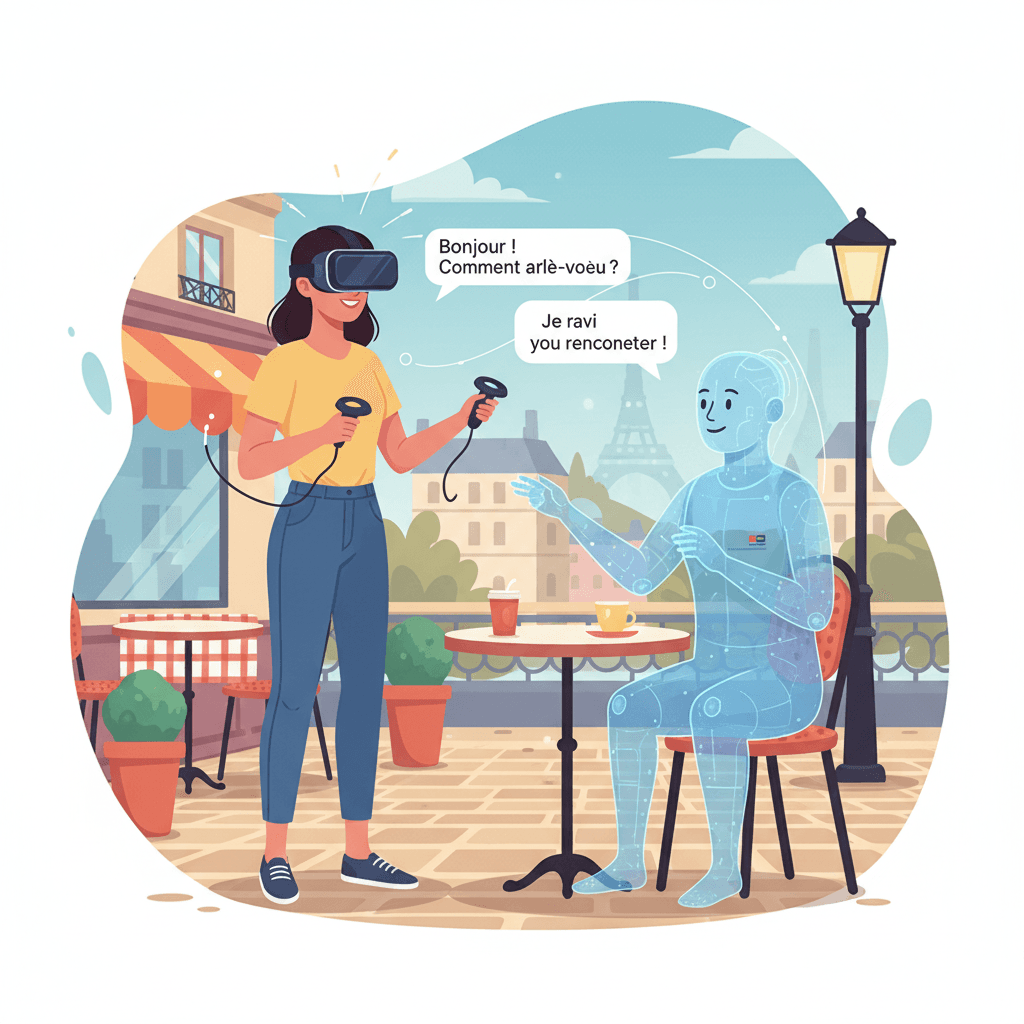
If you've ever dreamed of ordering coffee in Paris or chatting with colleagues in Tokyo but felt too nervous to practice, you're not alone. The biggest hurdle in language learning isn't just memorizing words; it's building the confidence to speak them. This is where virtual reality comes in, and it’s more powerful than you might think. We're going to walk you through the best VR language learning apps and a system for using them to finally break through the speaking barrier. Forget dry textbooks—it's time to step into a world where practice is private, engaging, and incredibly effective.
Why VR is Your Secret Weapon for Speaking Confidently
Imagine practicing a new language in a bustling café or a busy hotel lobby, but from the comfort and privacy of your own home. That's the magic of VR language learning. For learners who are motivated but often intimidated, VR acts as a personal sandbox—a safe space to try, fail, and try again without any fear of judgment. This isn't just about feeling good; it's about learning that actually sticks.
The lessons you learn through immersive experience have a much higher impact. According to a May 2026 meta-analysis of over 2,500 participants, VR has a 'moderately positive and significant effect' on developing productive language skills like speaking. It provides a scientifically-backed environment to build real-world fluency. This method moves you beyond simply knowing a word to actually using it in a conversation, which is the ultimate goal for any language learner.
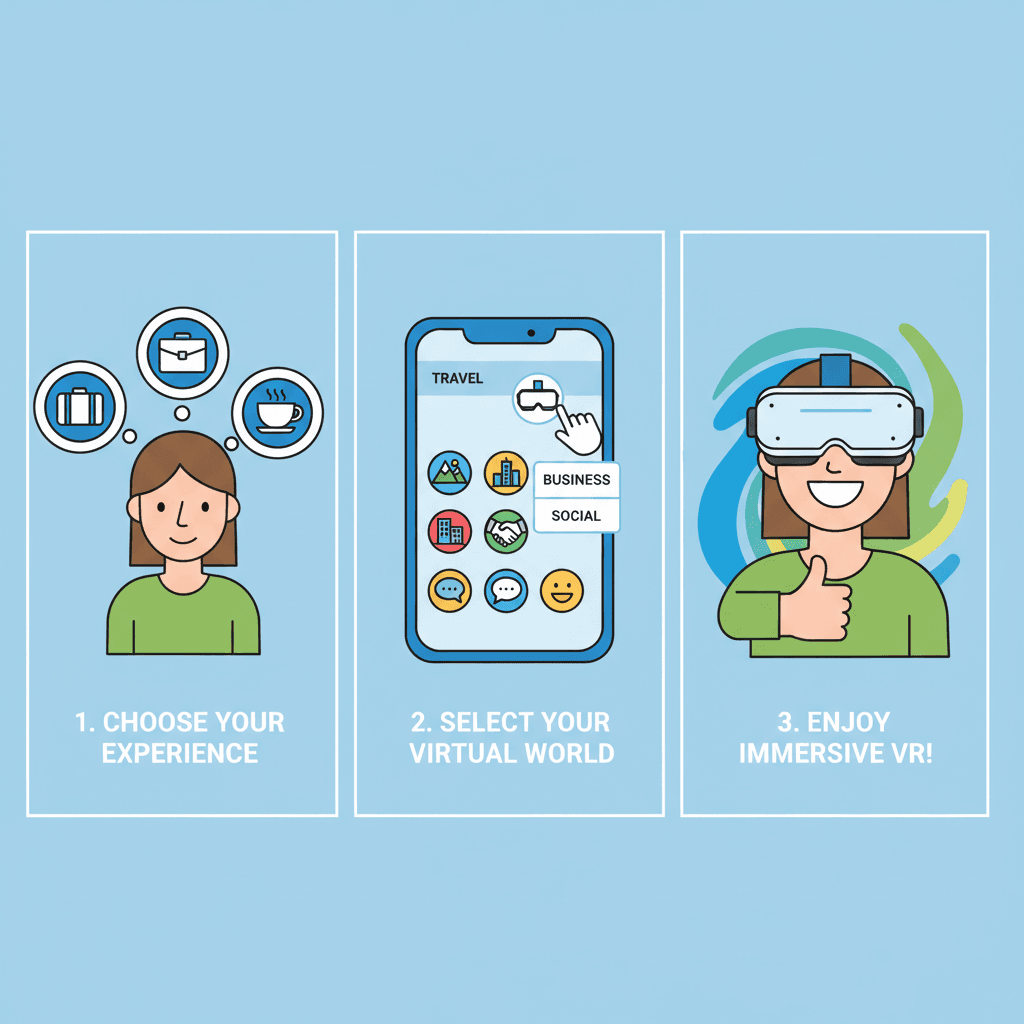
The 3-Step System to Choose Your Perfect VR App
With the immersive language learning market projected to reach $38.6 billion by 2034, the number of apps is exploding. So how do you choose? Instead of just giving you a list, we've developed the SpeaksyAI System for VR Speaking Practice—a simple 3-step framework to help you find the perfect app for your specific needs. Choosing the right tool is critical. Recent research from Ling (2026) confirms that VR technology positively influences language learners' understanding, retention, and practical application. This system ensures you get those benefits.
The data backs this up: a Q4 2025 report from Dataintelo found that learners on immersive VR platforms show 40% higher vocabulary retention and achieve conversational proficiency 35% faster than those using traditional apps. By following this framework, you're not just picking an app; you're creating a personalized plan for success.
Step 1: Define Your Speaking Goal (Travel, Business, or Casual Chat?)
Before you even look at an app, ask yourself: Why am I learning this language? Your primary motivation is the most important factor in choosing the right VR tool. An app designed to help you navigate a business meeting in Spanish will be very different from one that prepares you for ordering tapas on a trip to Madrid.
This is because the effectiveness of VR for speaking practice comes from its ability to provide 'interactive, context-sensitive environments,' according to a May 2026 meta-analysis. For example, if you're preparing for a trip, an app like Mondly VR is geared toward general travel and conversational practice, letting you rehearse scenarios like checking into a hotel. If your goal is professional, the VirtualSpeech app focuses on business settings like job interviews and client meetings. Choosing an app that matches your desired context is crucial for making fast progress.
Picking a goal you find genuinely motivating will also keep you engaged. A January 2026 systematic review confirmed that immersion and interactivity are critical for long-term knowledge retention. When you're practicing for a goal that excites you, you're more likely to stick with it and see better results.
Step 2: Match the App to Your Learning Style & Goal
Once you know your 'why,' you can find the 'what.' The best VR language learning apps are often specialized. Let's look at how the top contenders align with different goals and learning styles, making it easy to find your perfect match.
- •For building travel confidence: If your goal is to feel comfortable and confident on an upcoming trip, look for apps that offer what Times Higher Education (2026) calls 'emotionally safe rehearsal spaces.' Apps like Immerse excel here, dropping you into realistic, slice-of-life scenarios where you can practice real-world interactions before you ever pack your bags.
- •For building a specific vocabulary: If you need to master a set of words for work, school, or a hobby, a gamified approach can be incredibly effective. Apps like Noun Town language learning are ideal for this. The evidence is clear: learners using immersive VR platforms show 40% higher vocabulary retention than with conventional apps (Dataintelo, 2025).
- •For pure speaking practice: If your main objective is simply to get more speaking time and improve your pronunciation, then apps like Mondly VR are a fantastic choice. The focus is on dialogue and conversational flow. A 2026 meta-analysis confirmed that VR has a 'moderately positive and significant effect' on productive language skills, making these apps a powerful tool for anyone looking to improve their speaking.
Don't forget about your learning style. If you struggle with motivation, research shows that VR can increase engagement and support different learning preferences (ELT Journal, 2025). Whether you learn best through games, realistic simulation, or structured dialogues, there’s a VR app that fits your style.
Step 3: A Clear Cost-Benefit Analysis (Headset + App)
Let's talk about the investment. Yes, you need a headset, but when you compare the total cost to other learning methods, VR offers incredible value. The ability to practice speaking anytime, for as long as you want, is a game-changer that traditional methods can't match.
Consider the numbers. You can get started with a Meta Quest 3 headset for around $499. App costs vary, with subscriptions ranging from about $8.99 to $45.00 per month, and one-time purchases like Noun Town for around $19.99. A popular option is combining the headset with a lifetime Mondly subscription for about $120, bringing your total one-time investment to around $620 for unlimited practice.
How does that compare? The price of a one-year VR setup (around $557) is roughly equivalent to just 22-28 hours of lessons with a private online tutor, who typically charges $20-$30 per hour. With VR, you get limitless hours of practice for the same price.
When you factor in the proven benefits—better retention, faster proficiency, and increased confidence—the value proposition becomes undeniable. You're investing in a tool that not only makes learning more enjoyable but also more effective.
How to Integrate VR into Your Weekly Study Routine
The best tool is the one you actually use. The key to success with VR language learning is consistency, not intensity. You don't need to spend hours in a headset to see results. Instead, focus on creating a simple, repeatable routine that fits your life.
Try starting with just 15 minutes of VR immersion each day. This small commitment can be more powerful than you think. Studies show that VR training can increase learning effectiveness by 76% compared to traditional methods (SkillsVR, 2025), so a short, focused session can have a huge impact. Apps like Mondly VR are perfect for this, offering self-contained dialogues that can be completed quickly.
If daily practice feels like too much, try setting a weekly goal. For example, you could aim to master one new scenario in Immerse or Noun Town each weekend. This 'mission-based' approach works because the skills you learn in VR stick around. According to SkillsVR (2025), learners can retain up to 80% of information one year after training. Even one session a week builds a strong foundation for long-term memory and helps you bridge the gap between knowing a word and using it confidently in a real conversation.
From VR Avatars to Real People: Bridging the Confidence Gap
Practicing with virtual avatars is an amazing way to build foundational confidence. Studies show that interacting with expressive avatars can improve interpersonal communication skills and even increase empathy (Scoping Review, 2024). But at some point, you'll want to take your skills into the real world. How do you make that leap?
This is where you can pair the power of VR with the intelligence of AI. While VR provides the safe practice environment, an AI language tutor can provide the detailed feedback you need to refine your speech. One highly effective method is to record the audio from your VR conversations and then upload it to an AI-powered tutor like SpeaksyAI (at speaksyai.com) for analysis. The AI can give you specific feedback on pronunciation, grammar, and word choice, helping you polish your skills.
What VR Still Can't Teach You (And How to Supplement It)
While VR is a revolutionary tool for immersive practice, it's important to be realistic about its current limitations. Most VR apps, even top-rated ones like Mondly VR and Immerse, excel at teaching vocabulary and practicing conversations within pre-defined scenarios. However, they are not primarily designed to teach complex grammar rules or handle the unpredictability of a truly spontaneous, unscripted conversation (Ling, 2026).
This is where a blended approach becomes essential. As you advance to higher proficiency levels (like CEFR B2), you'll need tools that can challenge you with more dynamic interactions. Standalone AI speaking apps are becoming increasingly sophisticated in their conversation depth and quality, allowing for the kind of open-ended practice that VR scenarios don't yet offer (Upstream Research, 2026).
Think of VR as your private speaking gym for building muscle memory and confidence. Then, use an AI tutor as your personal coach to refine your technique, correct your form, and prepare you for any conversation that comes your way. This combination leverages the best of both technologies, aligning with a market where AI already drives over a third of digital language learning revenue.
FAQ: Your VR Language Learning Questions Answered
Frequently Asked Questions
Ready to Practice What You've Learned?
SpeaksyAI is the AI language tutor that provides instant feedback on your speaking. Turn your VR practice into real-world fluency.
Join the Waitlist